
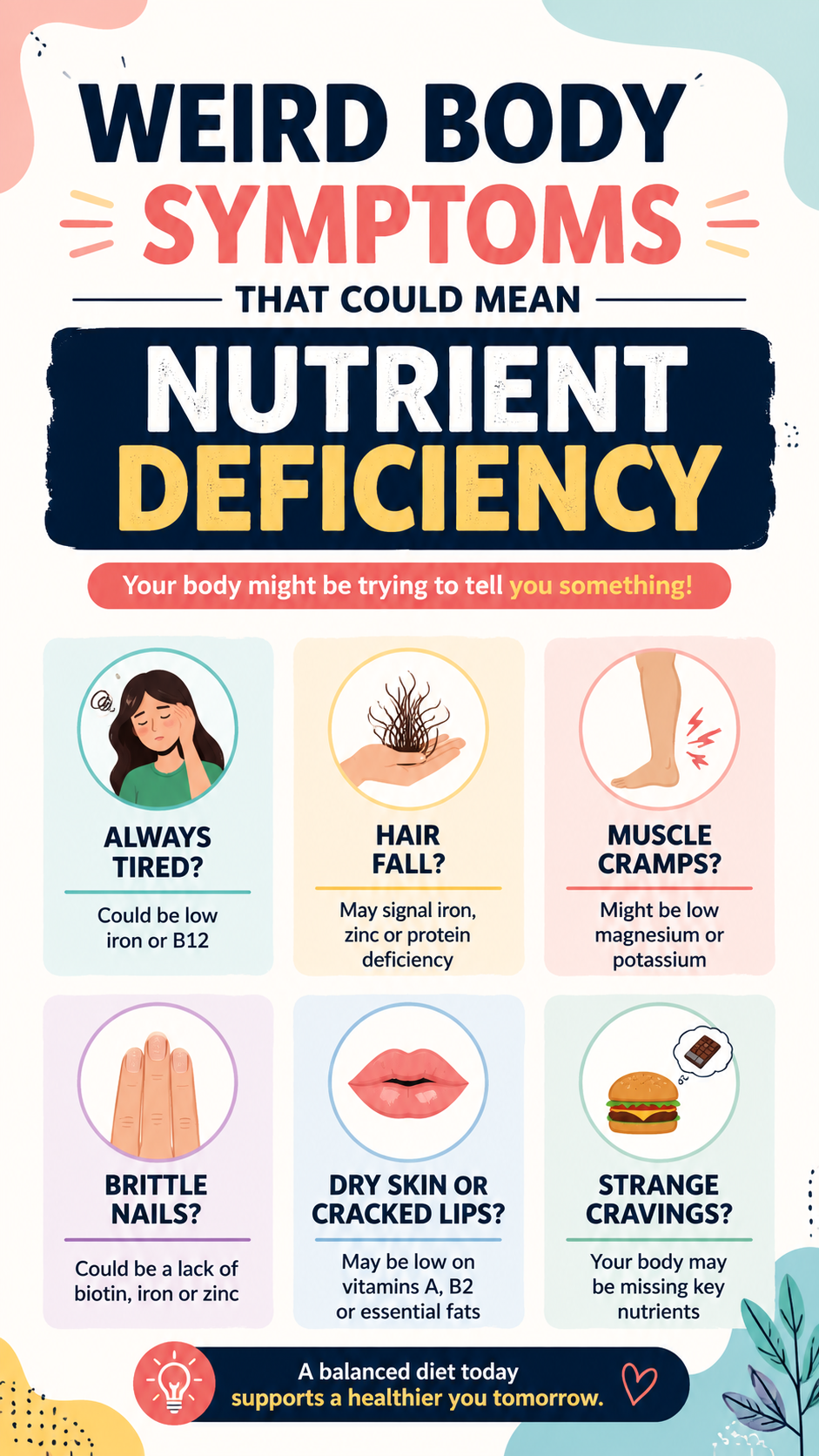
Have you ever noticed unusual body changes and wondered if they mean something more? Dry skin, brittle nails, muscle cramps, constant fatigue, or strange food cravings can sometimes be subtle clues that your body may not be getting enough essential nutrients. While many symptoms have different causes, learning to recognize potential warning signs can help you make informed choices about your health and overall well-being.
Key Takeaways
- Unusual symptoms may sometimes point to vitamin or mineral deficiencies.
- Fatigue, hair loss, and muscle cramps are common warning signs.
- A balanced diet supports long-term health and energy.
- Hydration and proper nutrition work together.
- Persistent symptoms should always be discussed with a healthcare professional.
Why Nutrients Matter More Than Most People Realize
Your body depends on vitamins, minerals, healthy fats, proteins, and carbohydrates to perform thousands of essential functions every day. Nutrients support energy production, brain health, immunity, muscle function, and even mood regulation.
When one or more nutrients are lacking, the body often sends signals. Sometimes these signs are obvious, while others can easily be mistaken for stress, lack of sleep, or aging.
Important: Many symptoms associated with nutrient deficiencies overlap with other health conditions. Persistent or severe symptoms deserve professional medical evaluation rather than self-diagnosis.
Common Weird Body Symptoms That May Signal Nutrient Deficiency
Constant Fatigue and Low Energy
Feeling exhausted despite getting enough sleep may indicate that your body is struggling to produce energy efficiently. Low levels of iron, vitamin B12, vitamin D, or magnesium are commonly associated with ongoing fatigue.
- Difficulty concentrating
- Feeling weak during routine activities
- Lack of motivation
- Brain fog throughout the day
Brittle Nails and Hair Changes
Your hair and nails often reflect your nutritional status. Weak nails or increased hair shedding may be linked to inadequate intake of iron, biotin, zinc, or protein.
Although occasional hair loss is normal, excessive thinning deserves attention.
Muscle Cramps and Twitching
Frequent cramps, especially at night, can be uncomfortable and frustrating. Electrolytes and minerals such as magnesium, potassium, calcium, and sodium help regulate muscle contractions.
When levels become imbalanced, muscles may react with spasms or twitching.
Dry Skin and Cracked Lips
Skin health depends on hydration and nutrition. Deficiencies in vitamin A, vitamin B complex, zinc, and healthy fats may contribute to dry or irritated skin.
Persistent cracks at the corners of the mouth are another symptom sometimes linked to vitamin deficiencies.
Unusual Food Cravings
Cravings can occur for many reasons, but unusual or intense cravings occasionally appear alongside nutritional imbalances.
- Ice cravings have been associated with iron deficiency in some cases.
- Salt cravings may accompany dehydration or mineral imbalance.
- Sweet cravings often relate to blood sugar fluctuations.
Signs Linked to Specific Nutrients
Iron Deficiency
Iron helps transport oxygen throughout the body. Low iron levels may contribute to:
- Fatigue
- Dizziness
- Pale skin
- Shortness of breath
- Cold hands and feet
Vitamin D Deficiency
Vitamin D supports bones, muscles, and immunity. Low levels are common and may be associated with:
- Frequent illness
- Bone discomfort
- Mood changes
- Low energy
Vitamin B12 Deficiency
Vitamin B12 plays an essential role in nerve health and red blood cell production.
- Numbness or tingling sensations
- Weakness
- Difficulty concentrating
- Memory problems
Magnesium Deficiency
Magnesium contributes to hundreds of bodily functions.
- Muscle cramps
- Poor sleep
- Anxiety
- Fatigue
- Headaches
Why This Matters
- Symptoms often develop gradually and may be easy to overlook.
- Small dietary improvements can support better energy and overall wellness.
- Recognizing early signs allows people to seek proper guidance sooner.
Lifestyle Habits That Influence Nutrient Levels
Nutrition is not the only factor affecting vitamin and mineral status. Several lifestyle habits can influence absorption and nutrient needs.
Poor Sleep Quality
Chronic sleep deprivation can affect hormones and appetite, leading to unhealthy food choices and nutrient imbalances over time.
Stress
Long-term stress influences digestion and may increase nutritional requirements. Managing stress through exercise, relaxation techniques, and healthy routines can support overall wellness.
Restrictive Diets
Eliminating major food groups without careful planning can increase the risk of deficiencies. Balanced eating patterns provide a wider range of nutrients.
Pro Tip: Variety matters. Consuming colorful fruits, vegetables, whole grains, healthy fats, and lean proteins helps provide the broad spectrum of nutrients your body needs.
Foods That Naturally Support Nutrient Intake
Iron-Rich Foods
- Lean meat
- Beans
- Lentils
- Spinach
- Pumpkin seeds
Magnesium Sources
- Almonds
- Cashews
- Dark leafy greens
- Avocados
- Whole grains
Vitamin D Sources
- Fatty fish
- Egg yolks
- Fortified dairy products
- Safe sun exposure
Vitamin B12 Sources
- Fish
- Eggs
- Milk
- Poultry
- Fortified foods
When Should You See a Healthcare Professional?
Occasional symptoms are common, but recurring issues should not be ignored. Professional evaluation can help determine whether symptoms are caused by nutrient deficiencies or another underlying condition.
Medical testing may identify deficiencies and help create an appropriate treatment plan.
Important: Supplements are not always harmless. Taking large amounts of vitamins or minerals without guidance may create imbalances or interact with medications.
Simple Ways to Support Better Nutrition
Eat Balanced Meals
Include protein, healthy fats, fiber, and colorful vegetables in your daily meals.
Stay Hydrated
Water supports digestion, circulation, and countless body functions.
Limit Highly Processed Foods
Whole foods generally provide more nutrients and help support steady energy.
Prioritize Sleep and Exercise
Healthy lifestyle habits complement proper nutrition and contribute to long-term wellness.
At a Glance
- Fatigue and muscle cramps may be linked to nutrient imbalances.
- Hair, skin, and nails often reflect nutritional health.
- Balanced eating helps support energy and immunity.
- Persistent symptoms deserve medical evaluation.
- Whole foods and healthy habits support long-term wellness.
Conclusion
Strange body symptoms are not always random. Sometimes they can serve as subtle messages that your body needs additional support. Paying attention to signs like fatigue, brittle nails, muscle cramps, dry skin, or unusual cravings can help you make healthier choices and seek appropriate guidance when necessary.
Good nutrition is not about perfection. Small, consistent habits, balanced meals, and paying attention to your body’s signals can make a meaningful difference in how you feel each day. Taking action early may help support energy, wellness, and long-term health.
Tags
Nutrient Deficiency Vitamin Deficiency Healthy Living Body Symptoms Wellness Tips Nutrition Tips Health Awareness