
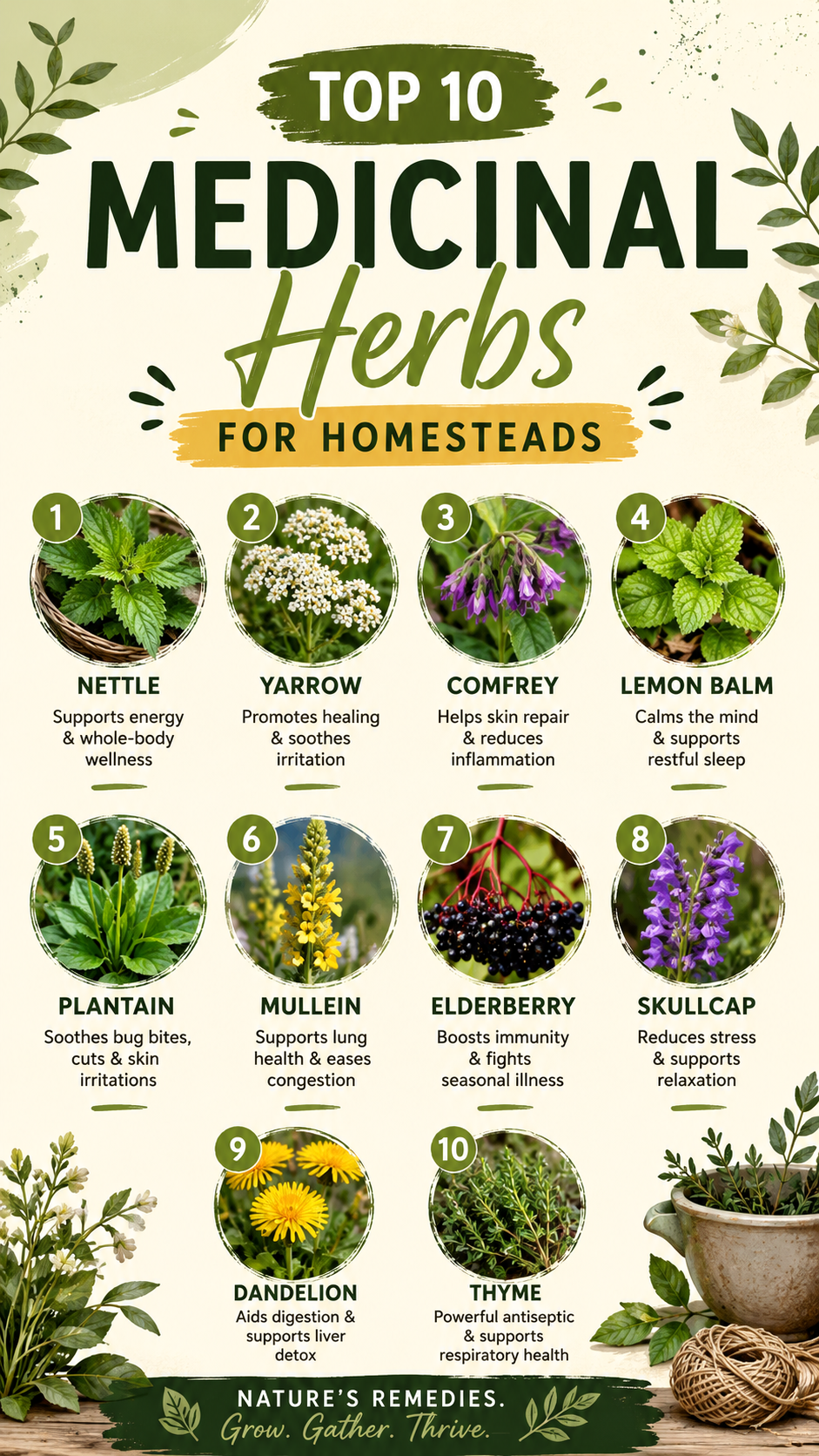
Medicinal herbs have been valued for generations by gardeners, homesteaders, and natural living enthusiasts. A well-planned herb garden can provide culinary ingredients, attract pollinators, and offer access to plants that have traditionally been used to support everyday wellness. From leafy greens rich in nutrients to fragrant herbs known for their versatility, growing medicinal herbs at home is one of the most rewarding ways to create a productive and sustainable garden.
Whether you have a sprawling homestead or a small backyard garden, certain herbs stand out for their ease of cultivation and wide range of practical uses. Many of these plants thrive in diverse climates, require minimal maintenance, and can be harvested throughout the growing season. Learning about these herbs is an excellent first step toward building a thriving herbal garden that combines beauty, functionality, and self-sufficiency.
Key Takeaways
- Medicinal herbs can provide beauty, biodiversity, and practical value in the garden.
- Many popular herbs are easy to grow and suitable for beginners.
- A diverse herb garden supports pollinators and beneficial insects.
- Harvesting and preserving herbs extends their usefulness throughout the year.
- Growing herbs at home encourages greater self-sufficiency and sustainability.
Why Medicinal Herbs Are Popular Among Homesteaders
Homesteading is often centered around producing more resources at home while reducing reliance on outside sources. Medicinal herbs fit perfectly into this lifestyle because they can be grown in relatively small spaces while offering a variety of uses.
Beyond their practical value, medicinal herbs add texture, fragrance, and visual interest to the landscape. Many produce beautiful flowers that attract bees, butterflies, and other beneficial pollinators. Others serve as companion plants that help improve the overall health of a garden ecosystem.
Important: Growing medicinal herbs does not require extensive gardening experience. Many of the most useful varieties are hardy, adaptable, and forgiving, making them excellent choices for beginner gardeners.
Stinging Nettle: A Nutrient-Rich Garden Ally
Stinging nettle is often overlooked because of its sting, but it has long been appreciated as a highly nutritious plant. Rich in vitamins and minerals, nettle has earned a place in many herbal gardens.
When properly handled and prepared, nettle leaves can be dried for tea, incorporated into compost, or used in homemade garden fertilizers. The plant grows vigorously and can become a valuable addition to a productive homestead.
Growing Tips
- Prefers moist, fertile soil.
- Tolerates partial shade.
- Harvest young leaves for the best quality.
- Wear gloves during handling.
Yarrow: A Classic Cottage Garden Favorite
Yarrow is known for its delicate clusters of flowers and feathery foliage. It is a favorite among gardeners because it is drought tolerant, attractive to pollinators, and easy to maintain.
Its flowers add beauty to garden beds while supporting beneficial insects that help maintain ecological balance. Yarrow is often included in herbal gardens due to its long history of traditional use.
Why Gardeners Love Yarrow
- Produces long-lasting blooms.
- Attracts pollinators.
- Tolerates poor soil conditions.
- Requires minimal maintenance.
Comfrey: A Powerhouse for Soil and Garden Health
Comfrey is widely recognized among homesteaders for its impressive growth and deep root system. It accumulates nutrients from deeper soil layers and is often used in composting systems and homemade plant feeds.
The large leaves can be harvested multiple times throughout the season, making comfrey one of the most productive plants in a homestead garden.
Pro Tip: Plant comfrey in a permanent location. Its deep roots make it difficult to relocate once established, but it can provide years of abundant growth and organic garden material.
Expert Insight
Many experienced homesteaders value herbs not only for their traditional uses but also for their contribution to soil fertility, pollinator support, and biodiversity. A diverse herb garden often becomes one of the most productive areas of the property.
Lemon Balm: Fragrance and Garden Charm
Lemon balm is a cheerful herb known for its refreshing citrus scent and vigorous growth. It belongs to the mint family and can quickly become a favorite in both ornamental and functional gardens.
The bright green foliage adds visual appeal while attracting beneficial pollinators. Many gardeners enjoy harvesting leaves throughout the growing season.
Best Growing Conditions
- Partial sun to full sun.
- Well-draining soil.
- Regular harvesting encourages new growth.
- Suitable for containers and raised beds.
Plantain: A Resilient and Useful Herb
Plantain is commonly found growing in lawns, fields, and garden edges. Despite often being considered a weed, it has earned respect among herbal gardeners for its hardiness and versatility.
Its broad leaves and adaptability make it easy to cultivate. Plantain thrives in many environments and requires very little care once established.
Mullein: Tall, Striking, and Beneficial
Mullein is one of the most recognizable medicinal herbs thanks to its towering flower spikes and soft, velvety leaves. The plant creates a dramatic focal point in cottage gardens and homestead landscapes.
Its impressive height helps attract pollinators while adding vertical structure to planting areas. Mullein is often appreciated as much for its ornamental value as its traditional herbal uses.
Garden Benefits
- Produces striking flower spikes.
- Attracts beneficial insects.
- Thrives in poor soils.
- Requires little maintenance.
Elderberry: A Productive Homestead Favorite
Elderberry shrubs are valued for their beautiful flowers and dark berries. They can serve as both ornamental landscape plants and productive edible crops.
The clusters of blossoms attract pollinators while the berries provide seasonal harvest opportunities. Elderberry shrubs can become an attractive and useful part of a larger food-producing landscape.
Important: Elderberry shrubs combine beauty and productivity, making them one of the most versatile plants for gardeners interested in edible landscaping and homestead resilience.
Skullcap: Beauty in Bloom
Skullcap is admired for its delicate purple flowers and compact growth habit. It brings color and pollinator activity to herb gardens while blending beautifully with other medicinal and ornamental plants.
The attractive blooms make skullcap an excellent addition to cottage-style plantings and pollinator gardens.
Dandelion: More Than a Common Weed
Dandelions are among the most recognizable plants in the world. While often removed from lawns, they are increasingly appreciated by gardeners interested in natural living and sustainable gardening.
Nearly every part of the plant has been traditionally utilized. Its bright yellow flowers also provide an early food source for pollinators emerging in spring.
Reasons to Keep Dandelions
- Supports pollinators.
- Produces edible leaves and flowers.
- Develops deep roots that help break compacted soil.
- Requires virtually no maintenance.
Thyme: Small Herb, Big Value
Thyme is a compact herb that delivers impressive versatility. It serves as a culinary herb, ground cover, pollinator plant, and traditional medicinal herb all at once.
Its drought tolerance and compact growth make it ideal for borders, pathways, containers, and herb spirals. Thyme is one of the easiest herbs to incorporate into almost any garden design.
Growing Thyme Successfully
- Provide full sun.
- Use well-draining soil.
- Avoid excessive watering.
- Prune lightly to encourage bushy growth.
Creating a Thriving Medicinal Herb Garden
Building a medicinal herb garden starts with thoughtful planning. Choose herbs that suit your climate, available space, and gardening goals. Combining perennial and annual herbs helps create year-round interest and productivity.
Consider grouping herbs according to their water and sunlight requirements. This approach simplifies maintenance and promotes healthier growth. Raised beds, containers, and dedicated herb borders can all work exceptionally well.
Essential Garden Planning Tips
- Start with a few easy-to-grow herbs.
- Choose a sunny location whenever possible.
- Improve soil quality with compost.
- Provide adequate spacing.
- Harvest regularly to encourage growth.
Harvesting and Preserving Herbs
One of the greatest advantages of growing medicinal herbs is the ability to harvest and preserve them for future use. Drying remains one of the simplest and most effective preservation methods.
Many gardeners hang herbs in small bundles or use drying racks in well-ventilated spaces. Proper storage helps maintain aroma, flavor, and quality throughout the year.
Additional preservation methods include freezing, creating infused oils, and preparing herbal blends. These techniques help maximize the value of every harvest.
At a Glance
- Nettle offers impressive nutritional value.
- Yarrow attracts pollinators and thrives in tough conditions.
- Comfrey supports composting and soil health.
- Elderberry combines ornamental beauty with productivity.
- Thyme delivers culinary and garden benefits in a compact package.
Conclusion
Medicinal herbs bring together beauty, functionality, and self-sufficiency in a way few garden plants can match. Whether you are growing nettle, yarrow, comfrey, lemon balm, plantain, mullein, elderberry, skullcap, dandelion, or thyme, each herb contributes something valuable to the landscape.
By cultivating a diverse collection of medicinal herbs, gardeners can create a more productive and resilient outdoor space while supporting pollinators, improving biodiversity, and enjoying the satisfaction of growing useful plants at home. With thoughtful planning and consistent care, an herb garden can become one of the most rewarding features of any homestead or backyard garden.
Tags
Medicinal Herbs Homesteading Herbal Gardening Natural Living Cottage Garden Sustainable Gardening Pollinator Garden Herb Garden