
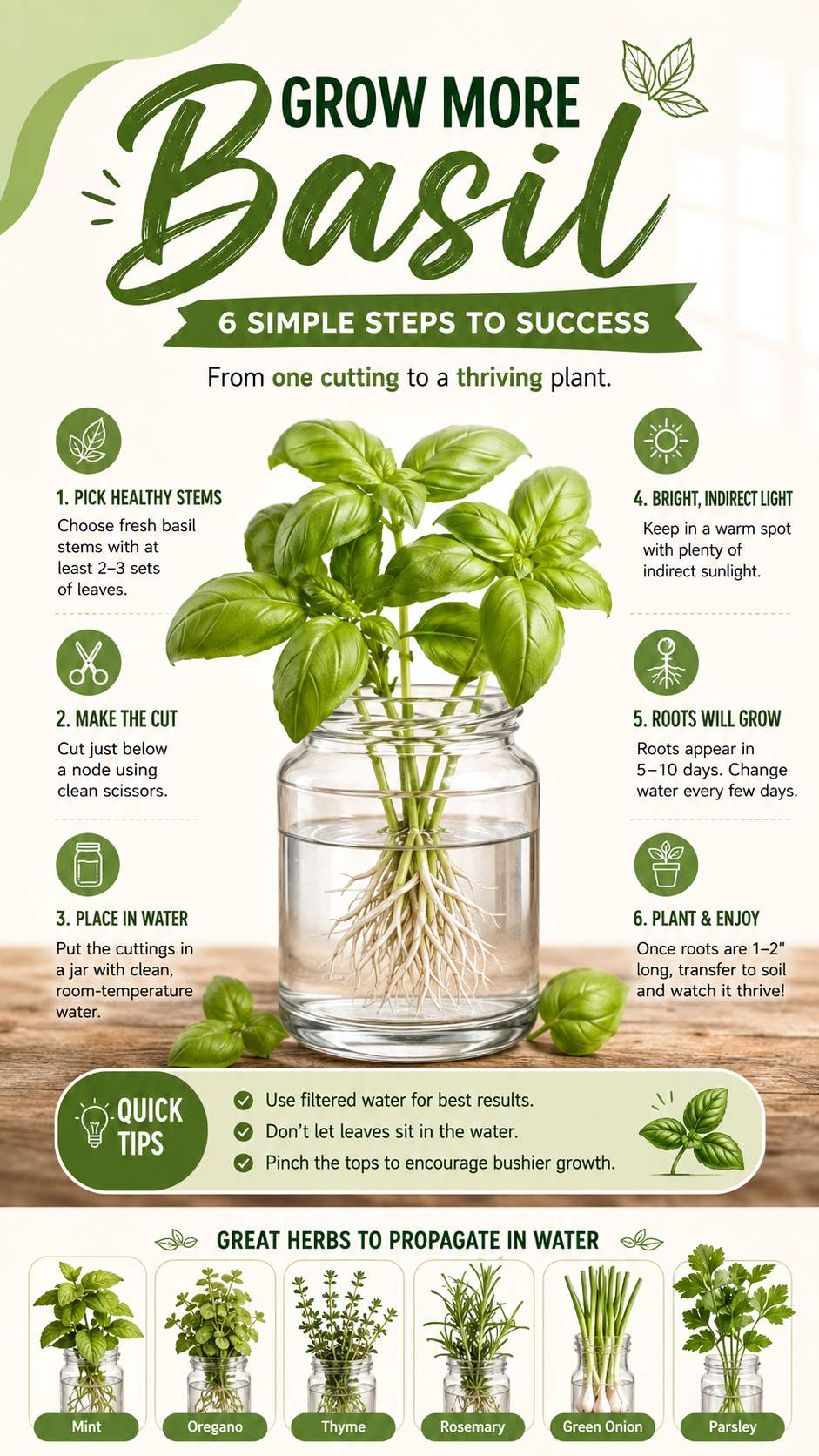
Fresh basil is one of the most rewarding herbs to grow at home. Its fragrant leaves elevate everything from pasta and salads to homemade pesto and infused oils. Yet many gardeners overlook one of the easiest ways to multiply their basil plants without spending extra money. Water propagation allows you to turn a single healthy stem into a thriving new plant with very little effort.
Whether you are a beginner gardener, an indoor plant enthusiast, or someone looking to expand a kitchen herb garden, learning how to propagate basil in water is a simple skill that delivers impressive results. With the right technique, healthy roots can develop quickly, allowing you to create a continuous supply of fresh basil throughout the growing season.
Key Takeaways
- Basil is one of the easiest culinary herbs to propagate in water.
- Healthy stem cuttings can develop roots within days under proper conditions.
- Clean water and regular maintenance help prevent rot and disease.
- Rooted cuttings can be transplanted into soil for long-term growth.
- Water propagation is inexpensive and ideal for beginners.
- Several other herbs can also be propagated using the same method.
Why Basil Propagation Is So Popular
Basil has earned a special place in home gardens because of its rapid growth, flavorful leaves, and versatility in cooking. Unlike many plants that require specialized equipment or advanced techniques for propagation, basil roots readily from stem cuttings placed in water.
This accessibility makes it an excellent choice for gardeners who want quick success. A healthy basil cutting can often begin producing roots within a relatively short period, giving growers visible progress and motivation to continue experimenting with plant propagation.
Important: Propagation allows gardeners to preserve healthy, productive basil plants while creating multiple new plants from a single parent. This can significantly increase herb production without additional seed purchases.
Understanding the Structure of a Basil Plant
Successful propagation starts with understanding the plant itself. Basil belongs to the mint family and shares several characteristics common among herbs in this group.
Leaves and Growth Pattern
Basil typically produces pairs of opposite leaves along upright stems. These nodes, where leaves emerge from the stem, play a crucial role in propagation because roots commonly develop from these points.
The plant naturally branches as it grows, producing multiple stems that can later become ideal propagation material.
Stem Characteristics
Healthy basil stems are firm, green, and flexible. Young stems generally root faster than older, woody growth. Selecting vigorous stems increases the likelihood of successful propagation and strong root development.
Root Development
When basil cuttings are placed in water, adventitious roots emerge from stem nodes. These roots are specifically formed in response to propagation conditions and are capable of supporting a fully developed plant once transferred to soil.
Step-by-Step Guide to Propagating Basil in Water
The process is remarkably straightforward, making it ideal for gardeners of all experience levels.
Step 1: Select Healthy Stems
Choose stems from a vigorous basil plant that shows no signs of disease, yellowing leaves, or pest damage. Healthy stems provide the energy reserves needed for root formation.
- Look for bright green growth.
- Select stems with multiple leaf nodes.
- Avoid flowering stems whenever possible.
Step 2: Make a Clean Cut
Using sanitized scissors or pruning shears, cut just below a node. This location is important because roots are most likely to emerge from these growth points.
Remove lower leaves that would otherwise sit beneath the water surface.
Step 3: Place Cuttings in Water
Fill a clean glass jar with fresh water and insert the cuttings. Ensure the nodes remain submerged while leaves stay above the waterline.
Clear containers make it easy to monitor root development and water quality.
Step 4: Provide Proper Lighting
Position the container in a bright location that receives indirect sunlight. Too much direct sunlight may overheat the water and stress the cuttings.
A sunny windowsill with filtered light often works well.
Step 5: Refresh the Water Regularly
Clean water is essential. Replace the water every few days to maintain oxygen levels and reduce the risk of bacterial growth.
This simple maintenance step dramatically improves rooting success.
Step 6: Monitor Root Growth
Over time, white roots begin emerging from submerged nodes. Allow roots to become established before transplanting into soil.
The stronger the root system becomes, the smoother the transition to a pot or garden bed will be.
Expert Insight
Healthy roots are typically white and firm. If roots appear dark, slimy, or have an unpleasant odor, refresh the water immediately and remove any affected plant material.
Common Mistakes That Prevent Successful Rooting
Even though basil propagation is easy, several mistakes can reduce success rates.
Leaving Leaves Underwater
Submerged leaves decompose quickly and contaminate the water. Always remove foliage below the waterline.
Using Dirty Containers
Bacteria and fungal spores can accumulate inside containers. Thorough cleaning before use helps maintain a healthier rooting environment.
Ignoring Water Changes
Stagnant water often becomes cloudy and oxygen-poor. Regular replacement supports healthy root growth and prevents disease issues.
Insufficient Light
While basil cuttings should avoid harsh direct sunlight, they still require bright conditions. Weak lighting can slow root development and weaken new growth.
Pro Tip: Place propagated basil near a bright east-facing window for an excellent balance of sunlight and temperature. Consistent light encourages stronger roots and healthier foliage.
Transplanting Rooted Basil Into Soil
Once roots have developed sufficiently, the next step is transplanting.
Choose a container with drainage holes and fill it with a quality potting mix. Create a small planting hole and gently place the rooted cutting inside.
Water thoroughly after planting and keep the soil consistently moist during the adjustment period.
For the first week, avoid exposing newly transplanted basil to intense sunlight. Gradual acclimation helps reduce transplant stress.
Growing a Productive Indoor Basil Garden
Water propagation can become the foundation of a highly productive indoor herb garden. By continuously taking healthy cuttings from mature plants, gardeners can maintain a nearly endless supply of fresh basil.
Indoor growing offers several benefits:
- Year-round access to fresh herbs.
- Reduced grocery expenses.
- Greater control over growing conditions.
- Convenient harvesting directly from the kitchen.
Combining regular pruning with propagation creates fuller, bushier plants while generating new specimens for additional pots.
Other Herbs That Thrive Through Water Propagation
Basil is not the only herb that responds well to this technique. Many culinary herbs can root successfully in water, making propagation an excellent strategy for expanding a herb collection.
Mint
Mint is famous for its vigorous growth and roots readily from stem cuttings.
Oregano
Oregano develops roots effectively when healthy stems are placed in fresh water.
Rosemary
Although slower than basil, rosemary can also produce roots through water propagation under favorable conditions.
Green Onions
Green onions are among the easiest plants to regrow, often producing fresh growth rapidly from root bases placed in water.
Parsley and Similar Herbs
Several leafy herbs respond positively to propagation methods, helping gardeners maximize productivity from existing plants.
Benefits of Propagating Herbs at Home
Beyond saving money, propagation offers numerous practical advantages.
- Creates backup plants in case of disease or damage.
- Allows sharing plants with friends and family.
- Supports sustainable gardening practices.
- Increases harvest potential.
- Provides a rewarding educational experience.
Important: Regular harvesting and propagation work together. Frequent trimming encourages basil to branch more aggressively, resulting in fuller plants and larger harvests over time.
At a Glance
- Select healthy basil stems with multiple nodes.
- Keep leaves above the water surface.
- Change water regularly for healthy roots.
- Provide bright indirect sunlight.
- Transplant rooted cuttings into quality potting soil.
Conclusion
Basil water propagation is one of the simplest and most satisfying gardening techniques available. With nothing more than a healthy stem, clean water, and a bit of patience, gardeners can produce thriving new plants that provide fresh herbs for months to come.
By understanding how basil grows, maintaining clean propagation conditions, and transplanting rooted cuttings carefully, even beginners can achieve excellent results. Whether your goal is a larger kitchen garden, a greener indoor space, or a continuous harvest of aromatic leaves, water propagation offers an easy path toward healthier, more productive basil plants.
Tags
Basil Propagation Herb Gardening Indoor Gardening Kitchen Herbs Water Propagation Grow Basil Organic Gardening Home Garden