
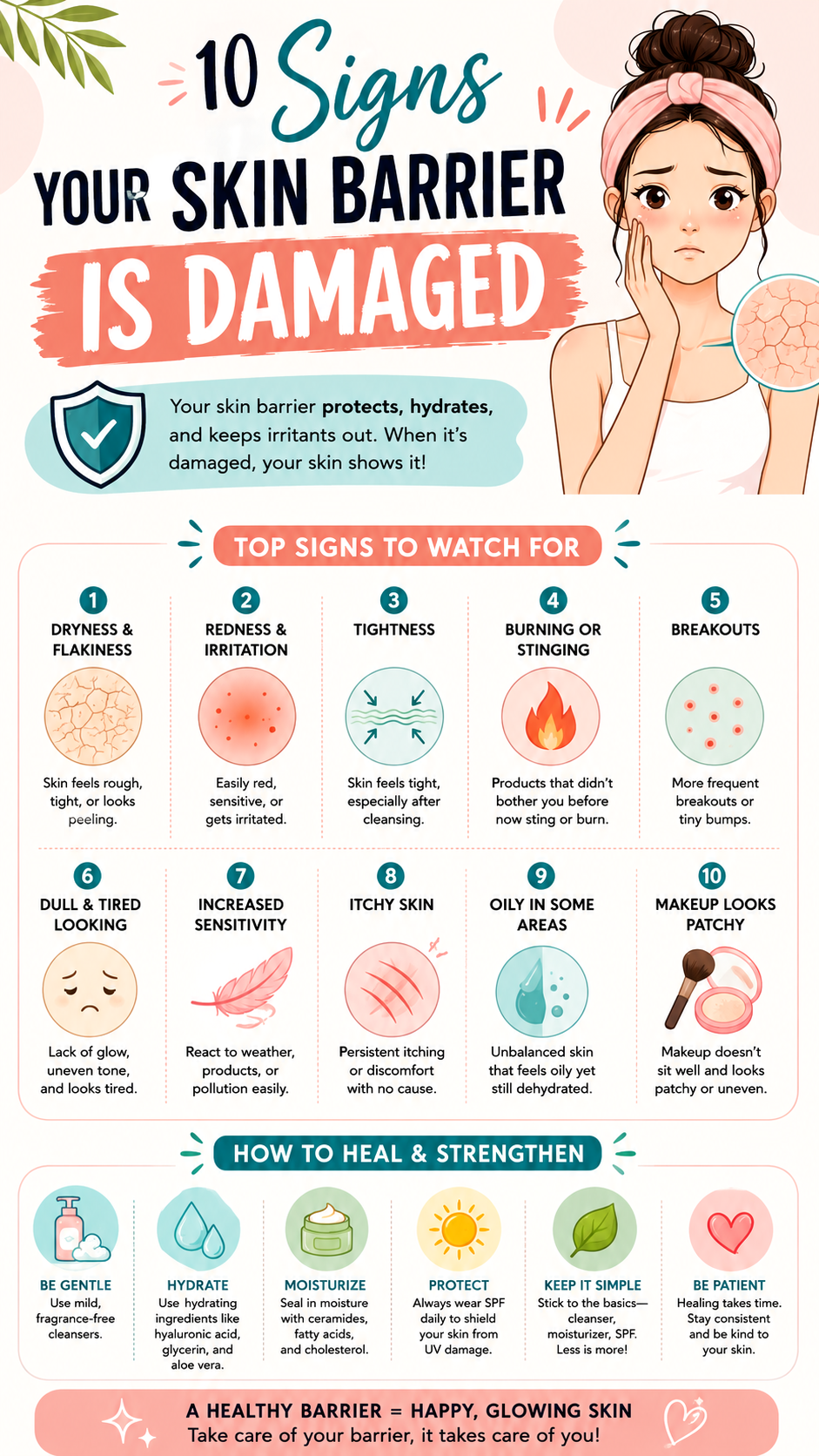
Healthy, glowing skin starts with a strong skin barrier. Yet many people struggle with dryness, redness, irritation, breakouts, and sensitivity without realizing that the root cause may be a damaged skin barrier. When this protective layer becomes compromised, skin can no longer defend itself effectively against environmental stressors, moisture loss, and irritants.
The good news is that skin barrier damage is often reversible with the right care and a consistent routine. Understanding the signs, causes, and healing strategies can help you restore balance and achieve healthier-looking skin over time.
Key Takeaways
- A damaged skin barrier often causes dryness, redness, irritation, and sensitivity.
- Over-cleansing and excessive exfoliation are common contributors.
- Hydration and moisturizing ingredients support recovery.
- Daily sun protection helps prevent further barrier damage.
- A simplified skincare routine is often more effective during healing.
- Consistency and patience are essential for long-term results.
What Is the Skin Barrier?
The skin barrier, often called the moisture barrier, is the outermost layer of the skin. It acts like a protective shield between your body and the outside world. This layer helps lock in moisture while keeping harmful irritants, bacteria, pollution, and allergens out.
Think of it as a brick wall. Skin cells are the bricks, while natural lipids such as ceramides, cholesterol, and fatty acids act as the mortar holding everything together. When the structure remains intact, skin feels comfortable, hydrated, and resilient.
When the barrier becomes damaged, tiny gaps can form within this protective layer. Moisture escapes more easily, and irritants can penetrate deeper into the skin. The result is often a cycle of dryness, inflammation, and sensitivity.
10 Common Signs Your Skin Barrier Is Damaged
Recognizing the early warning signs can help you adjust your skincare routine before the damage becomes more severe.
1. Dryness and Flakiness
One of the most noticeable symptoms is skin that feels rough, tight, or visibly flaky. Even frequent moisturizing may seem less effective because moisture escapes more quickly through a weakened barrier.
2. Redness and Irritation
Damaged skin often reacts more intensely to products, weather changes, and environmental triggers. Red patches and irritation can become increasingly common.
3. Persistent Tightness
If your skin feels tight after cleansing or throughout the day, it may be struggling to retain adequate hydration.
4. Burning or Stinging Sensations
Products that once felt comfortable may suddenly sting or burn. This increased reactivity often signals a compromised protective barrier.
5. Frequent Breakouts
A damaged barrier can contribute to inflammation and imbalance, making skin more susceptible to clogged pores and breakouts.
6. Dull, Tired Appearance
When skin lacks adequate hydration and protection, it can lose its natural radiance and appear uneven or fatigued.
7. Increased Sensitivity
People with a damaged barrier often notice stronger reactions to products, fragrances, pollution, and even temperature changes.
8. Itchy Skin
Persistent itching without an obvious cause can indicate moisture loss and irritation associated with barrier dysfunction.
9. Oily Yet Dehydrated Skin
Some people experience oily skin alongside dryness. When moisture levels drop, the skin may produce more oil in an attempt to compensate.
10. Patchy Makeup Application
Foundation and concealer may cling to dry patches or settle unevenly when the skin’s surface is compromised.
What Causes Skin Barrier Damage?
Several lifestyle and skincare habits can weaken the skin’s natural defenses.
- Over-cleansing: Washing too frequently can strip away protective oils.
- Harsh cleansers: Strong surfactants may disrupt the skin’s natural balance.
- Over-exfoliation: Excessive use of acids, scrubs, or exfoliating treatments can damage the barrier.
- Sun exposure: UV radiation contributes to inflammation and barrier breakdown.
- Environmental stress: Pollution, wind, and low humidity can weaken skin resilience.
- Too many active ingredients: Combining strong skincare products may overwhelm sensitive skin.
- Stress and poor sleep: Internal stress can affect skin health and recovery.
Why This Matters
- A healthy skin barrier improves hydration retention.
- Strong barrier function can reduce sensitivity and irritation.
- Balanced skin often appears smoother, brighter, and healthier.
How to Heal a Damaged Skin Barrier
Recovery requires a gentle and consistent approach. Instead of adding more products, focus on supporting your skin’s natural repair process.
Use a Gentle Cleanser
Switch to a mild, fragrance-free cleanser that removes dirt without stripping the skin. Avoid harsh foaming cleansers if they leave your face feeling tight.
Prioritize Hydration
Hydrating ingredients help replenish moisture levels and improve skin comfort. Look for ingredients such as hyaluronic acid, glycerin, and aloe vera.
Choose a Barrier-Supporting Moisturizer
Moisturizers containing ceramides, cholesterol, and fatty acids help reinforce the skin’s natural structure. These ingredients work together to support repair and strengthen the barrier over time.
Wear Sunscreen Daily
UV exposure can worsen inflammation and delay healing. Daily sunscreen use helps protect recovering skin and prevent additional damage.
Reduce Active Ingredients Temporarily
If your skin feels irritated, consider reducing the use of strong exfoliants, retinoids, and potent acids until your barrier becomes more stable.
Keep Your Routine Simple
A basic routine often works best during recovery. Focus on cleansing, moisturizing, hydrating, and sun protection rather than introducing multiple new products.
Ingredients That Support Barrier Repair
Certain ingredients are widely recognized for their ability to support hydration and skin barrier recovery.
- Ceramides: Help replenish essential lipids.
- Glycerin: Draws moisture into the skin.
- Hyaluronic Acid: Supports hydration and plumpness.
- Fatty Acids: Help maintain barrier integrity.
- Cholesterol: Works alongside ceramides and fatty acids.
- Aloe Vera: Provides soothing hydration.
- Panthenol: Supports skin comfort and recovery.
Lifestyle Habits That Help Your Skin Recover
Skincare products are only part of the equation. Daily habits can significantly influence how well your skin repairs itself.
Stay Hydrated
Proper hydration supports overall skin function and helps maintain a healthy appearance.
Get Quality Sleep
Skin undergoes important repair processes during sleep. Consistent rest can support recovery and resilience.
Manage Stress Levels
Chronic stress may contribute to inflammation and worsen skin sensitivity. Relaxation techniques and regular exercise can be beneficial.
Avoid Excessive Heat
Very hot showers and prolonged heat exposure can strip natural oils and further stress the skin barrier.
How Long Does Skin Barrier Recovery Take?
Recovery timelines vary depending on the severity of the damage and individual skin characteristics. Mild cases may improve within a few weeks, while more significant damage can require longer periods of consistent care.
The most important factor is consistency. Gentle cleansing, regular moisturizing, hydration, and sun protection can gradually restore balance and strengthen the skin over time.
At a Glance
- Dryness, redness, and sensitivity are common warning signs.
- Over-cleansing and over-exfoliation are frequent causes.
- Hydration and barrier-supporting ingredients aid recovery.
- Daily SPF protects healing skin from further damage.
- Simple routines often deliver the best results.
Conclusion
A healthy skin barrier is the foundation of comfortable, resilient, and radiant skin. When this protective layer becomes compromised, symptoms such as dryness, irritation, breakouts, and sensitivity can quickly appear. Fortunately, recognizing the signs early and making thoughtful adjustments to your skincare routine can help support recovery.
By choosing gentle products, prioritizing hydration, protecting your skin from sun exposure, and keeping your routine simple, you can give your skin the environment it needs to heal. Over time, these consistent habits can restore balance and help your complexion look and feel its best.
Tags
Skin Barrier Barrier Repair Skincare Tips Sensitive Skin Healthy Skin Hydrated Skin Skin Barrier Damage Skincare Routine