
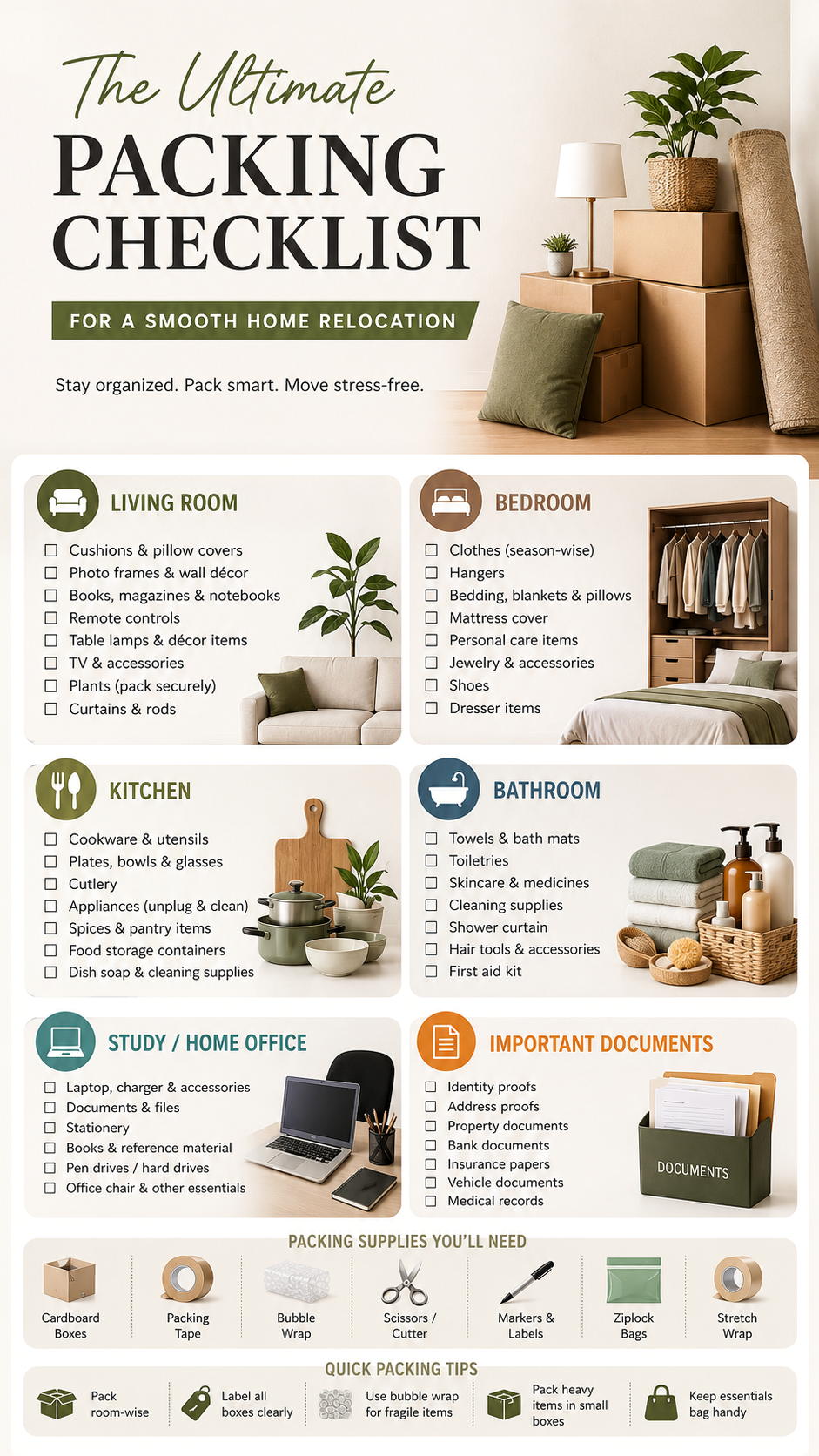
Moving to a new home is exciting, but the packing process can quickly become overwhelming without a clear plan. Whether you are relocating across town or preparing for a long-distance move, having a detailed packing checklist can make the entire experience smoother, more organized, and far less stressful. A room-by-room packing strategy helps ensure that important belongings are not forgotten while also reducing the chaos that often comes with moving day.
One of the biggest challenges people face during relocation is knowing where to start. By breaking the process into manageable categories such as the living room, bedroom, kitchen, bathroom, home office, and important documents, you can stay in control from the first packed box to the final unpacking task.
Key Takeaways
- Pack one room at a time to stay organized.
- Label every box clearly with its contents.
- Protect fragile items with proper packing materials.
- Keep important documents easily accessible.
- Prepare an essentials bag for moving day.
- Use a checklist to avoid forgetting important items.
Why a Packing Checklist Is Essential
A packing checklist acts as your roadmap throughout the relocation process. Instead of guessing what has already been packed or worrying about forgotten items, you can systematically work through each area of your home.
Checklists reduce stress because they transform a large project into smaller, achievable tasks. They also save time during unpacking since labeled and categorized boxes are easier to place in their designated rooms.
Important: The most successful moves are rarely the fastest. They are usually the most organized. Taking extra time to create and follow a detailed packing plan often prevents expensive mistakes, damaged belongings, and unnecessary frustration.
Living Room Packing Checklist
The living room often contains a surprising number of items that accumulate over time. Decorative pieces, electronics, books, and soft furnishings all require different packing methods.
Items to Pack
- Cushions and pillow covers
- Photo frames and wall décor
- Books, magazines, and notebooks
- Remote controls
- Table lamps and decorative accessories
- Television accessories and cables
- Indoor plants
- Curtains and curtain rods
Best Practices
Wrap fragile decorative items individually using bubble wrap. Place books in smaller boxes to prevent excessive weight. Keep electronics together and label cables so reassembly is simple in your new home.
Protecting Electronics
If possible, use original packaging for televisions, speakers, and gaming systems. If original boxes are unavailable, use sturdy cartons with extra cushioning to minimize movement during transport.
Bedroom Packing Checklist
The bedroom contains everyday essentials that need careful organization. Since you’ll likely want access to many of these items immediately after moving, prioritize them accordingly.
- Seasonal clothing
- Hangers
- Bedding, blankets, and pillows
- Mattress covers
- Personal care items
- Jewelry and accessories
- Shoes
- Dresser contents
Sort clothing before packing. Moving presents an excellent opportunity to donate items you no longer wear. This reduces clutter and minimizes the number of boxes required.
Pro Tip: Pack one suitcase with several days’ worth of clothing, toiletries, medications, chargers, and personal essentials. This “first-night bag” can make your transition significantly more comfortable.
Handling Jewelry and Valuables
Store jewelry in dedicated organizers or small containers. Valuable items should remain with you rather than being loaded onto a moving truck whenever possible.
Kitchen Packing Checklist
The kitchen is often one of the most challenging rooms to pack due to its mix of fragile, heavy, and oddly shaped items.
- Cookware and utensils
- Plates, bowls, and glasses
- Cutlery
- Small appliances
- Spices and pantry items
- Food storage containers
- Cleaning products
Packing Fragile Kitchenware
Wrap dishes individually and place padding between stacked plates. Glassware should be packed upright and surrounded by cushioning material.
Managing Pantry Items
Check expiration dates before packing. Dispose of expired products and donate unopened items you do not plan to use. This helps reduce moving weight and keeps your new kitchen organized from day one.
Why This Matters
- Proper kitchen packing reduces breakage risks.
- Sorting pantry items saves space and effort.
- Organized boxes make unpacking significantly faster.
Bathroom Packing Checklist
Bathrooms contain a variety of personal care products, medications, and cleaning supplies that require thoughtful packing.
- Towels and bath mats
- Toiletries
- Skincare products
- Medications
- Cleaning supplies
- Shower accessories
- Hair tools
- First aid kit
Seal liquid products in plastic bags to prevent leaks. Keep frequently used toiletries accessible until moving day. Medications should travel with you rather than being packed away in moving boxes.
Managing Cleaning Supplies
Review local transportation guidelines for household cleaning products. Avoid packing unnecessary or nearly empty containers and safely dispose of products that are no longer needed.
Study and Home Office Packing Checklist
With more people working remotely than ever before, the home office has become a critical area during relocation. Careful packing protects both productivity and valuable equipment.
- Laptop and chargers
- Documents and files
- Stationery
- Books and reference materials
- External drives
- Office essentials
Protecting Digital Equipment
Back up important files before moving. Store laptops, external drives, and sensitive electronics in padded containers. Keep essential work devices easily accessible if you need to resume work shortly after relocating.
Important: Losing access to critical documents or digital files during a move can cause unnecessary delays and stress. Always maintain backups and keep essential records within reach.
Organizing Important Documents
Some belongings are simply too important to be buried inside moving boxes. Important documents deserve their own dedicated folder or storage case.
- Identity documents
- Address verification records
- Property paperwork
- Banking documents
- Insurance records
- Vehicle documentation
- Medical records
Creating a Document Folder
Keep all critical paperwork together in a clearly labeled folder. Digital copies stored securely in cloud storage can provide an additional layer of protection.
Essential Packing Supplies You Should Have
Using the right materials is just as important as having a good checklist. Quality packing supplies help prevent damage and keep your belongings secure.
- Cardboard boxes
- Packing tape
- Bubble wrap
- Scissors or box cutters
- Markers and labels
- Ziplock bags
- Stretch wrap
Choosing the Right Box Sizes
Small boxes are ideal for books and heavy items. Medium boxes work well for general household goods, while large boxes should be reserved for lightweight belongings such as bedding and pillows.
Smart Packing Tips for a Stress-Free Move
Following a few proven strategies can dramatically improve your moving experience.
Pack Room by Room
Focus on completing one room before moving to the next. This prevents confusion and keeps progress visible.
Label Everything Clearly
Write both the room destination and a brief contents description on every box. This makes unloading and unpacking much easier.
Use Protective Materials
Bubble wrap, packing paper, and padding materials provide essential protection for fragile items during transport.
Avoid Overloading Boxes
Heavy boxes are difficult to move and more likely to fail during transport. Distribute weight evenly across multiple containers.
Keep Essentials Accessible
Prepare a dedicated bag containing chargers, medications, important documents, snacks, toiletries, and other immediate necessities.
Pro Tip: Take photos of electronic setups before disconnecting cables. These images can serve as valuable references when reconnecting equipment in your new home.
At a Glance
- Create a room-by-room packing plan.
- Gather supplies before packing begins.
- Protect fragile items carefully.
- Keep important documents separate.
- Label boxes clearly for faster unpacking.
Conclusion
Moving does not have to feel overwhelming. With a comprehensive room-by-room packing checklist, the right supplies, and a clear strategy, you can transform a stressful relocation into a manageable project. Organizing your belongings by category, protecting fragile items properly, and keeping important documents accessible are simple steps that make a significant difference.
The key to a successful move is preparation. Start early, stay organized, and follow a structured checklist throughout the process. By doing so, you’ll arrive at your new home ready to unpack, settle in, and enjoy the exciting next chapter ahead.
Tags
Moving Checklist Home Relocation Packing Tips Moving Day Home Organization Packing Supplies Stress Free Moving Relocation Guide