
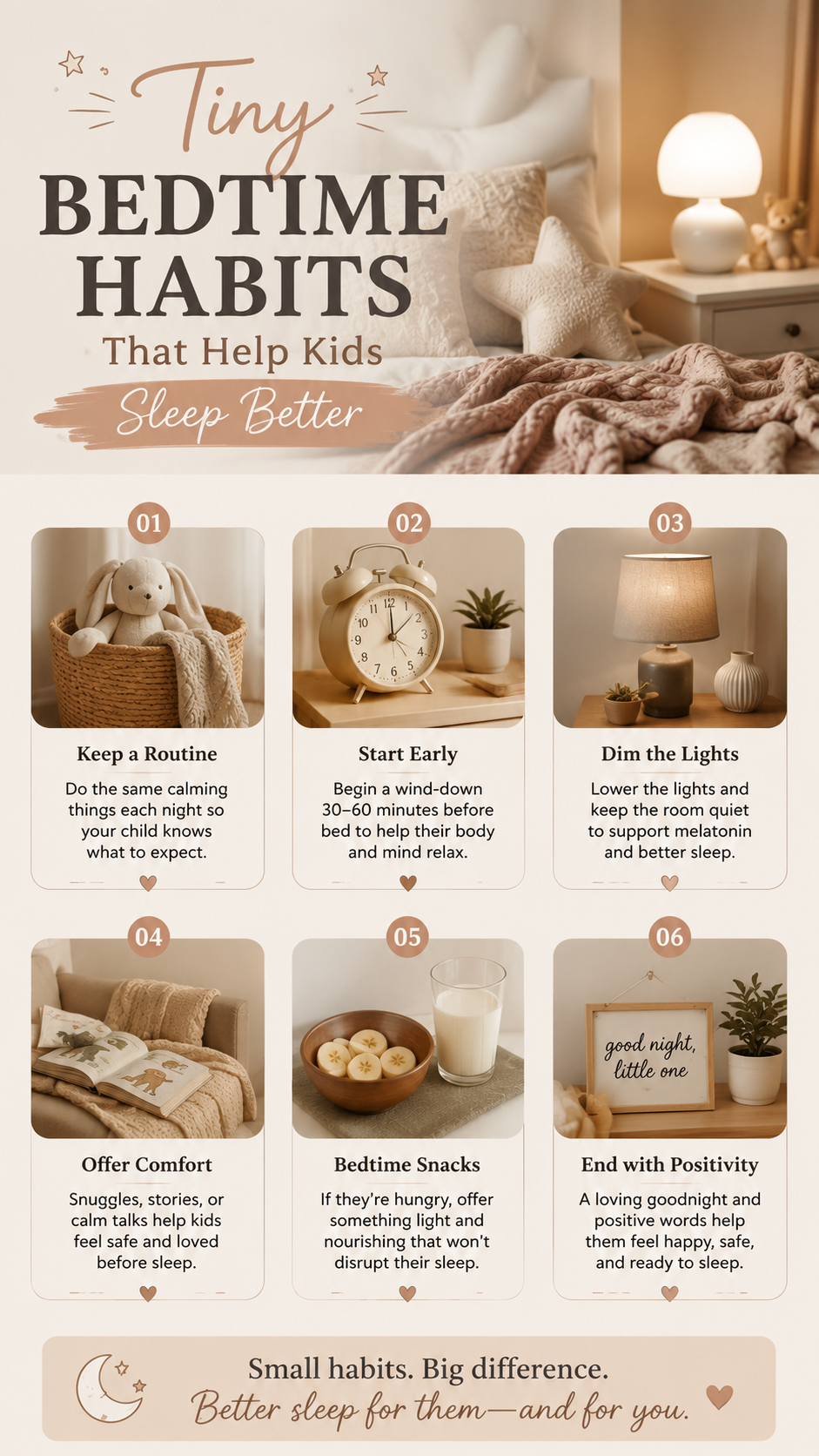
Establishing healthy bedtime habits for toddlers can feel like a daily challenge, but with a few simple strategies, you can create a calm and predictable nighttime routine that helps your little one sleep better and wake up happier. Sleep is crucial for toddlers’ growth, mood, and overall well-being, so taking small, intentional steps each night can make a big difference.
Key Takeaways
- Consistent routines signal safety and predictability to toddlers
- Wind-down activities help the mind and body relax before bed
- Dim lighting and low noise promote natural melatonin release
- Comfort, connection, and positivity boost emotional security
- Light, nourishing bedtime snacks prevent sleep disruptions
Why a Consistent Routine Matters
Children thrive on predictability. Keeping a consistent bedtime routine signals to your toddler that it’s time to slow down, preparing both their body and mind for sleep. This doesn’t mean rigid schedules, but rather a calm, repeated set of activities that are easy to anticipate. Activities might include brushing teeth, reading a short story, or singing a lullaby. Important: Consistency reduces anxiety and makes bedtime smoother for both children and parents.
Simple Steps for a Reliable Routine
- Start the same way each night: bath, pajamas, and quiet play.
- Keep activities gentle to avoid overstimulation.
- Maintain a predictable order of events to foster security.
Wind-Down Time 30–60 Minutes Before Bed
Transitioning from active play to quiet time is essential. Reducing screen exposure, turning off bright lights, and engaging in calm activities like reading a book, gentle stretches, or sipping warm milk can make a significant difference. Pro Tip: Short wind-down periods lower energy levels naturally, allowing toddlers to relax without resistance.
Creating a Calm Environment
Dim lights and minimize noise to signal your child’s body that bedtime is approaching. Soft music or white noise machines can be helpful, but avoid overstimulating sounds or bright visuals. Important: A calm environment encourages melatonin production and makes falling asleep easier.
Tips for a Sleep-Friendly Space
- Use soft lighting or nightlights with warm tones
- Keep the room temperature comfortable, not too hot or cold
- Introduce soft textures, like blankets and pillows, for comfort
Offer Comfort and Connection
Physical closeness and emotional connection are crucial for toddlers. Spending a few minutes cuddling, talking, or sharing a story can help your child feel safe and loved. These moments also strengthen parent-child bonding and create positive associations with bedtime.
Expert Insight
- Snuggles and storytelling help reduce bedtime anxiety
- Positive interaction before bed sets the tone for restful sleep
- Even short moments of connection make a measurable impact
Keep Bedtime Snacks Light
If your toddler needs a snack before bed, opt for something small and easy to digest, like banana slices or a small glass of milk. Heavy meals or sugary treats can disrupt sleep patterns and make falling asleep more difficult. Important: Light snacks support uninterrupted sleep while preventing hunger-related wake-ups.
End the Night with Positivity
Closing bedtime on a positive note leaves your child feeling safe, happy, and ready for sleep. A loving “goodnight” and affirming words can have a calming effect that lasts into the night. Encourage small rituals like saying something you’re thankful for or sharing a favorite moment from the day.
Positive Language Tips
- Use gentle, encouraging words
- Reinforce feelings of safety and love
- Create a small ritual to signal bedtime closure
Quick Points
- Consistent routines help children feel secure
- Wind-down activities calm the mind and body
- Soft lighting and quiet environment aid sleep
- Comfort, connection, and positivity support restful nights
- Light bedtime snacks prevent sleep interruptions
Conclusion
Helping your toddler sleep better is a combination of creating a calm environment, offering emotional support, and maintaining predictable routines. Each small habit contributes to better sleep, happier mornings, and a stronger parent-child connection. By implementing these strategies consistently, bedtime can become a peaceful and positive experience for both you and your child. Remember, small changes lead to big results, and every step you take toward a soothing bedtime routine makes a difference.
Tags
Toddler Sleep Bedtime Routine Parenting Tips Sleep Tips Toddler Health Positive Parenting Kids Sleep Tips