
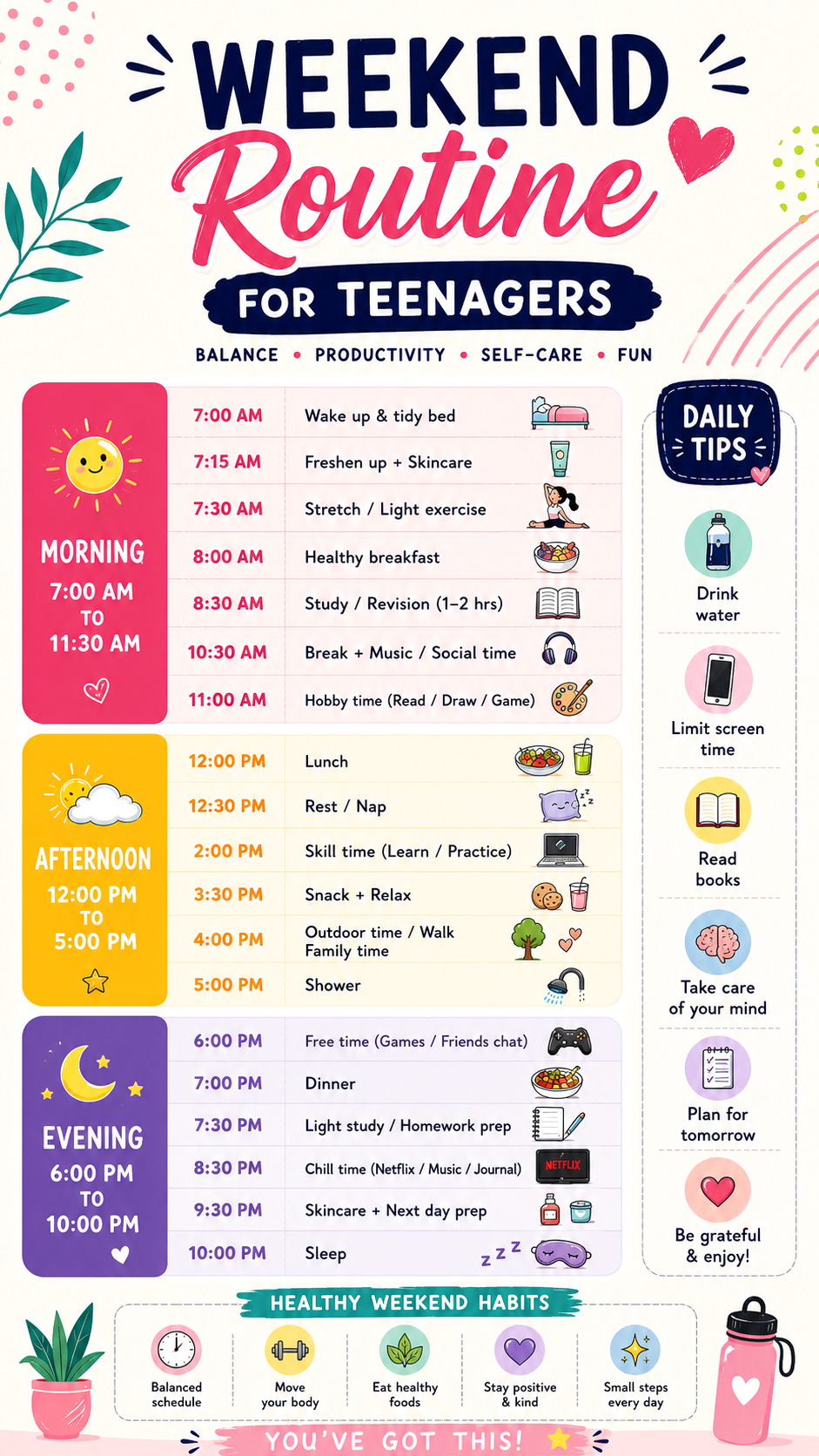
A weekend routine can completely change the way teenagers feel, study, rest, and enjoy their free time. Instead of letting Saturday and Sunday disappear into endless scrolling, late mornings, unfinished homework, and rushed Sunday-night stress, a simple weekend daily routine creates structure without taking away the fun. The best routine is not about being busy every minute. It is about finding a healthy balance between productivity, self-care, hobbies, family time, movement, and real relaxation.
The idea behind a weekend lifestyle timetable for teenagers is simple: divide the day into clear sections so each part of the weekend has a purpose. Morning can be used for fresh energy, light studying, skincare, breakfast, and hobbies. Afternoon can support rest, skill-building, outdoor time, and family connection. Evening can become a calming space for free time, dinner, light homework prep, journaling, skincare, and getting ready for sleep.
Key Takeaways
- A weekend routine helps teenagers balance study, rest, self-care, and fun.
- Morning habits set the tone for a more productive and positive day.
- Planned breaks make studying feel less overwhelming and more realistic.
- Evening routines support better sleep, organization, and emotional calm.
- A flexible timetable works better than a strict schedule that feels stressful.
- Small habits like drinking water, stretching, reading, and planning ahead can make weekends feel more meaningful.
Why Teenagers Benefit From a Weekend Daily Routine
Teenagers often have busy weekdays filled with school, assignments, activities, social pressure, screen time, and emotional ups and downs. By the time the weekend arrives, it is tempting to abandon all structure. While rest is important, a completely unplanned weekend can sometimes leave teens feeling more tired, behind, or unmotivated by Sunday evening.
A weekend daily routine gives the day a gentle rhythm. It helps teenagers know when to study, when to take breaks, when to enjoy hobbies, and when to slow down. This can reduce decision fatigue because there is no need to constantly wonder what to do next. A schedule also makes space for fun, which is important. Productivity should never mean removing joy from the weekend.
Important: A good teen weekend routine should feel supportive, not controlling. The goal is to create a balanced lifestyle where school responsibilities, personal care, hobbies, friendships, and rest can all fit into the same day.
Morning Routine: Start With Energy and Intention
The morning section of a weekend timetable is one of the most powerful parts of the day. A healthy morning routine does not need to begin extremely early, but it should start with a few habits that help the body and mind wake up. In the schedule shown, the morning begins at 7:00 AM and continues until 11:30 AM, with simple steps like waking up, tidying the bed, washing the face, brushing teeth, stretching, eating breakfast, studying, taking a break, and enjoying hobby time.
Wake Up and Tidy the Bed
Starting the day by making the bed may seem like a small task, but it creates an instant feeling of accomplishment. For teenagers, this tiny habit can help shift the mind from sleep mode into day mode. It also makes the room feel cleaner, calmer, and more inviting. A tidy environment can make studying and relaxing easier later in the day.
Waking up at a consistent time on weekends can also support better sleep patterns. Teenagers do need rest, and sleeping in occasionally is normal, but staying in bed for half the day can disrupt energy levels. A balanced approach is to wake up at a reasonable time while still allowing the weekend to feel slower than a school morning.
Skincare, Hygiene, and Freshening Up
A quick face wash, skincare routine, and brushing teeth help create a fresh start. For teens, self-care routines can also build confidence and consistency. This does not have to be complicated. A simple routine with cleansing, moisturizing, and sun protection during the day is enough for many people.
The key is to treat personal care as part of daily wellness, not as a chore. When a teenager starts the weekend by taking care of themselves, it can improve mood and make the rest of the day feel more organized.
Light Exercise, Stretching, or Dance
Movement in the morning helps wake up the body. The routine includes light exercise, stretching, or dance, which is a great teen-friendly option because it allows flexibility. Not every teenager enjoys intense workouts, and not every weekend needs a full fitness session. Stretching, dancing to a favorite playlist, doing a short walk, or following a quick beginner workout can all count.
Pro Tip: Keep morning movement short and enjoyable. A 10 to 20 minute routine is often easier to maintain than a long workout that feels intimidating. The best habit is the one a teenager can actually repeat.
Breakfast and Study Time: Build a Productive Foundation
Breakfast gives the morning structure and helps fuel the brain for study or revision. A weekend breakfast does not need to be fancy. The point is to pause, eat something nourishing, drink water, and prepare for the next part of the day. This is especially helpful before a study block because concentration is harder when energy is low.
The timetable includes study or revision for one to two hours. This is a realistic amount of weekend academic work for many teenagers because it provides progress without consuming the whole day. A focused study block can be used for homework, exam revision, reading notes, organizing school materials, or preparing for the upcoming week.
How to Make Weekend Study Less Stressful
Weekend studying works best when it is specific. Instead of writing a vague goal like “study,” teens can choose one or two clear tasks. For example, finish math homework, revise biology notes, read a chapter, prepare flashcards, or review vocabulary. Clear goals make it easier to start and easier to know when the task is complete.
- Use a timer for 25 to 45 minutes of focused work.
- Keep the phone away during the study block.
- Prepare notebooks, pens, water, and snacks before starting.
- Write down the top three tasks for the day.
- Take a short break after each focused session.
A teen weekend routine should not turn Saturday into another school day. The purpose of a study block is to create progress early so the rest of the day feels lighter.
Breaks, Music, Social Media, and Hobby Time
After focused study, the timetable includes a break with music, TikTok, or chill time. This is important because teenagers need mental rest. A planned break can make screen time feel more intentional rather than accidental. Instead of scrolling for hours and then feeling guilty, teens can enjoy a defined break and then move into another activity.
Hobby time is another strong part of the schedule. Drawing, reading, gaming, editing, dance practice, language learning, and creative projects all give teenagers a chance to build identity outside of school. Hobbies are not wasted time. They can support creativity, confidence, relaxation, and even future skills.
Why Hobbies Belong in a Weekend Routine
Teenagers are often told to focus on grades, but personal interests matter too. A weekend timetable that includes hobbies recognizes that a healthy lifestyle is not only about productivity. Creative and recreational time helps teens explore what they enjoy and gives them something to look forward to.
For a teen who loves drawing, hobby time might become a sketchbook session. For someone who enjoys gaming, it could be a limited gaming block after responsibilities are done. For someone who loves content creation or editing, this could be a chance to practice a skill in a relaxed way.
Why This Matters
A balanced weekend routine teaches teenagers that productivity and rest can exist together. When study time, hobbies, outdoor breaks, and self-care are all planned, the weekend feels less chaotic and more fulfilling.
Afternoon Routine: Rest, Skills, Food, and Fresh Air
The afternoon section of the routine starts around 12:00 PM and continues until 5:00 PM. This part of the day includes lunch, rest or a nap, skill time, a snack, outdoor time, family time, and a shower. It is a smart structure because afternoons can easily become a blur of scrolling, snacking, and unfinished plans if there is no rhythm.
Lunch and Rest
Lunch marks the transition from morning productivity into a slower afternoon. It is a natural pause point. Eating a proper meal and stepping away from schoolwork can help reset energy. After lunch, the schedule includes rest or a nap. This is a helpful reminder that rest is productive when the body genuinely needs it.
A short nap can be refreshing, but it is best not to let it become too long. For many people, a 20 to 30 minute rest is enough to recharge without making it harder to sleep at night. Teens can also use this time for quiet reading, listening to calm music, or simply lying down away from screens.
Skill Time for Personal Growth
Skill time is one of the most valuable parts of a teen weekend schedule. The routine suggests dance practice, language learning, editing, or other personal development activities. This is ideal because weekends give teenagers extra space to explore interests that may not fit into a regular school day.
Skill-building can be academic, creative, physical, or practical. A teenager might learn a new language, practice a sport, edit videos, bake, code, paint, write, learn photography, or improve an instrument. These activities can build confidence because progress becomes visible over time.
Important: Skill time does not need to be perfect or performance-based. It is most effective when it feels interesting and personally meaningful. Even 30 minutes each weekend can become a powerful habit over time.
Snack, Relax, and Go Outside
By mid-afternoon, a snack and relaxed break can help restore energy. The routine also includes outdoor time, a walk, or family time. This is an excellent reminder that weekends should not happen entirely indoors. Fresh air, sunlight, and movement can improve mood and help teens feel more connected to the world around them.
Outdoor time does not have to be complicated. A short walk, sitting in the garden, visiting a park, helping with errands, or spending time with family can all count. The goal is to break up screen time and give the mind a change of scenery.
Evening Routine: Wind Down Without Losing the Night
The evening section of the timetable runs from 6:00 PM to 10:00 PM. It includes free time, dinner, light study or homework prep, chill time, skincare, next-day preparation, and sleep. This structure is especially useful because evenings can quickly become messy when there is no plan. A teen might start watching a show or scrolling online and suddenly realize it is midnight, homework is unfinished, and Monday feels stressful.
Free Time and Social Connection
Free time in the evening is important. Teenagers need space to talk with friends, play games, enjoy social media, or relax without feeling like every moment must be productive. The difference is that this routine gives free time a place in the day rather than letting it take over the entire weekend.
Healthy free time feels enjoyable and balanced. It helps teenagers recharge, laugh, connect, and feel part of their social world. The key is to avoid letting it push sleep, homework, or self-care too late into the night.
Light Homework Prep Before Full Relaxation
The routine includes light study or homework preparation after dinner. This does not have to be a long academic session. It can be as simple as checking what is due, packing school materials, reviewing notes, finishing a small task, or writing a plan for Sunday. Doing this before deep relaxation helps reduce the anxious feeling of remembering responsibilities too late.
This is especially helpful for teenagers who struggle with procrastination. A short evening prep session creates a sense of control and makes the next day easier.
Chill Time, Journaling, and Reflection
Chill time in the evening might include watching Netflix, listening to music, journaling, reading, or simply relaxing. Journaling is a helpful option because it allows teens to process their thoughts. It can be as simple as writing three things that went well, one thing to improve tomorrow, and one thing they feel grateful for.
Evening reflection does not need to be serious or lengthy. It can be a soft reset. This is a way to end the day with awareness instead of letting the night disappear into noise and distraction.
Self-Care Habits That Make the Routine Work
A weekend lifestyle timetable is not just about time management. It also encourages self-care habits that support emotional and physical well-being. The schedule highlights drinking water, limiting screen time, reading books, taking care of the mind and body, planning for tomorrow, and being grateful.
Drink Water Throughout the Day
Hydration is one of the easiest wellness habits to forget, especially when teens are busy studying, gaming, watching shows, or scrolling. Keeping a water bottle nearby makes it easier to drink regularly. This small habit can support energy, focus, and overall comfort throughout the day.
Limit Screen Time Without Removing Fun
The timetable suggests limiting screen time to two to three hours per day. The exact amount may vary for each teenager, especially if schoolwork or creative projects require screens. The bigger idea is to use screens intentionally. Instead of removing social media, shows, or games completely, the routine places them into planned parts of the day.
Pro Tip: Try creating screen-free anchors during the day, such as the first 30 minutes after waking, meal times, outdoor walks, and the final 30 minutes before sleep. These small boundaries can make a big difference.
Prepare for Tomorrow
Next-day preparation is one of the best habits for reducing stress. Teenagers can use this time to choose an outfit, pack a bag, check assignments, tidy the desk, update a planner, or write a short to-do list. This makes the next morning smoother and helps prevent last-minute panic.
How to Personalize a Weekend Routine for Different Teenagers
Not every teenager has the same energy levels, school demands, family responsibilities, hobbies, or social life. That is why a weekend routine should be flexible. The schedule can be used as inspiration rather than a strict rule. Some teens may wake up later. Others may need longer study blocks. Some may have sports, part-time work, family events, or religious commitments. The best routine is one that fits real life.
For Busy Students
Teenagers with heavy schoolwork can use the morning for the hardest subjects and keep the afternoon for lighter tasks. They might extend the study block slightly, but they should still protect breaks, meals, movement, and sleep. A weekend full of studying without rest can lead to burnout.
For Creative Teens
Creative teenagers may want more time for drawing, editing, writing, music, photography, or design. They can use hobby time and skill time as their main creative blocks. The important thing is to balance creativity with responsibilities so passion projects feel rewarding rather than distracting.
For Teens Who Need More Rest
Some weekends are for recovery. If a teenager is exhausted after a stressful school week, the routine can be softened. Study time can be shorter, naps can be prioritized, and evening relaxation can start earlier. A routine should support well-being, not ignore it.
Simple Weekend Routine Template for Teens
Here is an easy version of the routine that teenagers can adapt for their own lifestyle:
- Morning: Wake up, tidy the bed, wash face, stretch, eat breakfast, study, take a break, enjoy a hobby.
- Afternoon: Eat lunch, rest, practice a skill, have a snack, go outside, spend time with family, shower.
- Evening: Enjoy free time, eat dinner, prepare homework, relax, journal, do skincare, plan tomorrow, sleep.
This type of weekend schedule helps teens create a lifestyle that feels productive but still enjoyable. It brings together the best parts of self-care, time management, personal growth, and relaxation.
At a Glance
- Start the day with small wins like making the bed and freshening up.
- Use morning energy for study or revision.
- Balance screen time with hobbies, sunlight, and movement.
- Use evenings for light prep, reflection, and calming self-care.
- Keep the routine flexible so it fits real weekend plans.
Conclusion: Build a Weekend That Feels Balanced and Meaningful
A teen weekend daily routine is not about perfection. It is about creating a rhythm that helps the weekend feel balanced, calm, productive, and enjoyable. When teenagers make time for studying, hobbies, meals, movement, rest, friends, family, skincare, and sleep, they build habits that support both school success and personal well-being.
The most helpful weekend routine is one that leaves room for real life. Some days will be more productive. Some days will be more restful. What matters is having a simple structure to return to. With a clear morning, a balanced afternoon, and a calming evening, teenagers can enjoy their weekends while still preparing for the week ahead.
Small habits add up. Making the bed, drinking water, stretching, reading, limiting screen time, practicing a skill, and planning tomorrow may seem simple, but together they create a lifestyle that feels intentional. A better weekend does not require a perfect schedule. It starts with choosing habits that help you become your best version, one day at a time.
Tags
Teen Weekend Routine Daily Routine Ideas Teen Productivity Self-Care Routine Study Schedule Healthy Habits Weekend Planning Lifestyle Timetable