
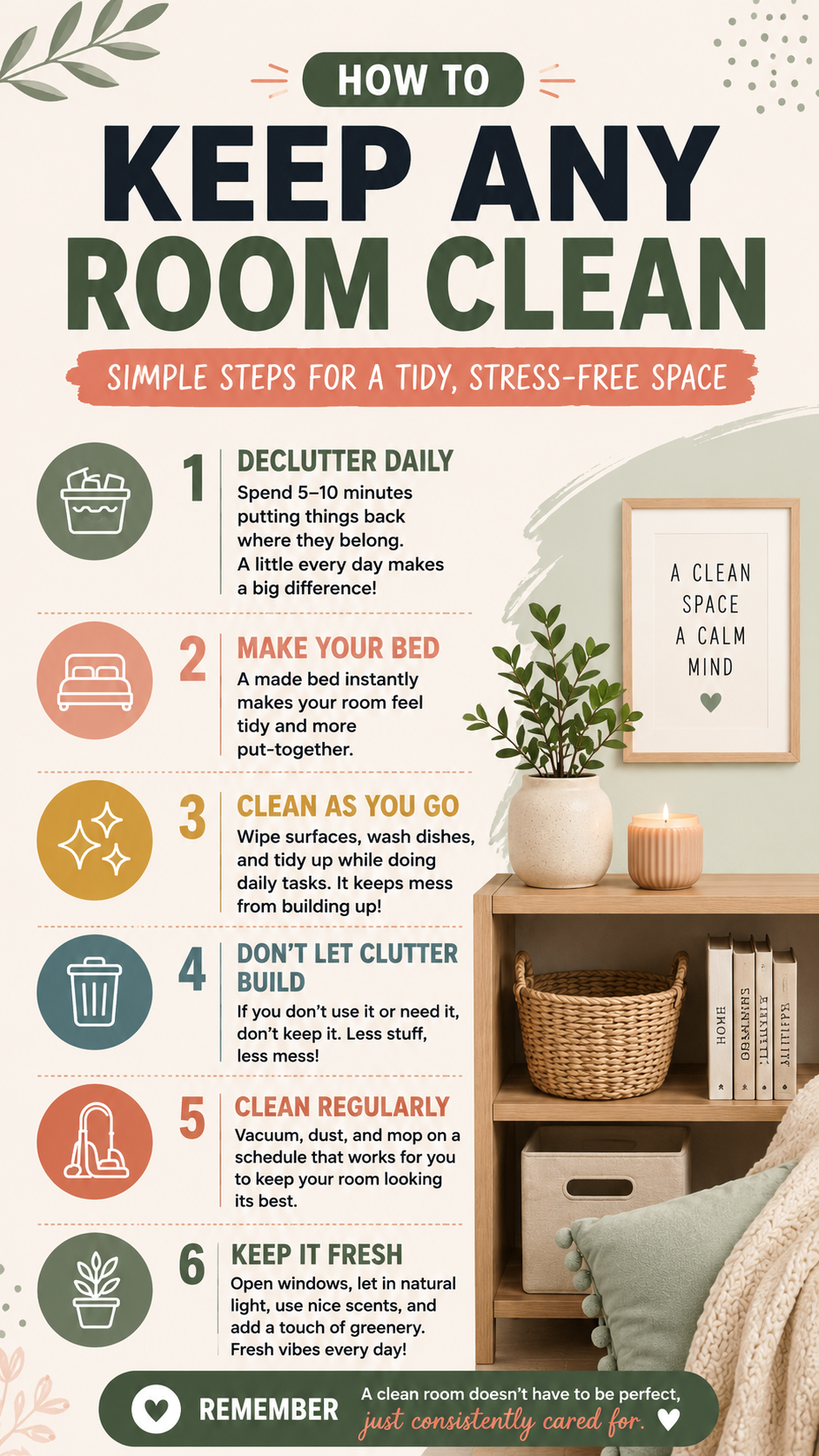
A clean room does more than look good. It changes how a space feels, how easily you move through your day, and how quickly you can relax when you finally have a quiet moment. The best part is that keeping any room clean does not require a full weekend reset, an expensive organizing system, or a perfect routine. It comes down to a few small daily habits that stop mess from taking over before it becomes overwhelming.
The heart of a tidy home is consistency. When you spend a few minutes returning items, making the bed, wiping surfaces, and refreshing the room, your space starts to feel easier to maintain. Whether you are organizing a bedroom, living room, guest room, dorm room, small apartment, or home office, the same simple cleaning habits can help you create a calmer, more put-together environment.
Key Takeaways
- Keeping a room clean is easier when you use short daily habits instead of waiting for a big cleaning day.
- Decluttering for 5 to 10 minutes can prevent piles, stress, and visual overwhelm.
- Making your bed instantly makes a bedroom feel more organized and intentional.
- Cleaning as you go keeps mess from spreading across surfaces, floors, and storage areas.
- Fresh air, natural light, and simple decor touches can make any room feel more inviting.
Why a Clean Room Feels So Good
A clean room gives your mind a place to rest. When clutter is everywhere, even simple tasks can feel harder. You may waste time looking for things, feel distracted by unfinished chores, or avoid spending time in the room because it feels chaotic. A tidy room creates the opposite effect. It feels open, calm, and easier to enjoy.
This is especially true in spaces where you begin and end the day. A bedroom with a made bed, clear floor, fresh air, and organized surfaces can help set a peaceful tone in the morning and make winding down at night feel more natural. A living room with baskets, clean tables, and soft textures can feel ready for guests or quiet evenings. A home office with fewer distractions can make work feel more focused.
Important: A clean room does not have to be perfect. The goal is not to create a space that looks untouched. The goal is to create a room that feels cared for, functional, and easy to live in.
Start with the Daily Declutter Habit
The first and most powerful step is daily decluttering. This habit is simple: spend 5 to 10 minutes putting things back where they belong. That might mean returning mugs to the kitchen, hanging clothes, placing books on a shelf, tossing receipts, or putting beauty products back into a drawer.
Daily decluttering works because it interrupts the mess cycle. Clutter usually does not appear all at once. It builds slowly through small decisions. A sweater lands on a chair. A glass stays on the nightstand. Mail sits on the entry table. Shoes stay by the bed. After a few days, the room feels messy even if nothing major happened.
How to Declutter Without Overthinking
Choose one small area and work quickly. Start with the floor, then surfaces, then items that obviously belong somewhere else. Do not turn a quick reset into a full organizing project. The goal is to restore order, not redesign your entire storage system in one evening.
- Pick up trash first.
- Return dishes, cups, and food items to the kitchen.
- Put laundry in a hamper or closet.
- Place books, papers, and personal items in their proper zones.
- Clear the main surface that makes the room look messy.
For small rooms, this habit is especially helpful because clutter shows faster in limited space. In a compact bedroom, studio apartment, or small living room, one messy surface can affect the entire room. A daily reset keeps the space from feeling crowded.
Make Your Bed for an Instant Room Reset
Making the bed is one of the quickest ways to make a bedroom feel clean. It creates a large visual anchor of order. Even if the rest of the room needs a little attention, a made bed immediately makes the space look more finished.
This habit is not about perfection. You do not need hotel corners or a complicated pillow arrangement. Smooth the blanket, straighten the pillows, and pull everything into place. The room will feel calmer within minutes.
Make It Easy to Repeat
If making the bed feels like a chore, simplify your bedding. Too many decorative pillows or layered blankets can make the routine feel annoying. Choose bedding that looks good with minimal effort. A cozy throw, two sleeping pillows, and one or two decorative cushions can be enough for a tidy, styled look.
Pro Tip: Make your bed before leaving the room in the morning. It creates an instant win and makes it less tempting to toss clothes, bags, or random items onto the bed later in the day.
Clean as You Go Throughout the Day
Cleaning as you go is one of the most underrated tidy home habits. Instead of letting mess collect until it becomes a project, you handle small tasks while they are still small. This can include wiping a table after using it, washing a dish right away, folding a blanket after sitting on the sofa, or putting supplies back after finishing a task.
This habit works beautifully in every room. In the bedroom, it might mean putting skincare items away after your routine. In the bathroom, it might mean wiping the sink after brushing your teeth. In the living room, it might mean fluffing pillows before bed. In a home office, it might mean clearing the desk at the end of the workday.
Use the One-Minute Rule
If a task takes less than one minute, do it right away. Hang the coat. Toss the wrapper. Put the book back. Wipe the spill. Close the drawer. These tiny actions make a huge difference because they stop clutter before it becomes noticeable.
The one-minute rule is also helpful for people who feel overwhelmed by cleaning. Instead of thinking about the entire room, you only focus on the next tiny task. Over time, those tiny tasks create a cleaner home with much less effort.
Why This Matters
Most rooms become messy because items are left slightly out of place again and again. Cleaning as you go prevents that slow buildup, which means your space stays easier to maintain and big cleaning sessions feel less exhausting.
Do Not Let Clutter Build Up
One of the clearest messages behind a tidy space is this: if you do not use it or need it, do not keep letting it take over your room. Clutter often comes from delayed decisions. We keep items because we might use them someday, because we feel guilty getting rid of them, or because we do not know where else to put them.
To keep any room clean, every item needs a reason and a place. If something has no purpose and no home, it will usually become clutter. This does not mean your room has to be minimal or empty. Cozy rooms can still have books, plants, candles, baskets, blankets, and meaningful decor. The difference is that intentional items add warmth, while random clutter adds stress.
Ask Better Decluttering Questions
When deciding what to keep, avoid vague questions like “Could I ever use this?” The answer will often be yes, and the item will stay. Instead, ask practical questions that reveal whether the item belongs in your life right now.
- Do I use this regularly?
- Would I look for this if I needed it?
- Does this item make the room better, easier, or more beautiful?
- Do I have a clear place to store it?
- Would I buy this again today?
Create a Small Outbox
An outbox is a basket, bin, or bag where you place items you are ready to donate, relocate, or think about. This is helpful because it gives clutter a temporary place to go instead of staying on your floor, desk, dresser, or shelves.
Once the outbox is full, take action. Donate usable items, recycle what you can, and throw away anything that no longer serves a purpose. A room becomes easier to clean when it contains fewer things that do not belong there.
Clean Regularly with a Simple Schedule
Daily tidying keeps mess under control, but regular cleaning keeps the room fresh. Vacuuming, dusting, mopping, and wiping surfaces all help maintain a healthier and more comfortable space. The key is to create a schedule that fits your life, not one that feels impossible to follow.
A room cleaning schedule can be simple. You might dust once a week, vacuum twice a week, wash bedding weekly, mop as needed, and do a deeper reset once a month. The exact timing depends on the room, your lifestyle, pets, children, weather, and how much the space is used.
Build a Room Cleaning Checklist
A checklist makes cleaning easier because it removes the question of what to do next. Instead of walking into the room and feeling overwhelmed, you follow a clear order.
- Pick up visible clutter.
- Empty trash.
- Dust shelves, frames, lamps, and surfaces.
- Wipe tables, dressers, desks, or nightstands.
- Vacuum rugs, carpet, and corners.
- Mop hard floors if needed.
- Refresh bedding, blankets, or pillows.
Important: A realistic cleaning schedule is better than an ambitious one you cannot maintain. Choose a rhythm that feels doable, then let consistency do the heavy lifting.
Keep the Room Fresh and Inviting
A clean room should not only be free of clutter. It should also feel fresh. Small sensory details can completely change the mood of a space. Opening windows, letting in natural light, adding greenery, lighting a candle, or placing a simple vase on a shelf can make a room feel cared for and welcoming.
Freshness is especially important after cleaning because it reinforces the feeling of a reset. Once the floor is clear and surfaces are wiped, open the curtains. Let the light in. Add a soft scent if you enjoy one. Place a plant, a small bowl, a basket, or a framed print in a spot that feels intentional.
Use Decor That Supports Cleanliness
The most useful decor is both beautiful and practical. Baskets hide everyday items. Trays group objects so surfaces look intentional. Storage boxes keep shelves neat. A small plant adds life without adding clutter. A framed print can create a calm focal point without taking up valuable storage space.
When choosing decor for a tidy room, think about how each item will function. Will it make the room easier to maintain? Will it create visual calm? Will it encourage you to keep the space clean? Decor should support the room, not make it harder to manage.
Try a Five-Minute Freshen-Up
When a room feels dull but not necessarily dirty, do a quick freshen-up. Open a window, straighten textiles, remove anything that smells stale, water plants, and wipe one visible surface. This tiny routine can make the room feel brighter without requiring a full clean.
How to Keep Different Rooms Clean
The same tidy habits work throughout the home, but each room benefits from a slightly different focus. A bedroom needs soft order and restful surfaces. A living room needs quick resets because it is often shared. A bathroom needs frequent wipe-downs. A kitchen needs cleaning as you go because mess can build quickly.
Bedroom Cleaning Habits
Make the bed, place laundry in the hamper, clear the nightstand, and keep the floor open. Bedrooms often collect clothes, cups, books, and small personal items. A daily reset keeps the room restful instead of cluttered.
Living Room Cleaning Habits
Fold blankets, fluff pillows, return remotes, clear coffee tables, and use baskets for quick storage. The living room should feel easy to use and easy to reset, especially if it is the main gathering place in the home.
Bathroom Cleaning Habits
Wipe the sink, hang towels, close containers, and keep counters as clear as possible. Bathrooms look cleaner when products are grouped, hidden, or limited to the essentials you use every day.
Home Office Cleaning Habits
Clear your desk at the end of the day, organize papers, put pens and chargers in one spot, and remove cups or plates. A tidy workspace can make the next work session feel more focused and less stressful.
Make Cleaning Feel Less Overwhelming
Many people avoid cleaning because they think they need a huge block of time. But a clean room is usually the result of small repeated actions. The more often you reset, the less dramatic each cleaning session needs to be.
Try pairing cleaning with something pleasant. Play music while you declutter. Open the window before you start. Light a candle after you finish. Set a timer and challenge yourself to improve the room before it rings. These little rituals make cleaning feel less like punishment and more like taking care of your space.
Pro Tip: The easiest room to clean is the one that never gets too far out of control. A few minutes today can save you from hours of cleaning later.
At a Glance
- Declutter for 5 to 10 minutes every day.
- Make the bed to create instant visual order.
- Clean small messes before they become big ones.
- Use baskets, trays, and simple storage to reduce clutter.
- Refresh the room with light, air, scent, and greenery.
Conclusion: A Clean Room Is Built One Small Habit at a Time
Keeping any room clean is not about chasing perfection. It is about creating simple habits that make your home easier to enjoy. When you declutter daily, make your bed, clean as you go, prevent clutter from building, clean regularly, and keep the room fresh, your space begins to feel calmer and more manageable.
The most successful cleaning routine is the one you can repeat. Start with one habit today. Spend a few minutes putting items away, wipe one surface, open the curtains, or make the bed. Small actions add up quickly, and before long, a tidy room becomes part of your normal rhythm.
A clean room does not need to look staged or perfect. It simply needs to feel cared for. With consistent daily habits, any room can become a more peaceful, organized, and inviting place to live.
Tags
Clean Room Tips Tidy Home Habits Daily Cleaning Routine Decluttering Ideas Home Organization Stress Free Space Cozy Room Reset