
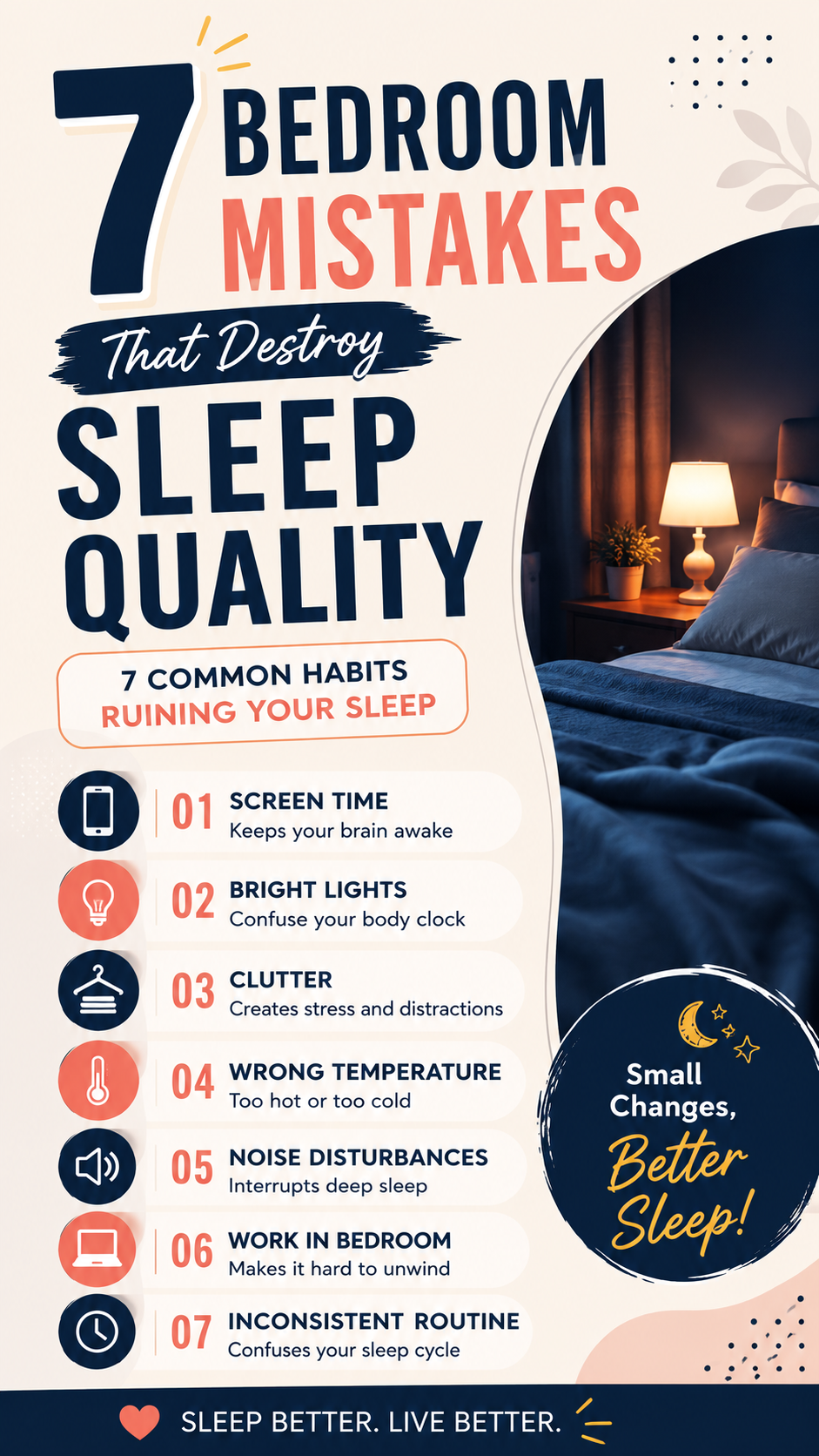
Sleep is one of the most important pillars of overall health, yet many people unknowingly sabotage their rest with everyday bedroom habits. You can invest in a comfortable mattress, follow a healthy diet, and stick to a consistent bedtime, but if your bedroom environment works against quality sleep, restful nights may remain out of reach. The good news is that many sleep-disrupting habits are surprisingly easy to fix.
From excessive screen time to poor lighting and cluttered surroundings, small mistakes can have a significant impact on how quickly you fall asleep and how refreshed you feel in the morning. Understanding these common issues is the first step toward creating a bedroom that supports deeper, more restorative sleep.
Key Takeaways
- Your bedroom environment directly affects sleep quality.
- Light, noise, temperature, and clutter can disrupt restful sleep.
- Screen exposure before bed may interfere with natural sleep signals.
- Simple adjustments often produce noticeable improvements.
- Consistent sleep-friendly habits support better long-term health.
Why Bedroom Habits Matter More Than You Think
Many people focus on what they do during the day when trying to improve sleep, but the bedroom itself plays an equally important role. The brain constantly processes environmental signals. Light levels, room temperature, noise, visual distractions, and even the organization of a space can influence whether your body feels ready for rest.
When your bedroom encourages relaxation, your mind begins associating the space with sleep. When it becomes a place for work, entertainment, stress, or distraction, falling asleep often becomes more difficult.
Important: Sleep quality is not determined by sleep duration alone. A person who spends eight hours in bed may still feel exhausted if their environment repeatedly interrupts deep, restorative sleep cycles.
Mistake #1: Using Electronic Devices Right Before Bed
Scrolling through social media, watching videos, or responding to emails before bedtime has become incredibly common. Unfortunately, these habits can interfere with the body’s natural sleep process.
Electronic devices emit blue light that can affect the production of melatonin, the hormone that helps regulate sleep. In addition, engaging content keeps the brain alert when it should be winding down.
How to Fix It
- Stop using screens at least 30 to 60 minutes before bed.
- Use warm lighting in the evening.
- Replace scrolling with reading, stretching, or meditation.
- Keep phones away from the bed whenever possible.
Mistake #2: Keeping the Bedroom Too Bright
Light exposure plays a major role in the body’s internal clock. Bright lighting in the evening can send signals that it is still daytime, making it harder to feel sleepy.
Even small sources of light can affect sensitive sleepers. Digital clocks, charging indicators, televisions, and streetlights entering through windows may contribute to sleep disturbances.
Better Lighting Choices
- Use blackout curtains.
- Choose warm-toned bedside lamps.
- Cover or remove unnecessary light sources.
- Dim lights gradually before bedtime.
Mistake #3: Letting Clutter Take Over
A cluttered room may seem harmless, but visual chaos can create mental stress. Research consistently shows that organized environments tend to promote feelings of calm and relaxation.
When clothes, paperwork, and miscellaneous items pile up around the bedroom, the mind often remains more active and distracted.
Creating a tidy environment does not require perfection. Even small improvements can make a noticeable difference in how peaceful a room feels.
Simple Decluttering Ideas
- Clear nightstands regularly.
- Store laundry out of sight.
- Use storage baskets for small items.
- Remove unnecessary furniture or decorations.
Expert Insight
A calm bedroom encourages a calm mind. The fewer visual distractions surrounding your sleep space, the easier it becomes for your brain to transition into a relaxed state before bedtime.
Mistake #4: Sleeping in an Uncomfortable Temperature
Temperature is one of the most overlooked sleep factors. A room that is too warm or too cold can cause discomfort and interrupt sleep cycles throughout the night.
The body naturally lowers its core temperature as part of the sleep process. Excess heat can interfere with this natural cooling mechanism.
Ways to Improve Bedroom Temperature
- Use breathable bedding materials.
- Improve air circulation with fans.
- Adjust thermostat settings before bedtime.
- Choose moisture-wicking sleepwear.
Pro Tip: Many people sleep best in a slightly cool room. Experiment with temperature settings until you find the environment that helps you fall asleep quickly and stay asleep longer.
Mistake #5: Allowing Noise to Interrupt Sleep
Unexpected sounds can trigger brief awakenings, even if you do not remember them the next morning. Traffic, televisions, household activity, and outdoor disturbances may prevent deep sleep.
Some individuals adapt well to background sounds, while others are highly sensitive to noise. Understanding your own preferences is essential.
Reducing Noise Disturbances
- Use white noise machines.
- Try soft earplugs if appropriate.
- Seal gaps around windows.
- Keep televisions off while sleeping.
Mistake #6: Turning the Bedroom Into a Workspace
Remote work has made it increasingly common for bedrooms to serve multiple purposes. While convenient, using the bedroom as an office can weaken the mental connection between the room and sleep.
When work-related stress enters the bedroom, the brain may continue associating the space with productivity, deadlines, and mental stimulation rather than relaxation.
Creating Better Boundaries
If possible, keep desks and work materials outside the bedroom. If space limitations make this impossible, store work equipment out of sight after business hours.
Establishing a clear separation between work and rest can significantly improve bedtime relaxation.
Mistake #7: Inconsistent Bedtime Routines
Your body thrives on consistency. Going to bed at different times every night can confuse your internal clock and make falling asleep more challenging.
A predictable routine signals that it is time to wind down. Over time, these cues help strengthen healthy sleep patterns.
Building a Better Night Routine
- Set a consistent bedtime.
- Dim lights during the final hour before sleep.
- Avoid stimulating activities late at night.
- Practice relaxation techniques.
- Wake up at a consistent time each morning.
Important: Consistency often matters more than perfection. A simple routine followed regularly can be more effective than a complicated routine that is difficult to maintain.
How Bedroom Design Influences Sleep Quality
Beyond specific habits, overall bedroom design contributes to sleep success. Colors, textures, furniture arrangement, and visual simplicity can all affect how restful a space feels.
Bedrooms designed with comfort and relaxation in mind often encourage better nighttime routines. Soft lighting, calming colors, and minimal distractions help create a soothing atmosphere.
Features of a Sleep-Friendly Bedroom
- Comfortable mattress and pillows.
- Minimal electronic distractions.
- Clean, organized surfaces.
- Relaxing color palette.
- Appropriate ventilation and airflow.
Small Changes That Deliver Big Results
Many people assume they need expensive upgrades to improve sleep quality. In reality, small adjustments often provide meaningful benefits.
Removing clutter, changing lighting habits, lowering room temperature, and limiting evening screen exposure are all low-cost improvements that can support better rest.
Sleep optimization is rarely about one dramatic change. Instead, it is usually the result of multiple small habits working together.
Where to Start
- Choose one sleep-disrupting habit to address this week.
- Evaluate your bedroom lighting.
- Reduce clutter in visible areas.
- Create a consistent bedtime schedule.
- Track improvements over several weeks.
Signs Your Bedroom May Be Affecting Your Sleep
If you regularly experience sleep challenges, your environment may be contributing more than you realize.
Common Warning Signs
- Difficulty falling asleep.
- Frequent nighttime awakenings.
- Feeling tired despite spending enough time in bed.
- Restlessness before sleep.
- Morning grogginess that persists throughout the day.
While many factors can influence sleep, reviewing your bedroom setup is often a practical and effective starting point.
At a Glance
- Reduce screen use before bedtime.
- Keep lighting soft and sleep-friendly.
- Maintain a clutter-free environment.
- Optimize room temperature and noise levels.
- Follow a consistent nighttime routine.
Conclusion
Quality sleep is not determined by luck. The habits you practice and the environment you create each night have a powerful influence on how well you rest. Many of the most common bedroom mistakes are easy to overlook because they become part of daily life. Yet even seemingly minor issues like bright lights, clutter, excessive screen use, or inconsistent routines can quietly reduce sleep quality over time.
By identifying and correcting these seven common bedroom mistakes, you can create a more peaceful, comfortable, and restorative sleep environment. Start with one or two improvements, remain consistent, and give your body time to adapt. Small changes today can lead to better sleep, increased energy, improved focus, and a healthier lifestyle in the long run.
Tags
Sleep Quality Bedroom Tips Sleep Hygiene Healthy Habits Night Routine Bedroom Organization Better Sleep Wellness Tips