
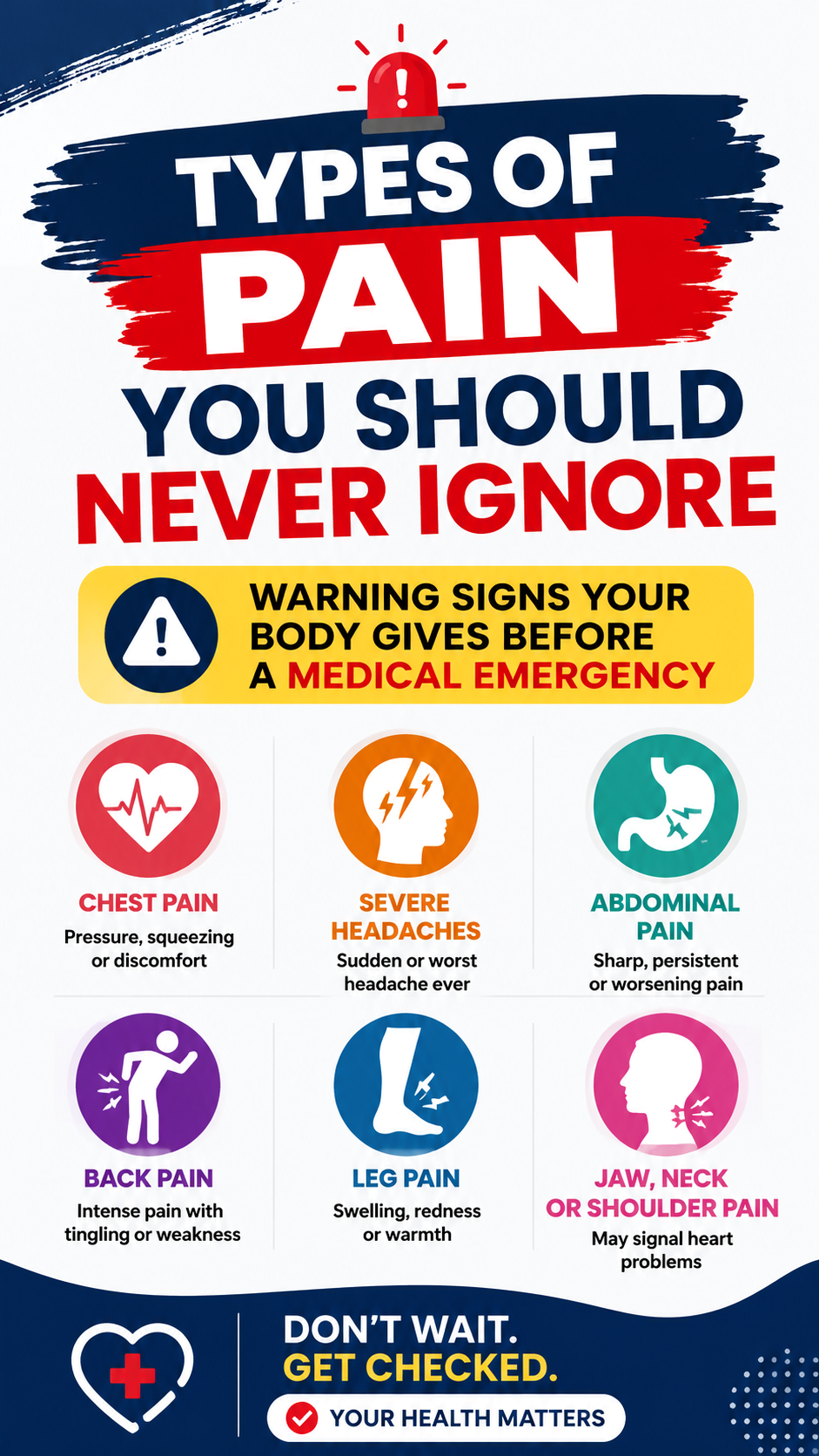
Pain is one of the body’s most important communication tools. While many aches and discomforts are harmless and temporary, some types of pain can signal a serious medical problem that requires prompt attention. Knowing the difference between everyday pain and potentially dangerous symptoms can help you make informed decisions about your health and may even save a life.
Many people ignore warning signs because they assume symptoms will go away on their own. Unfortunately, conditions such as heart attacks, strokes, infections, internal bleeding, and other emergencies often begin with pain that seems manageable at first. Understanding which symptoms deserve immediate medical evaluation is a valuable part of protecting your well-being.
Key Takeaways
- Sudden, severe, or unusual pain should never be ignored.
- Chest pain can be a warning sign of a heart-related emergency.
- Severe headaches may indicate a serious neurological condition.
- Persistent abdominal pain can signal problems requiring urgent treatment.
- Pain accompanied by difficulty breathing, weakness, or confusion needs immediate attention.
- Trust your instincts when something feels significantly different from normal.
Why Paying Attention to Pain Matters
Pain serves a purpose. It alerts us that something may be wrong inside the body. While minor muscle soreness after exercise or occasional discomfort from poor posture is common, intense or unusual pain deserves careful consideration.
Ignoring warning signs can delay diagnosis and treatment. In many medical emergencies, early intervention improves outcomes and reduces the risk of complications. The sooner a serious condition is recognized, the greater the chance of successful treatment.
Important: Pain that appears suddenly, rapidly worsens, or feels unlike anything you have experienced before should always be taken seriously. Even if symptoms later improve, it is often worth discussing them with a healthcare professional.
Chest Pain: One of the Most Critical Warning Signs
Chest pain is among the most recognized symptoms associated with medical emergencies. Although not every case is heart-related, it is impossible to determine the cause without proper evaluation.
Heart-related chest pain may feel like pressure, squeezing, heaviness, tightness, or burning. Some individuals describe the sensation as if a heavy weight is sitting on their chest.
Symptoms That Increase Concern
- Pain spreading to the arm, neck, jaw, shoulder, or back
- Shortness of breath
- Cold sweats
- Nausea or vomiting
- Dizziness or lightheadedness
- Sudden weakness
These symptoms can occur during a heart attack and should never be dismissed. Immediate medical attention is essential when chest pain is severe, persistent, or accompanied by other concerning signs.
Severe Headaches That Feel Different From Normal
Most people experience headaches from time to time. However, a sudden and extremely severe headache can indicate a serious medical issue.
A headache that develops instantly and reaches maximum intensity within seconds or minutes is particularly concerning. Some people describe it as the worst headache of their life.
Warning Signs to Watch For
- Sudden onset of intense pain
- Vision changes
- Confusion or difficulty speaking
- Weakness on one side of the body
- Loss of balance
- Fever with severe headache
- Loss of consciousness
These symptoms may indicate conditions affecting the brain or nervous system and warrant urgent evaluation.
Why This Matters
Many life-threatening conditions begin with symptoms that seem manageable at first. Recognizing unusual pain early can lead to faster treatment, better outcomes, and fewer long-term complications.
Abdominal Pain That Should Never Be Ignored
Stomach and abdominal discomfort are common, but severe or persistent abdominal pain deserves attention. The abdomen contains many vital organs, and pain can originate from numerous causes ranging from minor digestive issues to medical emergencies.
Certain patterns are especially concerning. Pain that becomes progressively worse, remains intense, or interferes with normal activities may require prompt medical evaluation.
Concerning Abdominal Symptoms
- Sudden severe pain
- Persistent vomiting
- Abdominal swelling
- Blood in stool or vomit
- High fever
- Fainting or extreme weakness
Abdominal emergencies can progress quickly. Delaying care may increase the risk of complications.
Pro Tip: Keep track of when the pain started, where it is located, what makes it better or worse, and whether other symptoms are present. This information can help healthcare providers evaluate your condition more efficiently.
Back Pain That Could Signal More Than a Muscle Strain
Back pain is often linked to posture, overuse, or minor injuries. However, certain types of back pain may indicate a more serious underlying condition.
Seek prompt medical attention if severe back pain occurs alongside symptoms such as weakness, numbness, loss of bladder or bowel control, fever, or unexplained weight loss.
Back pain accompanied by chest discomfort, breathing difficulties, or sudden neurological symptoms should also be treated as a medical concern.
When Back Pain Is More Concerning
- Appears suddenly and intensely
- Follows significant trauma
- Causes difficulty walking
- Is associated with numbness or weakness
- Occurs with fever or infection symptoms
Pain in the Legs and the Risk of Circulation Problems
Leg pain is often related to exercise, muscle strain, or overuse. However, pain that develops unexpectedly and is accompanied by swelling, redness, warmth, or tenderness deserves attention.
Circulatory problems can sometimes present with leg discomfort. Early evaluation may help prevent serious complications.
If leg pain occurs alongside shortness of breath, chest pain, or sudden breathing difficulties, emergency medical care should be sought immediately.
Jaw, Neck, and Shoulder Pain Can Be Misleading
Many people associate medical emergencies with chest pain alone, but discomfort in the jaw, neck, shoulders, or upper back can sometimes be an important warning sign.
In some cases, these symptoms may occur with little or no chest pain at all. This is one reason why unexplained pain in these areas should not be automatically attributed to stress, sleeping position, or muscle tension.
Pay particular attention if discomfort appears suddenly, worsens with time, or occurs together with sweating, dizziness, nausea, or breathing difficulties.
Pain Combined With Neurological Symptoms
Pain becomes significantly more concerning when neurological symptoms are involved. The combination may indicate conditions that require immediate medical evaluation.
Symptoms That Require Urgent Attention
- Sudden weakness
- Numbness on one side of the body
- Difficulty speaking
- Vision loss or double vision
- Confusion
- Loss of coordination
These symptoms should never be ignored, especially when they appear suddenly.
Important: Time-sensitive medical conditions often respond best to rapid treatment. If severe pain occurs with neurological symptoms, seeking immediate medical help is critical.
Understanding the Difference Between Acute and Chronic Pain
Not all pain is an emergency. Learning the difference between acute and chronic pain can help you make informed decisions.
Acute pain usually appears suddenly and often has an identifiable cause such as an injury or illness. Chronic pain generally persists for weeks, months, or longer and may be linked to ongoing health conditions.
Even chronic pain deserves medical attention when it changes significantly, becomes more severe, or develops new associated symptoms.
Questions to Ask Yourself
- Did the pain begin suddenly?
- Is it unusually severe?
- Does it feel different from previous episodes?
- Are other symptoms occurring at the same time?
- Is it interfering with normal activities?
The more concerning answers you have, the more important it becomes to seek professional guidance.
When to Seek Immediate Medical Attention
While every situation is unique, some circumstances should always be treated seriously.
- Chest pain or pressure
- Sudden severe headache
- Difficulty breathing
- Loss of consciousness
- Sudden weakness or paralysis
- Severe abdominal pain
- Pain after a major injury
- Symptoms accompanied by confusion
- Pain with significant bleeding
Trusting your instincts can also be valuable. If something feels significantly wrong, seeking medical evaluation is often the safest choice.
Listening to Your Body Can Make a Difference
Modern life often encourages people to push through discomfort and ignore symptoms. While resilience has value, health warning signs should never be overlooked. Pain is information, and understanding that information can help prevent serious consequences.
By recognizing dangerous symptoms early, paying attention to unusual changes, and seeking appropriate medical care when necessary, you can take an active role in protecting your health.
At a Glance
- Sudden, severe pain deserves immediate attention.
- Chest pain should never be ignored.
- Neurological symptoms combined with pain are especially concerning.
- Persistent abdominal pain may indicate a serious condition.
- Early medical evaluation can improve outcomes.
Conclusion
Understanding the warning signs your body provides is an important part of maintaining long-term health. While many aches and pains are harmless, some symptoms can indicate serious medical emergencies that require prompt attention. Chest pain, severe headaches, intense abdominal pain, neurological symptoms, and sudden unexplained discomfort should never be ignored.
Awareness is not about creating fear. It is about recognizing when your body may be asking for help. Paying attention to unusual symptoms, acting quickly when necessary, and seeking professional medical guidance can make a meaningful difference in health outcomes. When in doubt, it is always better to have a concerning symptom evaluated than to delay care for something potentially serious.
Tags
Pain Warning Signs Medical Emergency Health Awareness Emergency Symptoms Preventive Health Patient Safety Wellness Tips Healthy Living