
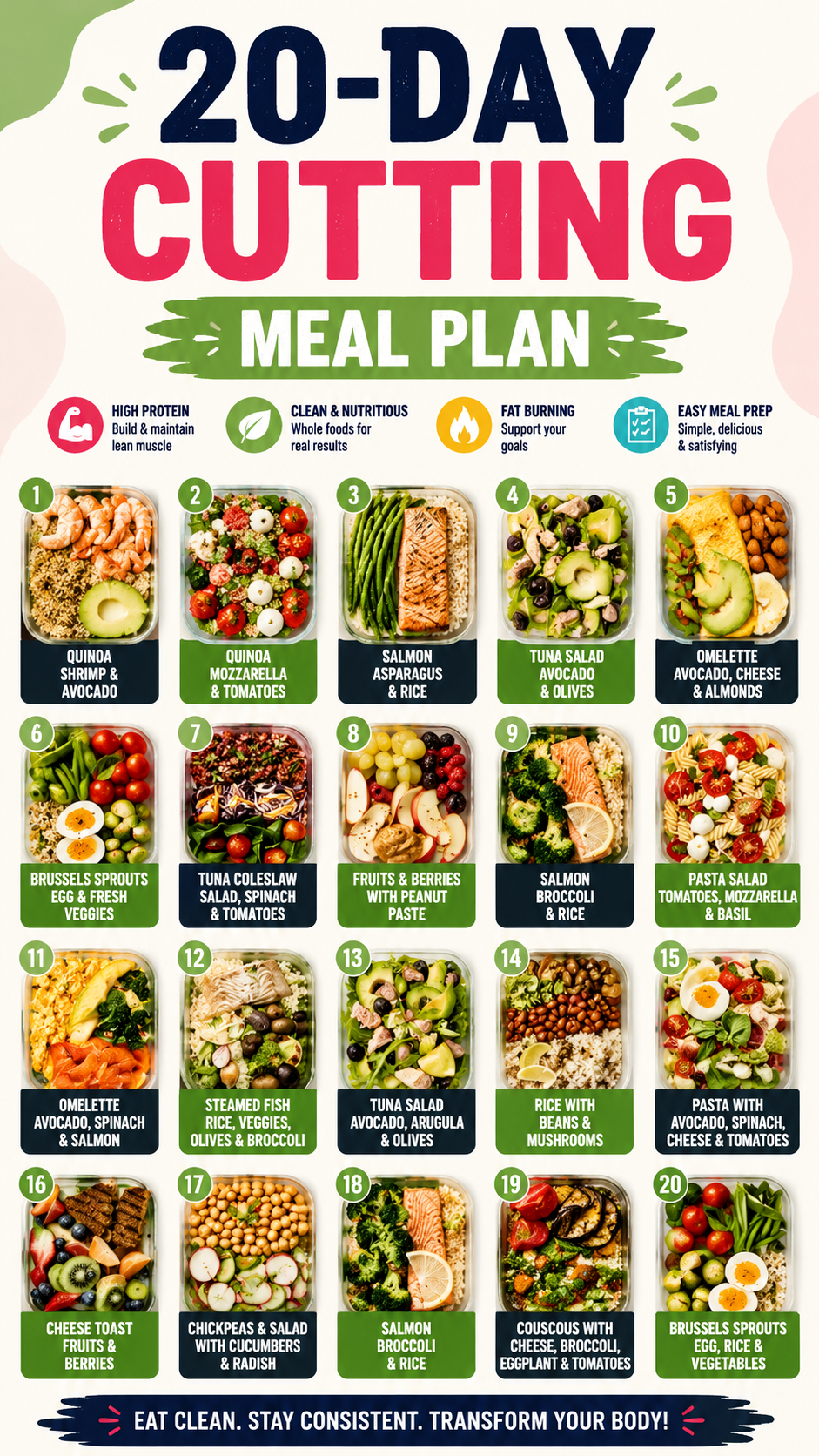
Achieving a leaner physique is often less about extreme dieting and more about consistency, smart food choices, and balanced nutrition. A well-structured cutting meal plan can help reduce body fat while maintaining energy levels and supporting muscle retention. By focusing on nutrient-dense foods such as lean proteins, healthy fats, vegetables, fruits, and quality carbohydrates, it becomes much easier to stay satisfied while working toward weight loss goals.
The foundation of a successful cutting phase lies in creating sustainable eating habits. Rather than eliminating entire food groups, a balanced approach emphasizes portion control, meal timing, and nutrient quality. Whether you are new to meal prep or looking to refresh your healthy eating routine, a structured cutting meal plan can simplify decision-making and keep you on track.
Key Takeaways
- Prioritize high-protein meals to support muscle maintenance.
- Include healthy fats for satiety and hormone support.
- Choose fiber-rich vegetables and fruits for fullness.
- Use meal prep to improve consistency and reduce unhealthy choices.
- Balance carbohydrates with activity levels and fitness goals.
- Focus on long-term habits rather than quick fixes.
Understanding the Purpose of a Cutting Meal Plan
A cutting meal plan is designed to help reduce body fat while preserving lean muscle mass. Unlike restrictive crash diets that often lead to energy crashes and unsustainable results, cutting focuses on strategic calorie management combined with nutrient-rich foods.
Many successful cutting plans emphasize protein-rich meals because protein helps increase feelings of fullness and supports muscle recovery. Foods such as salmon, tuna, eggs, shrimp, and lean fish are common staples due to their impressive nutrient profiles.
Important: Sustainable fat loss is typically achieved through a moderate calorie deficit rather than extreme restriction. Consistency over weeks and months usually produces better results than aggressive short-term dieting.
Alongside protein, healthy fats from foods like avocado, nuts, olives, and seeds play a crucial role. These foods help support overall health and contribute to meal satisfaction, making it easier to adhere to a nutrition plan.
The Benefits of High-Protein Meals
Protein is one of the most valuable nutrients during a cutting phase. It supports muscle preservation, promotes satiety, and may increase the number of calories burned through digestion compared to fats and carbohydrates.
Popular Protein Sources
- Salmon
- Tuna
- Shrimp
- Eggs
- Sea fish
- Legumes and chickpeas
- Low-fat dairy products
Including protein in every meal can help stabilize hunger levels throughout the day. This makes it easier to avoid unnecessary snacking and maintain a calorie deficit.
Why Seafood Works Well During Cutting
Seafood provides high-quality protein while often remaining relatively low in calories. Salmon additionally supplies omega-3 fatty acids, which contribute to heart health and overall wellness.
Combining seafood with vegetables and moderate portions of complex carbohydrates creates a balanced meal that supports both performance and recovery.
Expert Insight
Meal variety improves adherence. Rotating between fish, eggs, legumes, vegetables, and whole grains helps prevent boredom while ensuring a wider range of nutrients.
The Role of Healthy Fats in Fat Loss
One common misconception is that fat should be eliminated during a cutting phase. In reality, healthy fats are essential for numerous bodily functions and can actually help improve dietary adherence.
Foods such as avocados, almonds, olives, and nuts provide healthy fats that contribute to fullness and flavor. Including moderate portions of these foods can make meals more satisfying without derailing progress.
Healthy Fat Sources to Include
- Avocados
- Almonds
- Walnuts
- Olives
- Seeds
- Fatty fish
Rather than avoiding fats entirely, focus on controlling portions and prioritizing nutrient-dense options.
Vegetables: The Secret Weapon for Fullness
Vegetables provide volume, fiber, vitamins, and minerals with relatively few calories. This combination makes them extremely valuable during a cutting phase.
Broccoli, asparagus, spinach, arugula, Brussels sprouts, cucumbers, tomatoes, and mixed greens can dramatically increase meal size while keeping calories under control.
Pro Tip: Fill at least half of your plate with vegetables during main meals. This simple habit can improve satiety and help manage calorie intake naturally.
Benefits of Fiber-Rich Vegetables
- Support digestive health.
- Increase meal volume.
- Promote feelings of fullness.
- Provide important vitamins and minerals.
- Help maintain steady energy levels.
Including a variety of colorful vegetables also improves overall nutrient intake and supports long-term health.
Smart Carbohydrates for Energy
Carbohydrates often receive unnecessary criticism during weight loss discussions. While reducing excessive carbohydrate intake may help some individuals, completely eliminating carbs is rarely necessary.
Quality carbohydrate sources such as quinoa, rice, couscous, chickpeas, fruits, and vegetables provide energy for workouts and daily activities.
Best Carb Choices During Cutting
- Quinoa
- Brown rice
- Whole grain pasta
- Couscous
- Chickpeas
- Fresh fruit
- Beans and legumes
The key is balancing portions according to activity levels and overall calorie goals.
Meal Prep for Long-Term Success
Meal preparation is one of the most effective tools for maintaining consistency. Having healthy meals ready in advance reduces the temptation to make impulsive food choices.
A weekly meal prep routine can save time, reduce stress, and support adherence to nutrition goals.
Simple Meal Prep Strategies
- Cook proteins in bulk.
- Prepare vegetables ahead of time.
- Portion meals into containers.
- Keep healthy snacks readily available.
- Plan meals for the entire week.
These small habits can have a significant impact on overall dietary consistency.
Building Balanced Cutting Meals
A balanced cutting meal generally includes protein, vegetables, healthy fats, and a controlled portion of carbohydrates.
Sample Meal Structure
- Protein: Salmon, tuna, shrimp, eggs, or legumes
- Vegetables: Broccoli, spinach, asparagus, tomatoes, or greens
- Healthy fats: Avocado, olives, almonds, or seeds
- Carbohydrates: Rice, quinoa, couscous, chickpeas, or fruit
This balanced approach helps deliver nutrients while supporting fat-loss goals.
Important: The best meal plan is the one you can realistically follow. Sustainability should always take priority over perfection.
Common Mistakes to Avoid During a Cut
Skipping Protein
Insufficient protein intake can make muscle retention more challenging and increase hunger levels.
Eliminating Entire Food Groups
Extreme restrictions often reduce adherence and may increase cravings over time.
Ignoring Portion Sizes
Even healthy foods can contribute excess calories if portions become too large.
Lack of Planning
Without preparation, it becomes easier to rely on convenience foods that may not align with your goals.
Creating Healthy Habits Beyond Weight Loss
While cutting meal plans are often associated with fat loss, many of the habits developed during this phase can provide long-term benefits. Learning portion control, prioritizing protein, increasing vegetable intake, and planning meals are valuable skills that extend beyond a specific fitness goal.
Rather than viewing healthy eating as a temporary strategy, consider it an ongoing investment in your overall well-being. Sustainable routines create lasting results and reduce the likelihood of regaining lost weight.
At a Glance
- Focus on high-protein meals.
- Include healthy fats daily.
- Fill plates with fiber-rich vegetables.
- Choose quality carbohydrate sources.
- Use meal prep to stay consistent.
Conclusion
A well-designed cutting meal plan combines nutrient-dense foods, balanced portions, and practical meal preparation strategies. By prioritizing protein, healthy fats, vegetables, and smart carbohydrate choices, it becomes easier to support fat loss while maintaining energy and satisfaction.
Success rarely comes from extreme restrictions. Instead, it is built through consistent daily habits, thoughtful meal planning, and realistic expectations. With a sustainable approach, healthy eating can become an enjoyable lifestyle rather than a temporary diet, helping you move closer to your fitness and wellness goals one meal at a time.
Tags
Cutting Meal Plan Weight Loss Meals Healthy Meal Prep High Protein Diet Fat Loss Nutrition Clean Eating Healthy Recipes Fitness Nutrition