
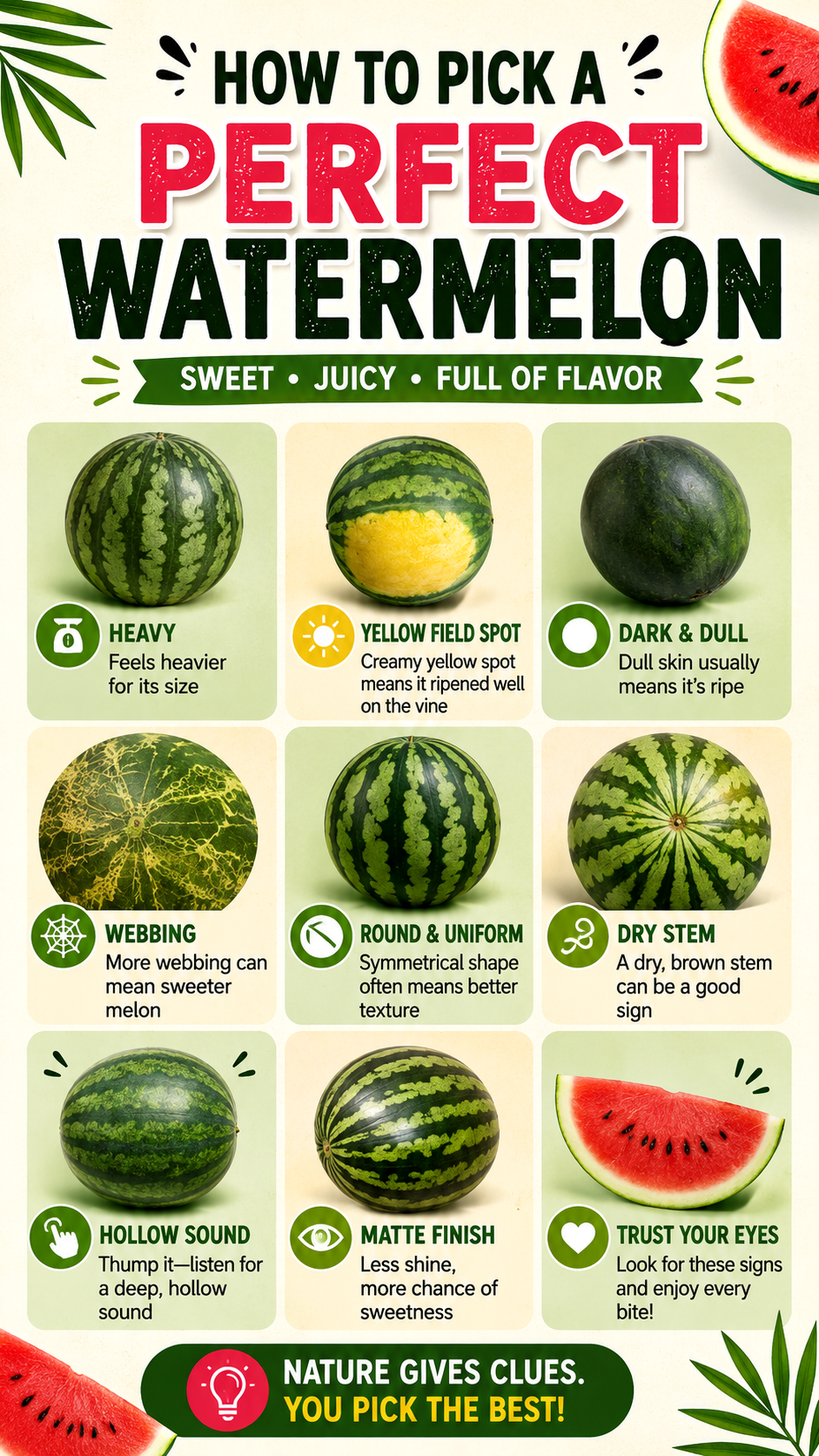
Picking a watermelon can feel like a guessing game. You tap it, lift it, inspect the rind, and hope for that perfect juicy slice once you cut it open. The good news is that choosing a sweet, ripe watermelon does not have to rely on luck alone. A few visual clues can help you make a better choice and improve your odds of bringing home a flavorful fruit.
From field spots to rind texture and overall shape, experienced shoppers often look for signs that suggest ripeness and sweetness. While no method guarantees perfection every time, understanding these indicators can make selecting a watermelon much easier and more enjoyable.
Key Takeaways
- Heavier watermelons often contain more water and feel juicier.
- A creamy yellow to orange field spot may indicate more time ripening.
- Darker, dull-looking skin can signal maturity.
- Surface webbing may suggest stronger sweetness development.
- Shape and texture together often tell a better story than one clue alone.
Why Choosing the Right Watermelon Matters
Watermelon is one of those fruits where appearance can dramatically affect the eating experience. One melon may be intensely sweet and refreshing, while another looks nearly identical but tastes watery or bland.
Understanding visual indicators allows shoppers to make more informed choices instead of selecting randomly. Whether you are preparing fruit platters, summer desserts, family picnics, or healthy snacks, a good watermelon makes a noticeable difference.
Important: Choosing based on a combination of weight, color, shape, and surface details usually works better than relying on a single sign of ripeness.
Look for a Uniform Shape and a Heavy Feel
One of the most common watermelon selection tips starts with shape and weight.
Why Shape Can Matter
Watermelons that appear evenly rounded or balanced in form may have developed more consistently during growth. Extreme irregularities sometimes suggest uneven growing conditions.
Uniformity does not automatically equal sweetness, but it can be one indicator among several.
The Weight Test
Lift two similarly sized melons.
- Choose the one that feels heavier.
- More weight often means higher water content.
- Dense fruit may feel more satisfying and juicy.
This quick comparison takes seconds and is one of the easiest shopping habits to adopt.
Understanding the Field Spot
The field spot is the patch where the watermelon rested on the ground while growing.
This detail is often one of the first things experienced produce shoppers inspect.
Creamy Yellow or Orange Field Spot
A deeper yellow or orange-toned spot may indicate that the watermelon remained on the vine longer and had additional time to mature.
That extra time can support stronger flavor development.
Pale or White Field Spot
A very light spot may suggest earlier harvesting before peak maturity.
Again, this is not an absolute rule, but many shoppers consider it a helpful signal.
Expert Insight
The field spot should be evaluated together with weight and rind appearance. Multiple positive signs generally create a stronger prediction than one feature alone.
What Watermelon Webbing May Tell You
Webbing refers to the rough brown lines or textured markings sometimes seen on watermelon skin.
Many fruit enthusiasts believe these patterns can reflect natural pollination activity and maturity.
Less Webbing
Minimal webbing is often associated with a milder flavor profile.
More Pronounced Webbing
More visible web-like marks are commonly associated with sweeter fruit by many shoppers and growers.
Although this remains more observational than scientific, it remains a popular buying tip.
Pro Tip: If you find a watermelon that feels heavy, has a creamy field spot, and shows moderate webbing, it may be worth giving that one extra attention.
Dark and Dull vs Shiny Skin
Rind appearance can offer another clue.
Many shoppers prefer darker green watermelons with a more matte finish rather than highly reflective skin.
Dark and Dull Appearance
A dull finish may suggest a watermelon has reached a more mature stage.
- Richer color
- Less reflective surface
- More natural-looking finish
Shiny Exterior
Very glossy skin is sometimes associated with less mature fruit.
As always, combine this clue with others rather than treating it as a final decision maker.
Should You Avoid Elongated Watermelons?
Shape preferences vary, but many people notice differences between round and elongated melons.
Round watermelons are often perceived as sweeter, while elongated varieties are sometimes associated with higher water content.
This distinction is more of a practical shopping observation than a strict rule.
When Shape Is Useful
- Round for snack trays and sweetness preference
- Longer shapes for hydration and juicing
- Balanced shapes for general versatility
The best approach is still evaluating the whole fruit.
Common Watermelon Shopping Mistakes
Many shoppers unknowingly ignore useful clues while focusing on habits that offer little value.
Mistake 1: Choosing Only by Size
Bigger does not automatically mean better.
Mistake 2: Ignoring Weight
Weight comparison can provide quick practical insight.
Mistake 3: Selecting the Shiniest Fruit
Visual shine may not indicate quality.
Mistake 4: Trusting One Sign Only
The strongest strategy combines multiple indicators.
Important: Watermelon selection is about improving probabilities, not guaranteeing perfection. Small differences in growing conditions can still affect flavor.
A Simple Watermelon Selection Checklist
Before adding a watermelon to your cart, run through this quick list:
- Pick one that feels heavy.
- Check for a creamy yellow field spot.
- Look for darker, less shiny skin.
- Notice moderate natural webbing.
- Choose a balanced overall shape.
This process takes less than a minute and can become second nature.
How to Store and Enjoy Your Watermelon
Once you bring your watermelon home, proper storage helps preserve freshness.
Whole Watermelon
Store in a cool location until cutting.
Cut Watermelon
Refrigerate promptly in a covered container.
Enjoy it in:
- Fresh fruit bowls
- Smoothies
- Summer salads
- Frozen snacks
- Picnic platters
At a Glance
- Heavier often feels juicier
- Orange or creamy field spots may signal maturity
- Dull skin can indicate ripeness
- Webbing may suggest stronger sweetness
- Use several clues together
Conclusion
Finding a delicious watermelon becomes easier when you know what to look for. Weight, field spot color, rind texture, webbing, and overall shape all contribute useful clues. No single feature guarantees sweetness, but together they can improve your chances of bringing home a ripe, juicy watermelon.
Next time you stand in front of a watermelon display, skip the guesswork and use a simple visual checklist. A few seconds of inspection may lead to a much sweeter reward.
Tags
Watermelon Tips Fruit Selection Produce Guide Healthy Eating Summer Fruit Grocery Tips Kitchen Hacks