
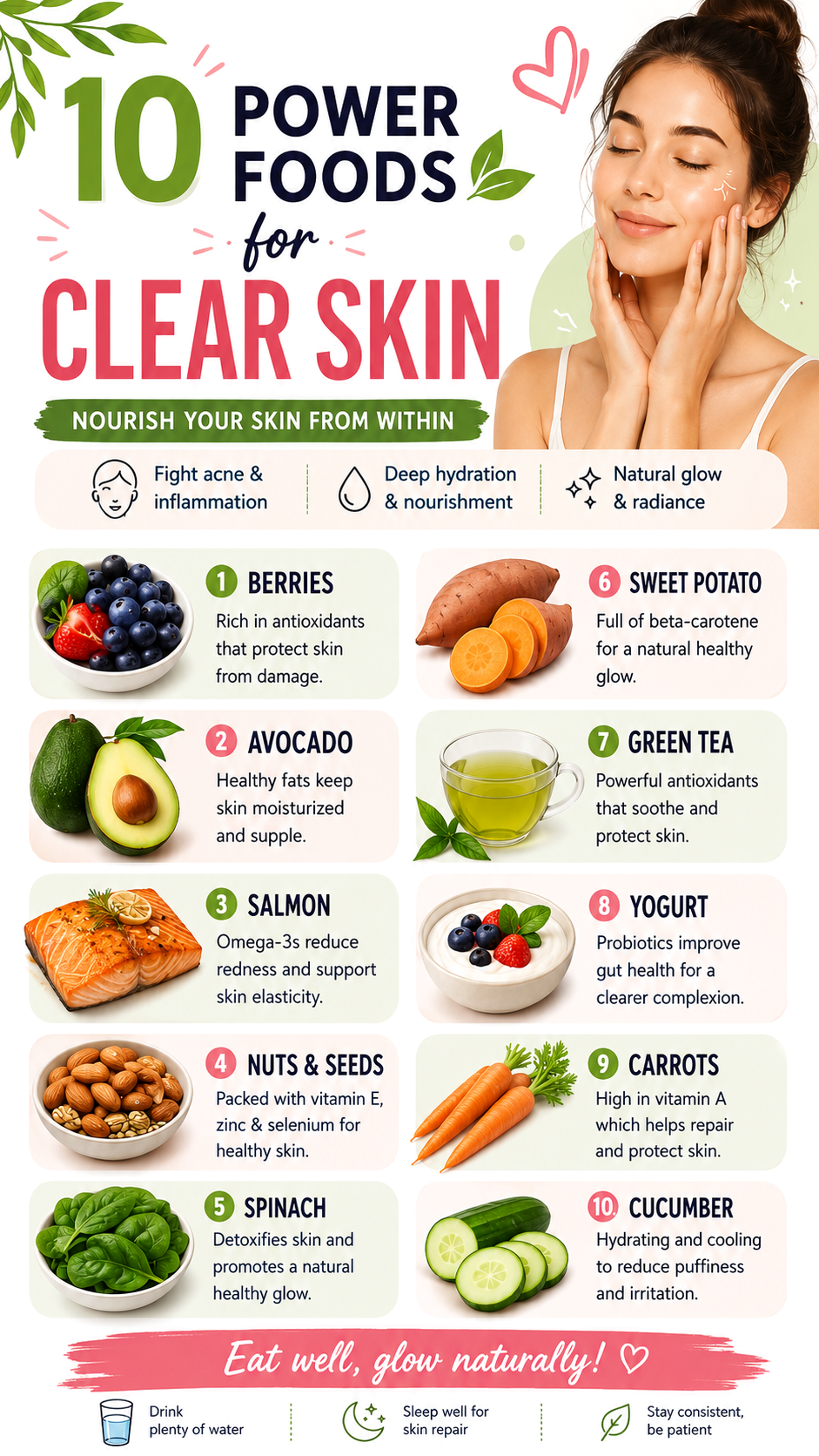
Clear, healthy-looking skin is often associated with expensive skincare products and complicated beauty routines. While topical products certainly play an important role, what you eat can also influence how your skin looks and feels. A nutrient-rich diet provides the vitamins, minerals, antioxidants, healthy fats, and hydration your skin needs to support its natural functions and maintain a vibrant appearance.
Many foods contain compounds that help protect skin from oxidative stress, support collagen production, reduce inflammation, and contribute to a balanced complexion. By making thoughtful dietary choices, you can complement your skincare routine and nourish your skin from within.
Key Takeaways
- Antioxidant-rich foods help protect skin from environmental stress.
- Healthy fats support skin hydration and elasticity.
- Vitamin-rich fruits and vegetables contribute to a healthy glow.
- Hydration plays a major role in maintaining skin appearance.
- A balanced diet works best when combined with healthy lifestyle habits.
- Consistency matters more than quick fixes.
The Connection Between Diet and Skin Health
Your skin is the body’s largest organ, and like every other organ, it relies on nutrients to function effectively. The foods you consume provide building blocks that support cell repair, collagen synthesis, moisture retention, and protection against environmental damage.
When your diet includes a variety of nutrient-dense foods, your body has access to essential vitamins such as A, C, E, and B vitamins, along with minerals like zinc and selenium. These nutrients help support normal skin function and contribute to a healthy complexion.
Important: No single food can instantly clear skin or eliminate breakouts. Healthy skin typically results from a combination of balanced nutrition, proper skincare, hydration, sleep, and overall wellness habits.
1. Berries: Tiny Fruits Packed with Antioxidants
Blueberries, strawberries, raspberries, and blackberries are rich sources of antioxidants. These compounds help combat free radicals, which can contribute to premature skin aging and dullness.
Berries also contain vitamin C, an essential nutrient involved in collagen production. Collagen helps maintain skin structure and firmness over time.
Benefits of Berries for Skin
- Rich in antioxidants
- Contain vitamin C
- Support collagen production
- May help promote a brighter complexion
2. Avocado: Healthy Fats for Nourished Skin
Avocados are known for their healthy monounsaturated fats, which help support skin hydration and flexibility. They also contain vitamin E, a nutrient often associated with skin protection.
Including healthy fats in your diet may help support the skin barrier, which plays an important role in maintaining moisture and defending against external irritants.
Easy Ways to Enjoy Avocado
- Add slices to salads
- Blend into smoothies
- Spread on whole-grain toast
- Mix into healthy dips
3. Salmon: A Source of Omega-3 Fatty Acids
Salmon is widely recognized for its omega-3 fatty acid content. These healthy fats support various functions throughout the body, including those related to skin health.
Omega-3 fats help maintain the skin’s natural barrier and support hydration. Salmon also provides protein, which is important for tissue maintenance and repair.
Pro Tip: Aim to include fatty fish in your meal plan regularly if it fits your dietary preferences. Consistent intake of omega-3-rich foods may contribute to healthier-looking skin over time.
Why This Matters
- Healthy fats help support the skin barrier.
- Antioxidants assist in protecting skin cells from environmental stress.
- A nutrient-rich diet complements topical skincare routines.
4. Nuts and Seeds: Small Foods with Big Nutritional Value
Almonds, walnuts, sunflower seeds, chia seeds, and flaxseeds offer a combination of healthy fats, vitamin E, zinc, and other beneficial nutrients.
Zinc is involved in numerous biological processes, including normal skin maintenance. Vitamin E acts as an antioxidant that helps protect cells from oxidative stress.
Popular Choices
- Almonds
- Walnuts
- Pumpkin seeds
- Sunflower seeds
- Chia seeds
- Flaxseeds
5. Spinach: A Nutrient-Dense Leafy Green
Spinach is packed with vitamins, minerals, and antioxidants. It contains vitamin A, vitamin C, iron, and various plant compounds that support overall health.
Leafy greens are often included in skin-friendly diets because they provide nutrients without excessive calories or added sugars. They can be easily incorporated into salads, smoothies, soups, and side dishes.
6. Sweet Potatoes: A Natural Source of Beta-Carotene
Sweet potatoes are rich in beta-carotene, a plant pigment that the body can convert into vitamin A. This nutrient plays an important role in maintaining healthy skin.
Many colorful vegetables contain carotenoids, which may contribute to a naturally vibrant complexion when consumed regularly as part of a balanced diet.
Other Beta-Carotene Rich Foods
- Carrots
- Butternut squash
- Pumpkin
- Red peppers
7. Green Tea: A Refreshing Antioxidant Boost
Green tea contains natural compounds called polyphenols, which are known for their antioxidant properties. Many people enjoy green tea as part of a wellness-focused lifestyle.
Replacing sugary beverages with green tea may also support broader health goals while providing beneficial plant compounds.
Important: While green tea contains valuable antioxidants, overall dietary patterns matter more than any single beverage. Focus on creating balanced habits that support long-term wellness.
8. Yogurt and Fermented Foods
Yogurt contains probiotics, which are beneficial microorganisms that support gut health. Researchers continue exploring connections between gut health and skin appearance.
In addition to yogurt, fermented foods such as kefir, kimchi, sauerkraut, and miso can be valuable additions to a balanced diet.
Choosing a Good Yogurt
- Look for live cultures
- Choose lower-sugar varieties when possible
- Consider plain yogurt with fresh fruit
- Check protein content for added nutritional value
9. Carrots: Colorful and Nutrient Rich
Carrots are another excellent source of beta-carotene. Their bright orange color reflects their high carotenoid content.
They are versatile, affordable, and easy to include in meals. Enjoy them raw, roasted, steamed, or blended into soups and smoothies.
10. Cucumber: Hydration Support for Healthy-Looking Skin
Cucumbers have a high water content, making them a refreshing food choice. Hydration is an important aspect of maintaining skin health and overall wellness.
While drinking water remains essential, consuming water-rich fruits and vegetables can contribute to your daily fluid intake.
Lifestyle Habits That Complement a Skin-Friendly Diet
Nutrition is only one piece of the puzzle. Several lifestyle habits work alongside healthy eating to support clearer, healthier-looking skin.
Stay Hydrated
Water supports countless processes throughout the body. Consistent hydration can help maintain overall skin appearance and comfort.
Prioritize Sleep
Quality sleep gives your body time to repair and regenerate. Inadequate sleep can affect energy levels, stress management, and overall wellness.
Manage Stress
Chronic stress can influence many aspects of health. Activities such as walking, meditation, journaling, and exercise may help support emotional well-being.
Limit Excess Added Sugar
Reducing excessive consumption of highly processed foods and sugary beverages can support overall health goals and encourage a more balanced eating pattern.
Pro Tip: Focus on adding nourishing foods rather than obsessing over restriction. Building meals around fruits, vegetables, lean proteins, healthy fats, and whole grains creates a sustainable foundation for healthy skin.
Creating a Daily Skin-Friendly Meal Plan
A practical approach to skin-supportive nutrition involves variety and consistency. Consider starting your day with yogurt topped with berries, enjoying a spinach salad with avocado for lunch, and including salmon with roasted sweet potatoes for dinner.
Snack options such as nuts, seeds, carrots, and cucumber slices can further increase nutrient intake throughout the day.
At a Glance
- Eat more antioxidant-rich fruits and vegetables.
- Include healthy fats from fish, avocados, nuts, and seeds.
- Stay hydrated with water and water-rich foods.
- Support gut health with probiotic foods.
- Combine nutrition with quality sleep and stress management.
Conclusion
Achieving healthier-looking skin is about supporting your body with consistent, nourishing habits. Foods such as berries, avocado, salmon, nuts, seeds, spinach, sweet potatoes, green tea, yogurt, carrots, and cucumbers provide valuable nutrients that can contribute to overall skin wellness.
Rather than searching for a single miracle food, focus on building a balanced diet rich in colorful produce, healthy fats, quality proteins, and hydration. Combined with good sleep, stress management, and an effective skincare routine, these habits can help you work toward a naturally radiant complexion that reflects your overall health.
Tags
Clear Skin Healthy Foods Glowing Skin Skin Nutrition Healthy Diet Beauty Tips Anti Inflammatory Foods Wellness Lifestyle