
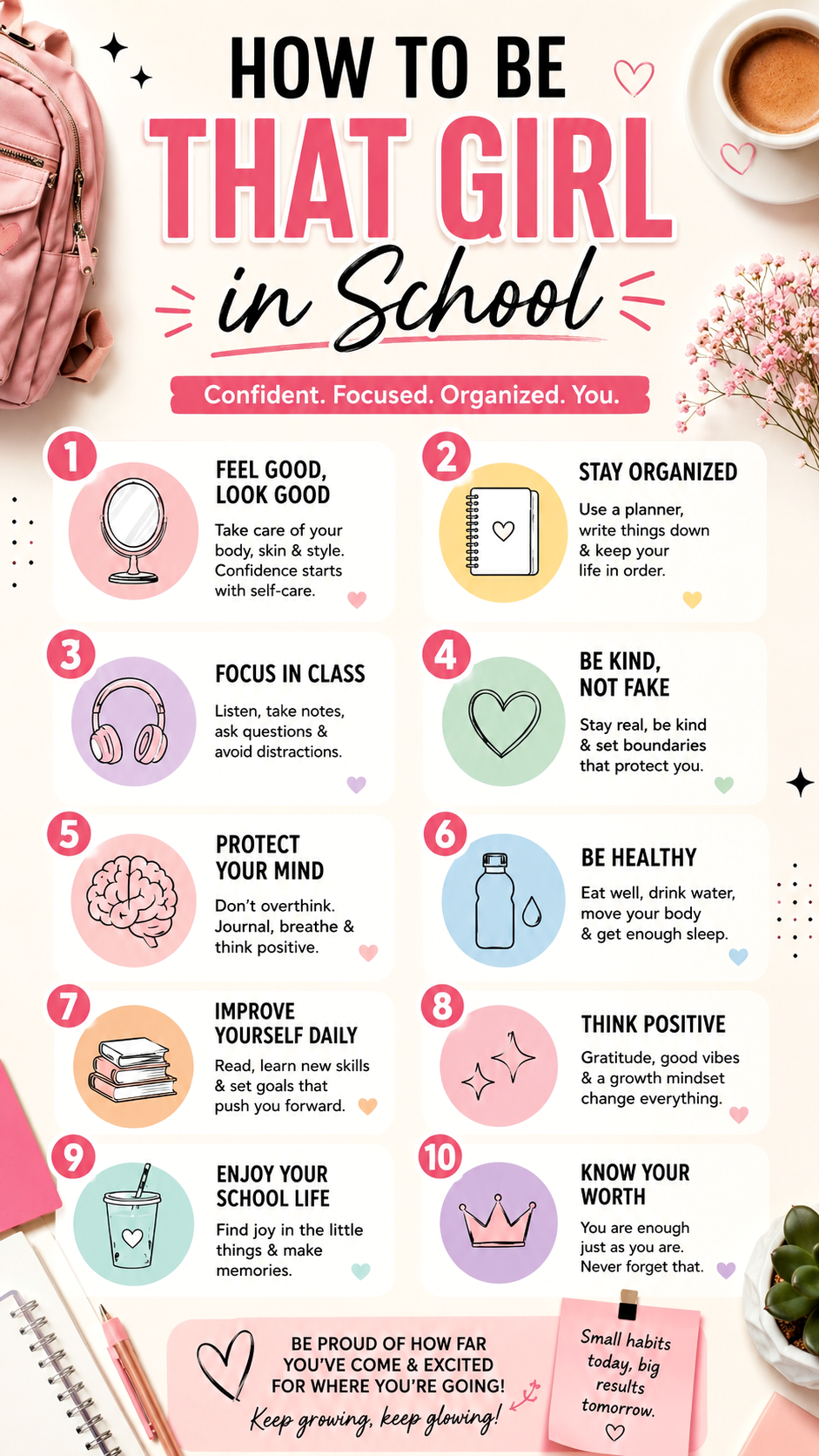
The idea of becoming “that girl” in school has become a popular self-improvement trend, but at its core, it is not about perfection, popularity, or looking flawless every day. It is about building healthy habits, developing confidence, staying organized, and showing up as the best version of yourself. For students, this mindset can create a more positive school experience while helping improve academic performance, personal growth, and overall well-being.
Being confident, focused, and intentional does not happen overnight. Small daily choices often make the biggest difference. From keeping a planner and staying organized to maintaining a healthy routine and developing a positive mindset, every habit contributes to becoming a stronger, happier, and more capable student.
Key Takeaways
- Build confidence through consistent daily habits.
- Stay organized with planners, schedules, and clear goals.
- Focus on both academic success and personal well-being.
- Develop a positive mindset that supports growth.
- Practice self-care without comparing yourself to others.
- Remember that progress matters more than perfection.
What Does Being “That Girl” in School Really Mean?
Many students associate the phrase with aesthetic notebooks, cute outfits, and picture-perfect routines. While those things can be fun, the deeper meaning is much more valuable. Being “that girl” means becoming someone who takes responsibility for her goals, treats herself with respect, and actively works toward personal growth.
It is about creating a balanced lifestyle that supports academic achievement, mental health, confidence, and self-discipline. Instead of chasing perfection, the focus should be on consistency and self-improvement.
Important: The most successful students are not necessarily the smartest or most talented. They are often the ones who consistently show up, stay organized, and keep moving forward even when motivation is low.
Why Confidence Matters More Than Appearance
Confidence is one of the most powerful qualities a student can develop. It affects how you communicate, participate in class, make decisions, and handle challenges.
While taking care of your appearance can boost self-esteem, true confidence comes from keeping promises to yourself. Completing assignments on time, speaking up during discussions, and overcoming obstacles all contribute to lasting self-belief.
Simple Ways to Build Confidence
- Practice positive self-talk.
- Celebrate small achievements.
- Set realistic goals.
- Learn from mistakes instead of fearing them.
- Focus on your progress rather than comparisons.
Confidence grows through action. Every time you do something difficult, you prove to yourself that you are capable.
The Power of Staying Organized
Organization is one of the most valuable skills students can develop. A well-organized student experiences less stress, misses fewer deadlines, and can focus more effectively during class.
Using a planner, digital calendar, or task management app can help keep track of assignments, exams, projects, and extracurricular activities.
Organization Habits That Work
- Write down assignments immediately.
- Review your schedule every morning.
- Prepare your school materials the night before.
- Keep notes organized by subject.
- Break large projects into smaller tasks.
When your environment is organized, your mind feels less overwhelmed. This creates more mental energy for learning and personal growth.
Why This Matters
- Organization reduces stress and decision fatigue.
- Planning ahead increases productivity and confidence.
- Small systems create long-term academic success.
How to Stay Focused During Class
Focus is becoming increasingly difficult in a world filled with constant notifications and distractions. Yet the ability to pay attention remains one of the biggest advantages a student can have.
Active participation helps improve understanding and retention. Listening carefully, taking notes, and asking questions transform passive learning into active engagement.
Focus Strategies for Students
- Put your phone away during lessons.
- Sit where distractions are minimized.
- Take structured notes.
- Ask questions when something is unclear.
- Review notes within 24 hours.
Even small improvements in focus can lead to better grades and a stronger understanding of the material.
Being Kind Without Becoming a People Pleaser
Kindness is an important quality, but healthy boundaries are equally important. Students often feel pressure to fit in, gain approval, or avoid conflict. However, constantly putting others first can become exhausting.
Learning to say no when necessary is a valuable life skill. Respecting yourself while remaining kind creates healthier relationships and protects your mental well-being.
Pro Tip: Being kind does not mean agreeing with everyone. Healthy boundaries help you maintain confidence, focus, and emotional balance.
Taking Care of Your Mental Health
Academic success becomes much harder when mental health is neglected. School can bring stress, pressure, and uncertainty. Prioritizing your emotional well-being is not a luxury. It is a necessity.
Developing healthy coping strategies can help you navigate challenges more effectively.
Healthy Mental Wellness Habits
- Keep a journal.
- Take breaks when needed.
- Practice gratitude.
- Limit negative self-talk.
- Talk to trusted friends, family members, or counselors.
Remember that everyone experiences difficult days. Strength comes from learning how to manage them constructively.
Why Physical Health Supports Academic Success
Your body and mind work together. Healthy habits can improve concentration, energy levels, memory, and overall performance at school.
Students often underestimate the impact of sleep, hydration, nutrition, and exercise. Yet these basics play a major role in cognitive function and emotional stability.
Healthy Habits Worth Prioritizing
- Drink enough water throughout the day.
- Get adequate sleep each night.
- Choose nourishing foods when possible.
- Stay physically active.
- Spend time outdoors regularly.
A healthy lifestyle provides the foundation for sustained motivation and productivity.
The Importance of Continuous Self-Improvement
Personal growth is a lifelong process. Students who embrace learning beyond the classroom often gain valuable skills that support future success.
Reading books, exploring new interests, learning practical skills, and challenging yourself intellectually can expand your opportunities and confidence.
Important: Improvement does not require dramatic changes. Small actions repeated consistently can create remarkable results over time.
Ways to Improve Yourself Daily
- Read for at least ten minutes.
- Learn a new skill.
- Practice better study techniques.
- Set personal goals.
- Reflect on your progress regularly.
Developing a Positive Attitude
Your attitude influences how you respond to challenges, setbacks, and opportunities. A positive mindset does not mean ignoring problems. It means choosing a productive response when difficulties arise.
Students with a growth mindset tend to view mistakes as opportunities to learn rather than evidence of failure.
Positive Mindset Practices
- Focus on solutions instead of problems.
- Practice gratitude daily.
- Celebrate effort as well as outcomes.
- Challenge negative thinking patterns.
- Surround yourself with supportive people.
Positive energy often creates positive opportunities, relationships, and experiences.
Finding Joy in Your School Experience
School is not only about grades and exams. It is also a place for growth, friendships, experiences, and memories.
Many students discover that their school years become more meaningful when they intentionally look for moments to appreciate. Enjoying your morning routine, creating attractive notes, joining clubs, and participating in events can make daily life more enjoyable.
The goal is not to create a perfect school experience. It is to make the most of the opportunities available to you.
Knowing Your Worth
Perhaps the most important lesson is understanding that your value does not depend on grades, popularity, appearance, or social media validation.
Self-worth comes from recognizing your strengths, respecting yourself, and understanding that your uniqueness matters.
Students who know their worth are more likely to set healthy boundaries, pursue meaningful goals, and recover from setbacks with resilience.
Pro Tip: Stop comparing your journey to someone else’s highlight reel. Focus on becoming a better version of yourself than you were yesterday.
At a Glance
- Confidence grows through consistent action.
- Organization reduces stress and improves performance.
- Mental and physical health support academic success.
- Positive habits create long-term results.
- Self-worth should never depend on comparison.
Conclusion
Becoming “that girl” in school is not about achieving perfection or fitting a particular aesthetic. It is about building habits that help you feel confident, organized, healthy, focused, and capable. The most meaningful transformations happen through small choices made consistently over time.
Whether you are improving your study routine, working on your confidence, developing healthier habits, or simply trying to enjoy school more, remember that progress is a journey. Every positive step counts. Focus on growth, stay committed to your goals, and trust that the person you are becoming is worth the effort.
Tags
Student Glow Up School Motivation Study Tips Self Improvement Student Productivity Confidence Building Healthy Habits School Success