
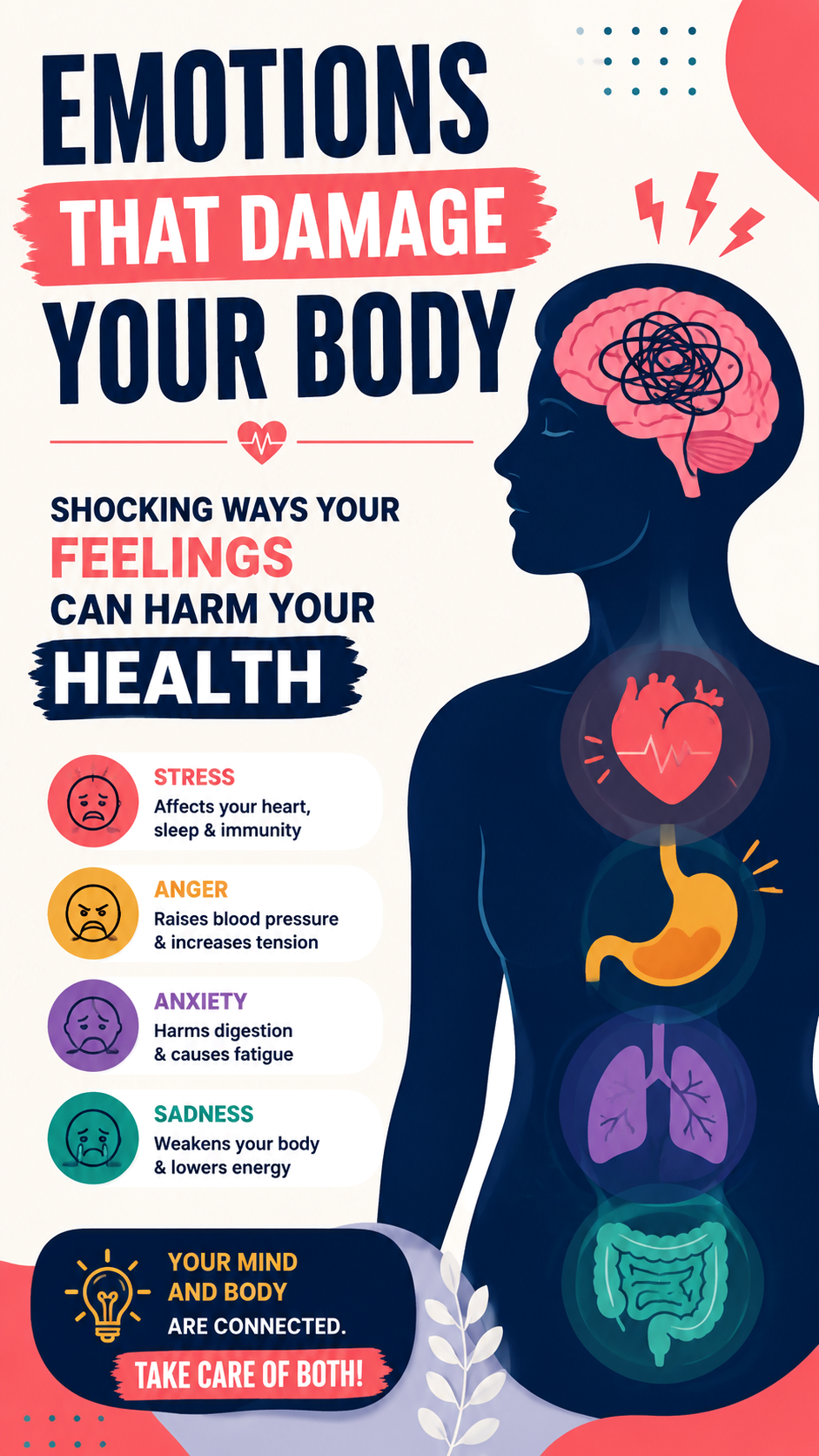
Have you ever noticed how a stressful day can leave you with a headache, stomach discomfort, muscle tension, or overwhelming fatigue? While emotions are a natural part of life, prolonged negative emotional states can influence physical health in surprising ways. Many people think of emotions as experiences that exist only in the mind, but modern research continues to show a strong connection between emotional well-being and bodily function.
From chronic stress and anxiety to unresolved anger and persistent sadness, emotional experiences can trigger physiological responses that affect multiple systems throughout the body. Understanding this connection can help you develop healthier habits, improve emotional resilience, and support long-term wellness.
Key Takeaways
- Emotions can influence physical health through hormonal and nervous system responses.
- Chronic stress may affect sleep, digestion, immunity, and heart health.
- Managing emotional well-being can support overall body function.
- Healthy coping strategies help reduce the impact of prolonged emotional strain.
- Small daily habits can improve resilience and emotional balance.
The Powerful Connection Between Mind and Body
The human body is designed to respond to emotions. When you experience fear, excitement, stress, or joy, your brain sends signals throughout the body that trigger physical reactions. This system evolved to help humans survive challenging situations.
For example, during a stressful moment, the body releases hormones such as adrenaline and cortisol. These chemicals increase alertness, raise heart rate, and prepare the body for action. While this response can be helpful in short-term situations, constant activation may place strain on various systems.
Important: Occasional stress is a normal part of life. The greater concern comes from long-term emotional strain that remains unresolved for weeks, months, or even years.
The relationship between emotional health and physical health is often called the mind-body connection. Rather than functioning separately, the brain and body continuously communicate through hormones, neurotransmitters, and the nervous system.
How Chronic Stress Affects the Body
Stress is one of the most common emotional experiences in modern life. Deadlines, financial concerns, family responsibilities, and constant digital stimulation can create ongoing pressure.
When stress becomes chronic, the body’s stress-response system may remain activated for extended periods. This can contribute to a range of physical symptoms and health challenges.
Effects on the Heart
During stressful situations, heart rate and blood pressure often increase. Over time, repeated stress responses may place additional demands on the cardiovascular system.
- Elevated blood pressure
- Increased heart rate
- Greater physical tension
- Reduced recovery from daily stressors
Managing stress effectively may support healthier cardiovascular function and improve overall well-being.
Effects on Sleep
Stress and anxiety frequently interfere with sleep quality. Racing thoughts, worry, and emotional tension can make it difficult to fall asleep or remain asleep throughout the night.
Poor sleep then creates a cycle where emotional resilience decreases, making stress feel even more intense the next day.
Effects on Digestion
The digestive system is highly sensitive to emotional changes. Many people experience stomach discomfort, nausea, appetite changes, or digestive upset during stressful periods.
The gut and brain communicate constantly through a complex network often referred to as the gut-brain axis. Emotional distress can influence digestive processes, while digestive issues can also affect mood.
The Physical Impact of Anxiety
Anxiety is characterized by excessive worry, nervousness, or fear about future events. Although occasional anxiety is normal, persistent anxiety can create noticeable physical effects.
Common physical symptoms include:
- Rapid heartbeat
- Muscle tension
- Sweating
- Shortness of breath
- Digestive discomfort
- Fatigue
- Difficulty concentrating
These symptoms occur because the body interprets anxiety as a signal that potential danger may be present. Even when no immediate threat exists, the body may remain in a heightened state of alertness.
Why This Matters
- Persistent anxiety can affect daily quality of life.
- Physical symptoms may appear even when emotional symptoms seem manageable.
- Addressing emotional wellness often benefits physical health as well.
Anger and Its Hidden Effects
Anger is a natural emotional response to frustration, injustice, or perceived threats. However, frequent or intense anger can influence the body in significant ways.
During episodes of anger, the body experiences physiological changes that resemble stress responses. Heart rate increases, blood pressure rises, and muscles become tense.
People who frequently suppress anger may also experience physical tension because emotional energy remains unresolved. Learning healthy ways to process and express anger can support emotional and physical wellness.
Healthy Ways to Manage Anger
- Pause before reacting
- Practice deep breathing
- Engage in physical activity
- Communicate concerns calmly
- Use journaling to process emotions
- Seek professional support when needed
The Effects of Persistent Sadness
Sadness is another normal human emotion. It often appears during periods of loss, disappointment, or major life changes. While temporary sadness is expected, prolonged emotional distress may affect physical health.
Individuals experiencing ongoing sadness may notice:
- Low energy levels
- Changes in appetite
- Reduced motivation
- Sleep disturbances
- Difficulty concentrating
- Physical aches and pains
The body and mind influence one another continuously. When emotional challenges persist, physical symptoms may become more noticeable.
Pro Tip: Emotional awareness is one of the most valuable wellness skills. Recognizing emotions early often makes them easier to manage before they create larger physical and mental challenges.
How Emotions Influence the Immune System
The immune system helps protect the body from illness and supports recovery. Emotional well-being may play a role in how effectively this system functions.
Periods of intense or prolonged stress can influence immune responses. This is one reason why some people notice they become more susceptible to common illnesses during particularly stressful times.
Supporting emotional health through stress management, quality sleep, physical activity, and social connection may contribute to stronger overall wellness.
The Role of Cortisol
Cortisol is often called the body’s primary stress hormone. It serves many important functions, including regulating metabolism and helping the body respond to challenges.
Short-term cortisol increases are normal and beneficial. Problems may arise when cortisol remains elevated for long periods due to chronic stress.
Long-term cortisol elevation may be associated with:
- Fatigue
- Sleep disruption
- Difficulty concentrating
- Mood changes
- Changes in appetite
Maintaining healthy routines can help support a more balanced stress response.
Recognizing Emotional Warning Signs
Many people focus exclusively on physical symptoms while overlooking emotional factors that may contribute to them. Becoming aware of emotional warning signs can help you take action sooner.
Common Signs of Emotional Overload
- Feeling overwhelmed most days
- Persistent irritability
- Constant worry
- Difficulty relaxing
- Trouble sleeping
- Loss of motivation
- Frequent headaches or tension
Recognizing these signs does not mean something is seriously wrong. Instead, it can serve as a reminder that emotional well-being deserves attention.
Practical Strategies for Emotional Wellness
Supporting emotional health does not require dramatic life changes. Small, consistent habits often produce meaningful results over time.
Prioritize Quality Sleep
Sleep helps regulate mood, energy, concentration, and stress recovery. Establishing a consistent bedtime routine can improve both emotional and physical health.
Stay Physically Active
Exercise supports mental and physical wellness. Movement can help reduce tension, improve mood, and encourage better stress management.
Practice Mindfulness
Mindfulness encourages present-moment awareness. Even a few minutes of mindful breathing each day can help calm the nervous system.
Build Strong Social Connections
Supportive relationships provide emotional comfort during challenging times. Talking openly with trusted friends or family members can reduce feelings of isolation.
Create Healthy Boundaries
Constant obligations can contribute to emotional exhaustion. Learning to set reasonable boundaries helps protect energy and reduce stress.
Important: Emotional wellness is not about eliminating every negative feeling. It is about developing healthy ways to understand, process, and respond to emotions.
When to Seek Additional Support
Everyone experiences emotional challenges at times. However, if emotional distress significantly interferes with daily life, relationships, work, or physical health, additional support may be beneficial.
Seeking help is a proactive step toward wellness. Professional guidance can provide valuable tools for managing stress, anxiety, emotional overwhelm, and other challenges.
Support may come from healthcare professionals, counselors, therapists, support groups, or trusted wellness resources.
At a Glance
- Emotions influence both mental and physical health.
- Chronic stress can affect sleep, digestion, immunity, and energy levels.
- Anxiety and anger often create measurable physical responses.
- Healthy habits help strengthen emotional resilience.
- Early awareness supports better long-term wellness.
Conclusion
The connection between emotions and physical health is powerful and often underestimated. Stress, anxiety, anger, and sadness are natural experiences, but when they become chronic, they can influence multiple systems throughout the body. Understanding these connections allows us to make more informed choices about our well-being.
By prioritizing sleep, movement, stress management, mindfulness, and meaningful relationships, we can support both emotional balance and physical health. Small daily actions add up over time, helping create a healthier, more resilient mind and body.