
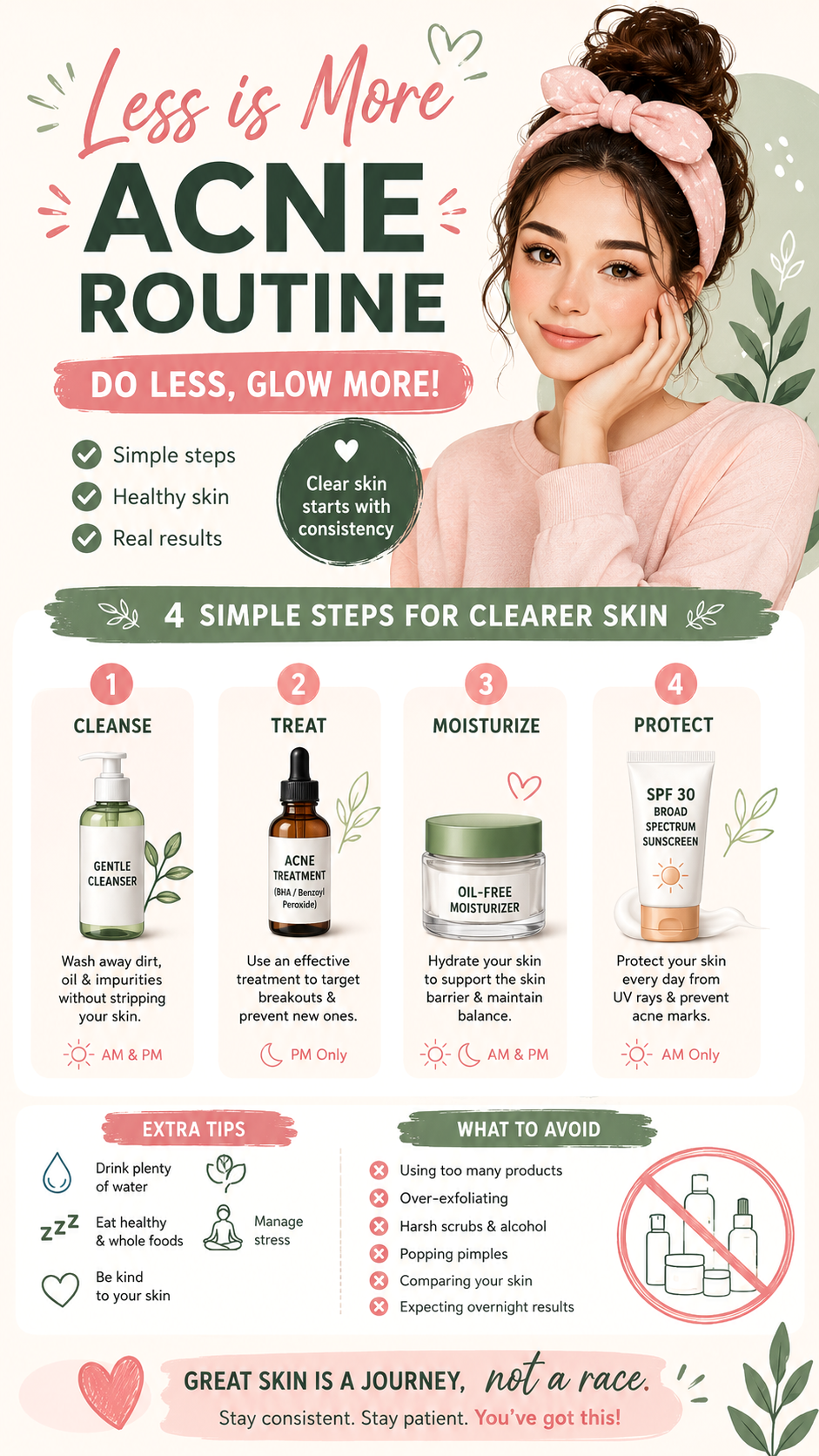
When it comes to acne-prone skin, many people assume that achieving a clear complexion requires a shelf full of products and a lengthy skincare routine. In reality, one of the most effective approaches is often the simplest. A minimal acne skincare routine focuses on consistency, gentle care, and using only the products your skin truly needs. Instead of overwhelming your skin with countless treatments, the goal is to support your skin barrier while targeting breakouts in a balanced and sustainable way.
Overloading the skin with active ingredients, frequent product changes, and aggressive treatments can often lead to irritation, dryness, and even more breakouts. A streamlined routine helps reduce confusion, encourages consistency, and makes it easier to identify what works for your unique skin.
Key Takeaways
- A simple routine can be highly effective for managing acne.
- Consistency is often more important than using many products.
- Gentle cleansing helps protect the skin barrier.
- Targeted treatments work best when used correctly and consistently.
- Daily moisturizing and sun protection are essential.
- Healthy lifestyle habits support clearer skin over time.
Why a Minimal Acne Routine Works
Acne develops due to a combination of factors including excess oil production, clogged pores, inflammation, and bacteria. While skincare products can help manage these issues, using too many products at once can stress the skin.
A minimal routine simplifies the process. Instead of layering multiple acids, serums, and treatments, you focus on a handful of products that perform essential functions. This approach reduces the risk of irritation while making your routine easier to maintain every day.
Important: Consistency beats complexity. A simple routine followed every day often delivers better results than an elaborate routine that is difficult to maintain.
Many people find that once they eliminate unnecessary products, their skin becomes calmer and more predictable. Redness decreases, sensitivity improves, and breakouts become easier to manage.
Step 1: Gentle Cleansing
Cleansing is the foundation of any skincare routine. The purpose of a cleanser is to remove dirt, oil, sunscreen, and impurities without stripping the skin’s natural moisture.
For acne-prone skin, choosing a gentle cleanser is crucial. Harsh cleansers may create a tight, squeaky-clean feeling, but they can damage the skin barrier and trigger increased oil production.
What to Look for in a Cleanser
- Gentle, non-stripping formulas
- Fragrance-free or low-irritation ingredients
- Suitable for your skin type
- Balanced pH formulations
Most people benefit from cleansing twice daily, once in the morning and once at night. If your skin tends to be very dry or sensitive, adjusting the frequency may help maintain comfort while keeping the skin clean.
Step 2: Use One Effective Acne Treatment
After cleansing, the next step is applying a treatment designed to target acne. This is where many people make mistakes by introducing multiple active ingredients simultaneously.
Instead, focus on one proven treatment and give it time to work. Consistency and patience are essential because acne treatments typically require several weeks before noticeable improvements appear.
Common Acne-Fighting Ingredients
- Benzoyl peroxide
- Salicylic acid
- Retinoids
- Azelaic acid
- Niacinamide
Introducing products gradually can help minimize irritation and make it easier to monitor how your skin responds.
Pro Tip: Starting slowly often leads to better long-term results. Using an acne treatment every other day initially can help your skin adapt before increasing usage.
Step 3: Never Skip Moisturizer
One of the biggest misconceptions in skincare is that oily or acne-prone skin does not need moisturizer. In reality, every skin type benefits from proper hydration.
Moisturizers help support the skin barrier, reduce water loss, and improve overall skin comfort. When the skin becomes excessively dry, it may produce more oil as compensation, potentially worsening acne concerns.
Benefits of Moisturizing
- Supports skin barrier health
- Reduces dryness from acne treatments
- Improves skin texture
- Helps maintain balanced hydration
- Enhances overall skin comfort
Look for lightweight, oil-free moisturizers if you have oily or acne-prone skin. These products provide hydration without feeling heavy or greasy.
Expert Insight
Many people focus exclusively on removing oil, but healthy skin requires balance. Supporting the skin barrier with proper hydration can actually improve the appearance of acne-prone skin over time.
Step 4: Daily Sun Protection
Sunscreen is often overlooked in acne routines, yet it is one of the most important steps for maintaining healthy skin.
Sun exposure can worsen post-acne marks, increase irritation, and contribute to premature skin aging. Certain acne treatments can also make the skin more sensitive to sunlight.
Choosing the Right Sunscreen
- Broad-spectrum protection
- SPF 30 or higher
- Non-comedogenic formulas
- Lightweight texture
- Comfortable daily wear
Applying sunscreen every morning helps protect your skin and supports the results of the rest of your routine.
Important: Even the most effective acne routine may struggle to deliver optimal results if sun protection is ignored. Daily SPF use helps preserve and protect your progress.
The Role of Lifestyle Habits in Clear Skin
Skincare products play an important role, but healthy habits can also influence your skin’s overall appearance and resilience.
While there is no single lifestyle change that guarantees clear skin, several supportive habits can contribute to better skin health over time.
Stay Hydrated
Drinking adequate water helps support overall wellness and may contribute to healthy-looking skin. Hydration works best when combined with proper skincare practices.
Prioritize Quality Sleep
Sleep is a crucial period for the body’s repair processes. Consistently getting enough rest may help support healthier skin and overall well-being.
Manage Stress
Stress can influence many aspects of health, including the skin. Finding effective ways to relax and manage daily pressures may support a calmer complexion.
Maintain a Balanced Diet
Eating a variety of nutrient-rich foods supports overall health. A balanced approach that includes fruits, vegetables, lean proteins, and whole foods may contribute to healthier skin over time.
Common Mistakes to Avoid
Sometimes what you avoid is just as important as what you include in your routine.
Using Too Many Products
Layering multiple active ingredients can increase irritation and make it difficult to determine which products are helping or harming your skin.
Over-Exfoliating
Exfoliation can be beneficial when done correctly, but excessive exfoliation may compromise the skin barrier and trigger sensitivity.
Frequently Switching Products
Many skincare products require time before results become visible. Constantly changing routines can make progress difficult to evaluate.
Popping Pimples
Picking at blemishes can increase inflammation and may raise the likelihood of scarring or prolonged healing.
Comparing Your Skin to Others
Every person’s skin is unique. Progress can vary significantly depending on genetics, lifestyle, skin type, and individual circumstances.
Building a Sustainable Skincare Routine
The best skincare routine is not necessarily the most expensive or complicated. It is the one you can follow consistently over the long term.
By focusing on the essentials, cleansing, treatment, moisturizing, and sun protection, you create a routine that supports your skin without overwhelming it.
Remember that skin improvement is often gradual. Small, consistent actions performed daily typically lead to more sustainable results than aggressive approaches.
Signs Your Routine Is Working
- Reduced irritation and redness
- More consistent skin texture
- Fewer new breakouts over time
- Improved hydration and comfort
- Better overall skin appearance
Tracking your skin with photos or notes can help you recognize progress that might otherwise be easy to overlook.
At a Glance
- Keep your routine simple and consistent.
- Use one targeted acne treatment at a time.
- Moisturize daily to support skin barrier health.
- Wear SPF every morning.
- Practice healthy lifestyle habits alongside skincare.
Conclusion
Clearer skin does not always require a complicated routine. In many cases, adopting a “less is more” philosophy can be one of the smartest approaches for acne-prone skin. Gentle cleansing, a targeted treatment, consistent moisturizing, and daily sun protection create a strong foundation for healthier skin.
Patience is essential throughout the process. Instead of chasing quick fixes or constantly trying new products, focus on consistency and giving your skin time to respond. Small daily habits can lead to meaningful improvements, helping you build a routine that feels manageable, effective, and sustainable for the long term.
Tags
Acne Routine Clear Skin Skincare Tips Minimalist Skincare Acne Prone Skin Healthy Skin Daily SPF Gentle Skincare