
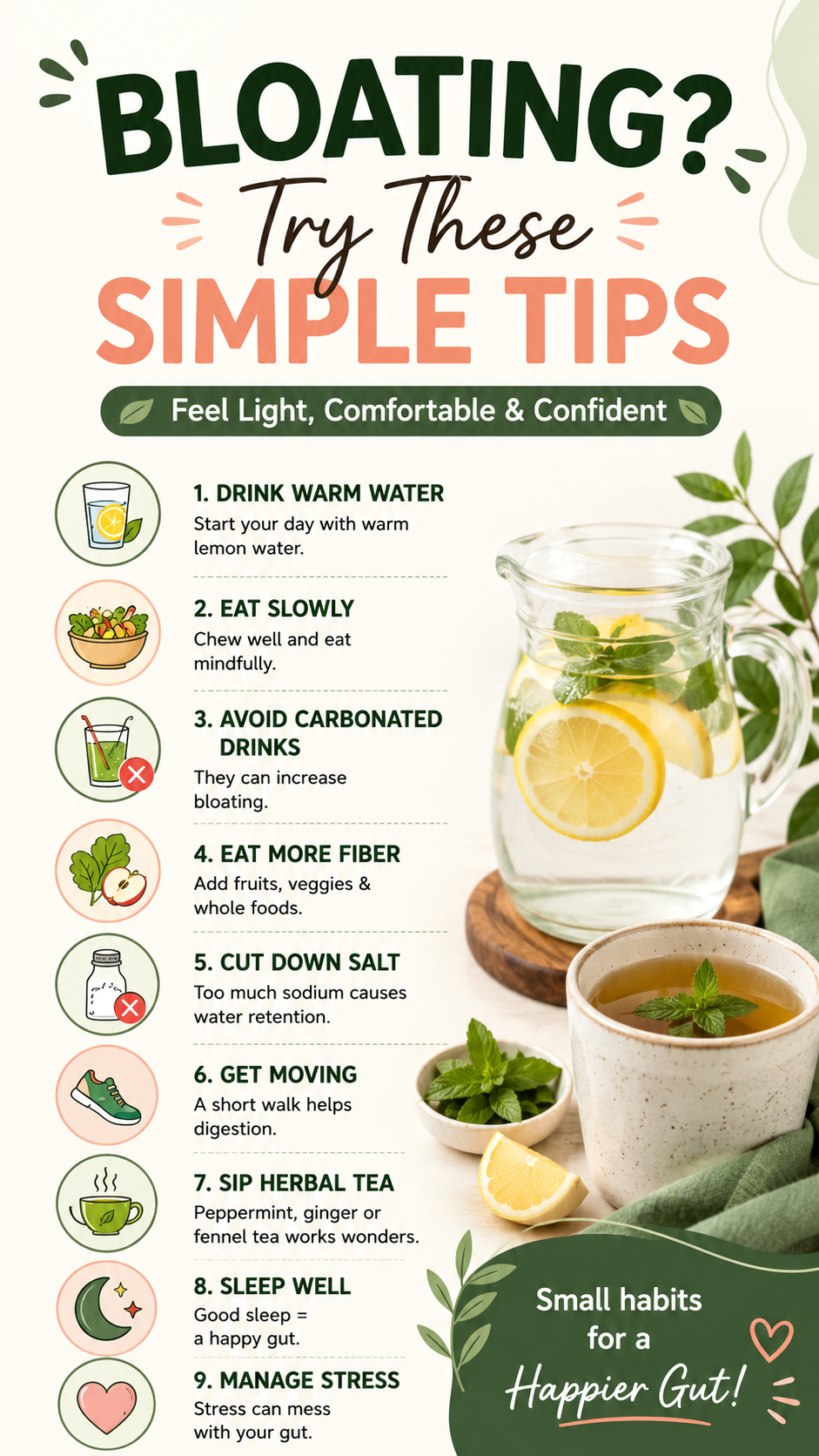
Feeling bloated can make even the best day feel uncomfortable. That heavy, swollen sensation in your stomach often comes with gas, sluggish digestion, and a lack of confidence. The good news is that many simple lifestyle habits can help reduce bloating naturally. Small changes in how you eat, drink, move, and manage stress can support healthy digestion and help you feel lighter throughout the day.
Key Takeaways
- Stay hydrated to support digestion.
- Eat slowly and chew food thoroughly.
- Limit carbonated drinks and excess sodium.
- Increase fiber gradually with fruits and vegetables.
- Regular movement can ease digestive discomfort.
- Stress and poor sleep can contribute to bloating.
What Causes Bloating?
Bloating happens when excess gas builds up in the digestive tract or when the body retains water. Certain foods, eating habits, hormonal changes, stress, and digestive conditions can all contribute to the problem.
Common causes of bloating include:
- Eating too quickly
- Overeating
- Carbonated beverages
- Excess sodium intake
- Lack of physical activity
- Stress and anxiety
- Poor sleep habits
- Digestive sensitivities
Important: Occasional bloating is common, but persistent or severe symptoms should be discussed with a healthcare professional, especially if accompanied by pain, unexplained weight loss, or changes in bowel habits.
Start Your Day with Warm Water
Hydration plays a major role in digestion. Starting the morning with warm water can help stimulate the digestive system and encourage regular bowel movements.
Many people enjoy adding lemon to warm water for flavor and freshness. While lemon itself is not a cure for bloating, drinking enough fluids throughout the day helps prevent constipation, which can contribute to abdominal discomfort.
Benefits of Staying Hydrated
- Supports healthy digestion
- Helps prevent constipation
- May reduce water retention
- Promotes overall wellness
Eat Slowly and Mindfully
Rushing through meals often causes people to swallow extra air, which can contribute to gas and bloating. Eating too fast may also lead to overeating before the body has a chance to signal fullness.
Mindful eating encourages you to slow down, chew thoroughly, and pay attention to hunger cues.
Simple Mindful Eating Habits
- Take smaller bites
- Chew food completely
- Put utensils down between bites
- Avoid distractions during meals
- Listen to your body’s signals
Pro Tip: Eating slowly gives your digestive system time to work efficiently and may help reduce feelings of heaviness after meals.
Avoid Carbonated Drinks
Soft drinks, sparkling water, and fizzy beverages contain carbon dioxide gas. Once swallowed, the gas can become trapped in the digestive system and create pressure inside the stomach.
If bloating is a frequent problem, replacing carbonated drinks with plain water, herbal tea, or infused water may provide relief.
Increase Fiber Gradually
Fiber supports healthy digestion and regular bowel movements. Fruits, vegetables, legumes, and whole grains are excellent sources of fiber.
However, adding too much fiber too quickly may temporarily increase gas and bloating. The key is to increase intake gradually while drinking plenty of water.
Fiber-Rich Foods to Include
- Apples
- Berries
- Broccoli
- Sweet potatoes
- Oats
- Brown rice
- Lentils
- Beans
Why This Matters
- Healthy digestion depends on both fiber and hydration.
- Gradual changes are easier on the digestive system.
- Consistency matters more than perfection.
Reduce Sodium Intake
Too much sodium encourages the body to retain water, which can make bloating worse. Processed foods, fast foods, canned soups, and salty snacks are often major sources of excess sodium.
Ways to Cut Back on Salt
- Cook meals at home more often
- Read food labels carefully
- Use herbs and spices instead of extra salt
- Limit processed foods
- Choose fresh ingredients when possible
Important: Hidden sodium is found in many packaged foods. Becoming aware of your intake can help reduce water retention and improve overall health.
Get Moving Every Day
Physical activity helps stimulate digestion and encourages the movement of gas through the digestive tract. Even light exercise can make a noticeable difference.
You do not need intense workouts to experience benefits. A short walk after meals may be enough to ease discomfort.
Easy Ways to Stay Active
- Take a 15-minute walk
- Stretch in the morning
- Practice yoga
- Use stairs instead of elevators
- Stay active throughout the day
Sip Herbal Tea
Herbal teas have long been enjoyed for their soothing properties. Peppermint tea, ginger tea, and fennel tea are popular choices among people seeking natural digestive support.
Popular Herbal Teas
- Peppermint tea
- Ginger tea
- Chamomile tea
- Fennel tea
- Lemon balm tea
Enjoying a warm cup after meals can become a relaxing part of your wellness routine.
Sleep and Digestion Are Connected
Sleep affects nearly every system in the body, including digestion. Poor sleep can increase stress hormones and interfere with gut health.
Adults should prioritize quality sleep by maintaining a consistent bedtime routine and creating a relaxing environment before bed.
Healthy Sleep Habits
- Maintain a regular schedule
- Avoid screens before bed
- Create a comfortable sleeping environment
- Limit caffeine late in the day
- Practice relaxation techniques
Manage Stress for Better Gut Health
The gut and brain are closely connected. Stress and anxiety can affect digestion and contribute to bloating in many people.
Finding healthy ways to manage stress can support both emotional well-being and digestive health.
Stress Management Ideas
- Meditation
- Deep breathing exercises
- Walking outdoors
- Journaling
- Yoga and stretching
- Spending time with loved ones
Pro Tip: Stress reduction does not need to be complicated. A few quiet moments each day can positively influence digestion and overall wellness.
When Should You Seek Medical Advice?
Most episodes of bloating are harmless and improve with lifestyle changes. However, recurring or severe symptoms deserve attention.
Contact a Healthcare Provider If You Experience:
- Persistent abdominal pain
- Blood in the stool
- Unexplained weight loss
- Severe constipation
- Frequent vomiting
- Symptoms that worsen over time
Quick Points
- Drink enough water daily.
- Eat slowly and chew thoroughly.
- Reduce sodium and carbonated beverages.
- Move your body regularly.
- Prioritize sleep and stress management.
Conclusion
Bloating is common, but it does not have to become part of everyday life. Simple habits like drinking enough water, eating mindfully, reducing excess sodium, enjoying herbal tea, staying active, and prioritizing sleep can all contribute to better digestion and greater comfort.
Building healthy routines takes time, and small changes often lead to meaningful improvements. By listening to your body and adopting supportive habits, you can help your digestive system function more efficiently and enjoy feeling lighter and more energized each day.
Tags
Bloating Relief Gut Health Healthy Digestion Natural Remedies Herbal Tea Healthy Lifestyle Wellness Tips