
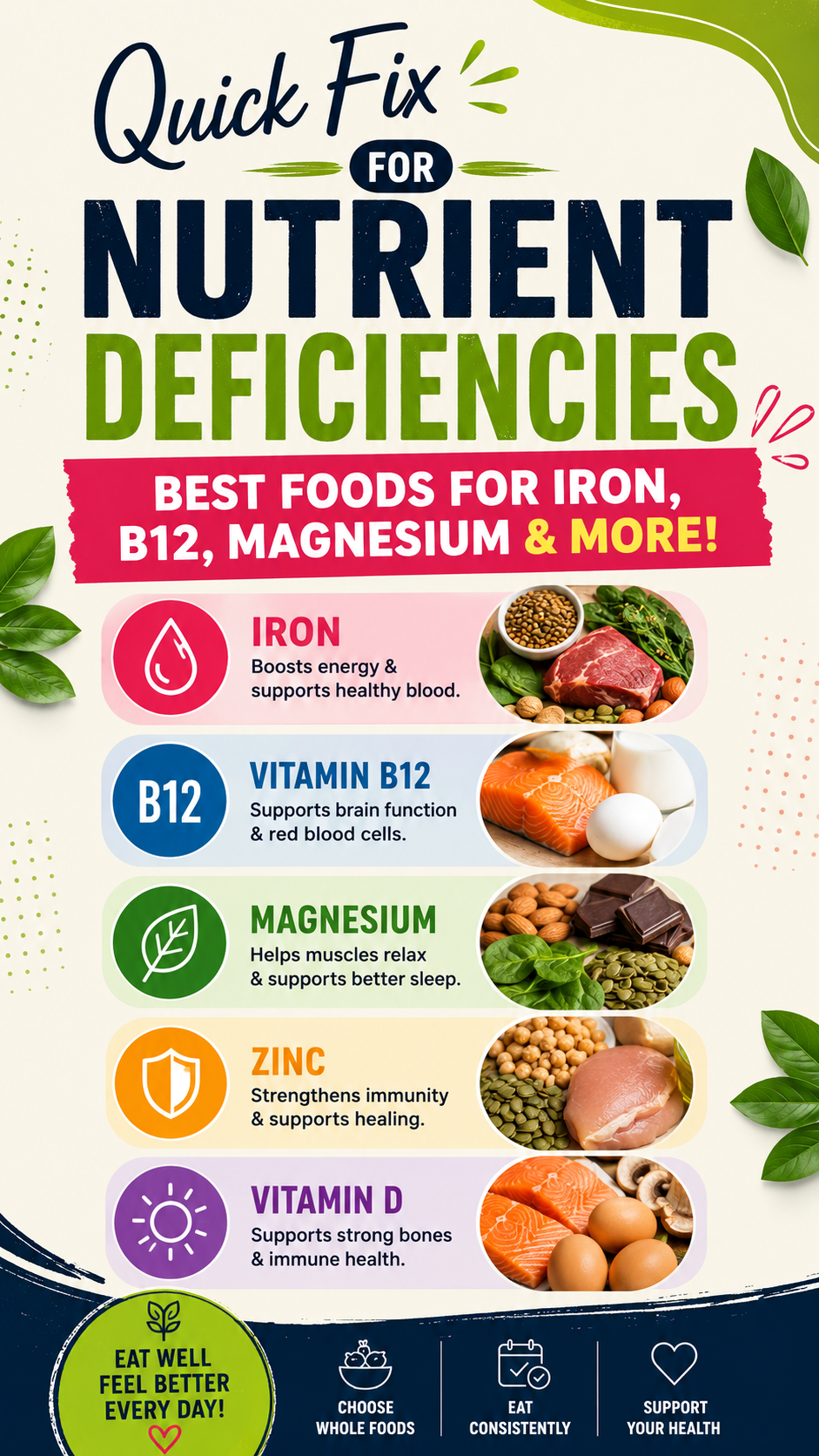
Nutrient deficiencies can quietly affect energy levels, mood, concentration, immunity, and overall well-being. Many people assume they are eating a balanced diet, yet they may still fall short on essential vitamins and minerals. The good news is that improving nutrient intake often starts with simple food choices. By focusing on nutrient-dense foods rich in iron, vitamin B12, magnesium, vitamin D, zinc, and other key nutrients, it is possible to support better health naturally and sustainably.
Whether you are feeling tired more often, struggling with brain fog, experiencing muscle cramps, or simply looking to improve your nutrition, understanding the role of essential nutrients can help you make smarter dietary decisions. Small adjustments can create meaningful changes over time.
Key Takeaways
- Iron supports oxygen transport and healthy energy levels.
- Vitamin B12 plays a critical role in nerve function and red blood cell production.
- Magnesium contributes to muscle function, relaxation, and metabolism.
- Whole foods often provide nutrients alongside beneficial fiber and antioxidants.
- Balanced meals help improve nutrient absorption and long-term wellness.
- Consistent dietary habits are more effective than occasional nutrition fixes.
Why Nutrient Deficiencies Are More Common Than Many People Think
Modern lifestyles can make it surprisingly easy to miss important nutrients. Busy schedules, highly processed foods, restrictive diets, and increased nutritional demands can all contribute to nutrient gaps. Even people who eat regularly may not always consume enough nutrient-rich foods to meet their daily needs.
Different deficiencies can produce different symptoms. Iron deficiency may contribute to fatigue and weakness. Low vitamin B12 can affect energy and neurological function. Inadequate magnesium intake may be associated with muscle discomfort, poor sleep quality, or increased stress sensitivity.
Important: Nutrient deficiencies often develop gradually. Early signs may seem minor, but addressing nutritional gaps sooner can support better long-term health outcomes.
Iron-Rich Foods for Better Energy and Vitality
Iron is one of the most discussed nutrients because it plays a direct role in carrying oxygen throughout the body. Without enough iron, the body may struggle to produce healthy red blood cells efficiently.
Top Food Sources of Iron
- Lean red meat
- Liver and organ meats
- Spinach and leafy greens
- Lentils and beans
- Tofu
- Pumpkin seeds
- Fortified cereals
Iron from animal foods is generally absorbed more efficiently than iron from plant foods. However, plant-based eaters can still achieve healthy iron intake through careful meal planning.
Improve Iron Absorption Naturally
Combining iron-rich foods with vitamin C sources can help increase absorption. Consider pairing spinach with bell peppers, lentils with tomatoes, or iron-fortified cereals with berries and citrus fruits.
Vitamin B12: The Essential Nutrient for Nerves and Energy
Vitamin B12 helps support nervous system function and contributes to the production of healthy red blood cells. Because B12 is found primarily in animal-based foods, certain groups may need to pay closer attention to their intake.
Best Sources of Vitamin B12
- Fish and seafood
- Eggs
- Dairy products
- Beef and poultry
- Fortified plant-based milk
- Fortified breakfast cereals
People following vegetarian or vegan eating patterns often rely on fortified foods or supplements to meet their B12 requirements. Regular monitoring of nutritional status can be helpful when dietary restrictions are involved.
Pro Tip: If you consume mostly plant-based foods, regularly including fortified products can help support healthy vitamin B12 intake without dramatically changing your eating style.
Magnesium: The Overlooked Mineral
Magnesium participates in hundreds of biochemical processes throughout the body. Despite its importance, many people do not consume enough magnesium-rich foods.
This mineral supports muscle function, energy production, nerve communication, and healthy sleep patterns. It also plays a role in maintaining normal blood pressure and bone health.
Foods Rich in Magnesium
- Almonds and cashews
- Pumpkin seeds
- Dark leafy greens
- Black beans
- Avocados
- Dark chocolate
- Whole grains
Adding a handful of nuts, seeds, or leafy greens to meals can significantly increase magnesium intake while also providing healthy fats and fiber.
Why This Matters
- Many nutrient-rich foods provide multiple vitamins and minerals simultaneously.
- Whole-food nutrition supports overall health beyond a single nutrient target.
- Consistent daily choices often deliver better results than drastic diet changes.
Vitamin D and Its Role in Overall Health
Vitamin D is essential for bone health, immune function, and calcium regulation. While sunlight exposure contributes to vitamin D production, dietary sources remain important, especially during seasons with limited sun exposure.
Food Sources of Vitamin D
- Fatty fish such as salmon and sardines
- Egg yolks
- Fortified dairy products
- Fortified plant-based beverages
- Fortified cereals
Because dietary vitamin D sources are somewhat limited, maintaining adequate intake often requires a combination of food choices and lifestyle considerations.
Zinc for Immunity and Recovery
Zinc supports immune function, wound healing, and protein synthesis. It is involved in numerous cellular processes and remains an important nutrient for overall wellness.
Top Zinc-Rich Foods
- Oysters and shellfish
- Beef
- Chicken
- Pumpkin seeds
- Chickpeas
- Nuts and legumes
A varied diet that includes both animal and plant-based sources can help support healthy zinc levels while providing a wide range of additional nutrients.
Building Meals That Naturally Support Nutrient Intake
One of the easiest ways to address nutrient gaps is by building balanced meals around whole foods. Rather than focusing on a single nutrient, aim to create meals that deliver multiple nutritional benefits.
A Balanced Plate Approach
- Fill half the plate with colorful vegetables.
- Add a quality protein source.
- Include whole grains or complex carbohydrates.
- Add healthy fats from nuts, seeds, or avocado.
- Use herbs and spices for flavor and antioxidants.
This simple framework supports a diverse nutrient profile while making healthy eating more practical and enjoyable.
Common Signs That May Suggest Nutrient Gaps
While symptoms alone cannot confirm a deficiency, certain patterns may indicate that nutritional intake deserves closer attention.
- Persistent fatigue
- Difficulty concentrating
- Frequent muscle cramps
- Brittle nails
- Poor exercise recovery
- Low energy throughout the day
- Increased susceptibility to illness
When symptoms persist, professional evaluation and appropriate testing can help identify underlying causes and guide nutritional strategies.
Important: Food choices are a powerful tool for supporting health, but persistent symptoms should always be discussed with a qualified healthcare professional to rule out underlying medical concerns.
Simple Everyday Habits That Support Better Nutrition
Improving nutrient intake does not require a complicated diet. Small habits practiced consistently can have a significant impact.
Practical Strategies
- Include vegetables at most meals.
- Choose whole foods more often than highly processed options.
- Keep nutrient-rich snacks available.
- Rotate protein sources throughout the week.
- Stay hydrated.
- Plan meals ahead of time.
- Focus on dietary variety.
Many nutritional gaps occur because people repeatedly eat the same limited selection of foods. Expanding variety often increases nutrient intake naturally.
The Power of Nutrient-Dense Foods
Nutrient-dense foods provide substantial amounts of vitamins, minerals, fiber, and beneficial compounds relative to their calorie content. These foods form the foundation of a healthy eating pattern and support overall wellness.
Examples include leafy greens, berries, legumes, fish, eggs, nuts, seeds, whole grains, and colorful vegetables. Incorporating more of these foods into daily meals can help address nutritional gaps while supporting energy and long-term health goals.
Foods That Deliver Multiple Nutrients
- Eggs provide protein, vitamin B12, and other essential nutrients.
- Spinach contributes iron, magnesium, and folate.
- Salmon offers protein, vitamin D, and healthy fats.
- Pumpkin seeds contain magnesium, iron, and zinc.
- Beans provide iron, fiber, and plant protein.
Choosing foods that offer multiple nutritional benefits can simplify healthy eating and maximize dietary value.
At a Glance
- Iron supports oxygen transport and energy.
- Vitamin B12 is essential for nerves and red blood cells.
- Magnesium contributes to muscle and metabolic health.
- Whole foods help fill nutrient gaps naturally.
- Balanced meals support long-term nutritional wellness.
Conclusion
Nutrient deficiencies can influence many aspects of daily life, from energy levels and concentration to physical performance and overall wellness. Fortunately, many common nutrient gaps can be addressed through thoughtful food choices and balanced eating habits. Prioritizing iron-rich foods, vitamin B12 sources, magnesium-packed ingredients, and other nutrient-dense options creates a strong foundation for better health.
Rather than chasing quick fixes, focus on consistent dietary improvements that support your body’s needs over time. A colorful, varied, and balanced diet remains one of the most effective ways to nourish your body, support long-term wellness, and feel your best every day.
Tags
Nutrient Deficiencies Iron Rich Foods Vitamin B12 Magnesium Foods Healthy Eating Nutrition Tips Balanced Diet Wellness