
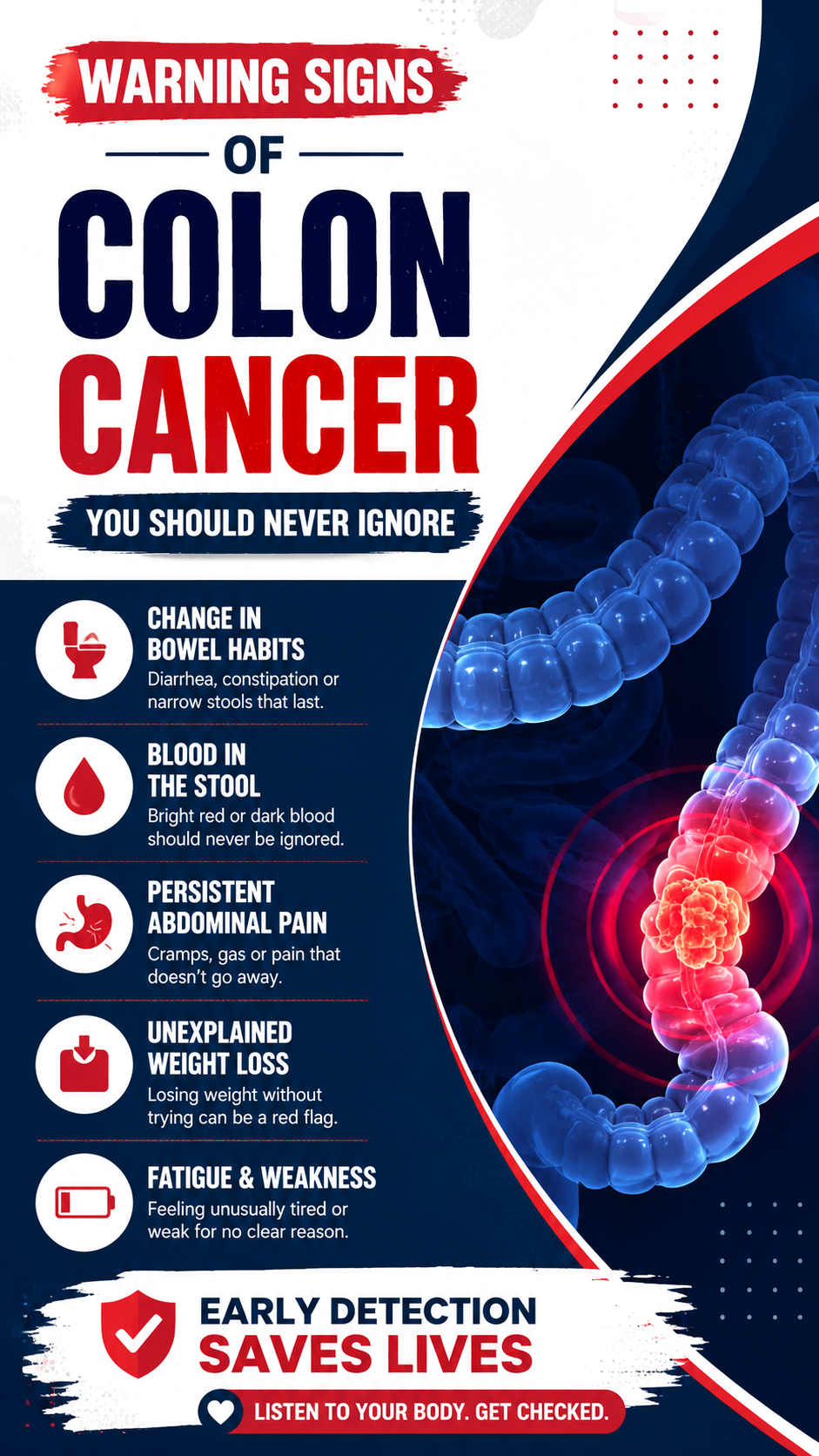
Colon cancer is one of the most common cancers worldwide, yet many people overlook its earliest warning signs. Because symptoms can develop gradually and may resemble less serious digestive issues, it is easy to dismiss important changes in your body. Understanding the potential signs of colon cancer and recognizing when to seek medical advice can play an important role in early detection and treatment.
Many cases of colon cancer begin with subtle symptoms that are easy to ignore. Changes in bowel habits, unexplained fatigue, abdominal discomfort, or blood in the stool can all be signals that deserve attention. While these symptoms do not automatically mean cancer is present, they should never be brushed aside, especially when they persist.
Key Takeaways
- Colon cancer symptoms can be subtle in the early stages.
- Persistent digestive changes should be evaluated by a healthcare professional.
- Blood in the stool is never a symptom that should be ignored.
- Early detection often improves treatment outcomes.
- Regular screenings are important, especially for higher-risk individuals.
- Knowing the warning signs helps you make informed health decisions.
Why Recognizing Colon Cancer Symptoms Matters
Colon cancer develops in the large intestine and often begins as small growths known as polyps. Over time, some polyps can become cancerous. The challenge is that early-stage colon cancer may produce few or no symptoms at all.
As the disease progresses, warning signs become more noticeable. Unfortunately, many people delay seeking medical attention because they assume symptoms are related to diet, stress, aging, or common digestive problems.
Important: Persistent digestive symptoms that last for several weeks should always be discussed with a healthcare provider. Early evaluation can help identify serious conditions before they become more advanced.
Awareness does not mean becoming fearful of every symptom. Instead, it means understanding what changes may require further attention and taking a proactive approach to your health.
Changes in Bowel Habits
One of the most commonly reported warning signs of colon cancer is a noticeable change in bowel habits. This can include:
- Persistent diarrhea
- Ongoing constipation
- Narrow or pencil-thin stools
- A feeling that the bowel does not empty completely
- Frequent urgency to have a bowel movement
Everyone experiences occasional digestive changes, but symptoms that continue for several weeks deserve medical attention. The key concern is persistence rather than a temporary issue caused by dietary choices or illness.
When a tumor grows within the colon, it can alter the movement of waste through the digestive tract. This disruption may create noticeable differences in stool consistency, frequency, or appearance.
When Should You Be Concerned?
If bowel habit changes continue beyond a few weeks or become progressively worse, it is wise to schedule a medical evaluation. Even if the cause is not cancer, identifying the underlying issue is important.
Blood in the Stool
Blood in the stool is one of the most significant warning signs associated with colon cancer. It may appear as bright red blood, dark red blood, or stools that look black and tarry.
Sometimes blood is visible, while in other cases it is hidden and only detected through testing. Because blood loss can occur gradually, some individuals may not realize it is happening until other symptoms develop.
Possible Causes Beyond Cancer
Blood in the stool can also result from hemorrhoids, anal fissures, inflammatory bowel disease, and other digestive conditions. However, it should never be assumed that these are the cause without proper evaluation.
Pro Tip: Any unexplained rectal bleeding should be reported to a healthcare professional. Prompt evaluation can help rule out serious conditions and provide peace of mind.
Persistent Abdominal Discomfort
Ongoing abdominal discomfort may be another sign that something is affecting the colon. Symptoms can vary significantly from person to person and may include:
- Cramping
- Bloating
- Gas pains
- Pressure sensations
- General abdominal discomfort
Many people experience occasional digestive discomfort, especially after eating certain foods. The difference is that cancer-related symptoms often persist and do not improve with typical lifestyle adjustments.
If abdominal pain becomes frequent, severe, or increasingly disruptive, medical evaluation is recommended.
Why This Matters
- Persistent abdominal symptoms may indicate an underlying digestive issue.
- Symptoms that worsen over time deserve prompt attention.
- Early medical evaluation can help identify problems before complications develop.
Unexplained Weight Loss
Losing weight without intentionally changing your diet or exercise routine can sometimes be a warning sign of an underlying health condition, including colon cancer.
Unexpected weight loss may occur because cancer cells consume energy, alter metabolism, or affect the body’s ability to absorb nutrients properly. In some cases, reduced appetite contributes to the problem.
While weight fluctuations can occur for many reasons, significant unexplained weight loss should never be ignored.
Tracking Changes Over Time
Keeping a record of your weight can help identify trends. If you notice a steady decline without explanation, discuss it with a healthcare provider.
Fatigue and Weakness
Many people are surprised to learn that ongoing fatigue can be associated with colon cancer. This symptom often develops gradually and may be overlooked because fatigue is common in everyday life.
When blood loss occurs over time, even in small amounts, anemia can develop. Reduced red blood cell levels can make it harder for oxygen to reach tissues efficiently, leading to exhaustion and weakness.
Signs may include:
- Feeling tired despite adequate sleep
- Reduced stamina during normal activities
- Difficulty concentrating
- General weakness
- Shortness of breath during exertion
Persistent fatigue that cannot be explained by lifestyle factors deserves further investigation.
A Feeling That the Bowel Does Not Empty Completely
Some individuals with colon cancer describe a constant sensation that they still need to have a bowel movement even after using the restroom.
This feeling can be frustrating and uncomfortable. It may occur because a growth within the colon interferes with normal bowel function.
Although this symptom can also occur with other digestive conditions, persistent sensations of incomplete emptying should be evaluated, particularly when accompanied by other warning signs.
Who Is at Higher Risk?
Anyone can develop colon cancer, but certain factors may increase risk. Understanding these factors can help guide discussions about screening and prevention.
Common Risk Factors
- Increasing age
- Family history of colon cancer
- Personal history of colon polyps
- Inflammatory bowel diseases
- Smoking
- Heavy alcohol consumption
- Obesity
- Physical inactivity
Having one or more risk factors does not mean you will develop colon cancer. However, awareness can help you make informed healthcare decisions.
Important: Individuals with a family history of colon cancer may need earlier or more frequent screening. Personalized guidance from a healthcare provider is essential.
The Importance of Screening
Screening is one of the most effective tools available for detecting colon cancer early. In some cases, screening can even help prevent cancer by identifying and removing precancerous polyps before they become dangerous.
Several screening options are available, including stool-based tests and colonoscopy procedures. The best choice depends on age, personal risk factors, medical history, and healthcare recommendations.
Benefits of Early Detection
- Greater treatment options
- Improved outcomes
- Potential detection before symptoms appear
- Reduced risk of advanced disease
- Better long-term health management
Many people feel nervous about screening, but the benefits often far outweigh temporary discomfort or inconvenience.
Healthy Habits That May Support Colon Health
While no lifestyle choice can completely eliminate cancer risk, healthy habits can contribute to overall digestive wellness.
Focus on a Balanced Diet
Eating a variety of nutrient-rich foods can support digestive health. Many experts encourage diets rich in fruits, vegetables, whole grains, and fiber.
Stay Physically Active
Regular movement supports overall wellness and may contribute to better digestive function. Activities do not need to be intense. Consistency is often more important than perfection.
Avoid Tobacco Use
Smoking affects numerous aspects of health and is associated with increased risk for several cancers.
Limit Excessive Alcohol Intake
Moderation can support overall health goals and reduce exposure to known risk factors.
Symptoms That Require Prompt Medical Attention
Although many digestive symptoms have non-cancerous causes, some situations should be addressed as soon as possible.
- Persistent rectal bleeding
- Significant unexplained weight loss
- Ongoing abdominal pain
- Sudden changes in bowel habits lasting several weeks
- Severe fatigue with no obvious cause
- Dark or black stools
Seeking medical advice early does not mean assuming the worst. It means taking symptoms seriously and ensuring appropriate evaluation.
At a Glance
- Changes in bowel habits can be an early warning sign.
- Blood in the stool should never be ignored.
- Persistent fatigue may be linked to hidden blood loss.
- Screening plays a major role in early detection.
- Prompt medical evaluation can improve outcomes.
Conclusion
Colon cancer awareness starts with understanding the warning signs and listening to your body. Symptoms such as persistent bowel changes, blood in the stool, unexplained weight loss, abdominal discomfort, and ongoing fatigue should never be dismissed when they continue over time.
While these symptoms do not automatically indicate cancer, they are important signals that deserve professional evaluation. Early detection remains one of the most powerful tools in improving outcomes and expanding treatment options.
Staying informed, keeping up with recommended screenings, and seeking medical advice when symptoms arise can help you take a proactive approach to long-term digestive health. Awareness today may make a meaningful difference tomorrow.
Tags
Colon Cancer Colon Cancer Symptoms Cancer Awareness Early Detection Digestive Health Health Screening Preventive Health Wellness Tips