
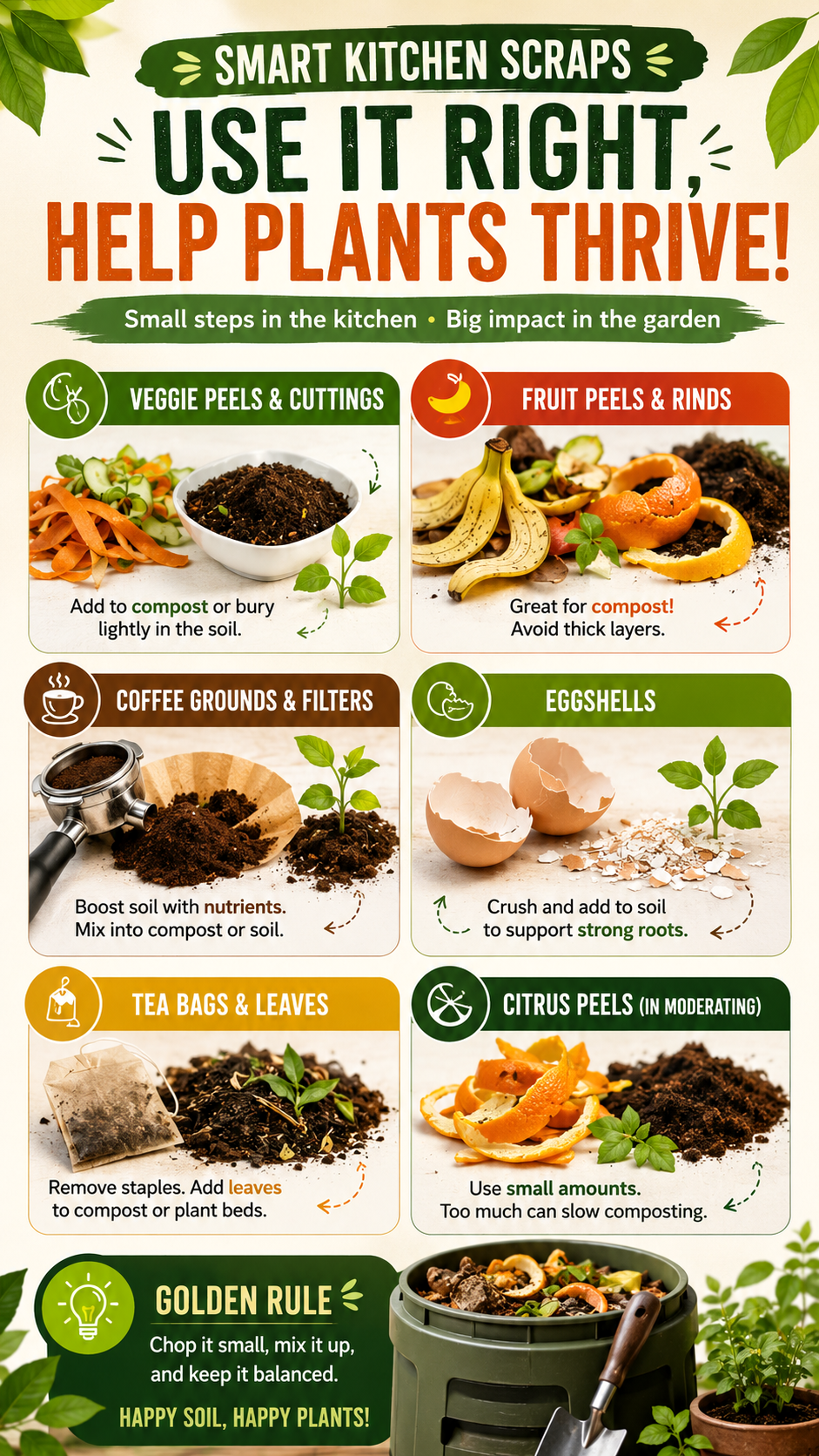
Healthy soil is the foundation of every thriving garden, but many gardeners unknowingly make mistakes when adding kitchen scraps directly to their planting beds. While composting and recycling organic waste is one of the best ways to support sustainable gardening, not every food scrap should be tossed onto the soil without proper preparation. Understanding how common kitchen leftovers interact with the soil can help you avoid nutrient imbalances, pest problems, and slow decomposition.
Many household scraps contain valuable nutrients that can benefit plants when used correctly. Coffee grounds, fruit peels, eggshells, tea leaves, and even wood ash can all contribute to healthier soil. The key is knowing when, where, and how to apply them. With a few simple adjustments, kitchen waste can become one of the most valuable resources in your garden.
Key Takeaways
- Most kitchen scraps work best after composting first.
- Coffee grounds should be mixed into compost rather than applied alone.
- Fruit and citrus peels need proper decomposition before reaching plant roots.
- Crushed eggshells break down faster and provide better soil benefits.
- Tea leaves can be composted, but many tea bags are not compostable.
- Wood ash should only be used after checking soil pH.
Why Kitchen Scraps Can Be Good for Soil
Kitchen scraps contain organic matter that enriches the soil over time. Organic matter improves moisture retention, encourages beneficial microbial activity, and helps create a healthier environment for plant roots. Instead of sending food waste to landfills, gardeners can recycle nutrients back into their gardens through proper composting practices.
When organic materials break down naturally, they release nutrients that plants need for growth. This process supports a more sustainable gardening approach while reducing household waste. However, decomposition takes time, and applying scraps incorrectly can cause more harm than good.
Important: The biggest mistake gardeners make is assuming that anything organic automatically improves soil. Many scraps require proper composting before they become beneficial. Fresh materials can attract pests, create unpleasant odors, and temporarily disrupt soil balance.
The Right Way to Use Coffee Grounds
Coffee grounds are often praised as a gardening miracle, but they are frequently misunderstood. Many gardeners scatter fresh coffee grounds directly around plants, expecting instant benefits. While coffee grounds contain valuable organic matter, applying them as a thick layer on the soil surface can create problems.
Dense layers of coffee grounds may compact over time, reducing water penetration and airflow. Fresh grounds can also influence soil conditions in ways that are not ideal for every plant.
The better approach is to add coffee grounds to a compost pile. Mixed with other organic materials, they break down gradually and become part of a balanced compost blend that enriches soil safely.
Benefits of Properly Composted Coffee Grounds
- Add organic matter to the soil.
- Support beneficial microbial activity.
- Improve compost texture.
- Help retain moisture when incorporated into finished compost.
- Contribute valuable nutrients during decomposition.
Banana Peels and Fruit Scraps
Banana peels are often promoted as a quick fertilizer solution. While they contain nutrients, burying large pieces directly around plants is not always the best strategy. Fresh peels decompose slowly and may attract insects or other unwanted visitors to the garden.
Instead of placing peels directly into planting areas, gardeners can compost them or soak them in water before using the resulting liquid as part of a broader feeding routine. Composting remains the most reliable option because it allows nutrients to become available gradually and naturally.
Fruit scraps in general work best when chopped into smaller pieces before entering a compost system. Smaller pieces break down faster and contribute to a healthier compost pile.
Why This Matters
- Large food scraps take longer to decompose.
- Fresh fruit waste can attract pests if left exposed.
- Composting converts scraps into a stable soil amendment.
Using Citrus Peels Without Causing Problems
Orange peels, lemon rinds, and other citrus scraps can be valuable additions to compost piles when used in moderation. However, excessive amounts may slow decomposition because citrus materials can take longer to break down than softer kitchen waste.
Adding small quantities of citrus scraps to a balanced compost pile is usually the best approach. Mixing them with leaves, vegetable scraps, and other compost ingredients helps maintain healthy decomposition.
Directly covering garden beds with large amounts of citrus peel is generally not recommended. Moderation is the key to making citrus waste beneficial rather than problematic.
Tips for Composting Citrus Peels
- Cut peels into smaller pieces.
- Mix with a variety of compost materials.
- Avoid creating thick layers of citrus waste.
- Turn compost regularly to encourage decomposition.
Understanding Wood Ash in the Garden
Wood ash can be a useful soil amendment under specific conditions. Many gardeners appreciate its ability to contribute minerals, but it should never be applied blindly. Soil conditions vary greatly, and adding wood ash without understanding your garden’s needs can lead to imbalances.
Wood ash can influence soil pH, making it more suitable for some situations than others. This is why testing soil before application is a smart step.
Pro Tip: Always check your soil’s pH before applying wood ash. What benefits one garden may create problems in another. Soil testing provides valuable insight that helps prevent unnecessary amendments.
Using wood ash sparingly and only when appropriate can support healthy plant growth. Applying it to suitable crops during the proper season often produces better results than random applications throughout the garden.
Eggshells: Small Preparation Makes a Big Difference
Eggshells are one of the most common kitchen scraps used in gardening. Many gardeners toss large shell fragments directly onto the soil, assuming they will quickly provide benefits. The reality is that whole or large pieces can take a very long time to break down.
Crushing eggshells into a fine powder dramatically increases their surface area. This allows them to decompose more efficiently and integrate into the soil more effectively.
After rinsing and drying eggshells, use a mortar, grinder, or food processor to create smaller particles. The finer the material, the faster it becomes part of the soil ecosystem.
Best Practices for Eggshell Recycling
- Wash shells before storing them.
- Allow them to dry completely.
- Crush into a fine consistency.
- Add to compost or mix lightly into garden soil.
Tea Bags and Tea Leaves
Tea leaves are excellent additions to compost piles because they break down relatively easily and contribute organic matter. The challenge often comes from the tea bag itself.
Not all tea bags are made from compostable materials. Some contain synthetic fibers that do not decompose properly. Before adding a tea bag to your compost pile, check whether it is specifically labeled compostable.
If there is any uncertainty, remove the tea leaves and compost them separately while disposing of the bag responsibly.
Important: Composting the contents of tea bags is often beneficial, but the bag material itself may not break down naturally. Taking a few seconds to separate the leaves can improve compost quality.
Why Composting First Is Usually the Best Option
One of the strongest gardening principles is allowing organic materials to fully decompose before they reach plant roots. Composting transforms kitchen waste into a stable, nutrient-rich amendment that supports healthy growth.
During composting, microorganisms break down food scraps into forms that plants can use more effectively. This process reduces the risk of attracting pests, creating odors, or introducing uneven nutrient distribution into garden beds.
The result is a dark, crumbly material often referred to as black gold by gardeners because of its tremendous value in improving soil structure.
Advantages of Composting Kitchen Scraps
- Reduces household waste.
- Improves soil structure.
- Encourages beneficial microorganisms.
- Supports moisture retention.
- Provides a slow release of nutrients.
- Creates healthier growing conditions.
Building Better Compost at Home
Successful composting relies on balance. Combining nutrient-rich green materials with carbon-rich brown materials creates the ideal environment for decomposition. Kitchen scraps belong to the green category and should be mixed with dry leaves, shredded paper, cardboard, or similar materials.
Regular turning helps introduce oxygen into the pile and speeds up the breakdown process. Maintaining adequate moisture also keeps microbial activity strong without making the pile soggy.
Patience is essential. Quality compost develops over time, but the rewards are worth the wait. Rich compost improves nearly every aspect of soil health and supports stronger, healthier plants.
At a Glance
- Compost most kitchen scraps before using them in the garden.
- Crush eggshells for faster breakdown.
- Use citrus peels in moderation.
- Check tea bags for compostable materials.
- Test soil before applying wood ash.
Conclusion
Kitchen scraps can become powerful tools for creating healthier soil and more productive gardens when used correctly. Coffee grounds, banana peels, citrus rinds, eggshells, tea leaves, and wood ash all have potential benefits, but proper preparation and application matter. Simply tossing scraps onto garden beds is not always the best solution.
By composting first, crushing materials when needed, and understanding the unique characteristics of each type of organic waste, gardeners can avoid common mistakes while maximizing soil health. These simple practices help transform everyday kitchen leftovers into valuable resources that support sustainable gardening and thriving plants for years to come.
Tags
Composting Tips Kitchen Scraps Organic Gardening Soil Health Coffee Grounds Eggshell Compost Sustainable Gardening Home Composting