
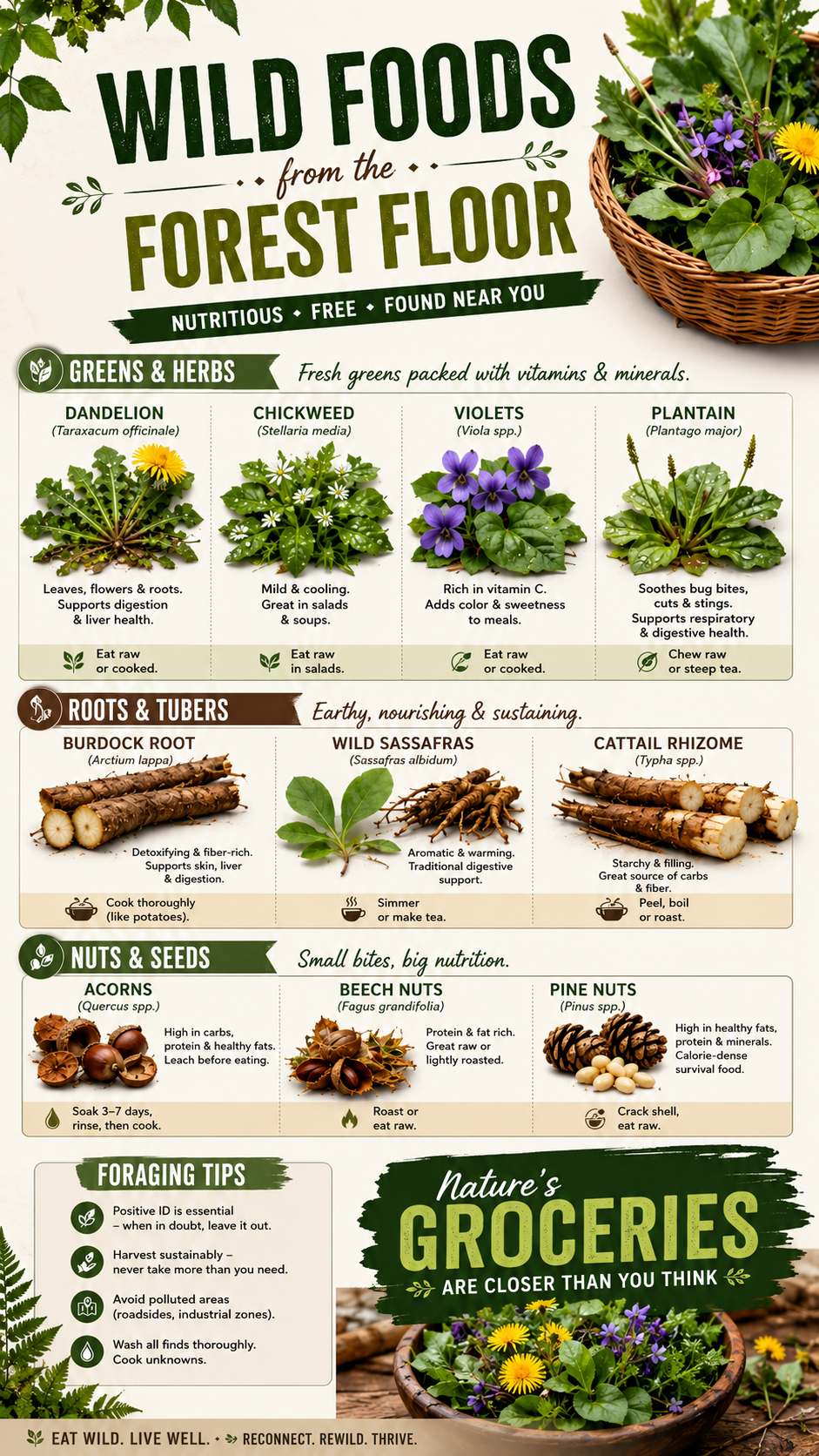
Nature offers an incredible variety of edible plants that have supported people for generations. From nutrient-rich greens to energy-packed nuts and nourishing roots, the forest floor contains a surprising range of natural foods waiting to be discovered by those who know what to look for. Learning about wild edible plants is not only a practical outdoor skill but also an enjoyable way to deepen your appreciation for local ecosystems and seasonal changes.
Whether you enjoy hiking, camping, bushcraft, homesteading, or simply spending time outdoors, understanding common edible plants can make every adventure more rewarding. Responsible foraging combines observation, patience, sustainable harvesting, and careful plant identification. With the right knowledge, you can confidently recognize edible species while protecting the environments that produce them.
Key Takeaways
- Learn to identify common edible plants before harvesting.
- Always practice sustainable and ethical foraging.
- Many wild greens, roots, and seeds provide valuable nutrients.
- Correct identification is the foundation of safe foraging.
- Preparation methods vary depending on the plant species.
Why Wild Edible Plants Are Worth Learning About
Wild edible plants have long been part of traditional food systems around the world. Long before grocery stores existed, communities relied on seasonal plants for vitamins, minerals, fiber, and natural flavors. Today, foraging has experienced renewed interest because many people want to reconnect with nature, reduce food waste, and better understand the landscapes around them.
Important: Safe foraging begins with accurate identification. Never consume a wild plant unless you are completely certain of its identity. Many edible plants have lookalikes that can be harmful.
Learning a handful of common edible species is often far more valuable than trying to memorize hundreds at once. As your experience grows, your confidence and understanding of seasonal growth patterns will naturally improve.
Popular Wild Greens Found on the Forest Floor
Some of the easiest wild foods to recognize are leafy greens. These plants often appear in open fields, woodland edges, and disturbed ground. Many are surprisingly nutritious and have been used in traditional cooking for centuries.
Dandelion
Dandelion is one of the best-known edible plants. Young leaves are commonly added to salads, flowers can be used in recipes, and roots have traditionally been roasted or prepared in various ways. Rich in vitamins and minerals, this familiar plant demonstrates how valuable common weeds can be.
Chickweed
Chickweed is appreciated for its tender leaves and mild flavor. It works well fresh in salads and can also be added to soups or cooked dishes. Because it grows in cool seasons, it is often among the first edible greens available each year.
Violets
Wild violets provide attractive flowers and edible leaves. The blossoms can brighten salads while the leaves contribute gentle flavor and texture. Their colorful appearance also makes them popular for edible garnishes.
Plantain
Plantain is another widespread wild plant commonly found in lawns, trailsides, and open areas. Young leaves are generally more tender than mature ones, making them preferable for many culinary uses.
Expert Insight
Focus on mastering five to ten easily recognized edible plants before expanding your knowledge. Building confidence with a small collection of species greatly reduces identification mistakes and creates a stronger foundation for advanced foraging.
Edible Roots and Underground Foods
Roots and underground stems often provide concentrated energy because plants store nutrients below the surface. Harvesting these foods requires additional care since removing roots usually kills the plant. Sustainable collection is especially important.
Burdock Root
Burdock produces a long taproot that has been enjoyed in various cuisines for generations. Proper cooking improves texture and flavor, making it a versatile ingredient in soups, stir fries, and roasted vegetable dishes.
Wild Sassafras
Sassafras has a long history in traditional herbal practices and culinary use. Proper identification remains essential because several tree species can appear similar during early growth stages.
Cattail Rhizomes
Cattails are among the most useful wetland plants. Their underground rhizomes have historically been valued as an emergency food source after proper preparation. Different parts of the cattail become useful during different seasons.
Pro Tip: Harvest underground plant parts only when populations are abundant. Leaving healthy plants behind helps maintain natural ecosystems and ensures future growth.
Nuts and Seeds That Provide Lasting Energy
Wild nuts and seeds are excellent sources of healthy fats, protein, and calories. During autumn, forests often produce abundant harvests that have historically helped people prepare for winter.
Acorns
Acorns are one of the most abundant wild foods in many regions. However, they require proper leaching to remove naturally occurring tannins before being suitable for many culinary uses.
Beech Nuts
Beech trees produce small but nutritious nuts that have traditionally been eaten roasted or incorporated into recipes. Their seasonal availability makes them a welcome autumn food.
Pine Nuts
Certain pine species produce edible seeds that are prized for their rich flavor and nutritional value. Proper species identification is essential because not every pine produces edible seeds suitable for harvesting.
Edible Forest Mushrooms
Mushrooms attract many outdoor enthusiasts because of their unique flavors and culinary versatility. Species such as morels and chanterelles are especially popular among experienced foragers.
Unlike many edible plants, mushrooms demand exceptional care during identification. Many edible mushrooms have poisonous lookalikes that can appear remarkably similar.
Important: Never rely on a single characteristic when identifying wild mushrooms. Use multiple field characteristics and trusted identification resources before harvesting.
Best Practices for Responsible Foraging
- Harvest only what you can confidently identify.
- Take only what you need.
- Leave enough plants for wildlife and future growth.
- Avoid polluted roadsides and contaminated areas.
- Respect private property and local regulations.
- Carry harvested plants in breathable baskets or bags.
- Wash edible plants thoroughly before preparation.
Building Your Foraging Skills Over Time
Successful foraging is a lifelong learning process. Each season introduces different edible species, changing weather conditions, and unique opportunities to expand your knowledge. Spending regular time outdoors improves observation skills while helping you recognize plant habitats and growth cycles.
Many experienced foragers recommend keeping a personal journal with notes about flowering times, harvest seasons, locations, and identification features. Over time, these observations become an invaluable learning resource.
The Benefits of Connecting With Nature Through Foraging
Foraging encourages people to slow down and pay attention to the natural world. Instead of simply walking through a forest, you begin noticing leaves, flowers, bark textures, soil conditions, and seasonal changes. This deeper awareness creates a more meaningful outdoor experience while building practical knowledge.
Learning about edible plants also supports environmental appreciation. Understanding native ecosystems often inspires people to protect habitats, avoid overharvesting, and practice responsible stewardship for future generations.
Quick Points
- Start with a few easily identified edible plants.
- Harvest sustainably and responsibly.
- Always verify plant identification before eating.
- Learn seasonal growth patterns.
- Continue building knowledge through regular outdoor practice.
Conclusion
Exploring edible plants on the forest floor opens the door to a fascinating combination of outdoor adventure, practical knowledge, and appreciation for the natural world. From nutritious greens and flavorful flowers to energy-rich nuts and useful roots, wild foods demonstrate the remarkable diversity found in local landscapes.
The most rewarding foragers are those who approach nature with patience, curiosity, and respect. By learning accurate identification, harvesting responsibly, and continually expanding your knowledge, you can safely enjoy one of humanity’s oldest outdoor skills while helping preserve healthy ecosystems for years to come.
Tags
Wild Edibles Foraging Guide Edible Plants Forest Food Survival Skills Bushcraft Nature Education Outdoor Living