
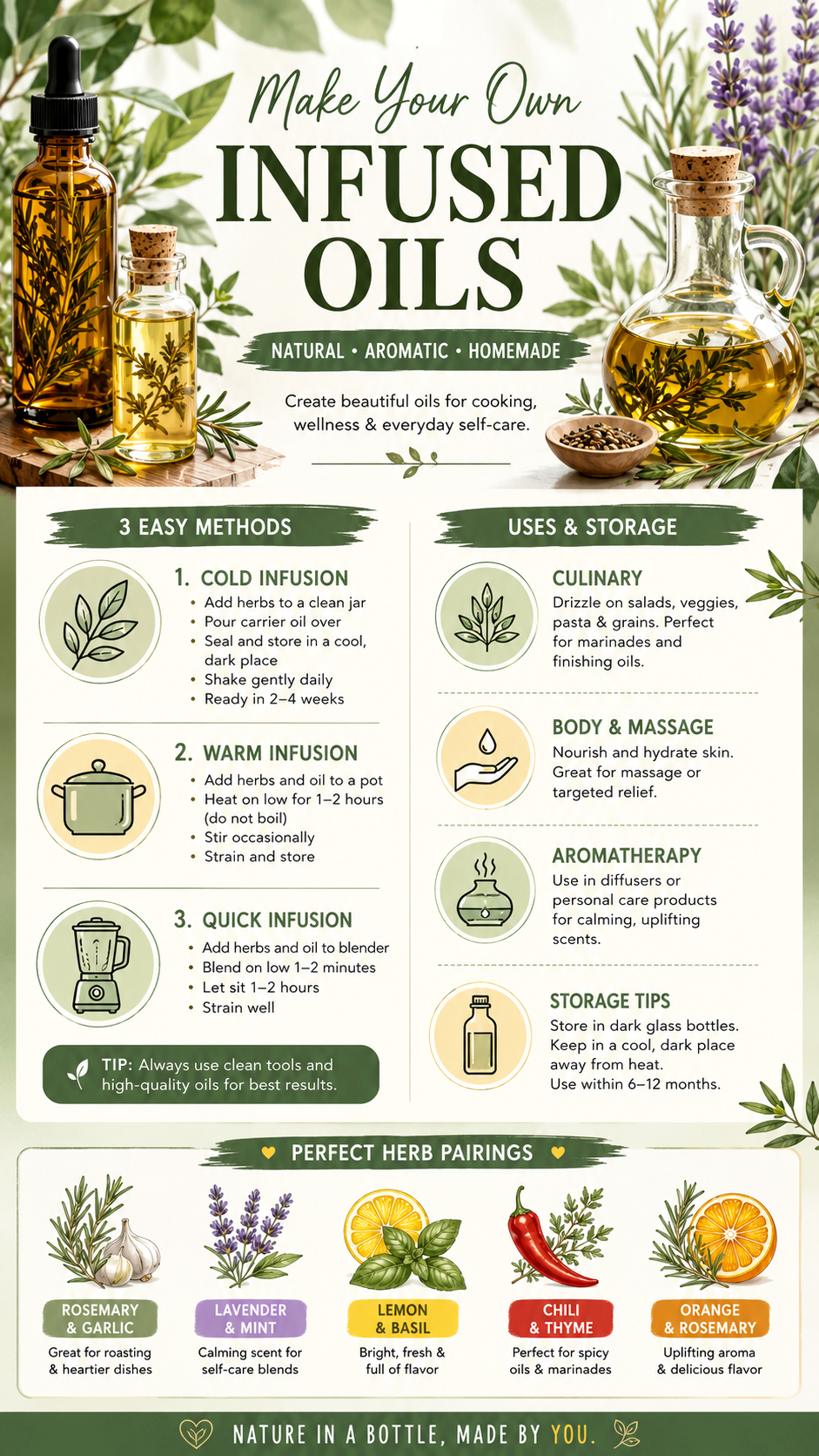
Homemade infused oils are a simple and rewarding way to capture the natural flavors and aromas of herbs, spices, citrus peels, and botanicals. Whether you want to elevate your favorite recipes, create luxurious massage oils, or explore natural wellness projects, infused oils offer endless possibilities. With just a few quality ingredients and a little patience, you can create beautifully aromatic oils that are both practical and enjoyable to use.
From rosemary and thyme for savory dishes to lavender and calendula for relaxing body oils, herbal infusions combine creativity with functionality. Understanding the proper techniques, storage methods, and safety practices ensures every batch delivers excellent results while maintaining freshness and quality.
Key Takeaways
- Choose fresh, high-quality carrier oils and clean herbs.
- Cold and warm infusion methods each offer unique advantages.
- Store infused oils in dark glass bottles away from heat and sunlight.
- Always label homemade oils with ingredients and preparation dates.
- Use culinary oils only with food-safe ingredients.
- Proper storage extends freshness and preserves flavor.
What Are Infused Oils?
Infused oils are carrier oils that have absorbed the flavor, aroma, or beneficial characteristics of herbs, spices, flowers, or other natural ingredients. Unlike essential oils, infused oils are created by steeping botanicals directly in oil rather than extracting concentrated plant compounds through distillation.
This gentle process produces versatile oils suitable for cooking, skincare, massage, and DIY beauty projects, depending on the ingredients used.
Important: Always choose ingredients appropriate for your intended use. Herbs that are excellent in the kitchen may not always be ideal for skincare, and botanical safety should always be considered before making topical products.
Benefits of Making Infused Oils at Home
Creating infused oils yourself gives you complete control over ingredients, quality, and flavor intensity. It is also an enjoyable project that allows you to customize blends for your own preferences.
- Fresh, natural flavors for everyday cooking.
- Personalized herbal combinations.
- Affordable compared to specialty infused oils.
- Creative homemade gifts.
- Reduced artificial additives.
- Versatile uses throughout the home.
Popular Carrier Oils
The carrier oil serves as the foundation of every infusion. Different oils provide different flavors, textures, and shelf lives.
- Olive oil: Rich flavor and excellent for culinary infusions.
- Avocado oil: Mild taste with a high smoke point.
- Grapeseed oil: Light texture suitable for skincare.
- Sweet almond oil: Popular for massage oils.
- Jojoba oil: Long-lasting and excellent for personal care.
- Sunflower oil: Neutral flavor for versatile cooking.
Three Easy Infusion Methods
1. Cold Infusion
The cold infusion method requires patience but produces delicate flavors and aromas with minimal heat exposure.
- Fill a clean glass jar with dry herbs.
- Cover completely with your chosen carrier oil.
- Seal tightly.
- Store in a cool, dark location.
- Shake gently every day.
- Strain after two to four weeks.
2. Warm Infusion
Gentle heat speeds up the infusion process while maintaining much of the botanical character.
- Combine herbs and oil in a heat-safe container.
- Warm gently using a double boiler or slow cooker.
- Avoid boiling.
- Heat for one to two hours.
- Cool completely.
- Strain through a fine mesh strainer or cheesecloth.
3. Quick Blender Method
When time is limited, blending herbs with oil provides a faster option for fresh infusions.
- Add herbs and oil to a blender.
- Blend briefly on low speed.
- Allow the mixture to rest.
- Strain thoroughly.
Expert Insight
The quality of your finished infused oil depends more on ingredient freshness and cleanliness than on expensive equipment. Dry herbs thoroughly, use sanitized containers, and avoid introducing moisture into your oil.
Best Herbs and Botanicals for Infused Oils
Culinary Favorites
- Rosemary
- Thyme
- Basil
- Garlic
- Chili peppers
- Lemon peel
- Orange peel
- Oregano
Wellness and Self Care
- Lavender
- Calendula
- Chamomile
- Rose petals
- Peppermint
Pro Tip: Dry herbs generally provide better shelf life because excess moisture can shorten the lifespan of infused oils. Properly dried botanicals help create safer, more stable infusions.
Creative Ways to Use Infused Oils
In the Kitchen
Herb-infused oils bring extra flavor to countless recipes.
- Drizzle over salads.
- Finish roasted vegetables.
- Flavor fresh bread.
- Create homemade marinades.
- Add to pasta dishes.
- Enhance grain bowls.
For Massage and Body Care
Many carrier oils infused with skin-friendly botanicals can become part of relaxing self-care routines.
- Massage oils.
- Body moisturizers.
- Cuticle treatments.
- DIY body scrubs.
- Bath oil blends.
Aromatherapy Inspired Projects
Infused oils can complement homemade wellness products and create naturally pleasant aromas when incorporated into suitable DIY recipes.
Proper Storage Tips
Correct storage protects flavor, aroma, and overall quality.
- Use clean dark glass bottles.
- Keep bottles tightly sealed.
- Store away from direct sunlight.
- Avoid excessive heat.
- Label every bottle.
- Monitor for changes in smell or appearance.
Important: If an infused oil develops an unusual odor, cloudiness beyond normal settling, or visible spoilage, discard it immediately. Proper handling and storage are essential for maintaining quality.
Helpful Safety Tips
- Work with sanitized jars and utensils.
- Research unfamiliar herbs before use.
- Perform a patch test before widespread topical application.
- Keep homemade oils away from children and pets.
- Store oils within their recommended shelf life.
Common Mistakes to Avoid
- Using wet herbs without proper preparation.
- Overheating the oil.
- Leaving herbs exposed above the oil.
- Using poor-quality carrier oils.
- Skipping labels and preparation dates.
- Storing bottles in warm kitchens or sunny windows.
Frequently Asked Questions
How long do homemade infused oils last?
The shelf life depends on the carrier oil, ingredients, and storage conditions. Properly stored oils often remain fresh for several months.
Can I combine multiple herbs?
Yes. Many people enjoy creating custom herbal blends that complement one another in flavor or aroma.
Should I refrigerate infused oils?
Many infused oils are stored in a cool, dark place, though refrigeration may be appropriate for certain ingredients or recipes. Always follow safe preparation and storage practices for your chosen botanicals.
Quick Points
- Use quality carrier oils for better results.
- Choose clean, dry herbs whenever possible.
- Store oils in dark glass containers.
- Label every batch with the preparation date.
- Enjoy infused oils for cooking, wellness, and DIY projects.
Conclusion
Making infused oils at home is an enjoyable project that blends creativity with everyday practicality. Whether your goal is enhancing meals with fragrant herbs or creating soothing oils for personal care, the process is approachable and highly customizable. By selecting quality ingredients, following safe preparation methods, and storing your creations properly, you can enjoy beautifully infused oils that add natural character to your kitchen and self-care routine for months to come.
Tags
Infused Oils Herbal Infusions DIY Kitchen Homemade Oils Natural Living Herbal Recipes Oil Storage DIY Wellness