
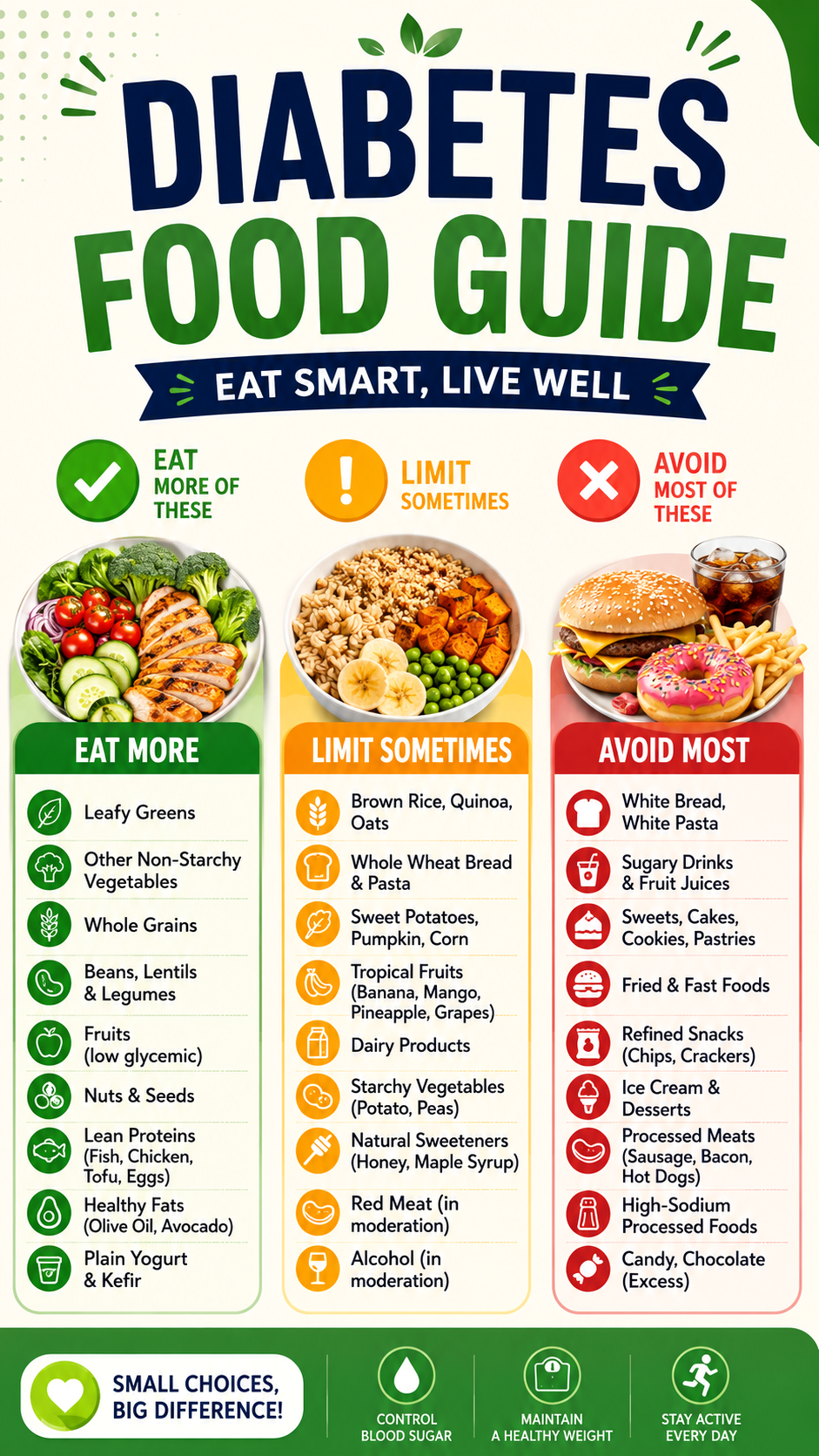
Managing diabetes becomes much easier when you have a clear understanding of which foods support healthy blood sugar levels and which ones should be enjoyed in moderation or avoided. A well-organized diabetes food list serves as a practical everyday reference, making grocery shopping, meal planning, and cooking less overwhelming. Rather than focusing on strict restrictions, a balanced approach encourages choosing nutrient-rich foods that provide lasting energy, essential vitamins, healthy fats, quality protein, and fiber.
Whether you are newly diagnosed with Type 2 diabetes, helping a family member, or simply looking for healthier eating habits, having an easy-to-follow food chart can simplify daily decisions. By understanding the difference between foods to eat regularly, foods to limit, and foods to avoid, you can build satisfying meals while supporting better overall health.
Key Takeaways
- Choose fiber-rich vegetables as the foundation of most meals.
- Balance carbohydrates with lean protein and healthy fats.
- Limit refined grains, sugary drinks, and processed snacks.
- Focus on whole foods instead of heavily processed options.
- Consistent healthy eating patterns matter more than perfection.
Understanding a Diabetes Food List
A diabetes food list is designed to organize foods into categories that help people make informed dietary choices. Instead of labeling foods as completely good or bad, the goal is to encourage balance and portion awareness.
Many diabetes-friendly eating plans divide foods into three simple groups:
- Eat: Foods rich in nutrients, fiber, lean protein, and healthy fats that can be enjoyed regularly.
- Limit: Foods that can fit into a balanced diet but require portion control.
- Avoid: Highly processed foods, refined carbohydrates, and sugary items that may contribute to rapid blood sugar spikes.
Important: No single food causes or cures diabetes. Long-term eating habits, balanced meals, physical activity, and guidance from healthcare professionals all work together to support healthy blood sugar management.
Foods to Eat More Often
The healthiest diabetes meal plans emphasize nutrient-dense foods that digest more slowly and provide steady energy throughout the day.
Leafy Green Vegetables
Vegetables like spinach, kale, broccoli, cabbage, cauliflower, bok choy, zucchini, cucumbers, celery, and bell peppers are packed with vitamins while remaining relatively low in carbohydrates.
- High in fiber
- Rich in antioxidants
- Naturally filling
- Excellent for everyday meals
Lean Protein Sources
Protein helps increase satiety and can support balanced meals when paired with vegetables and healthy carbohydrates.
- Chicken
- Turkey
- Fish such as salmon, cod, tuna, trout, sardines, and mackerel
- Eggs
- Tofu
- Tempeh
- Shrimp and seafood
Beans and Legumes
Black beans, kidney beans, chickpeas, lentils, and edamame provide an excellent combination of plant protein and dietary fiber, making them a satisfying addition to soups, salads, and grain bowls.
Healthy Fats
Healthy fats contribute to fullness and support overall nutrition.
- Avocados
- Olive oil
- Avocado oil
- Walnuts
- Almonds
- Pecans
- Pumpkin seeds
- Flaxseeds
- Chia seeds
Why This Matters
Building meals around vegetables, lean protein, healthy fats, and fiber-rich foods can help create more satisfying meals while supporting steady energy throughout the day.
Foods to Enjoy in Moderation
Not every carbohydrate needs to disappear from your plate. Whole grains and naturally sweet fruits can often be part of a balanced eating pattern when portions are appropriate.
Whole Grains
Whole grains generally contain more fiber than refined grains.
- Brown rice
- Oats
- Quinoa
- Barley
- Bulgur
- Buckwheat
- Farro
- Whole wheat bread
- Whole wheat pasta
Starchy Vegetables
Sweet potatoes, pumpkin, squash, carrots, corn, peas, beets, and parsnips provide valuable nutrients but contain more carbohydrates than leafy vegetables.
Fruit Choices
Fruit offers vitamins, minerals, and antioxidants. Portion size remains important because fruit naturally contains sugar.
- Apples
- Berries
- Pears
- Peaches
- Plums
- Kiwi
- Oranges
- Grapefruit
- Pomegranate
- Watermelon
- Cantaloupe
Pro Tip: Pair fruit with Greek yogurt, nuts, or a source of protein to create a more balanced snack that helps you stay full longer.
Foods to Limit or Avoid
Highly refined carbohydrates and sugary foods often digest quickly and may lead to larger blood sugar fluctuations. Reducing these foods can make overall meal planning much easier.
Refined Grain Products
- White bread
- White pasta
- Bagels
- Pastries
- Donuts
- Cookies
- Cakes
Sugary Drinks
Beverages can contain surprisingly high amounts of added sugar.
- Soft drinks
- Sweet tea
- Energy drinks
- Fruit juice with added sugar
- Sweetened coffee beverages
Highly Processed Snacks
Many packaged snacks combine refined flour, unhealthy fats, and added sugars.
- Potato chips
- Candy
- Chocolate bars
- Crackers
- Frozen desserts
- Fast food
Building a Balanced Diabetes-Friendly Plate
Creating balanced meals does not require complicated recipes. A simple plate method works well for many people.
- Fill half the plate with non-starchy vegetables.
- Add lean protein to roughly one quarter of the plate.
- Choose a moderate serving of whole grains or starchy vegetables for the remaining quarter.
- Include healthy fats in reasonable amounts.
- Drink water or another unsweetened beverage.
Smart Grocery Shopping Tips
Planning ahead helps reduce impulse purchases and makes healthy eating much easier throughout the week.
- Create a grocery list before shopping.
- Buy fresh or frozen vegetables.
- Choose plain yogurt over flavored varieties.
- Select whole grain products whenever possible.
- Read nutrition labels carefully.
- Compare added sugar amounts between products.
- Keep healthy snacks available at home.
Important: Reading ingredient labels can be just as valuable as checking nutrition facts. Products with shorter ingredient lists and fewer added sugars often make healthier everyday choices.
Easy Meal Planning Ideas
Breakfast
- Plain Greek yogurt with berries and chia seeds
- Vegetable omelet with avocado
- Oatmeal topped with walnuts and cinnamon
Lunch
- Grilled chicken salad
- Lentil soup with vegetables
- Turkey lettuce wraps
Dinner
- Baked salmon with broccoli and quinoa
- Grilled chicken with roasted vegetables
- Tofu stir fry with mixed vegetables
Snack Ideas
- Apple slices with peanut butter
- Mixed nuts
- Vegetables with hummus
- Plain yogurt
- Hard-boiled eggs
Quick Points
- Choose whole foods more often than processed foods.
- Prioritize vegetables at every meal.
- Watch portion sizes for carbohydrate-rich foods.
- Limit sugary beverages and refined snacks.
- Consistency leads to long-term success.
Conclusion
A printable diabetes food list is more than a grocery guide. It is a practical tool that encourages healthier daily habits and simplifies meal planning. Focusing on vegetables, lean proteins, healthy fats, legumes, whole grains, and mindful portions can help create enjoyable meals while supporting better nutrition.
Remember that healthy eating is not about perfection. Small, consistent improvements often produce the greatest long-term results. Use a food list as a convenient reference, explore new recipes, and build meals that are both nutritious and satisfying. With thoughtful planning and balanced food choices, healthy eating can become a sustainable part of everyday life.
Tags
Diabetes Food List Diabetic Diet Type 2 Diabetes Low Glycemic Foods Healthy Meal Planning Low Carb Diet Printable Food Chart