
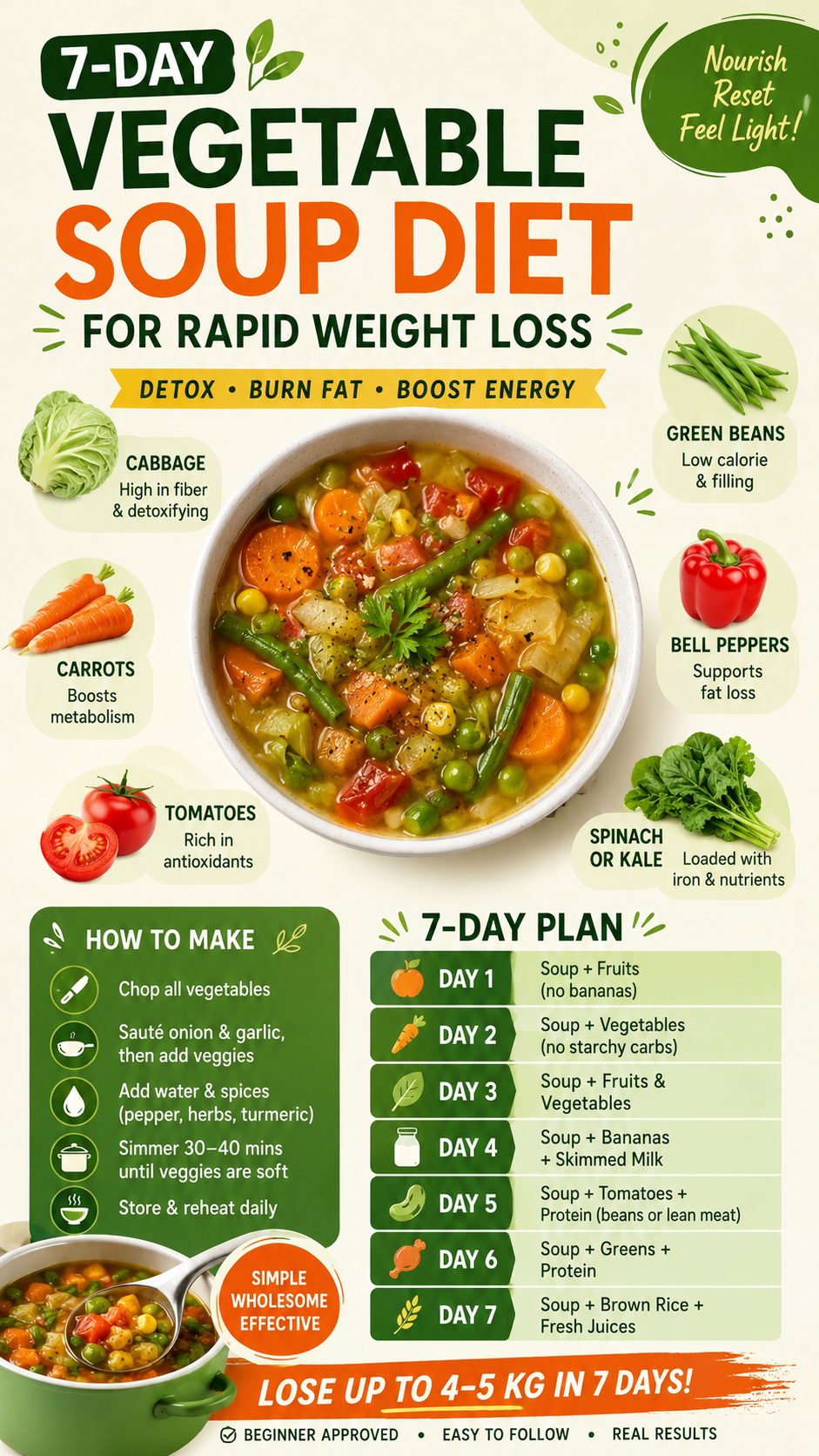
Eating more vegetables is one of the simplest ways to support overall wellness, and a vegetable soup cleanse is a delicious way to make that happen. Packed with colorful ingredients like cabbage, carrots, tomatoes, green beans, spinach, and bell peppers, a hearty vegetable soup can provide fiber, vitamins, minerals, and hydration in every bowl. Many people choose a short-term soup-focused meal plan as a way to reset eating habits, increase vegetable intake, and enjoy lighter meals without sacrificing flavor.
While no single food or recipe can magically eliminate inflammation or guarantee rapid weight loss, a vegetable-rich soup can become part of a balanced eating pattern that supports healthy digestion, improved satiety, and better nutrition. Combined with mindful eating, adequate hydration, and regular physical activity, this approach can help you feel energized while making healthier food choices throughout the week.
Key Takeaways
- Vegetable soup is naturally rich in fiber and essential nutrients.
- A soup-focused meal plan may help increase fullness while reducing calorie intake.
- Colorful vegetables provide antioxidants that support overall health.
- Preparing soup in batches makes healthy eating more convenient.
- Long-term success comes from balanced nutrition rather than restrictive dieting.
Why Vegetable Soup Is So Popular
Vegetable soup has remained a favorite healthy meal for decades because it combines nutrition, comfort, and convenience. Unlike many processed foods, homemade vegetable soup allows complete control over ingredients, sodium levels, herbs, and seasonings.
Each serving delivers a satisfying combination of vegetables while providing plenty of water, helping meals feel filling without excessive calories. This makes vegetable soup appealing to people looking to manage their weight while still enjoying generous portions.
Important: Vegetable soup works best as part of a balanced eating pattern. Rather than viewing it as a miracle solution, think of it as an easy way to increase vegetable intake and replace higher-calorie meals with nutrient-dense alternatives.
3 Surprising Benefits of a Soup Cleanse for Inflammation
1. It Naturally Increases Antioxidant Intake
Colorful vegetables are naturally rich in antioxidants, vitamins, and plant compounds that help protect cells from oxidative stress. Ingredients commonly found in vegetable soup include:
- Cabbage for fiber and vitamin C.
- Carrots for beta-carotene.
- Tomatoes for lycopene.
- Bell peppers for vitamin C.
- Spinach or kale for iron, folate, and vitamin K.
- Green beans for fiber and valuable micronutrients.
Eating a variety of colorful vegetables throughout the week supports overall wellness while helping diversify nutrient intake.
2. It Can Help You Feel Fuller Longer
One overlooked benefit of vegetable soup is its impressive ability to promote fullness. Water-rich vegetables combined with dietary fiber slow digestion and may reduce unnecessary snacking between meals.
This feeling of fullness often makes it easier to maintain portion control during the rest of the day without constantly thinking about food.
3. It Encourages Healthier Eating Habits
Preparing vegetable soup ahead of time makes nutritious meals more accessible during busy days. Having ready-to-eat soup available reduces reliance on processed convenience foods or fast food.
Meal preparation also encourages mindful grocery shopping, increased vegetable consumption, and more consistent eating routines.
Expert Insight
Consistency usually delivers better long-term results than extreme dieting. A nourishing vegetable soup can become a healthy weekly habit that supports better food choices without feeling overly restrictive.
Nutritional Highlights of Common Soup Ingredients
Cabbage
Cabbage provides fiber, vitamin C, and beneficial plant compounds while remaining naturally low in calories. It also adds satisfying texture to homemade soup.
Carrots
Carrots contribute natural sweetness while supplying beta-carotene, which the body converts into vitamin A to support eye health and immune function.
Tomatoes
Tomatoes contain lycopene along with vitamins A and C. Cooking tomatoes in soup may increase the availability of certain beneficial compounds.
Green Beans
Green beans add texture, fiber, and valuable nutrients while keeping meals light and satisfying.
Spinach or Kale
Leafy greens boost the nutritional value of soup with iron, calcium, vitamin K, folate, and numerous antioxidants.
Bell Peppers
Bell peppers provide exceptional amounts of vitamin C while contributing vibrant color and fresh flavor.
How to Prepare a Flavorful Vegetable Soup
- Wash and chop all vegetables into bite-sized pieces.
- Sauté onions and garlic in a small amount of olive oil.
- Add carrots, cabbage, tomatoes, green beans, and peppers.
- Pour in vegetable broth or water.
- Season with black pepper, turmeric, parsley, oregano, thyme, and other herbs.
- Simmer for 30 to 40 minutes until vegetables become tender.
- Add leafy greens during the final few minutes of cooking.
- Taste and adjust seasonings before serving.
Pro Tip: Preparing a large batch once or twice each week makes healthy meals incredibly convenient. Divide the soup into containers so nutritious lunches and dinners are always ready.
Sample 7-Day Vegetable Soup Meal Plan
Many people enjoy following a structured meal plan for a week to increase vegetable intake while simplifying meal decisions.
- Day 1: Vegetable soup with fresh fruit.
- Day 2: Vegetable soup with additional non-starchy vegetables.
- Day 3: Vegetable soup with fruits and vegetables.
- Day 4: Vegetable soup with bananas and low-fat dairy.
- Day 5: Vegetable soup with lean protein and tomatoes.
- Day 6: Vegetable soup with leafy greens and protein.
- Day 7: Vegetable soup with brown rice and fresh fruit.
Individual nutritional needs vary, so adapting any meal plan to personal preferences and health goals is always recommended.
Tips to Make Your Soup Even Healthier
- Use low-sodium vegetable broth.
- Add fresh herbs instead of excessive salt.
- Include beans for extra protein and fiber.
- Mix different vegetables throughout the week.
- Add lean chicken or tofu if additional protein is desired.
- Serve alongside whole grains when appropriate.
- Stay hydrated throughout the day.
Common Mistakes to Avoid
Even healthy meals can become less beneficial when preparation habits are overlooked.
- Using too much salt.
- Adding heavy cream or excessive butter.
- Relying on soup alone for extended periods.
- Ignoring protein needs.
- Skipping healthy fats entirely.
- Expecting instant or permanent results after only one week.
Important: Sustainable wellness comes from balanced eating habits maintained over time. A vegetable soup cleanse can serve as a motivating starting point, but lasting health depends on variety, moderation, and consistency.
Can Vegetable Soup Support Weight Management?
Many people include vegetable soup in weight management plans because it combines volume, hydration, and fiber. Meals that are satisfying without being overly calorie-dense can help reduce overall energy intake while still providing essential nutrients.
Pairing vegetable soup with lean proteins, whole grains, healthy fats, regular exercise, and adequate sleep creates a more complete approach to healthy living than relying on restrictive eating plans alone.
Quick Points
- Eat a variety of colorful vegetables every week.
- Batch cooking saves time and supports healthy habits.
- Fiber and hydration help increase fullness.
- Balance soup meals with protein and whole foods.
- Focus on long-term lifestyle improvements.
Conclusion
A vegetable soup cleanse can be a simple and enjoyable way to increase vegetable consumption while supporting healthier eating habits. Nutrient-rich ingredients such as cabbage, carrots, tomatoes, green beans, spinach, kale, and bell peppers offer vitamins, minerals, antioxidants, and fiber that contribute to overall wellness. Although no single recipe can promise dramatic health outcomes, incorporating homemade vegetable soup into a balanced lifestyle can help you enjoy satisfying meals, improve meal preparation habits, and make nutritious choices easier every day.
Tags
Vegetable Soup Soup Cleanse Anti-Inflammatory Foods Healthy Meal Prep Weight Management Healthy Recipes Clean Eating Wellness Nutrition