
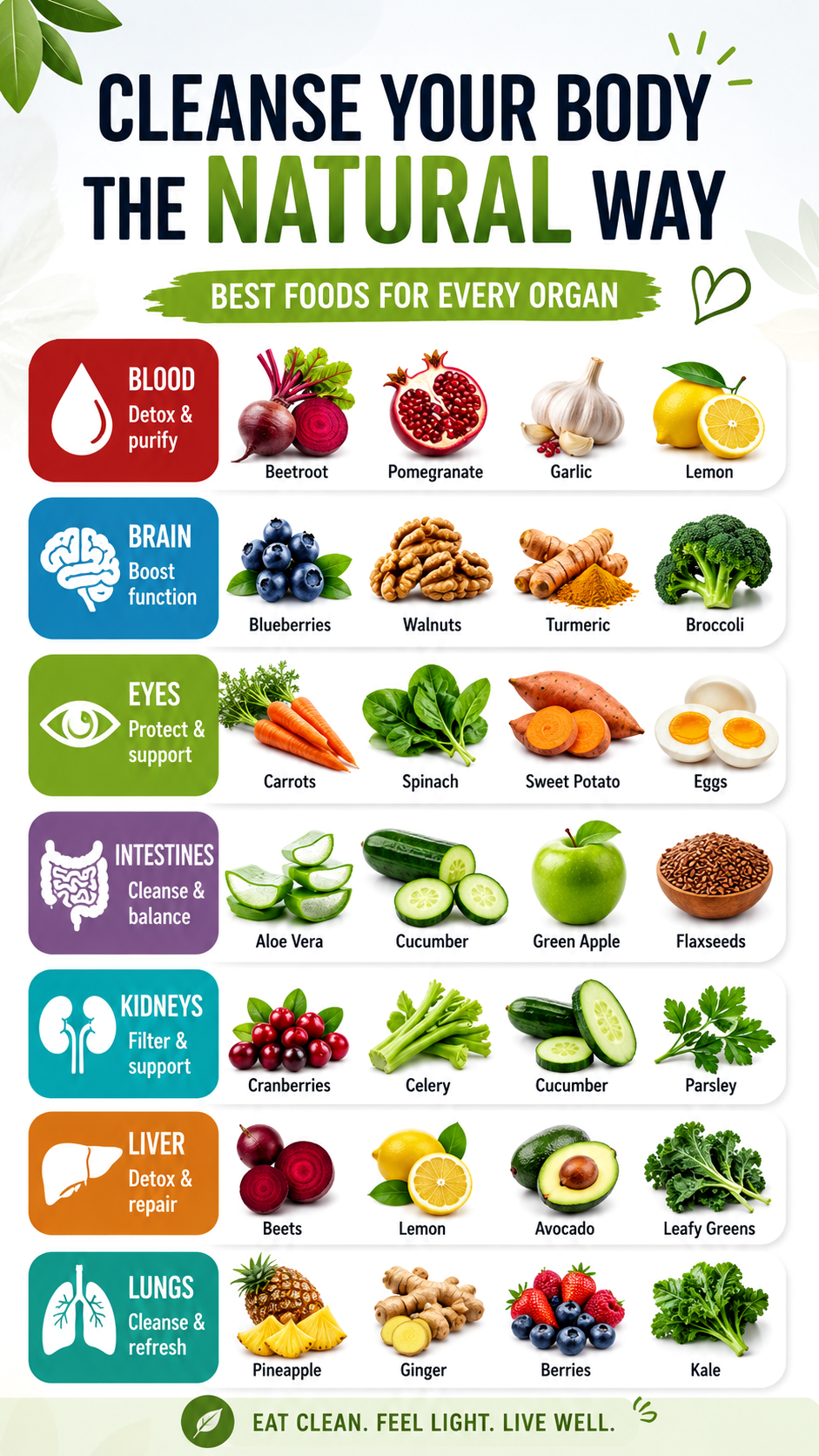
Choosing nutrient-rich foods is one of the simplest ways to support your overall health. While no single food can magically cleanse or detoxify your organs, a balanced diet filled with colorful fruits, vegetables, herbs, and whole foods provides essential vitamins, minerals, antioxidants, and fiber that help your body function at its best. Your liver, kidneys, digestive system, lungs, brain, eyes, and circulatory system all work together every day to naturally remove waste, process nutrients, and maintain overall wellness. The right foods simply give these hardworking organs the nutrients they need to perform these vital tasks efficiently.
This guide explores some of the most popular foods commonly associated with supporting different organs. From antioxidant-rich berries to fiber-packed vegetables and vitamin-filled citrus fruits, you’ll discover how everyday ingredients can become part of a healthy lifestyle that promotes long-term wellness.
Key Takeaways
- Whole foods provide nutrients that support normal organ function.
- A colorful diet increases your intake of vitamins, minerals, and antioxidants.
- Hydration and fiber are just as important as food choices.
- No food can detox your body overnight, but healthy habits make a lasting difference.
- Balanced nutrition works best when combined with exercise, quality sleep, and stress management.
How Your Body Naturally Supports Itself
Your body already has an impressive built-in system for removing waste and maintaining balance. The liver filters substances from the bloodstream, the kidneys remove waste through urine, the lungs exchange oxygen and carbon dioxide, the intestines eliminate digestive waste, and the skin also plays a small role through perspiration. Rather than searching for miracle detox products, focusing on wholesome nutrition supports these natural processes.
Important: Healthy eating supports your body’s natural functions, but there is no scientific evidence that a specific food alone can “clean” or “detox” an organ. Consistently eating a balanced diet delivers much greater benefits than short-term detox plans.
Foods That Support Healthy Blood
Blood carries oxygen, nutrients, hormones, and immune cells throughout the body. Certain foods contain nutrients that contribute to healthy blood production and circulation.
Beets
Beets are naturally rich in nitrates, folate, and antioxidants. Dietary nitrates may help support healthy blood flow by promoting nitric oxide production. Their vibrant color comes from betalains, compounds known for antioxidant properties.
Pomegranate
Pomegranates are packed with vitamin C, potassium, and plant compounds called polyphenols. These antioxidants help protect cells from oxidative stress while adding refreshing flavor to your meals.
- Add sliced beets to salads.
- Blend pomegranate seeds into smoothies.
- Enjoy roasted beets as a colorful side dish.
Brain-Supporting Foods
Your brain requires healthy fats, antioxidants, vitamins, and minerals to perform its many complex functions.
Blueberries
Blueberries contain anthocyanins, antioxidants that have been widely studied for their potential role in supporting healthy brain aging. They also provide fiber and vitamin C.
Walnuts
Walnuts offer omega-3 fatty acids, healthy fats, vitamin E, and minerals that support overall nutrition. Their nutrient profile makes them an excellent snack.
Turmeric
Turmeric contains curcumin, a naturally occurring compound that has attracted significant scientific interest. Including turmeric in cooking adds flavor while contributing valuable plant compounds.
Expert Insight
Instead of relying on a single “superfood,” build meals with a variety of colorful ingredients. Different colors often represent different antioxidants, vitamins, and beneficial plant compounds that work together as part of a healthy eating pattern.
Foods That Help Support Eye Health
Vision depends on a steady supply of nutrients that protect delicate eye tissues and maintain healthy function over time.
Carrots
Carrots are famous for their beta-carotene, which the body converts into vitamin A. Vitamin A plays an important role in maintaining normal vision.
Leafy Greens
Kale contains lutein and zeaxanthin, two carotenoids that are naturally found in the retina. Including leafy greens regularly is a smart nutritional habit.
Sweet Potatoes
Sweet potatoes provide beta-carotene, fiber, potassium, and vitamin C while making satisfying meals.
Pro Tip: Pair colorful vegetables with healthy fats such as olive oil, avocado, or nuts. Fat helps your body absorb fat-soluble vitamins and carotenoids more effectively.
Supporting Digestive Health Naturally
A healthy digestive system relies on hydration, fiber, and a diverse range of plant foods.
Aloe Vera
Aloe vera is commonly associated with digestive wellness, although edible preparations should always be specifically intended for consumption.
Cucumber
Cucumbers contain plenty of water, making them refreshing and hydrating. They are also low in calories and easy to add to salads.
Green Apples
Apples provide fiber, particularly pectin, which helps support a healthy digestive system when included as part of a balanced diet.
- Drink enough water throughout the day.
- Increase fiber gradually.
- Eat a variety of fruits and vegetables.
Kidney-Friendly Food Choices
The kidneys continuously filter blood and help regulate fluid balance. Staying hydrated and eating nutrient-dense foods supports overall kidney health for most healthy individuals.
Cranberries, celery, cucumbers, and other water-rich vegetables are popular additions to balanced meal plans. They provide hydration, vitamins, minerals, and beneficial plant compounds while fitting easily into everyday meals.
Supporting Liver Health Through Nutrition
Your liver performs hundreds of functions every single day, including processing nutrients, storing vitamins, and helping metabolize medications.
Beets, lemons, and garlic are frequently included in healthy recipes because they contribute antioxidants, vitamin C, and flavorful compounds that encourage cooking with fresh ingredients instead of highly processed foods.
Important: The best way to protect your liver is maintaining a healthy body weight, limiting alcohol intake, staying physically active, and following a nutritious eating pattern rather than depending on detox products.
Foods That Promote Healthy Lungs
Healthy lungs benefit from an overall nutritious lifestyle. Pineapple, ginger, and garlic are nutritious foods that fit well into balanced meals.
Ginger adds natural flavor to soups, teas, stir-fries, and smoothies. Pineapple provides vitamin C and manganese, while garlic contributes distinctive flavor and beneficial sulfur-containing compounds.
Creating an Organ-Friendly Meal Plan
You don’t need expensive supplements or restrictive diets to nourish your body. Small improvements often lead to sustainable long-term success.
- Fill half your plate with colorful vegetables.
- Choose fresh fruit for snacks.
- Include healthy fats like walnuts and olive oil.
- Drink water consistently throughout the day.
- Reduce heavily processed foods when possible.
- Cook more meals at home using fresh ingredients.
Healthy Habits Beyond Nutrition
Food is only one piece of the wellness puzzle. Regular physical activity, adequate sleep, stress management, and avoiding tobacco all contribute significantly to healthy organ function. These lifestyle choices work together with nutritious eating to support overall well-being.
Quick Points
- Eat a wide variety of colorful fruits and vegetables.
- Choose whole foods more often than processed foods.
- Stay hydrated every day.
- Focus on long-term healthy habits instead of quick detoxes.
- Build balanced meals with fiber, healthy fats, and lean protein.
Conclusion
Supporting your body’s vital organs begins with everyday choices. Fresh vegetables, colorful fruits, nuts, herbs, and whole foods provide the nutrients your body needs to perform its natural functions efficiently. Rather than searching for shortcuts, focus on creating balanced meals filled with a variety of plant-based ingredients, staying hydrated, and maintaining healthy lifestyle habits. Over time, these simple decisions can contribute to greater energy, improved overall wellness, and a healthier future.
Tags
Healthy Eating Organ Health Balanced Nutrition Whole Foods Superfoods Healthy Lifestyle Clean Eating Wellness Tips