
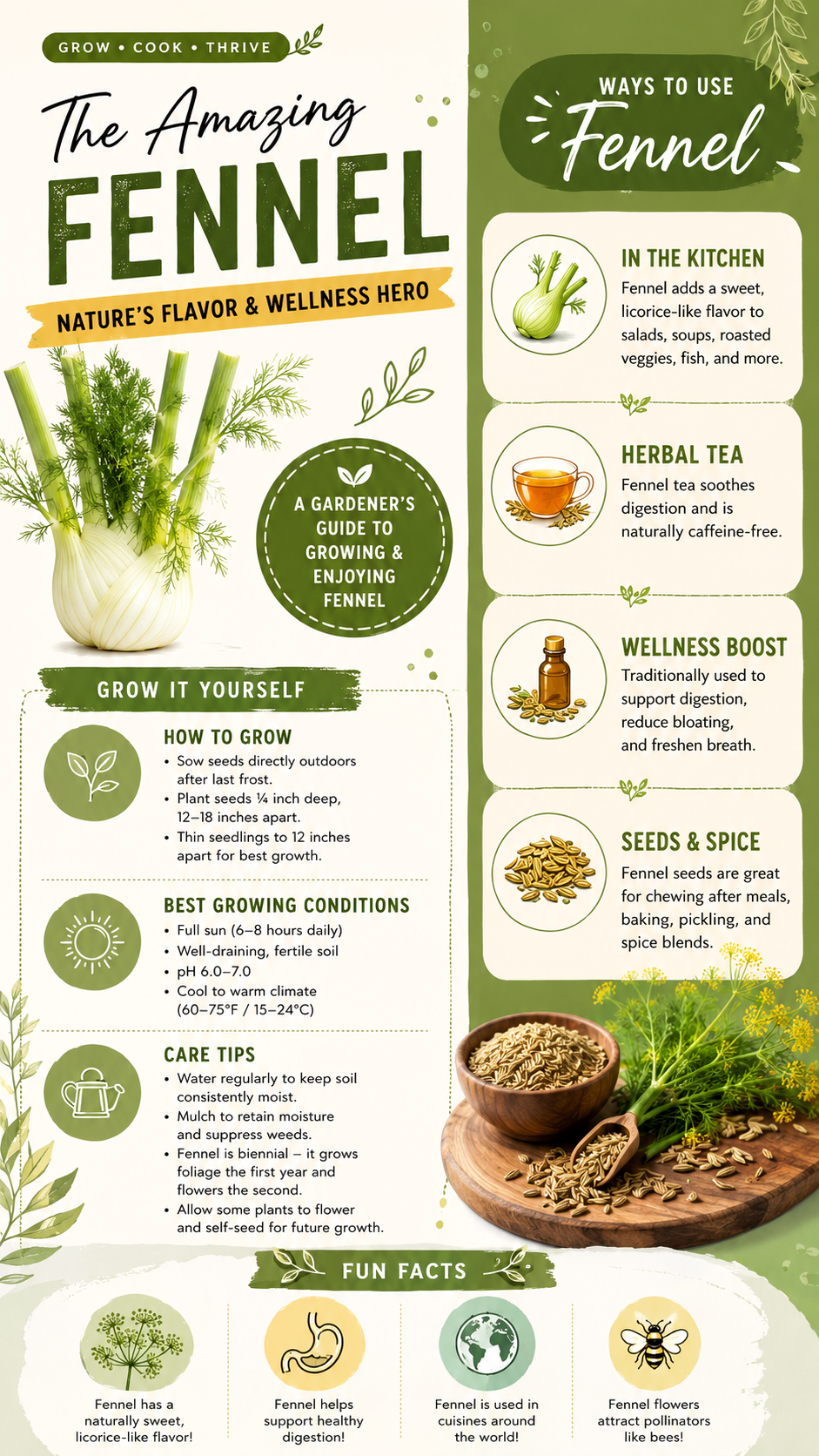
Fennel is one of those remarkable plants that earns its place in both the garden and the kitchen. With its delicate feathery foliage, fragrant seeds, and crisp bulb, fennel brings beauty, flavor, and versatility to any growing space. Whether you are planning a dedicated herb bed or looking to expand your vegetable garden with something unique, learning how to grow fennel can be an incredibly rewarding experience.
This aromatic herb has been treasured for generations thanks to its sweet, licorice-like flavor and its impressive range of culinary uses. From salads and roasted dishes to herbal teas and homemade spice blends, nearly every part of the plant can be enjoyed. The good news is that fennel is surprisingly beginner-friendly when given the right conditions.
Key Takeaways
- Fennel thrives in full sun and fertile, well-draining soil.
- The plant can be grown for its bulbs, leaves, flowers, and seeds.
- Consistent watering helps produce tender, flavorful growth.
- Fennel attracts beneficial pollinators and helpful garden insects.
- Most varieties perform best in cool to moderately warm weather.
- Growing fennel from seed is simple and beginner friendly.
Why Fennel Deserves a Spot in Your Garden
Many gardeners first notice fennel because of its elegant appearance. Its airy foliage creates texture among vegetables and herbs, while its yellow flower clusters attract bees, butterflies, and other pollinators throughout the growing season.
Beyond its ornamental appeal, fennel offers practical value. Gardeners can harvest fresh fronds for garnishing dishes, collect seeds for seasoning, and enjoy the crunchy bulb in countless recipes. Few plants provide so much from a single growing cycle.
Important: Fennel is one of the rare garden plants where almost every part is useful. Leaves, bulbs, flowers, and seeds all have culinary value, making it an excellent choice for gardeners who appreciate low-waste growing.
Understanding the Different Parts of the Fennel Plant
Before planting fennel, it helps to understand the different harvest opportunities the plant offers.
The Bulb
The bulb forms at the base of certain fennel varieties and develops into a crisp, layered vegetable with a mild anise flavor. It can be sliced into salads, grilled, roasted, or added to soups.
The Fronds
The soft, feathery leaves resemble dill and provide a delicate herb that pairs beautifully with fish, vegetables, potatoes, and creamy sauces.
The Flowers
Fennel flowers attract pollinators and can even be used as edible garnishes in creative dishes.
The Seeds
The seeds carry the strongest flavor and are commonly used in bread, spice mixes, pickling recipes, and herbal tea blends.
How to Grow Fennel Successfully
Choose the Right Location
Fennel loves sunshine and rewards gardeners who provide plenty of direct light throughout the day. Aim for at least six hours of sunlight daily, although eight hours often produces the strongest plants.
Good air circulation also helps keep foliage healthy while reducing moisture-related issues.
Prepare the Soil
Loose, fertile, and well-draining soil creates ideal growing conditions. Heavy clay soils can restrict bulb development and encourage water retention around the roots.
- Add compost before planting.
- Improve drainage if necessary.
- Aim for a slightly acidic to neutral soil pH.
- Remove weeds that may compete for nutrients.
Pro Tip: Preparing the soil before planting often has a bigger impact on fennel harvests than fertilizing later in the season. Healthy roots create healthy plants.
Planting Fennel Seeds
Direct sowing is often the easiest and most successful method for growing fennel. Since the plant develops a taproot, transplanting can sometimes slow growth or encourage premature flowering.
- Wait until the danger of frost has passed.
- Sow seeds approximately one quarter inch deep.
- Space planting areas generously to allow airflow.
- Keep soil lightly moist during germination.
Seedlings generally emerge quickly when temperatures remain moderate and soil moisture stays consistent.
Expert Insight
- Direct sowing reduces root disturbance.
- Consistent moisture improves germination rates.
- Proper spacing helps bulbs and foliage develop fully.
Providing the Best Growing Conditions
Sunlight Requirements
Fennel performs best in full sun. In cooler climates, maximum sunlight encourages vigorous growth. In hotter regions, light afternoon shade may help reduce stress during heat waves.
Watering Schedule
Regular watering is important, particularly while bulbs are developing. The goal is evenly moist soil rather than soggy conditions.
- Water deeply rather than frequently.
- Monitor soil moisture during dry periods.
- Reduce watering during extended rainy weather.
Important: Inconsistent watering can lead to stressed plants and reduced bulb quality. A steady watering routine often produces sweeter, more tender fennel.
Mulching Benefits
A layer of organic mulch helps retain moisture, suppress weeds, and regulate soil temperature around the roots. Straw, shredded leaves, or compost all work well.
Companion Planting Considerations
Fennel has a reputation for being somewhat independent in the garden. Many experienced gardeners prefer giving it its own space rather than planting it among crowded vegetable beds.
This approach allows the plant to develop fully while simplifying harvesting and maintenance.
Common Challenges and Solutions
Bolting
Bolting occurs when plants send up flowers earlier than expected. Temperature swings and environmental stress can contribute to this process.
- Maintain consistent watering.
- Plant during suitable weather conditions.
- Avoid root disturbance after establishment.
Poor Bulb Development
Bulbs may remain small if plants are overcrowded or competing for nutrients and sunlight. Proper spacing significantly improves growth potential.
Dry Soil
Extended periods without watering can slow growth and reduce flavor intensity. Mulching and regular monitoring help prevent this issue.
Harvesting Fennel at the Right Time
Timing plays a major role in flavor and texture. Younger bulbs tend to be sweeter and more tender, while mature plants provide larger harvests of foliage and seeds.
Harvesting the Bulb
Use a sharp knife to cut the bulb near soil level once it reaches a useful size for your kitchen needs.
Harvesting Fronds
Fresh fronds can be harvested throughout the season without significantly affecting plant growth.
Collecting Seeds
Allow flower heads to mature and dry before collecting seeds for storage or future planting.
Important: Saving seeds from healthy plants is an easy way to maintain a continuous supply of fennel for future growing seasons.
Ways to Use Fresh Fennel
In the Kitchen
Fresh fennel pairs beautifully with roasted vegetables, seafood dishes, salads, and grain bowls. The sweet herbal flavor adds depth without overpowering other ingredients.
Herbal Tea
Fennel seeds are frequently brewed into soothing herbal teas that are naturally caffeine free and pleasantly aromatic.
Homemade Spice Blends
Ground fennel seeds can elevate baking recipes, dry rubs, and seasoning mixtures with their warm sweetness.
At a Glance
- Grow fennel in full sun.
- Keep soil consistently moist.
- Use mulch to retain moisture.
- Harvest bulbs, fronds, and seeds.
- Encourage pollinators with flowering plants.
Conclusion
Growing fennel combines the satisfaction of gardening with the rewards of fresh cooking ingredients and beneficial pollinator support. Its elegant foliage, versatile harvest options, and relatively simple care requirements make it an excellent addition to beginner and experienced gardens alike.
With a sunny location, fertile soil, and regular watering, fennel can become one of the most productive and enjoyable plants in your growing space. Whether you are harvesting fresh fronds for dinner, collecting seeds for tea, or enjoying the beauty of flowering stems in the garden, fennel offers value far beyond its modest footprint.
Tags
Fennel Growing Herb Gardening Kitchen Garden Growing Herbs Vegetable Gardening Garden Tips Organic Gardening Beginner Gardening