
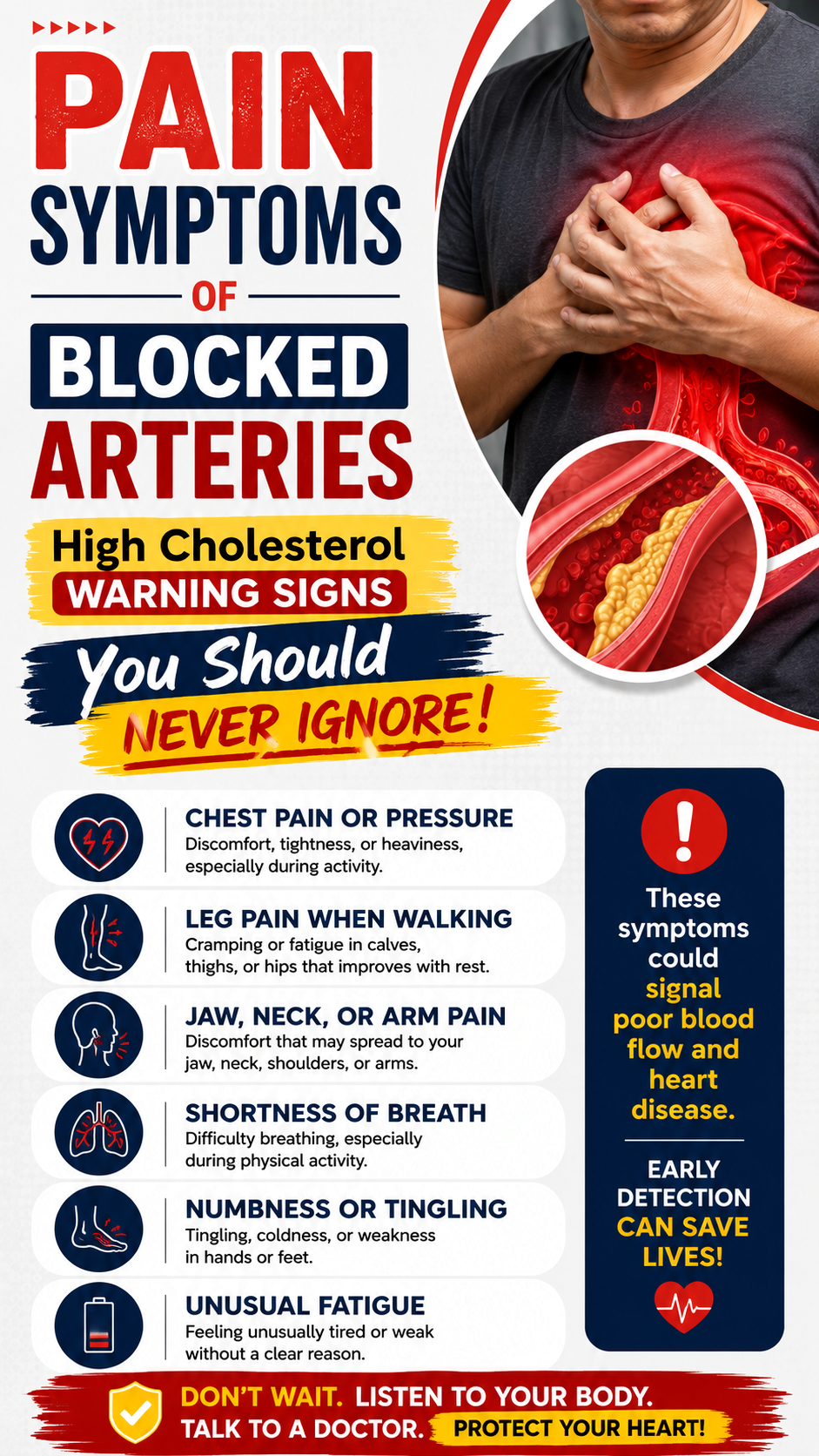
Pain can be one of the body’s earliest warning signals that something is not functioning properly. While many aches and discomforts are harmless, certain types of pain may indicate reduced blood flow caused by blocked arteries. These blockages often develop gradually due to cholesterol buildup, a condition known as atherosclerosis. Recognizing these symptoms early can help people seek medical evaluation before more serious cardiovascular complications occur.
High cholesterol itself rarely causes symptoms. Instead, the effects of cholesterol accumulation inside blood vessels may eventually lead to pain, numbness, fatigue, and other warning signs throughout the body. Understanding these symptoms can play an important role in protecting long-term heart and vascular health.
Key Takeaways
- Blocked arteries can reduce blood flow to vital organs and muscles.
- Pain in the chest, legs, neck, jaw, or arms may signal circulation problems.
- High cholesterol contributes to plaque buildup over time.
- Early detection may help reduce the risk of heart attack and stroke.
- Healthy lifestyle choices can support cardiovascular health.
- Persistent or unexplained pain should always be discussed with a healthcare professional.
Understanding Blocked Arteries
Arteries are blood vessels responsible for carrying oxygen-rich blood throughout the body. Over time, cholesterol, fats, calcium, and other substances can accumulate along artery walls. These deposits form plaques that narrow the passageway and limit blood flow.
When blood cannot move freely, tissues and organs may not receive enough oxygen. The resulting lack of circulation often produces symptoms that vary depending on which arteries are affected.
Important: Many people assume blocked arteries only affect the heart. In reality, reduced circulation can impact the legs, arms, brain, kidneys, and other parts of the body, leading to a wide range of symptoms.
Chest Pain and Pressure
One of the most widely recognized symptoms of blocked arteries is chest discomfort. When the coronary arteries that supply blood to the heart become narrowed, the heart muscle may not receive enough oxygen during physical activity or emotional stress.
This condition can result in angina, a type of chest pain often described as:
- Pressure or tightness in the chest
- A squeezing sensation
- Burning discomfort
- Heaviness in the center of the chest
- Pain that worsens with exertion
Some individuals experience mild symptoms, while others describe intense pressure that feels like a weight resting on their chest.
When Chest Pain Requires Immediate Attention
Chest pain accompanied by shortness of breath, dizziness, nausea, sweating, or pain spreading to the jaw or arm may indicate a medical emergency. Prompt evaluation is essential because these symptoms can be associated with a heart attack.
Leg Pain During Walking
Blocked arteries do not only affect the heart. Reduced circulation in the legs may lead to peripheral artery disease, commonly known as PAD.
People with PAD often experience pain, cramping, or fatigue in the legs during physical activity. The discomfort usually improves with rest and returns when walking resumes.
Common Leg Symptoms
- Calf pain while walking
- Thigh discomfort during activity
- Weakness in the legs
- Burning sensations
- Muscle cramping after short distances
These symptoms occur because narrowed arteries cannot deliver sufficient oxygen-rich blood to working muscles.
Why This Matters
- Leg pain during walking is often dismissed as aging or poor fitness.
- Persistent symptoms may signal circulation problems that deserve medical attention.
- Early treatment may improve mobility and vascular health.
Pain in the Neck, Jaw, Shoulders, or Arms
Not everyone experiences classic chest pain when blood flow to the heart becomes restricted. In some cases, discomfort radiates to nearby areas.
The pain may appear in:
- The neck
- The jaw
- One or both shoulders
- The upper back
- The left or right arm
This type of referred pain occurs because nerves from different areas share pathways with the heart. As a result, the brain may interpret the discomfort as originating elsewhere.
Important: Jaw or arm pain that occurs alongside chest pressure, shortness of breath, or unusual fatigue should never be ignored, particularly in individuals with cardiovascular risk factors.
Shortness of Breath and Physical Discomfort
When arteries narrow, the heart may struggle to pump enough blood to meet the body’s demands. This reduced efficiency can result in shortness of breath, especially during physical activity.
Some individuals notice:
- Difficulty climbing stairs
- Reduced exercise tolerance
- Unusual fatigue
- Breathlessness during routine activities
- Feeling exhausted after minimal exertion
Although shortness of breath is not technically pain, it often accompanies symptoms caused by poor circulation and cardiovascular strain.
Back Pain Associated With Poor Circulation
Some forms of artery disease may contribute to discomfort in the back, particularly when blood vessels supplying nearby tissues become narrowed. While back pain has many possible causes, circulation-related issues should not be overlooked when accompanied by other cardiovascular symptoms.
Individuals may notice:
- Persistent lower back discomfort
- Pain that worsens during activity
- Symptoms combined with leg pain or weakness
Because back pain is common, it is often attributed to muscle strain. However, persistent symptoms deserve professional evaluation, especially when cardiovascular risk factors are present.
Numbness and Tingling Sensations
Restricted blood flow can affect nerve function. In some cases, people experience numbness, tingling, or unusual sensations in the arms, legs, hands, or feet.
These symptoms may occur because tissues are not receiving adequate oxygen and nutrients. Although nerve compression and other conditions can also cause numbness, circulation problems should remain on the list of possibilities.
Signs to Watch For
- Cold feet or hands
- Persistent tingling
- Reduced sensation
- Weakness in affected limbs
- Slow-healing wounds
Risk Factors Linked to High Cholesterol and Artery Blockage
Several factors increase the likelihood of developing arterial plaque. Understanding these risks can help individuals take preventive action before symptoms appear.
- Elevated LDL cholesterol levels
- Smoking
- High blood pressure
- Diabetes
- Physical inactivity
- Obesity
- Family history of cardiovascular disease
- Advancing age
Many people have more than one risk factor. The combination of multiple risks can significantly increase the likelihood of developing artery disease over time.
Pro Tip: Regular health screenings can identify cholesterol issues long before symptoms develop. Monitoring cholesterol levels, blood pressure, and blood sugar can help support proactive cardiovascular care.
How Lifestyle Habits Affect Artery Health
Daily habits play a significant role in cardiovascular wellness. While genetics influence risk, lifestyle choices often have a powerful impact on artery health.
Heart-Friendly Habits
- Eating more fruits and vegetables
- Choosing whole grains
- Reducing saturated and trans fats
- Maintaining regular physical activity
- Avoiding tobacco products
- Managing stress effectively
- Prioritizing quality sleep
These habits support healthy cholesterol levels and may contribute to improved blood vessel function over time.
When to Seek Medical Evaluation
Not all pain indicates blocked arteries. However, recurring symptoms that appear during activity and improve with rest should be taken seriously.
Medical evaluation may be particularly important when symptoms include:
- Chest pressure or tightness
- Pain spreading to the jaw or arms
- Leg pain while walking
- Shortness of breath
- Unexplained fatigue
- Dizziness or fainting episodes
Healthcare providers may use blood tests, imaging studies, stress testing, or other diagnostic tools to evaluate cardiovascular health.
Prevention Is Often More Effective Than Treatment
One of the most encouraging aspects of cardiovascular health is that many risk factors are manageable. Small, consistent lifestyle improvements often produce meaningful benefits over time.
Preventive efforts may include maintaining a healthy weight, staying active, eating a balanced diet, controlling blood pressure, and following medical advice regarding cholesterol management.
Important: High cholesterol frequently develops without obvious symptoms. Waiting for pain to appear may allow plaque buildup to progress significantly. Routine health checkups remain one of the most valuable preventive strategies.
At a Glance
- Chest pain is one of the most recognized warning signs of blocked arteries.
- Leg pain during walking may indicate peripheral artery disease.
- Jaw, neck, shoulder, and arm discomfort can be heart-related.
- High cholesterol contributes to plaque buildup inside arteries.
- Early detection and healthy lifestyle choices support cardiovascular wellness.
Conclusion
Pain symptoms associated with blocked arteries can appear in many different forms, ranging from chest pressure and arm discomfort to leg cramping and unexplained fatigue. Because high cholesterol often progresses silently, these warning signs may represent the body’s attempt to signal reduced blood flow and increasing cardiovascular stress.
Understanding these symptoms does not replace professional medical advice, but it can encourage greater awareness and earlier action. Paying attention to changes in the body, maintaining healthy habits, and scheduling regular health screenings can help support long-term heart and vascular health. Recognizing potential warning signs early may make a meaningful difference in protecting overall well-being.
Tags
Blocked Arteries High Cholesterol Heart Health Cardiovascular Wellness Chest Pain Peripheral Artery Disease Circulation Health Heart Disease Prevention