
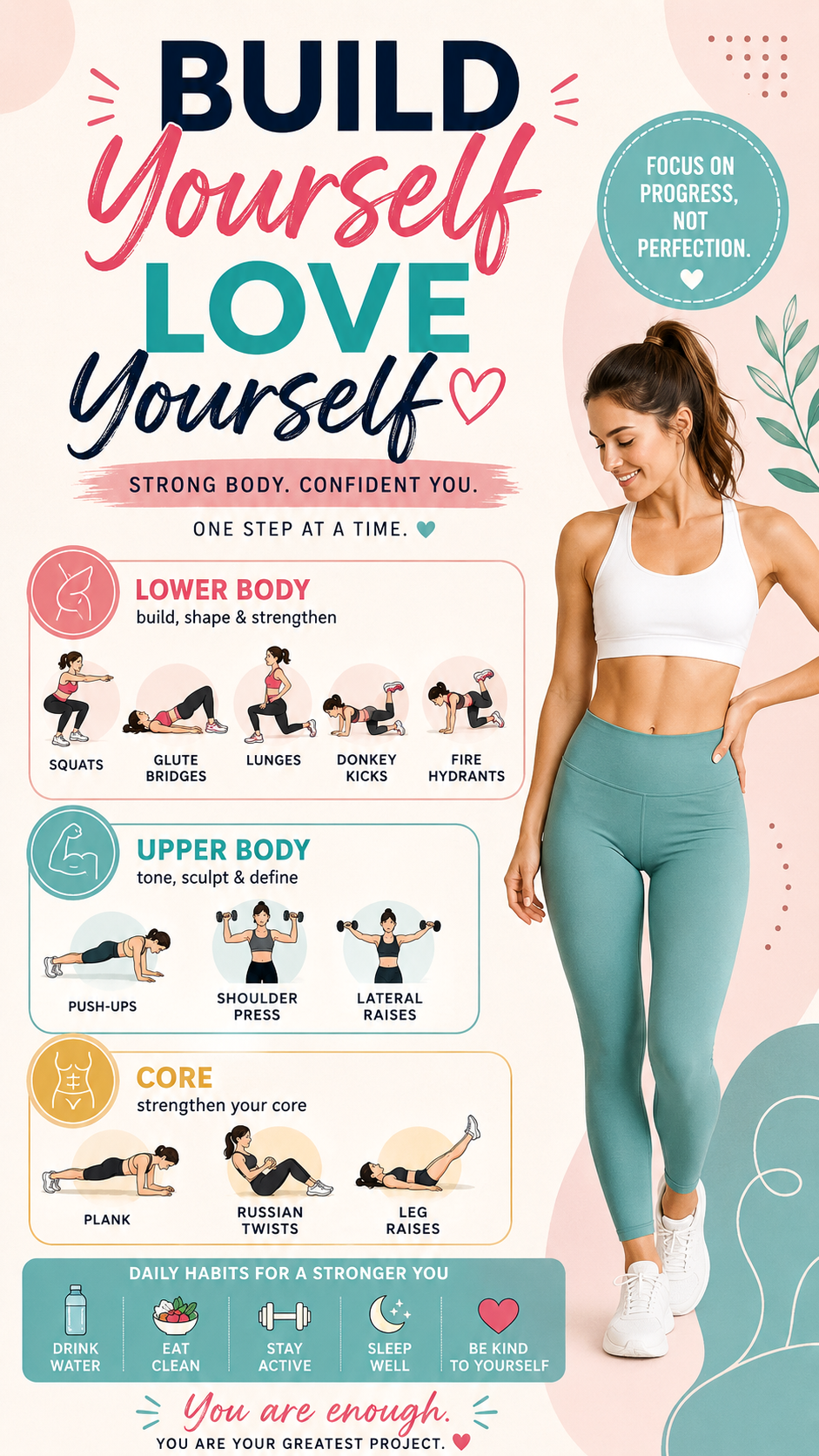
Building a healthier, stronger, and more confident version of yourself does not require complicated fitness programs or endless hours at the gym. In many cases, the most effective transformation begins with a simple commitment to daily movement, self-care, and consistency. A balanced home workout routine can help improve strength, posture, energy levels, and overall well-being while fitting comfortably into a busy lifestyle.
Whether your goal is to tone your body, increase strength, improve fitness, or simply feel more confident in your own skin, a structured workout plan that targets the lower body, upper body, and core can provide a solid foundation. Combined with healthy habits and a positive mindset, these exercises can support sustainable progress and long-term results.
Key Takeaways
- Focus on progress rather than perfection.
- Train the lower body, upper body, and core for balanced fitness.
- Consistency matters more than intensity for beginners.
- Daily healthy habits support workout results.
- Rest and recovery are essential parts of fitness success.
- Self-confidence grows through small daily improvements.
Why Fitness and Self-Love Go Hand in Hand
Fitness is often viewed only through the lens of physical appearance, but true wellness extends far beyond aesthetics. Exercise is a form of self-respect. Every workout is an investment in your health, strength, mobility, and confidence.
When you approach fitness from a place of self-care instead of self-criticism, the journey becomes more sustainable and enjoyable. Rather than focusing solely on a number on the scale, you begin to appreciate improvements in energy, endurance, posture, mood, and overall quality of life.
Important: The most successful fitness journeys are built on consistency and self-compassion. Progress becomes easier when you celebrate small wins rather than constantly chasing perfection.
Creating a Balanced Home Workout Routine
A balanced workout plan targets all major muscle groups. This helps prevent muscular imbalances while improving strength, coordination, and overall body composition.
Dividing workouts into lower body, upper body, and core training sessions creates a structured approach that supports full-body fitness.
Benefits of Full-Body Training
- Improves overall strength and muscle tone
- Supports better posture and stability
- Enhances calorie burning and metabolism
- Reduces injury risk from muscle imbalances
- Promotes functional fitness for everyday activities
Lower Body Exercises for Strength and Shape
The lower body contains some of the largest muscles in the body. Strengthening these muscles improves mobility, balance, and athletic performance while helping create a strong foundation for daily movement.
Squats
Squats are one of the most effective lower body exercises. They engage the glutes, quadriceps, hamstrings, and core simultaneously.
How to perform:
- Stand with feet shoulder-width apart.
- Push your hips back as if sitting into a chair.
- Keep your chest lifted and core engaged.
- Lower until your thighs are nearly parallel to the floor.
- Press through your heels to stand.
Glute Bridges
Glute bridges strengthen the glutes and hamstrings while helping improve hip mobility and posture.
This exercise is particularly useful for individuals who spend long hours sitting during the day.
Lunges
Lunges challenge balance, coordination, and lower body strength. They effectively target the quadriceps, glutes, and calves.
Start with bodyweight lunges and gradually increase difficulty as strength improves.
Donkey Kicks
Donkey kicks are excellent for activating and strengthening the glute muscles. They can easily be incorporated into home workout routines without equipment.
Fire Hydrants
Fire hydrants target the glute medius, an important muscle responsible for hip stability and movement control.
Why This Matters
- Strong glutes support better posture and balance.
- Lower body training helps improve daily movement efficiency.
- Building leg strength can enhance overall workout performance.
Upper Body Exercises for Tone and Definition
A strong upper body contributes to better posture, improved daily function, and greater confidence. Upper body training also supports joint health and muscular balance.
Push-Ups
Push-ups are a highly effective bodyweight exercise that strengthens the chest, shoulders, triceps, and core.
Beginners can modify push-ups by performing them on their knees or against a wall.
Shoulder Press
The shoulder press develops shoulder strength while improving upper body stability.
Light dumbbells or resistance bands can be used to perform this exercise at home.
Lateral Raises
Lateral raises isolate the shoulders and help create stronger, more defined upper body muscles.
Slow and controlled movements produce the best results while reducing injury risk.
Pro Tip: Focus on proper form rather than heavy weights. Controlled movements activate muscles more effectively and help prevent unnecessary strain.
Building a Strong and Stable Core
The core is responsible for stabilizing the entire body. A strong core supports posture, balance, athletic performance, and injury prevention.
Plank
The plank is one of the most effective exercises for overall core stability.
Maintain a straight line from head to heels while engaging your abdominal muscles throughout the movement.
Russian Twists
Russian twists target the oblique muscles and help improve rotational strength.
This exercise can be performed using body weight or a light resistance object.
Leg Raises
Leg raises challenge the lower abdominal muscles while improving core control and endurance.
Perform this exercise slowly to maximize muscle engagement.
The Power of Daily Healthy Habits
Workouts are only one part of a successful wellness journey. Daily habits play an equally important role in supporting physical and mental health.
Stay Consistent
Consistency is often more important than intensity. Small actions performed regularly create lasting results over time.
Eat Nutritious Foods
Balanced meals provide the energy and nutrients needed to fuel workouts and recovery.
Focus on whole foods, lean proteins, fruits, vegetables, and healthy fats whenever possible.
Drink Enough Water
Hydration supports energy production, muscle function, digestion, and recovery.
Keep a water bottle nearby throughout the day as a simple reminder.
Prioritize Rest
Muscles grow and recover during rest periods. Quality sleep is essential for optimal performance and long-term health.
Practice Self-Kindness
Every fitness journey includes challenges. Learning to be patient with yourself can improve motivation and reduce unnecessary stress.
Important: Sustainable fitness comes from balancing exercise, nutrition, recovery, and mindset. Neglecting any one of these areas can slow progress over time.
How to Stay Motivated on Your Fitness Journey
Motivation naturally rises and falls. Successful individuals rely on habits and systems rather than waiting for motivation to appear.
- Set realistic fitness goals.
- Track your progress weekly.
- Celebrate small milestones.
- Create a workout schedule.
- Find exercises you genuinely enjoy.
- Focus on how you feel, not just how you look.
Remember that meaningful change often happens gradually. The effort you invest today contributes to future results.
Sample Weekly Home Workout Plan
Monday
Lower body workout and light stretching.
Tuesday
Upper body workout and mobility exercises.
Wednesday
Core workout and walking session.
Thursday
Active recovery and stretching.
Friday
Full lower body workout.
Saturday
Upper body and core training.
Sunday
Rest and recovery.
At a Glance
- Train lower body, upper body, and core each week.
- Stay hydrated and prioritize recovery.
- Build habits gradually for lasting success.
- Focus on consistency over perfection.
- Practice self-love throughout your fitness journey.
Conclusion
Building yourself and loving yourself are not separate goals. They work together to create a healthier, happier, and more confident lifestyle. By incorporating simple home workouts, strengthening key muscle groups, practicing healthy daily habits, and maintaining a positive mindset, you can create meaningful progress one step at a time.
Remember that fitness is not about becoming someone else. It is about becoming the strongest, healthiest version of yourself. Stay consistent, celebrate every improvement, and trust the process. Small daily actions can lead to remarkable transformations over time.
Tags
Home Workout Women Fitness Strength Training Core Workout Lower Body Exercises Healthy Lifestyle Self Love Fitness Motivation