
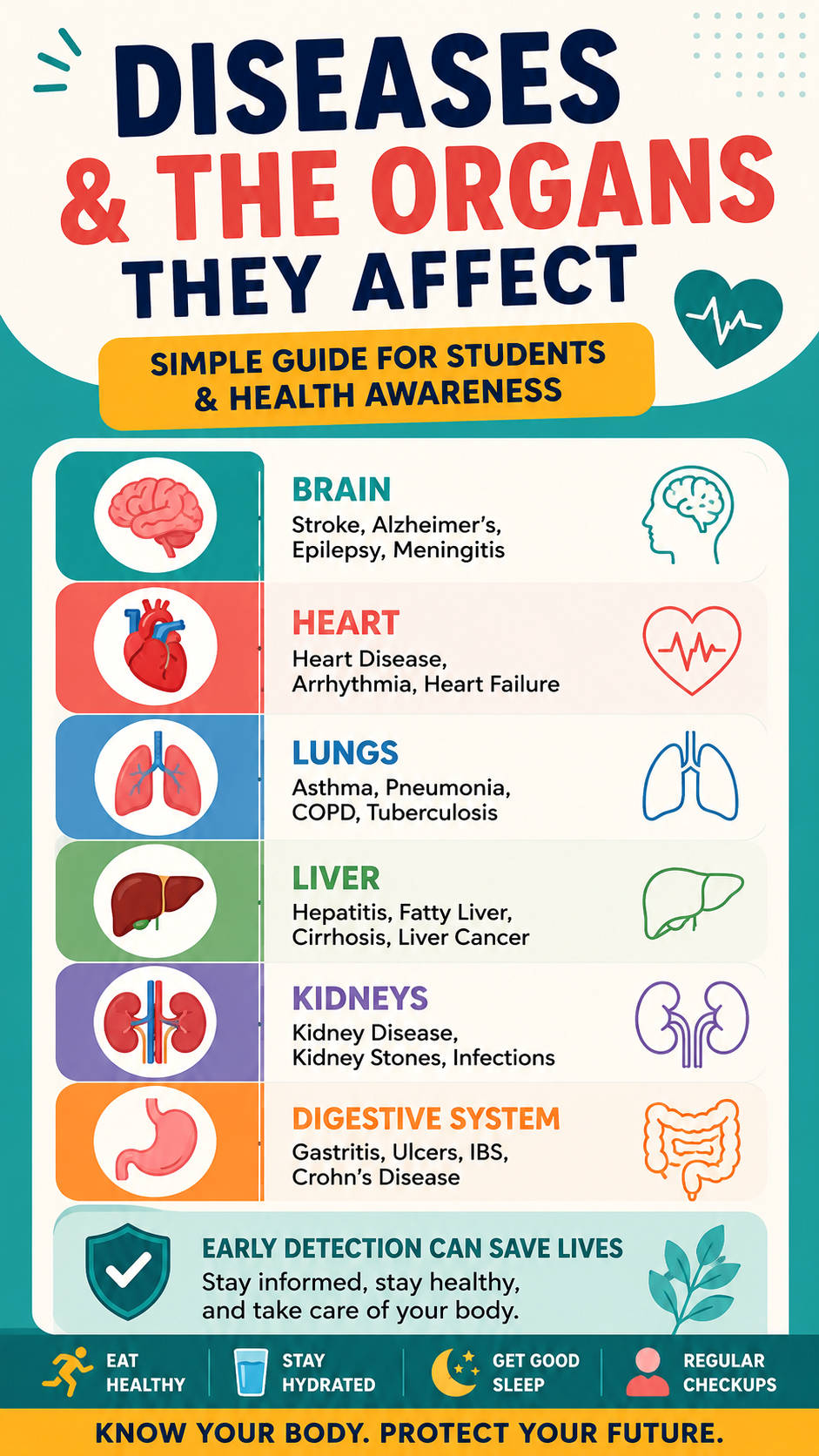
Understanding how diseases affect different organs is one of the most important foundations of health education. Every organ in the human body has a unique role, and when disease interferes with that role, it can impact overall health in significant ways. Learning the connection between diseases and the organs they affect helps students, healthcare learners, and health-conscious individuals better understand symptoms, prevention strategies, and the importance of early diagnosis.
The human body functions as an interconnected system. When one organ becomes damaged or diseased, other body systems may also be affected. By exploring common diseases and the organs they target, we can gain a clearer picture of how the body works and why maintaining organ health is essential for long-term well-being.
Key Takeaways
- Different diseases affect specific organs and body systems.
- Understanding organ function helps explain disease symptoms.
- Early detection often improves treatment outcomes.
- Healthy lifestyle habits support organ health.
- Learning basic anatomy makes health education easier.
- Awareness can help prevent many common health conditions.
Why Understanding Organs and Diseases Matters
Many health conditions become easier to understand when viewed through the lens of organ function. For example, breathing difficulties make more sense when you understand how lung diseases interfere with oxygen exchange. Similarly, fatigue and circulation problems become clearer when examining conditions that affect the heart.
Health awareness is not only for medical professionals. Students, parents, educators, and everyday individuals benefit from understanding how diseases impact the body’s organs. This knowledge encourages informed health decisions and promotes healthier lifestyles.
Important: Understanding which organ a disease affects can help people recognize symptoms earlier, seek appropriate medical advice, and make informed decisions about prevention and treatment.
The Brain and Neurological Diseases
The brain serves as the body’s control center, regulating movement, memory, emotions, and countless other functions. When diseases affect the brain, they can impact both physical and mental abilities.
Common Brain Disorders
- Stroke
- Alzheimer’s disease
- Parkinson’s disease
- Epilepsy
- Meningitis
Symptoms associated with brain disorders may include memory loss, difficulty speaking, seizures, balance problems, or changes in behavior. Because the brain controls so many body functions, neurological diseases often have widespread effects.
Protecting Brain Health
Regular exercise, mental stimulation, quality sleep, and a balanced diet can help support healthy brain function. Managing blood pressure and avoiding smoking also contribute to long-term neurological health.
Heart Diseases and Cardiovascular Health
The heart pumps blood throughout the body, delivering oxygen and nutrients to tissues and organs. Diseases affecting the heart can reduce its efficiency and create serious health risks.
Common Heart Conditions
- Coronary artery disease
- Heart failure
- Arrhythmias
- Heart valve disorders
- Cardiomyopathy
People with heart disease may experience chest pain, shortness of breath, fatigue, dizziness, or swelling in the legs. Some conditions develop gradually, making routine health screenings especially important.
Why This Matters
- Heart disease remains one of the most common health concerns worldwide.
- Many cardiovascular conditions can be reduced through healthy lifestyle choices.
- Regular checkups help identify risk factors before complications develop.
Maintaining a healthy weight, staying physically active, and consuming heart-friendly foods can significantly support cardiovascular health.
Lung Diseases and Respiratory Function
The lungs enable oxygen to enter the bloodstream and remove carbon dioxide from the body. Respiratory diseases can interfere with these essential processes.
Common Lung Diseases
- Asthma
- Pneumonia
- Chronic obstructive pulmonary disease (COPD)
- Tuberculosis
- Lung cancer
Symptoms often include coughing, wheezing, chest discomfort, and difficulty breathing. Some respiratory conditions are temporary, while others require long-term management.
Pro Tip: Avoiding tobacco smoke, reducing exposure to air pollution, and staying physically active are among the most effective ways to support lung health throughout life.
Liver Diseases and Metabolic Health
The liver performs hundreds of vital functions, including detoxification, nutrient processing, and production of important proteins. When liver function declines, many body systems can be affected.
Common Liver Conditions
- Hepatitis
- Fatty liver disease
- Cirrhosis
- Liver cancer
Symptoms may include fatigue, jaundice, abdominal discomfort, and swelling. However, some liver diseases can progress silently for years before noticeable symptoms appear.
Limiting excessive alcohol consumption, maintaining a healthy weight, and receiving recommended vaccinations can help protect liver health.
Kidney Diseases and Waste Removal
The kidneys filter waste products from the blood and help regulate fluid balance. Healthy kidneys are essential for maintaining proper chemical balance within the body.
Common Kidney Disorders
- Chronic kidney disease
- Kidney stones
- Kidney infections
- Polycystic kidney disease
Kidney disease symptoms may include swelling, fatigue, changes in urination, and high blood pressure. Early diagnosis is especially important because kidney damage may progress gradually.
Important: Staying hydrated, controlling blood pressure, and managing blood sugar levels are key steps in maintaining healthy kidney function.
Digestive System Diseases
The digestive system includes several organs that work together to break down food, absorb nutrients, and eliminate waste. Problems within this system can affect overall nutrition and energy levels.
Stomach and Intestinal Conditions
- Gastritis
- Peptic ulcers
- Irritable bowel syndrome (IBS)
- Crohn’s disease
- Ulcerative colitis
Digestive diseases can lead to abdominal pain, nausea, bloating, diarrhea, or constipation. Dietary choices often play a significant role in symptom management.
Pancreatic Disorders
The pancreas produces digestive enzymes and hormones such as insulin. Disorders affecting the pancreas can influence both digestion and blood sugar regulation.
Common Pancreatic Diseases
- Pancreatitis
- Diabetes
- Pancreatic cancer
Because insulin plays a crucial role in regulating blood glucose levels, pancreatic disorders can have widespread health effects throughout the body.
Diseases Affecting the Skin
The skin is the body’s largest organ and serves as a protective barrier against environmental threats. Skin diseases can vary from mild irritations to serious medical conditions.
Common Skin Conditions
- Eczema
- Psoriasis
- Acne
- Skin cancer
- Dermatitis
Symptoms often include redness, itching, inflammation, dryness, or changes in skin appearance. Proper skin care and sun protection can help reduce risks associated with many conditions.
Diseases Affecting the Bones and Joints
The skeletal system provides structure, protection, and movement. Diseases affecting bones and joints can significantly impact mobility and quality of life.
Common Musculoskeletal Disorders
- Osteoporosis
- Arthritis
- Rheumatoid arthritis
- Bone infections
Symptoms may include joint pain, stiffness, reduced mobility, and increased fracture risk. Physical activity and proper nutrition are important for maintaining bone strength.
The Importance of Early Detection
Many diseases become more manageable when identified early. Regular medical checkups, screenings, and awareness of warning signs can improve outcomes and reduce complications.
Health education empowers individuals to take an active role in their well-being. Recognizing how diseases affect organs provides a practical framework for understanding symptoms and seeking appropriate care.
Pro Tip: Do not ignore persistent symptoms. Even minor changes in health can sometimes indicate underlying issues that benefit from professional evaluation.
Healthy Habits That Support Organ Function
While not every disease can be prevented, many lifestyle choices help support organ health and reduce risk factors.
- Eat a balanced, nutrient-rich diet.
- Exercise regularly.
- Stay hydrated.
- Avoid tobacco products.
- Limit excessive alcohol consumption.
- Get sufficient sleep.
- Manage stress effectively.
- Attend regular health screenings.
These habits contribute to healthier organs, stronger immune function, and improved overall wellness.
At a Glance
- Every organ has a specific function and can be affected by different diseases.
- Symptoms often reflect the organ involved.
- Prevention and early detection are crucial.
- Healthy lifestyle habits support long-term organ function.
- Health education improves awareness and decision-making.
Conclusion
Learning about diseases and the organs they affect provides valuable insight into how the human body functions. Whether studying biology, improving health literacy, or simply becoming more informed, understanding these connections helps make complex medical concepts easier to grasp.
Each organ plays a critical role in maintaining health, and diseases that impact these organs can affect quality of life in many ways. By building awareness, practicing healthy habits, and recognizing early warning signs, individuals can take meaningful steps toward protecting their long-term well-being.
Tags
Health Education Human Anatomy Diseases and Organs Medical Awareness Biology Learning Body Systems Student Resources Health Awareness