
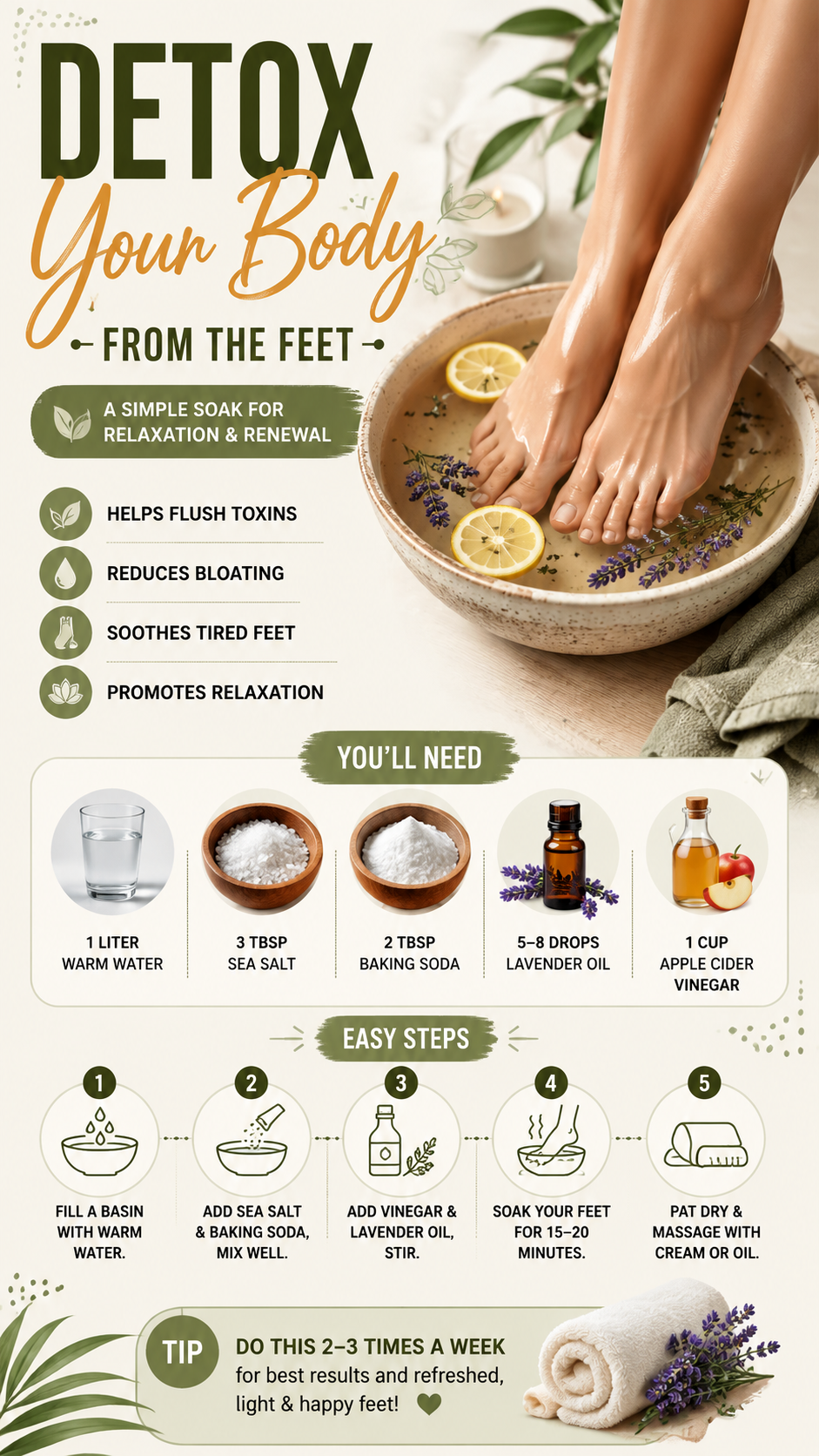
Taking time to care for your feet is one of the simplest ways to create a relaxing self-care ritual at home. After carrying you through busy workdays, long walks, workouts, and everyday responsibilities, your feet deserve regular attention. A warm foot soak can help you slow down, enjoy a peaceful moment, and give your feet the comfort they need after hours of standing or walking.
Many DIY foot soak recipes combine warm water with common household ingredients such as sea salt, baking soda, essential oils, and apple cider vinegar. While these ingredients are popular in home wellness routines, it is important to view them as part of a relaxing self-care experience rather than a proven method to remove toxins from the body. Your liver and kidneys naturally perform the body’s detoxification processes.
Key Takeaways
- Warm foot soaks can help create a relaxing wellness routine.
- Simple ingredients are affordable and easy to find.
- Regular foot care supports comfort and healthy-looking feet.
- Essential oils can add a pleasant spa-like fragrance.
- Moisturizing afterward helps keep skin soft.
Why DIY Foot Soaks Remain Popular
Home spa treatments continue to grow in popularity because they offer a convenient way to relax without leaving the house. A foot soak requires very little preparation, making it perfect for busy schedules.
Many people enjoy the calming experience of sitting comfortably with their feet immersed in warm water while reading a book, listening to music, or practicing mindfulness.
Important: Although foot soaks can be soothing and refreshing, there is no reliable scientific evidence that soaking your feet removes toxins from your body. Think of this practice as a relaxing wellness ritual instead of a medical detox.
Common Ingredients Used in DIY Foot Soaks
Warm Water
Warm water is the foundation of nearly every foot soak. It helps create a soothing environment and softens the skin, making it easier to remove dry patches during your foot care routine.
Sea Salt
Sea salt is widely used in home spa recipes because it dissolves easily and contributes to the relaxing feel of the soak. Many people enjoy the refreshing sensation it provides.
Baking Soda
Baking soda is another popular addition. It is often included to soften bath water and leave feet feeling clean and refreshed.
Lavender Essential Oil
Lavender is well known for its calming aroma. Just a few drops can transform a basic foot bath into a spa-inspired experience that encourages relaxation after a stressful day.
Apple Cider Vinegar
Apple cider vinegar is commonly included in DIY wellness recipes. While many people enjoy using it, claims that it detoxifies the body are not supported by strong scientific evidence.
How to Prepare a Relaxing Foot Soak
- Fill a basin with comfortably warm water.
- Add sea salt and baking soda.
- Mix in a small amount of apple cider vinegar if desired.
- Add a few drops of your favorite essential oil.
- Soak your feet for approximately 15 to 20 minutes.
- Dry your feet thoroughly.
- Finish with a nourishing moisturizer or foot cream.
Expert Insight
Consistency matters more than complicated routines. A simple weekly foot soak followed by moisturizing often provides a more enjoyable self-care habit than expensive spa treatments used only occasionally.
Benefits of Regular Foot Care
- Helps soften rough skin.
- Encourages relaxation after long days.
- Supports a calming bedtime routine.
- Makes moisturizing treatments more effective.
- Provides an opportunity to inspect your feet for dryness or irritation.
Pro Tip: Apply a rich moisturizer immediately after drying your feet. Wearing cotton socks overnight can help lock in moisture and leave your skin feeling noticeably softer the next morning.
Creating a Spa Atmosphere at Home
The experience is about more than the ingredients. Consider dimming the lights, lighting a candle safely, playing calming music, and preparing a comfortable chair. These simple touches can transform an ordinary foot soak into a relaxing wellness ritual.
Add Relaxing Scents
Lavender, eucalyptus, peppermint, and chamomile are among the most popular essential oils for home spa experiences.
Stay Comfortable
Use a supportive chair, keep a towel nearby, and have your moisturizer ready before beginning your soak.
Safety Tips
- Test water temperature before soaking.
- Avoid soaking open cuts or infected skin.
- Stop if irritation develops.
- Use essential oils sparingly and dilute appropriately.
- Consult a healthcare professional if you have diabetes or circulation problems before beginning regular foot soaks.
Important: Home foot soaks are designed for comfort and relaxation. They should never replace medical care for persistent foot pain, infections, wounds, or other health concerns.
Building a Weekly Self-Care Routine
A weekly foot care ritual can easily fit into your schedule. Pair your soak with gentle stretching, hydration, skincare, or reading to create a complete wellness routine that helps you unwind.
Even twenty minutes of uninterrupted relaxation can help you disconnect from daily stress and dedicate time to personal well-being.
At a Glance
- Warm water creates the foundation of the soak.
- Essential oils enhance the spa experience.
- Moisturize immediately afterward.
- Practice weekly for consistent foot care.
- Enjoy the ritual for relaxation, not detoxification.
Conclusion
A DIY foot soak is a simple yet enjoyable way to bring a little luxury into your home. Using warm water and a few familiar ingredients can help create a peaceful environment where you can relax, care for your feet, and unwind after a busy day. While these soaks should not be viewed as true detox treatments, they remain a wonderful addition to a balanced self-care routine focused on comfort, hydration, and relaxation. With regular foot care and moisturizing, your feet can continue to feel refreshed, comfortable, and ready for whatever tomorrow brings.
Tags
DIY Foot Soak Home Spa Foot Care Self Care Wellness Routine Relaxation Natural Foot Care At Home Wellness