
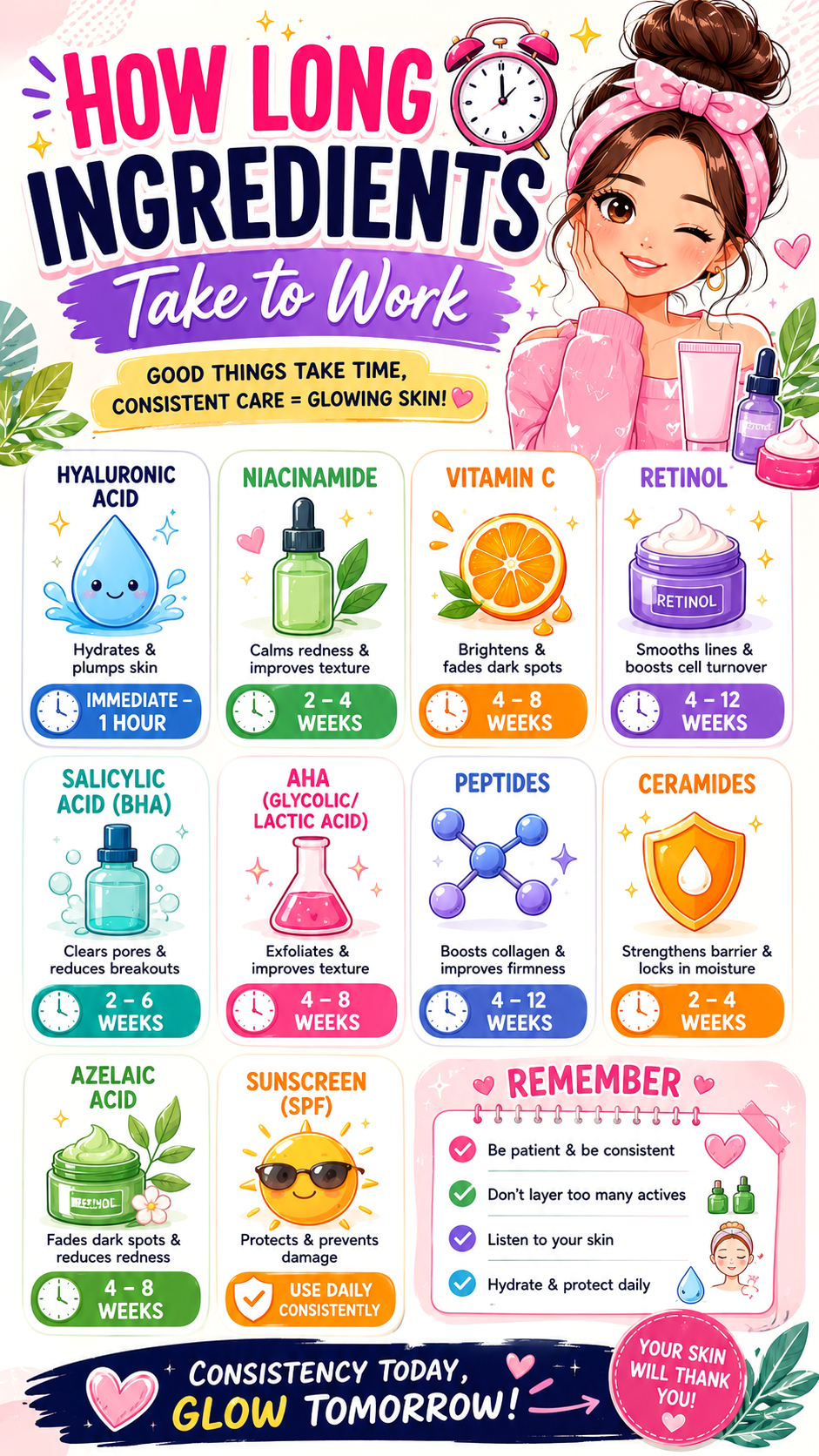
If you have ever started a new skincare product and wondered, “How long until I actually see results?”, you are not alone. One of the biggest reasons people give up on skincare routines is unrealistic expectations. Many active ingredients can deliver impressive benefits, but they rarely work overnight. Understanding realistic timelines helps you stay patient, consistent, and confident in your skincare journey.
From retinol and vitamin C to niacinamide and hyaluronic acid, each ingredient works differently within the skin. Some provide immediate hydration and glow, while others require several weeks or even months before visible improvements appear. Knowing what to expect can help you build a routine that supports long-term skin health and prevents unnecessary product switching.
Key Takeaways
- Different skincare ingredients work on different timelines.
- Hydrating ingredients often show results quickly.
- Anti-aging ingredients usually require several weeks of consistent use.
- Skin barrier support ingredients can improve skin health within a month.
- Consistency matters more than using many products at once.
- Daily sunscreen use helps maximize skincare results.
Why Skincare Results Take Time
Your skin naturally renews itself through a cycle that typically takes several weeks. Many skincare ingredients work by supporting this renewal process, stimulating collagen production, reducing inflammation, improving hydration, or regulating pigmentation.
Because these changes happen gradually, visible improvements often require patience. While marketing messages sometimes promote instant transformations, healthy skin improvements are usually cumulative and depend on consistent product use.
Important: The effectiveness of skincare ingredients depends not only on the ingredient itself but also on factors such as concentration, formulation, skin type, lifestyle habits, and consistency of application.
Hyaluronic Acid: Fast Hydration and Plumping
Hyaluronic acid is one of the fastest-acting skincare ingredients available. Known for its ability to attract and retain water, it helps skin appear plumper, smoother, and more hydrated almost immediately.
Typical Timeline
- Immediate to 1 hour for visible hydration effects
- Several days for improved skin comfort and moisture balance
People often notice their skin feels softer and looks more refreshed shortly after application. While the plumping effect can appear quickly, maintaining hydration requires ongoing use.
Best For
- Dry skin
- Dehydrated skin
- Fine lines caused by dehydration
- Supporting the skin barrier
Niacinamide: The Multi-Tasking Ingredient
Niacinamide has become a favorite among skincare enthusiasts because it addresses multiple concerns at once. It helps reduce redness, regulate oil production, improve skin texture, and support the skin barrier.
Typical Timeline
- 2 to 4 weeks for visible texture improvements
- Several weeks for reduced redness and improved tone
- Longer with consistent use for overall skin refinement
Many users begin noticing smoother skin and reduced irritation within the first month. Continued use often leads to more balanced and resilient skin.
Expert Insight
Niacinamide is often considered one of the easiest active ingredients to incorporate into a skincare routine because it works well with many other ingredients and is generally well tolerated by most skin types.
Vitamin C: Brightening and Dark Spot Support
Vitamin C is widely recognized for its brightening effects and antioxidant protection. It helps combat environmental stressors while improving the appearance of uneven skin tone and discoloration.
Typical Timeline
- 4 to 8 weeks for brighter-looking skin
- Several weeks for improvement in dark spots
- Long-term use for enhanced skin radiance
Results often depend on the severity of pigmentation and the stability of the vitamin C formulation. Consistent application is key for noticeable improvements.
Pro Tip: Vitamin C works particularly well when paired with daily sunscreen use. Protecting your skin from UV exposure helps preserve your brightening results and prevents new discoloration from developing.
Retinol: The Long-Term Skin Transformer
Retinol is one of the most researched skincare ingredients for addressing signs of aging. It promotes cell turnover and supports collagen production, helping improve fine lines, wrinkles, and overall skin texture.
Typical Timeline
- 4 to 12 weeks for visible improvements
- Several months for more significant anti-aging benefits
- Ongoing improvements with consistent use
Many people experience an adjustment period when beginning retinol. Temporary dryness, flaking, or sensitivity can occur while the skin adapts.
Tips for Success
- Start slowly
- Use moisturizer regularly
- Avoid over-exfoliation
- Wear sunscreen every day
The key to retinol success is consistency rather than aggressive application.
Salicylic Acid: Helping Clear Congested Pores
Salicylic acid, commonly known as a BHA, penetrates into pores and helps dissolve excess oil and debris. It is especially popular among individuals dealing with acne-prone or oily skin.
Typical Timeline
- 2 to 6 weeks for clearer-looking skin
- Gradual reduction in clogged pores
- Ongoing maintenance benefits with regular use
While some improvements may appear relatively quickly, more persistent breakouts often require several weeks of consistent treatment.
AHA Exfoliants: Smoother and Brighter Skin
Alpha hydroxy acids such as glycolic acid and lactic acid help remove dead skin cells from the surface of the skin. This process promotes smoother texture and a brighter complexion.
Typical Timeline
- 4 to 8 weeks for noticeable texture improvements
- Regular use helps maintain radiance
- Long-term benefits include a more refined appearance
Exfoliating acids should be used carefully to avoid irritation. More is not always better when it comes to exfoliation.
Peptides: Supporting Firmness and Elasticity
Peptides are short chains of amino acids that support skin functions related to firmness and elasticity. They are often included in anti-aging products because of their potential role in maintaining youthful-looking skin.
Typical Timeline
- 4 to 12 weeks for visible improvements
- Long-term support for skin firmness
- Gradual enhancement of skin texture
Peptides work best as part of a comprehensive skincare routine focused on hydration, protection, and skin barrier health.
Ceramides: Strengthening the Skin Barrier
Ceramides are naturally found in the skin and play a crucial role in maintaining barrier function. When skin becomes dry or irritated, ceramide-rich products can help restore balance.
Typical Timeline
- 2 to 4 weeks for barrier improvements
- Reduced dryness and irritation over time
- Enhanced moisture retention with ongoing use
Healthy skin begins with a strong barrier. Supporting this foundation often makes other skincare ingredients more effective.
Important: A damaged skin barrier can make even gentle skincare products feel irritating. Prioritizing hydration and barrier repair often leads to better long-term results than adding more active ingredients.
Azelaic Acid: A Gentle Yet Effective Option
Azelaic acid is valued for its ability to improve the appearance of redness, uneven skin tone, and blemishes. It is often recommended for individuals seeking a gentler active ingredient.
Typical Timeline
- 4 to 8 weeks for visible improvements
- Gradual reduction in redness
- Enhanced skin clarity with continued use
Its versatility makes it a popular addition to routines targeting multiple skin concerns simultaneously.
The Essential Role of Sunscreen
Sunscreen is unique because its protective benefits begin immediately after proper application. However, its true value comes from consistent daily use over months and years.
UV exposure contributes significantly to premature aging, discoloration, and skin damage. Daily sunscreen helps protect the progress made by every other skincare ingredient in your routine.
Why Daily SPF Matters
- Prevents future sun damage
- Supports anti-aging goals
- Helps maintain an even skin tone
- Protects investment in skincare products
Common Reasons People Don’t See Results
Sometimes skincare products are effective, but certain habits interfere with progress.
- Switching products too frequently
- Using too many active ingredients simultaneously
- Inconsistent application
- Skipping sunscreen
- Expecting overnight changes
- Over-exfoliating the skin
Giving products enough time to work is one of the most important aspects of successful skincare.
Quick Note
- Consistency beats intensity.
- Track progress with monthly photos.
- Introduce new actives one at a time.
Building Realistic Expectations for Better Results
One of the healthiest approaches to skincare is viewing it as a long-term investment rather than a quick fix. Most ingredients deliver their best results through steady, consistent use over time.
When you understand realistic timelines, it becomes easier to stay committed to your routine and avoid the frustration that often comes from expecting immediate transformation.
At a Glance
- Hyaluronic acid works fastest for hydration.
- Niacinamide often shows improvements within a month.
- Vitamin C and azelaic acid typically require several weeks.
- Retinol and peptides need patience for maximum benefits.
- Sunscreen supports every skincare goal.
Conclusion
Successful skincare is built on consistency, patience, and realistic expectations. While some ingredients like hyaluronic acid can provide almost immediate benefits, others such as retinol, peptides, and vitamin C require weeks or months before significant improvements become visible. Understanding these timelines helps you make informed decisions, stay committed to your routine, and appreciate the gradual progress that leads to healthier-looking skin.
Remember that skincare is a journey, not a race. Focus on building a balanced routine, protecting your skin with daily sunscreen, and giving your products enough time to perform. Small improvements accumulated over time often produce the most rewarding and lasting results.
Tags
Skincare Routine Retinol Niacinamide Vitamin C Healthy Skin Skincare Tips Skin Barrier Glowing Skin