
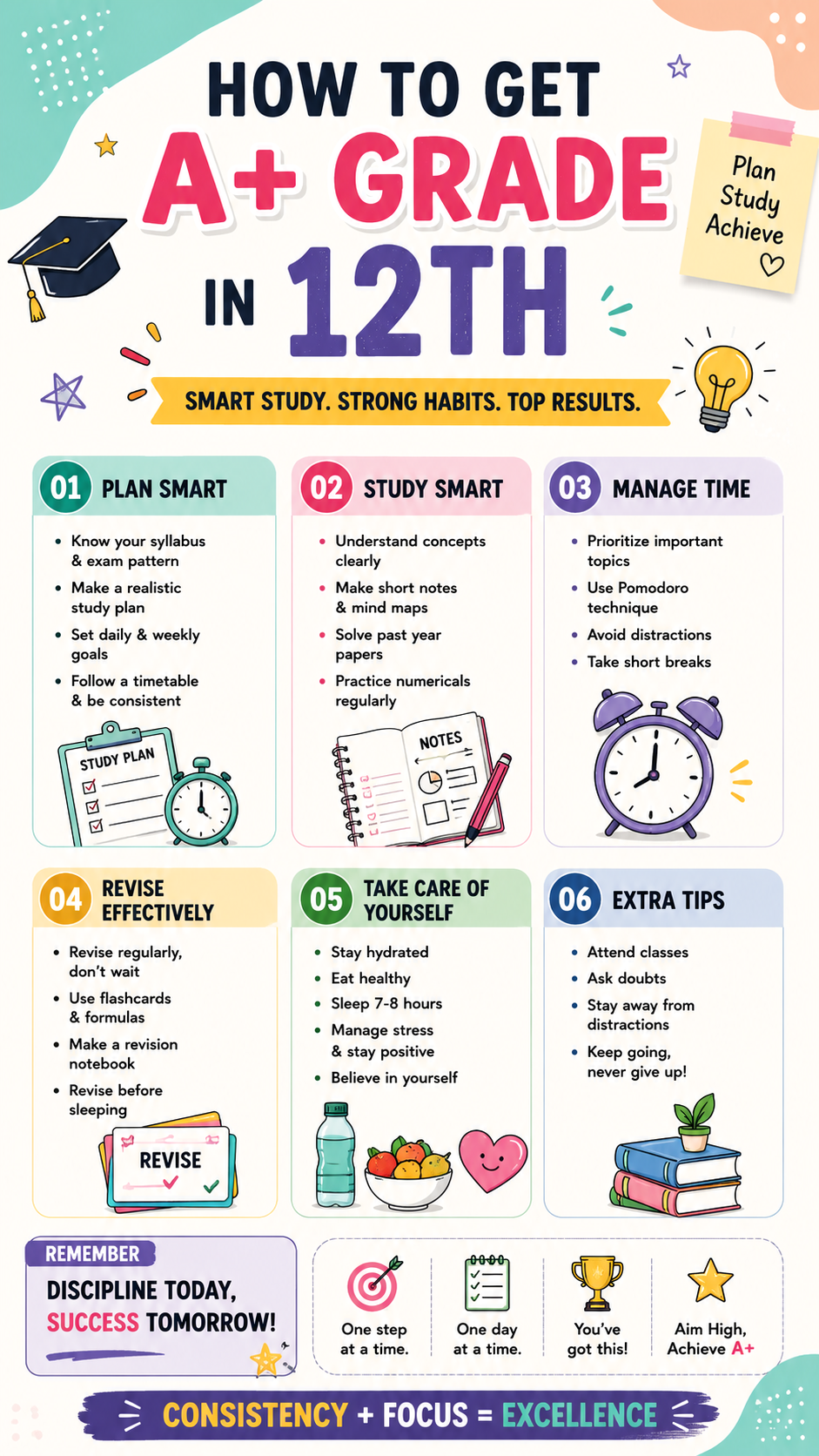
Scoring an A+ in 12th grade is a goal many students dream about, but great results rarely come from last minute cramming. Success in board exams is usually built through smart planning, daily consistency, effective revision, and a healthy mindset. Whether you are preparing for science, commerce, or arts subjects, the right habits can make studying easier and help you perform with confidence. This guide shares practical study tips, time management strategies, and revision techniques that can help students maximize their potential and stay motivated throughout the academic year.
Key Takeaways
- Create a realistic study schedule and stick to it.
- Focus on understanding concepts rather than memorizing everything.
- Revise regularly to improve retention.
- Practice previous year papers and sample questions.
- Maintain healthy habits and avoid burnout.
- Stay consistent and trust the process.
Why Smart Study Matters More Than Long Hours
Many students believe studying for long hours automatically guarantees excellent marks. In reality, productivity and efficiency matter far more than simply spending endless hours with books. Smart studying means focusing on understanding concepts, practicing regularly, and using time wisely.
Important: Consistency beats intensity. Studying a few focused hours every day often produces better results than occasional marathon sessions.
Students who develop organized study habits tend to retain information better and experience less stress during exams. Instead of chasing perfection, aim for steady progress.
Create a Smart Study Plan
A proper study plan helps you cover the syllabus without feeling overwhelmed. The key is creating realistic goals that can actually be followed.
Understand Your Syllabus
Begin by reviewing the complete syllabus and exam pattern. Knowing what topics carry more weight helps you prioritize important chapters.
Set Daily and Weekly Goals
- Break subjects into smaller topics.
- Assign realistic targets for each day.
- Review progress weekly.
- Adjust your timetable when necessary.
Follow a Timetable
A balanced schedule should include study sessions, revision periods, breaks, and sufficient sleep. Avoid overloading yourself because exhaustion reduces productivity.
Study Smart Instead of Memorizing Everything
Board exams test understanding and application of knowledge. Blind memorization often leads to confusion and forgetfulness.
Understand Concepts Clearly
Focus on learning the logic behind each topic. Understanding concepts makes solving difficult questions easier and improves long-term retention.
Make Short Notes
Short notes simplify revision and save valuable time before exams. Summaries, formulas, and key points can be written in notebooks or flashcards.
Use Mind Maps
Visual learning techniques such as mind maps help connect ideas and make complex chapters easier to understand.
Pro Tip: Teach concepts to someone else. Explaining topics aloud improves understanding and reveals areas that need more practice.
Practice Previous Year Question Papers
One of the most effective ways to score high marks is solving previous year papers and sample tests.
- Understand question patterns.
- Improve speed and accuracy.
- Identify weak areas.
- Build confidence before exams.
Practice under timed conditions to simulate the actual examination environment. This reduces anxiety and improves performance.
Expert Insight
- Regular practice develops confidence.
- Repeated revision improves memory retention.
- Mock tests help reduce exam stress.
Master Time Management Skills
Time management is one of the biggest factors behind academic success. Students who manage their time effectively can maintain balance without feeling overwhelmed.
Prioritize Important Topics
Not all chapters carry equal weight. Identify high scoring topics and allocate additional time to them.
Use the Pomodoro Technique
The Pomodoro method encourages focused study sessions followed by short breaks.
- Study for 25 minutes.
- Take a 5-minute break.
- Repeat four cycles.
- Take a longer break afterward.
Avoid Procrastination
Delaying tasks creates unnecessary stress. Start with difficult subjects when your concentration levels are highest.
Important: A consistent routine creates momentum. Missing one day is normal, but avoiding long breaks keeps your preparation on track.
Effective Revision Strategies
Revision is where learning becomes permanent. Students who revise regularly remember concepts more effectively during exams.
Revise Frequently
Instead of revising only before exams, review topics every week. Frequent revision prevents forgetting.
Create a Revision Notebook
Maintain a separate notebook containing formulas, definitions, diagrams, and important concepts.
Use Flashcards
Flashcards are excellent for quick revision. They are especially helpful for formulas, dates, and key terms.
Revise Before Sleeping
Reviewing important information before bedtime can improve memory retention and help reinforce learning.
Take Care of Your Health
Good health supports better concentration and productivity. Neglecting physical and mental well-being can negatively affect performance.
Stay Hydrated
Drinking enough water helps maintain focus and energy throughout the day.
Eat Healthy Foods
Nutritious meals provide the energy required for long study sessions. Include fruits, vegetables, and protein-rich foods in your diet.
Get Enough Sleep
Sleeping 7 to 8 hours every night helps improve concentration, memory, and overall well-being.
Manage Stress Positively
Simple activities such as meditation, stretching, listening to music, or spending time with family can help reduce stress.
Important: Mental health matters just as much as academic preparation. Taking care of yourself allows you to study more effectively and stay motivated.
Extra Tips for Scoring an A+
- Attend classes regularly.
- Take organized notes.
- Clear doubts immediately.
- Avoid distractions during study sessions.
- Compare yourself only with your past performance.
- Stay confident and positive.
- Believe in your abilities.
- Keep improving every day.
Build Discipline and Stay Consistent
Success in board exams is rarely about luck. Students who maintain discipline and continue working steadily usually achieve better outcomes. Motivation may fluctuate, but consistency keeps progress moving forward.
Focus on daily improvements rather than instant results. Even small efforts add up over time and lead to significant achievements.
Quick Points
- Study smart instead of studying longer.
- Revise regularly and solve sample papers.
- Manage time effectively and avoid procrastination.
- Take care of your physical and mental health.
- Stay disciplined and trust your progress.
Conclusion
Achieving an A+ in 12th grade is possible when you combine smart planning, effective study methods, regular revision, and healthy habits. Great results are built through discipline and consistency rather than perfection. Believe in yourself, stay focused, and continue making steady progress every day. With the right approach and a positive mindset, success in board exams becomes much more achievable.
Tags
Study Tips Class 12 Board Exams Exam Preparation Revision Tips Time Management Study Motivation Academic Success