
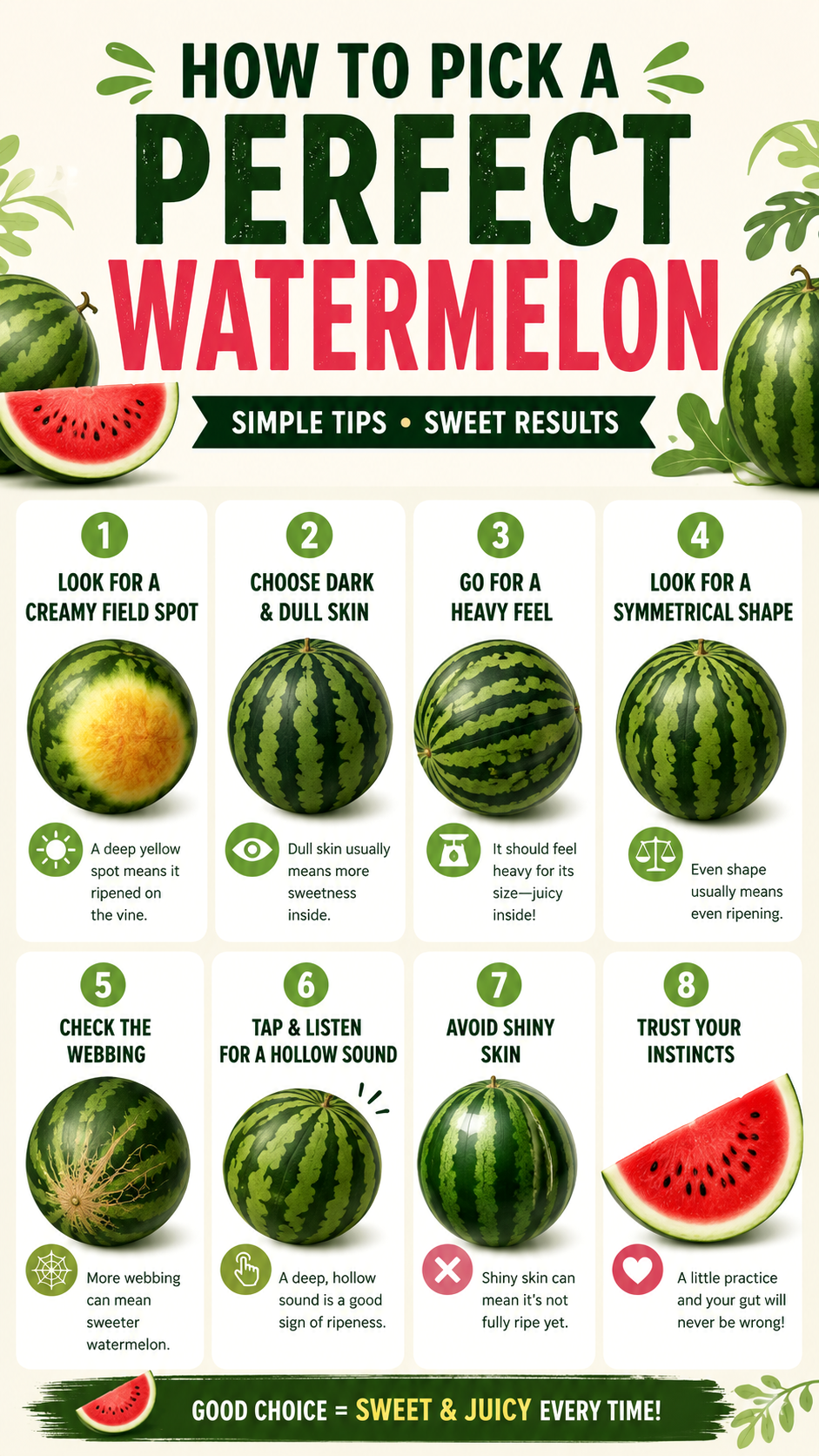
Nothing ruins summer excitement faster than cutting open a watermelon that looks perfect on the outside only to discover pale, watery flesh inside. Whether you are planning a picnic, prepping fruit for meal prep, or stocking up for a backyard barbecue, knowing how to pick a ripe watermelon can save you time, money, and disappointment.
Choosing the perfect watermelon is not just luck. There are a few reliable visual and physical clues that help you identify the sweetest, juiciest melon in the pile. From color and shape to weight and texture, small details make a big difference.
In this guide, you will learn practical, easy-to-remember tips for selecting the best watermelon every time you shop.
Key Takeaways
- Look for a creamy yellow field spot instead of a white one.
- Choose dull skin over shiny skin for better ripeness.
- Pick heavy melons since they usually contain more water and sweetness.
- Symmetrical shapes often indicate even growth and better texture.
- Check webbing because more webbing may suggest sweeter fruit.
Why Picking the Right Watermelon Matters
Watermelon is one of the most refreshing fruits, especially during warm weather. It is hydrating, naturally sweet, and incredibly versatile. You can eat it fresh, blend it into smoothies, toss it into salads, or freeze it into popsicles.
The challenge is that watermelons do not continue ripening after harvest. That means what you buy is what you get. If you choose an underripe watermelon, waiting a few days will not magically improve flavor.
Important: Unlike bananas or peaches, watermelons stop ripening once picked. Selecting a ripe one at the store is essential for the best flavor and texture.
1. Check the Shape First
One of the easiest things to notice is the overall shape.
A good watermelon should look uniform and symmetrical. Whether round or oval, it should not have weird bulges, dents, or irregular bumps.
Why Shape Matters
Symmetry often indicates consistent growth conditions. When a watermelon develops evenly, the flesh inside is more likely to have balanced sweetness and texture.
Misshapen melons may have experienced inconsistent watering, poor pollination, or growth stress.
What to Avoid
- Large flat sides
- Deep dents
- Odd lumps or distortions
Choose melons that look balanced from all angles.
2. Pick a Watermelon That Feels Heavy
Weight is one of the most trusted signs of quality.
Pick up several watermelons of similar size. The best one usually feels heavier than expected.
Why? Because heavier melons tend to contain more water, which often means juicier fruit.
Pro Tip: When two watermelons look similar, choose the heavier one. Extra weight often means more juice and better sweetness.
Quick Weight Test
- Select two melons of similar size
- Lift both carefully
- Choose the heavier one
This simple trick works surprisingly well.
3. Find the Field Spot
The field spot is the area where the watermelon rested on the ground while growing.
This is one of the most important visual indicators.
Best Color for the Field Spot
- Deep creamy yellow or orange: Good sign
- Pale white: Less desirable
A creamy yellow spot suggests the melon spent enough time ripening on the vine.
A white spot may indicate it was picked too early.
Why This Matters
The field spot tells part of the watermelon’s life story. Darker yellow usually means longer vine ripening, which often results in better flavor and higher sugar content.
4. Look at the Surface Finish
The skin tells you a lot.
A ripe watermelon usually has a dull or matte finish.
Shiny skin often means the fruit is less mature.
Dull vs Shiny
- Dull: Usually ripe
- Shiny: Often underripe
The difference may seem subtle, but once you compare several melons side by side, it becomes easier to spot.
5. Check the Webbing
You may notice brown, rough, web-like markings on the rind. These are commonly called webbing.
Many experienced shoppers prefer melons with more visible webbing.
What Webbing Suggests
Webbing may be linked to pollination activity during growth. Better pollination can contribute to sweeter fruit.
While not a perfect rule, it is a popular tip among farmers and produce buyers.
Expert Insight: Webbing should be viewed as one clue, not the only clue. Combine it with weight, shape, and field spot for the best results.
6. Try the Tap Test
Yes, tapping a watermelon can actually help.
Give the melon a firm tap with your knuckles.
Listen Carefully
- Deep hollow sound: Good sign
- Dull flat sound: May be overripe or underripe
A ripe watermelon tends to produce a resonant sound because of its internal water content and structure.
This technique takes practice, so do not rely on it alone.
Round vs Elongated Watermelons
You may have heard that shape affects taste.
Many shoppers believe round watermelons are sweeter, while elongated ones tend to be more watery.
This is a general observation, not a strict scientific rule, but many people swear by it.
General Rule
- Round: Often sweeter
- Elongated: Often more watery
If sweetness is your goal, a round melon may be a better bet.
Common Mistakes When Buying Watermelon
Even experienced shoppers make mistakes. Avoid these common errors.
Mistake #1: Choosing by Size Alone
Bigger does not always mean better.
Mistake #2: Ignoring the Bottom
Always check the field spot.
Mistake #3: Buying the Shiniest One
Glossy skin often looks appealing but can signal immaturity.
Mistake #4: Relying on One Tip Only
The best approach combines multiple clues.
Best Uses for Sweet Watermelon
Once you bring home a perfectly ripe watermelon, enjoy it in creative ways.
- Fresh slices
- Fruit bowls
- Smoothies
- Summer salads
- Frozen treats
- Juice blends
Sweet watermelon adds freshness and hydration to nearly any summer menu.
Quick Points
- Choose symmetrical melons
- Pick heavy fruit for more juice
- Look for creamy yellow field spots
- Avoid shiny skin
- Use multiple clues together
Conclusion
Learning how to pick the perfect watermelon is easier than most people think. You do not need expert-level produce knowledge, just a few reliable habits.
Start by checking shape, weight, field spot color, skin finish, and webbing. Add the tap test if you want extra confidence.
The more melons you inspect, the better your instincts become.
Before long, you will be the person in the grocery store confidently choosing sweet, juicy watermelons while everyone else guesses.
And once you slice into that vibrant red, refreshing fruit, every extra second spent choosing carefully will feel worth it.
Tags
Watermelon Tips Fruit Picking Healthy Eating Summer Fruit Grocery Hacks Kitchen Tips Ripe Watermelon