
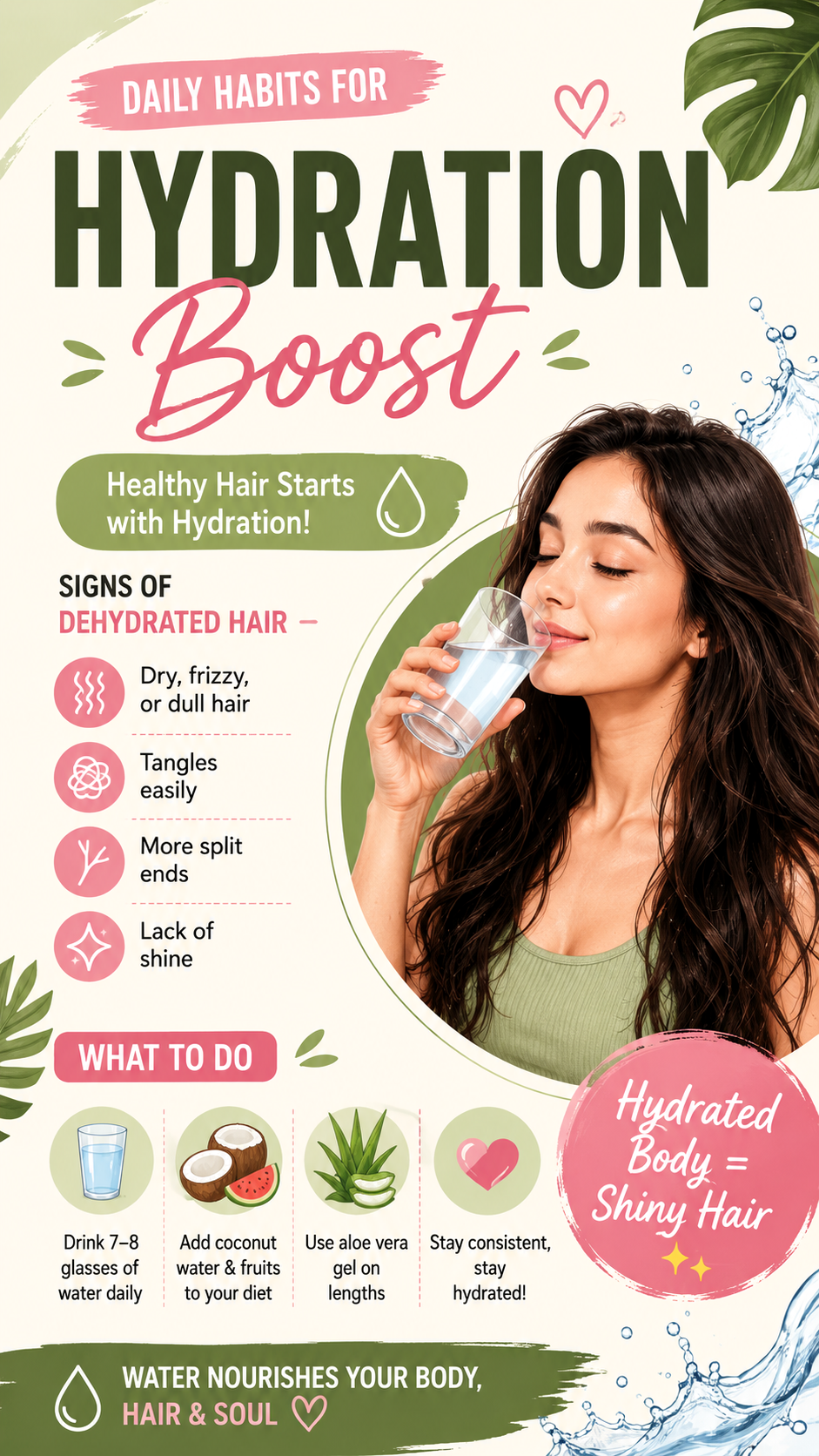
Healthy, shiny hair starts with something surprisingly simple, proper hydration. Many people invest in expensive shampoos, masks, and treatments while overlooking one of the most important factors behind beautiful hair. When your body lacks water, your hair often shows the signs first. Dryness, frizz, dullness, and brittleness can all be linked to dehydration.
Hydration is not just about drinking a glass of water when you’re thirsty. It is a daily habit that supports your skin, scalp, and hair from the inside out. A well-hydrated body creates the ideal environment for stronger, softer, and more manageable hair.
Key Takeaways
- Dehydration can lead to dry, frizzy, and dull-looking hair.
- Drinking enough water supports scalp and hair health.
- Hydrating foods provide additional moisture and nutrients.
- Aloe vera can help improve the appearance of dry hair.
- Consistent habits create long-term improvements in hair quality.
Why Hydration Matters for Healthy Hair
Your hair may not seem like a living tissue, but the health of your hair follicles depends heavily on your body’s hydration levels. Every cell in your body requires water to function properly, including the cells responsible for producing healthy hair strands.
When you become dehydrated, your body prioritizes essential organs. Hair and skin receive fewer resources, which can leave your strands looking dry and lifeless. The scalp may also become tight and flaky, creating an environment that is less than ideal for healthy hair growth.
Important: Persistent dryness and frizz are not always caused by hair products. Sometimes, they are your body’s way of signaling that you need better hydration habits.
Signs That Your Hair May Be Dehydrated
Hair dehydration often develops gradually. You may not notice it immediately, but several common symptoms can indicate that your strands need more moisture.
Dry and Rough Texture
Hair that feels coarse or rough to the touch may be lacking moisture. Dehydrated strands struggle to maintain softness and flexibility.
Excessive Frizz
Frizz often occurs when hair seeks moisture from the surrounding environment. This is especially common in dry or damaged hair.
Dull Appearance
Healthy hair naturally reflects light. When dehydrated, it can lose its shine and appear flat or lifeless.
Increased Breakage
Dry strands are more fragile and prone to splitting and snapping during brushing or styling.
How Much Water Should You Drink?
Hydration needs vary from person to person. Factors such as age, activity level, climate, and overall health all play a role. However, many people aim for around seven to eight glasses of water throughout the day as a simple guideline.
Rather than drinking large amounts all at once, try spreading your intake throughout the day. Keeping a water bottle nearby can make this habit easier.
- Start your morning with a glass of water.
- Drink water before meals.
- Carry a reusable bottle while working or traveling.
- Choose water instead of sugary beverages when possible.
Why This Matters
- Even mild dehydration can affect how your hair looks and feels.
- Consistent hydration supports both scalp comfort and overall wellness.
- Healthy habits often create visible improvements over time.
Hydrating Foods That Support Hair Health
Drinking water is essential, but hydration also comes from the foods you eat. Many fruits and vegetables contain a high percentage of water and provide important nutrients that support healthy hair.
Coconut Water
Coconut water is naturally refreshing and contains minerals that can help support hydration. It can be a delicious addition to your wellness routine.
Watermelon
This juicy fruit contains plenty of water and makes a satisfying snack during warmer months.
Oranges
Oranges contribute both hydration and vitamin C, an important nutrient involved in collagen production.
Cucumbers
Cucumbers are mostly water and can easily be added to salads and snacks.
Pro Tip: Building meals around water-rich fruits and vegetables can improve hydration while also adding valuable vitamins and minerals to your diet.
The Role of Aloe Vera in Hair Hydration
Aloe vera has been used in beauty routines for generations. Its soothing texture makes it a popular ingredient in masks, conditioners, and leave-in treatments.
Applying aloe vera gel to the lengths of the hair can help improve the appearance of dryness and make strands feel softer. It can also help create a smoother appearance, reducing the look of frizz.
Simple Aloe Vera Treatment
- Apply a small amount of pure aloe vera gel to damp hair.
- Focus on the mid-lengths and ends.
- Leave it on for fifteen to twenty minutes.
- Rinse thoroughly and follow with conditioner if desired.
Lifestyle Habits That Can Dry Out Your Hair
Sometimes the problem is not just a lack of water intake. Everyday habits can contribute to hair dehydration.
- Excessive heat styling
- Overwashing the hair
- Frequent chemical treatments
- Spending time in harsh weather conditions
- Using products that contain harsh ingredients
Addressing these habits alongside proper hydration can make a noticeable difference in your hair’s appearance.
Important: Healthy hair is the result of many small choices. Drinking enough water, eating nourishing foods, and using gentle products all work together.
Creating a Daily Hydration Routine
Consistency is often the secret to healthier hair. Instead of focusing on quick fixes, develop habits that support long-term hydration.
Morning
Start the day with water before reaching for coffee or tea.
Afternoon
Eat a hydrating snack like fruit and continue sipping water throughout the day.
Evening
Apply a nourishing hair treatment if needed and avoid going to bed with extremely dry hair.
Can Better Hydration Improve Hair Shine?
While hydration is not a magic solution for every hair concern, many people notice improvements in softness and shine after adopting healthier habits. Hair that receives adequate moisture often looks smoother and feels more manageable.
Internal hydration also supports the scalp, creating conditions that encourage healthier-looking hair over time.
Simple Habits for Shinier Hair
- Drink water regularly throughout the day.
- Choose water-rich foods.
- Limit excessive heat styling.
- Protect hair from harsh environmental conditions.
- Use moisturizing treatments when needed.
- Practice consistency instead of searching for quick fixes.
At a Glance
- Hydration supports healthier-looking hair.
- Dry, frizzy hair may be a sign of dehydration.
- Water-rich foods can boost your hydration efforts.
- Aloe vera can help improve softness and manageability.
- Small daily habits lead to lasting results.
Conclusion
Beautiful hair does not always require complicated routines or expensive treatments. Sometimes, the foundation of healthier, shinier hair begins with something as simple as drinking enough water and caring for your body from the inside out.
By paying attention to hydration, eating nourishing foods, and supporting your hair with gentle care practices, you can help your strands look and feel their best. Small changes made consistently often create the most noticeable results. Give your body the hydration it deserves, and your hair may thank you with more softness, shine, and vitality.
Tags
Hydration Boost Healthy Hair Hair Care Tips Dry Hair Remedies Natural Beauty Self Care Shiny Hair Wellness Tips