
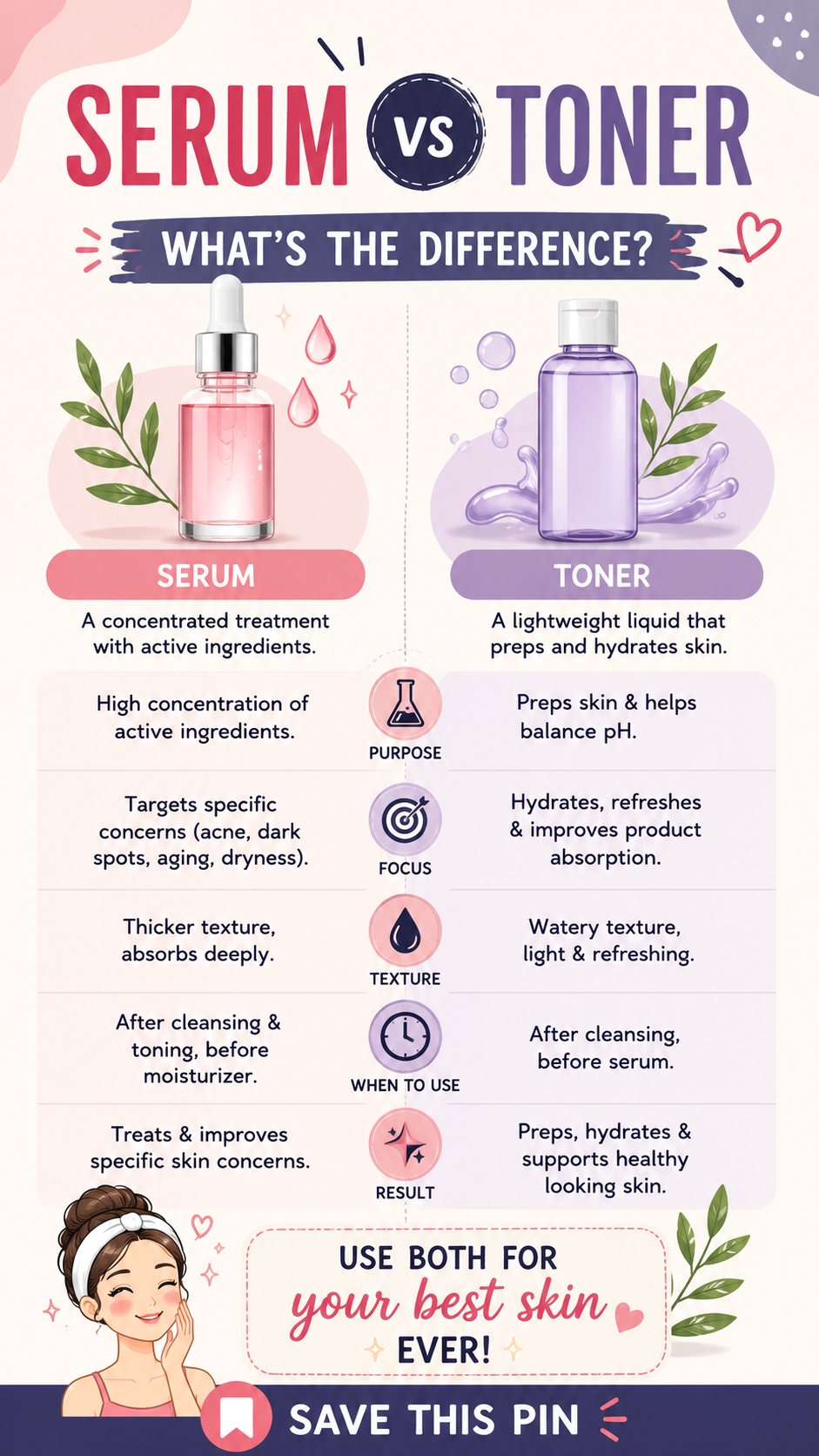
Understanding the difference between serum and toner is one of the most common skincare questions, especially for beginners building a routine. Both products play important roles in achieving healthy, glowing skin, yet they serve completely different purposes. Many people mistakenly think they can replace one with the other, but the truth is that serum and toner work best when used together. Knowing when to use them, how they function, and what benefits they offer can help you create a more effective skincare routine that supports your unique skin concerns.
Key Takeaways
- Toner and serum have different roles in a skincare routine.
- Toner helps prepare, hydrate, and refresh the skin.
- Serums contain concentrated active ingredients that target specific concerns.
- Toner is typically applied before serum.
- Using both products can improve overall skincare results.
- Choosing formulas based on your skin type is essential.
What Is a Toner?
A toner is a lightweight liquid skincare product designed to be applied after cleansing. Modern toners are very different from the harsh, alcohol-heavy formulas that were popular years ago. Today’s toners often focus on hydration, soothing ingredients, and supporting the skin barrier.
After cleansing, the skin can sometimes feel tight or slightly dehydrated. A toner helps replenish moisture while preparing the skin to better absorb the products that follow. Think of toner as the first layer of hydration in your skincare routine.
Many toners contain ingredients such as hyaluronic acid, glycerin, rose water, green tea extract, or soothing botanical extracts. Depending on the formula, toners can also provide gentle exfoliation or help control excess oil.
Benefits of Using Toner
- Provides lightweight hydration.
- Refreshes the skin after cleansing.
- Helps support a healthy skin barrier.
- Prepares the skin for serums and moisturizers.
- Can help improve the absorption of other skincare products.
- May assist in balancing oily or combination skin.
Important: A toner should not leave your skin feeling stripped, dry, or irritated. Modern skincare focuses on maintaining hydration and protecting the skin barrier rather than aggressively removing oil.
What Is a Serum?
A serum is a concentrated treatment product formulated with active ingredients designed to address specific skin concerns. Unlike toners, which primarily focus on hydration and preparation, serums deliver targeted ingredients deeper into the skin.
Serums are often formulated with powerful ingredients such as vitamin C, niacinamide, peptides, hyaluronic acid, retinol, or antioxidants. Because they contain higher concentrations of active ingredients, they are generally considered treatment products.
The texture of a serum can range from lightweight and watery to slightly thicker and gel-like. Despite the variation in consistency, serums are designed to absorb efficiently without feeling heavy.
Benefits of Using Serum
- Targets specific skin concerns.
- Delivers concentrated active ingredients.
- Can help improve hydration levels.
- Supports brighter and more even-looking skin.
- May help reduce the appearance of fine lines.
- Can assist with acne, dark spots, and texture concerns.
Serum vs Toner: The Core Difference
The simplest way to understand the difference is to focus on their primary purpose.
Toner prepares the skin. Serum treats the skin.
Toner acts as a supportive step that hydrates, refreshes, and helps optimize the effectiveness of the products that follow. Serum is where targeted treatment happens.
For example, if your goal is to address dark spots, fine lines, or acne, your serum is likely the product doing most of the heavy lifting. Meanwhile, your toner helps create an ideal environment for those active ingredients to work effectively.
| Feature | Toner | Serum |
|---|---|---|
| Purpose | Prep and hydrate skin | Treat specific concerns |
| Texture | Watery and lightweight | More concentrated |
| Ingredients | Hydrating and soothing | Active treatment ingredients |
| When to Use | After cleansing | After toner |
| Main Goal | Preparation and hydration | Targeted improvement |
Why This Matters
- Skipping toner does not make serum ineffective, but it may reduce overall hydration.
- Skipping serum means missing out on targeted treatment benefits.
- Using both can create a more balanced and effective skincare routine.
Which Product Should You Apply First?
The correct order is simple:
- Cleanser
- Toner
- Serum
- Moisturizer
- Sunscreen in the morning
Skincare products are generally applied from the thinnest consistency to the thickest. Since toner has a very watery texture, it should be used before serum.
Applying toner first allows the skin to receive a quick burst of hydration, which may help improve the experience and absorption of subsequent products.
Pro Tip: Apply toner while the skin is slightly damp after cleansing. Follow with serum shortly afterward to help lock in hydration and maximize comfort.
Can You Use Toner Without Serum?
Yes. If your skincare goals are simple and your skin is generally healthy, using a toner alone can provide hydration and refreshing benefits.
Many people with minimalist routines enjoy using a cleanser, toner, moisturizer, and sunscreen. This approach can work well for those who do not have significant concerns such as hyperpigmentation, acne, or signs of aging.
However, if you want targeted improvements, adding a serum often delivers more noticeable results.
Can You Use Serum Without Toner?
Absolutely. A serum can still be highly effective even if you skip toner.
Many skincare enthusiasts prioritize serums because they contain concentrated active ingredients. If you are simplifying your routine or working within a budget, investing in a quality serum may provide more targeted benefits than investing in a toner.
That said, using both products often creates a more complete routine that focuses on hydration as well as treatment.
Choosing the Right Toner for Your Skin Type
Dry Skin
Look for hydrating ingredients such as hyaluronic acid, glycerin, aloe vera, and panthenol. Avoid formulas that contain excessive alcohol.
Oily Skin
Lightweight toners with balancing ingredients can help refresh the skin without over-drying it. Gentle exfoliating ingredients may also be beneficial.
Sensitive Skin
Choose fragrance-free and soothing formulas with calming ingredients like chamomile, centella asiatica, or oat extract.
Combination Skin
Hydrating toners with lightweight formulations often work best because they support both dry and oily areas without overwhelming the skin.
Choosing the Right Serum for Your Goals
For Hydration
Look for serums containing hyaluronic acid and moisture-binding ingredients.
For Brightening
Vitamin C and niacinamide are popular choices for improving the appearance of dull skin and uneven tone.
For Fine Lines
Peptides, antioxidants, and retinol-based formulations are commonly chosen to support smoother-looking skin.
For Blemishes
Ingredients such as niacinamide and other targeted treatments can help support clearer-looking skin.
Important: Introducing multiple active serums at once can increase the risk of irritation. Start slowly and monitor how your skin responds before adding additional treatments.
Common Mistakes to Avoid
- Using too many products at once.
- Applying serum before toner.
- Expecting overnight results.
- Choosing products without considering skin type.
- Skipping moisturizer after serum.
- Neglecting sunscreen during daytime routines.
Consistency matters more than complexity. A simple routine followed regularly often delivers better results than a complicated routine that is difficult to maintain.
Building a Simple Routine with Toner and Serum
Morning Routine
- Gentle cleanser
- Hydrating toner
- Antioxidant serum
- Moisturizer
- Sunscreen
Evening Routine
- Cleanser
- Toner
- Treatment serum
- Moisturizer
This straightforward approach covers hydration, treatment, protection, and overall skin health without becoming overwhelming.
At a Glance
- Toner prepares and hydrates the skin.
- Serum targets specific skincare concerns.
- Toner should be applied before serum.
- Both products complement each other.
- Consistency is key for long-term results.
Conclusion
When comparing serum vs toner, it is important to remember that they are not competitors. Instead, they are complementary skincare products that serve different purposes. Toners focus on hydration, preparation, and skin comfort, while serums deliver concentrated active ingredients that address specific concerns such as dryness, uneven tone, blemishes, or signs of aging.
Whether you are building your first skincare routine or refining an existing one, understanding how these products work together can help you make smarter choices. By selecting formulas that match your skin type and goals, you can create a balanced routine that supports healthier, smoother, and more radiant-looking skin over time.
Tags
Skincare Routine Serum vs Toner Healthy Skin Hydrated Skin Beauty Tips Skincare Guide Glowing Skin Skin Care Basics