
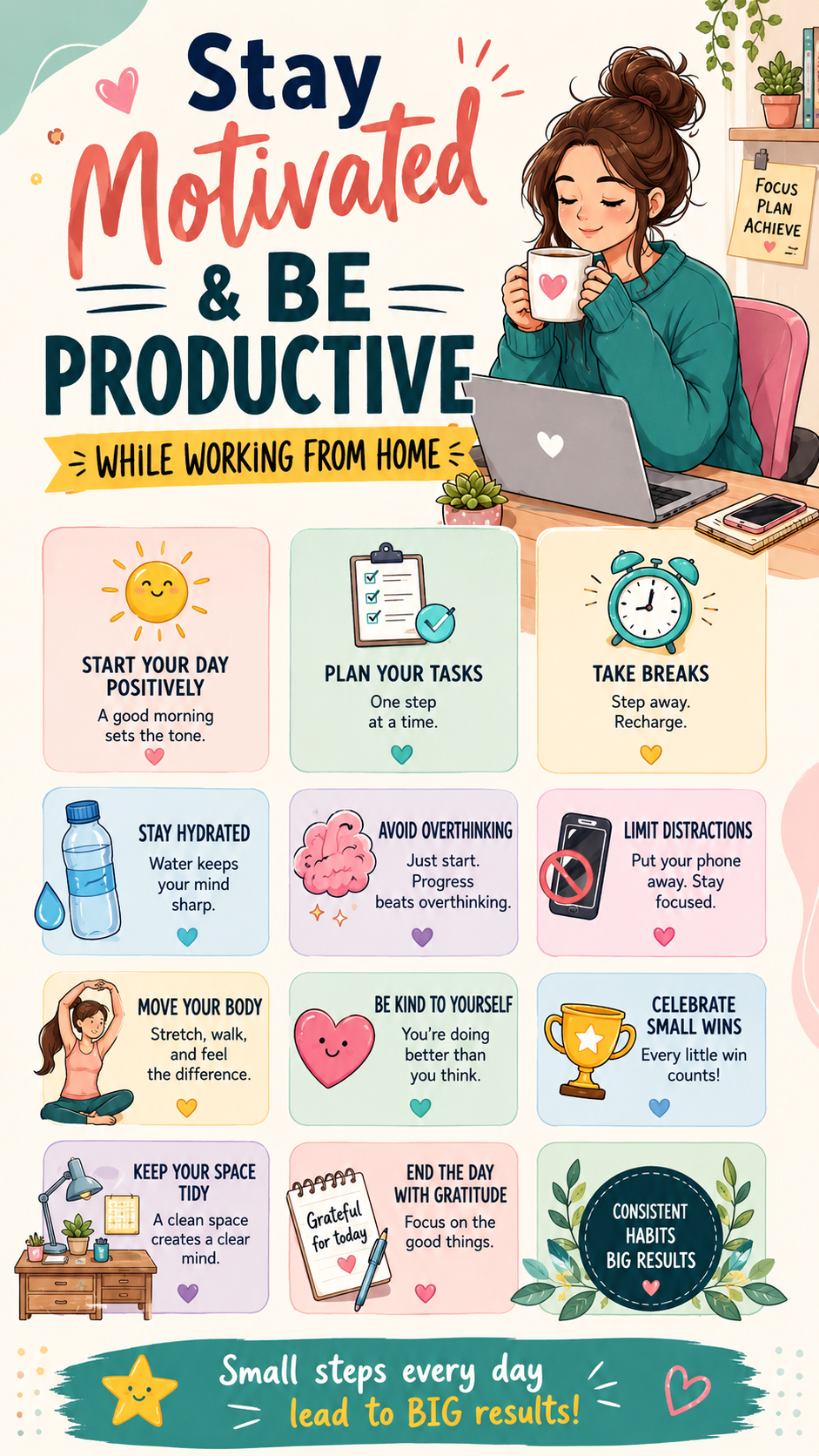
Staying motivated while working from home can feel easy on some days and surprisingly difficult on others. Without the structure of a traditional office, distractions can appear from every direction, and maintaining focus requires a deliberate approach. The good news is that productivity is not about working longer hours. It is about creating habits, routines, and environments that help you perform at your best while protecting your well-being.
Whether you are a remote employee, freelancer, entrepreneur, student, or anyone managing tasks from home, small daily actions can make a remarkable difference. From planning your day and taking breaks to celebrating small wins and practicing gratitude, productive habits help create momentum that carries you through challenges and keeps your goals moving forward.
Key Takeaways
- Create a simple morning routine to start your day positively.
- Break large projects into smaller, manageable tasks.
- Take regular breaks to maintain energy and focus.
- Reduce distractions by limiting unnecessary phone use.
- Celebrate small achievements to stay motivated.
- Balance productivity with self-care and rest.
Why Motivation Matters When Working From Home
Motivation is often viewed as something that magically appears when inspiration strikes. In reality, motivation is usually the result of action. When you take small productive steps, your brain receives positive feedback, making it easier to continue moving forward.
Remote work offers flexibility and freedom, but it also places greater responsibility on individuals to manage their own schedules. Without coworkers nearby or managers walking through the office, staying engaged requires intention and self-discipline.
Important: Productivity is not about being busy every minute of the day. Sustainable productivity comes from focusing on meaningful work while maintaining healthy energy levels and avoiding burnout.
Building a productive work-from-home lifestyle starts with understanding that consistency often beats intensity. Small improvements repeated daily can lead to significant long-term results.
Start the Day with a Positive Mindset
The way you begin your morning often sets the tone for the rest of your day. Starting with positivity creates momentum and helps you approach challenges with confidence.
Instead of immediately checking emails or social media, consider creating a short morning routine that helps you feel energized and focused. This might include:
- Drinking a glass of water.
- Taking a few deep breaths.
- Writing down your goals for the day.
- Enjoying a quiet cup of coffee or tea.
- Reading something inspiring.
A calm and intentional start can improve concentration and reduce feelings of overwhelm before your workday even begins.
Plan Your Tasks One Step at a Time
One of the biggest obstacles to productivity is feeling overwhelmed by a large workload. Looking at everything you need to accomplish at once can make it difficult to know where to begin.
Breaking tasks into smaller actions creates clarity and momentum. Instead of writing “Finish project,” break it down into individual steps that are easier to manage.
Benefits of Task Planning
- Reduces stress and uncertainty.
- Creates clear priorities.
- Improves focus throughout the day.
- Makes progress easier to measure.
- Increases motivation through quick wins.
Consider identifying your top three priorities each morning. Completing those essential tasks first can create a strong sense of accomplishment.
Expert Insight
People often overestimate what they can accomplish in a single day and underestimate what they can achieve over several months. Focus on steady progress rather than perfection.
Take Regular Breaks to Recharge
Many people believe that working continuously leads to greater productivity. However, research and experience consistently show that regular breaks improve focus, creativity, and mental performance.
Short breaks allow your brain to recover and return to work with renewed energy. A simple strategy is to work in focused intervals and then step away for a few minutes.
Ideas for Productive Breaks
- Stretch your muscles.
- Walk around your home.
- Step outside for fresh air.
- Refill your water bottle.
- Practice a brief mindfulness exercise.
These small pauses help prevent mental fatigue and keep productivity levels steady throughout the day.
Stay Hydrated and Support Your Energy
Hydration is one of the simplest and most overlooked productivity habits. Even mild dehydration can contribute to fatigue, headaches, and difficulty concentrating.
Keeping a water bottle nearby serves as a visual reminder to drink regularly throughout the day. Pairing hydration with healthy snacks can also support consistent energy levels and reduce afternoon slumps.
Creating a comfortable workspace that encourages healthy habits helps both physical and mental performance.
Avoid Overthinking and Take Action
Overthinking is a common productivity challenge. Many people spend more time worrying about a task than actually completing it.
Waiting for the perfect moment, perfect plan, or perfect level of confidence often leads to unnecessary delays. Taking action, even if the first step is small, creates momentum.
Pro Tip: When a task feels intimidating, commit to working on it for just five minutes. Starting is often the hardest part, and momentum frequently carries you further than expected.
Progress builds confidence. The more frequently you take action, the less power overthinking has over your productivity.
Reduce Digital Distractions
Smartphones and notifications can interrupt concentration dozens of times throughout the day. Even brief distractions can significantly reduce productivity because the brain needs time to refocus.
Creating distraction-free work sessions can dramatically improve efficiency. Consider setting specific periods where your phone is placed out of reach or notifications are temporarily disabled.
Simple Focus Strategies
- Turn off nonessential notifications.
- Close unused browser tabs.
- Use website blockers when necessary.
- Schedule dedicated focus periods.
- Check messages at designated times.
Protecting your attention is one of the most valuable productivity skills in today’s digital environment.
Move and Stretch Throughout the Day
Physical movement plays a major role in maintaining energy and focus. Sitting for extended periods can contribute to stiffness, fatigue, and reduced productivity.
Simple stretches, short walks, or light exercises can refresh both your body and mind. Movement increases circulation and can improve mental clarity.
You do not need an intense workout to experience benefits. Even a few minutes of movement every hour can make a noticeable difference.
Be Kind to Yourself During Challenging Days
Not every day will be equally productive. Unexpected challenges, stress, and low-energy periods are normal parts of life.
Self-compassion allows you to recover more effectively from setbacks. Instead of criticizing yourself for a difficult day, focus on what you can improve tomorrow.
Important: Long-term productivity depends on resilience. Treating yourself with patience and understanding helps maintain motivation during periods when progress feels slower.
Productivity should support your well-being, not come at the expense of it.
Celebrate Small Wins
Many people wait until they reach a major goal before celebrating success. However, recognizing smaller achievements along the way can significantly improve motivation.
Every completed task represents progress. Acknowledging those accomplishments reinforces positive habits and helps maintain momentum.
- Finished a difficult report?
- Completed your workout?
- Cleared your inbox?
- Stayed focused for a work session?
These achievements deserve recognition because they contribute to larger goals over time.
Keep Your Workspace Clean and Organized
Your environment influences your ability to focus. A cluttered workspace can create visual distractions and increase feelings of stress.
Maintaining an organized desk does not require perfection. Small habits such as putting items away, organizing papers, and removing unnecessary clutter can improve concentration.
A clean workspace also creates a more professional and enjoyable atmosphere for remote work.
Practice Gratitude at the End of the Day
Ending the day with gratitude helps shift attention away from unfinished tasks and toward positive experiences. This simple habit can improve mood, reduce stress, and support a healthier mindset.
Consider writing down three things that went well during the day. They do not need to be major achievements. Small moments of progress and positivity matter.
Examples include:
- Completing an important task.
- Having a productive meeting.
- Taking a refreshing walk.
- Learning something new.
- Helping a colleague or client.
This practice encourages reflection and helps create a positive transition from work time to personal time.
At a Glance
- Start each day with intention and positivity.
- Break large goals into smaller tasks.
- Protect your focus by limiting distractions.
- Take breaks, move often, and stay hydrated.
- Celebrate progress and practice gratitude daily.
Conclusion
Building a productive work-from-home routine is not about chasing perfection. It is about creating practical habits that support focus, motivation, and well-being over time. Small actions such as planning your tasks, taking breaks, staying hydrated, reducing distractions, and celebrating progress can have a powerful impact on your daily performance.
Remember that productivity is a journey rather than a destination. Every positive habit you build today creates a stronger foundation for tomorrow. By combining focused work with self-care, you can create a sustainable routine that helps you achieve your goals while enjoying the flexibility and freedom of working from home.
Tags
Productivity Tips Work From Home Remote Work Time Management Daily Habits Motivation Self Care Focus and Productivity