
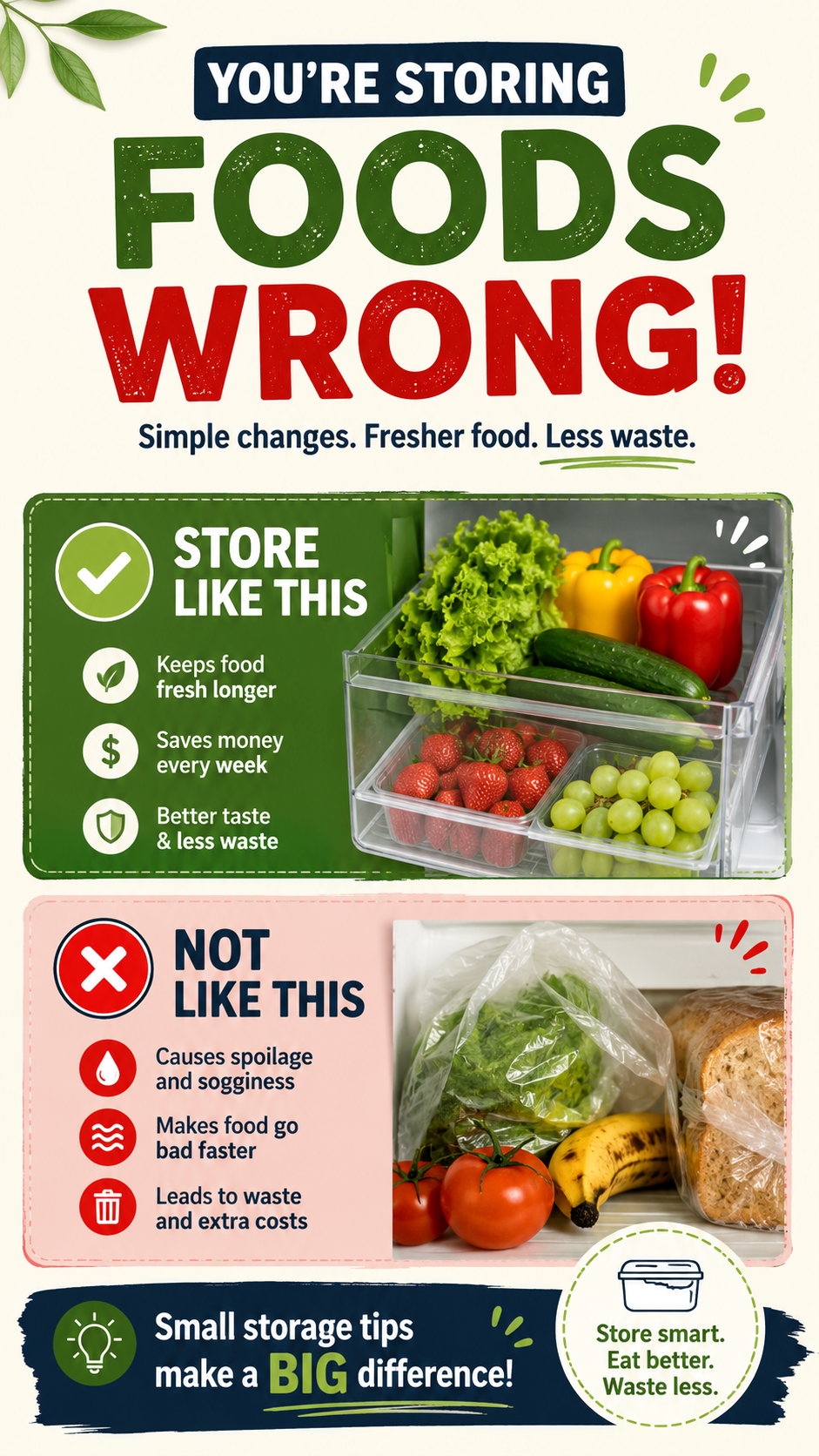
Food waste often starts with something surprisingly simple: storing everyday groceries in the wrong place. Many people assume that if food is in the fridge, it is safe and fresh for as long as possible. In reality, improper food storage can ruin texture, flavor, and shelf life far faster than you might expect. From soggy vegetables to stale bread and mushy fruit, small storage mistakes can cost you money every single week.
Knowing how to store food properly is one of the easiest ways to reduce waste, preserve freshness, and make your groceries last longer. Better storage also helps you keep meals tastier and safer to eat. Whether you are organizing a busy family kitchen or trying to make meal prep easier, proper storage matters more than most people realize.
Key Takeaways
- Not all foods belong in the refrigerator
- Proper storage helps reduce food waste and saves money
- Moisture and airflow greatly affect freshness
- Some foods release gases that speed ripening
- Simple storage habits can extend shelf life significantly
Why Proper Food Storage Matters
Every year, households throw away huge amounts of food due to spoilage. Often, the food was perfectly good when purchased, but improper storage caused it to deteriorate quickly. Temperature, humidity, airflow, and exposure to ethylene gas all affect how long food stays fresh.
Important: Food storage is not just about preventing spoilage. It also protects taste, texture, nutrition, and food safety. A tomato stored incorrectly may still look edible but can lose much of its flavor and freshness.
Once you understand which foods need cold temperatures, which prefer room temperature, and which require breathable storage, your kitchen routine becomes much easier.
Foods You Should Never Store in the Fridge
1. Tomatoes
Refrigeration damages tomato cell structure, making them mealy and bland. Tomatoes develop their best flavor at room temperature.
- Store on the counter
- Keep away from direct sunlight
- Use within several days for best flavor
2. Potatoes
Cold temperatures convert potato starch into sugar, creating an unpleasant taste and grainy texture.
- Store in a cool, dark pantry
- Avoid sealed plastic bags
- Keep away from onions
3. Bread
Many people refrigerate bread to keep it fresh longer, but this often makes it stale faster. The fridge accelerates starch crystallization.
Instead:
- Keep bread at room temperature for short-term use
- Freeze if storing for longer than a few days
Foods That Need Refrigeration
Leafy Greens
Greens wilt quickly without moisture control. Excess moisture causes rot, while dryness causes wilting.
Best practice:
- Wash only before use
- Store in breathable containers
- Add paper towels to absorb moisture
Berries
Berries spoil fast because of delicate skin and high moisture content. Refrigeration slows mold growth.
- Store unwashed
- Remove damaged berries immediately
- Wash only before eating
Dairy Products
Milk, yogurt, cheese, and cream need consistent refrigeration. Avoid placing them in the fridge door where temperatures fluctuate.
Expert Insight
The refrigerator door is one of the warmest spots in the fridge. Keep highly perishable items like milk, eggs, and fresh meat on inner shelves where temperature stays more stable.
The Hidden Role of Ethylene Gas
Some fruits naturally release ethylene gas as they ripen. This gas speeds up ripening in nearby produce, which can be helpful or harmful depending on storage.
High Ethylene Producers
- Bananas
- Apples
- Avocados
- Pears
Ethylene Sensitive Foods
- Lettuce
- Broccoli
- Cucumbers
- Carrots
Pro Tip: Keep bananas and apples away from leafy vegetables unless you want those greens to age rapidly. Separating produce can dramatically extend freshness.
Common Food Storage Mistakes
Overpacking the Fridge
A crowded fridge blocks airflow. Cold air needs circulation to maintain even temperatures.
Storing Hot Food Immediately
Placing steaming food directly in the fridge raises internal temperature and can affect nearby foods.
Using the Wrong Containers
Airtight containers are great for some foods but harmful for others that need airflow.
- Use airtight for leftovers
- Use breathable bags for produce
Best Storage Tips by Food Category
Fruits
Store according to ripeness.
- Unripe fruit: counter
- Ripe fruit: fridge
Vegetables
Most vegetables prefer cool conditions with moderate humidity.
- Leafy greens need moisture balance
- Root vegetables prefer dark storage
Dry Goods
Rice, flour, pasta, and grains last longest in cool, dry environments.
- Use sealed containers
- Protect from moisture and pests
How Proper Storage Saves Money
Throwing away spoiled food is essentially throwing away money. Even reducing weekly waste by a small amount adds up over a year.
Good storage habits help you:
- Buy groceries less often
- Reduce waste
- Improve meal planning
- Lower food costs
Important: One of the most effective budgeting strategies is simply making food last longer. Smart storage transforms every grocery trip into better value.
Building Better Kitchen Habits
Proper food storage becomes easy when you build simple routines.
Weekly Checklist
- Check fridge for aging produce
- Move ripening fruits strategically
- Rotate older items to the front
- Clean spills immediately
- Use leftovers quickly
These small habits prevent waste before it starts.
At a Glance
- Keep bread out of the fridge
- Separate ethylene-producing fruits
- Avoid overcrowding your refrigerator
- Use proper containers for each food type
- Check produce weekly
Conclusion
Storing food properly is one of the simplest kitchen upgrades you can make. Small changes such as keeping tomatoes on the counter, separating bananas from greens, and avoiding fridge overcrowding can dramatically improve freshness. These habits protect flavor, reduce waste, and save money.
The next time you unpack groceries, think beyond simply putting everything into the fridge. Give each food the environment it needs, and you will notice longer shelf life, better taste, and fewer wasted ingredients.
Tags
Food Storage Kitchen Tips Food Preservation Meal Prep Reduce Food Waste Kitchen Organization