
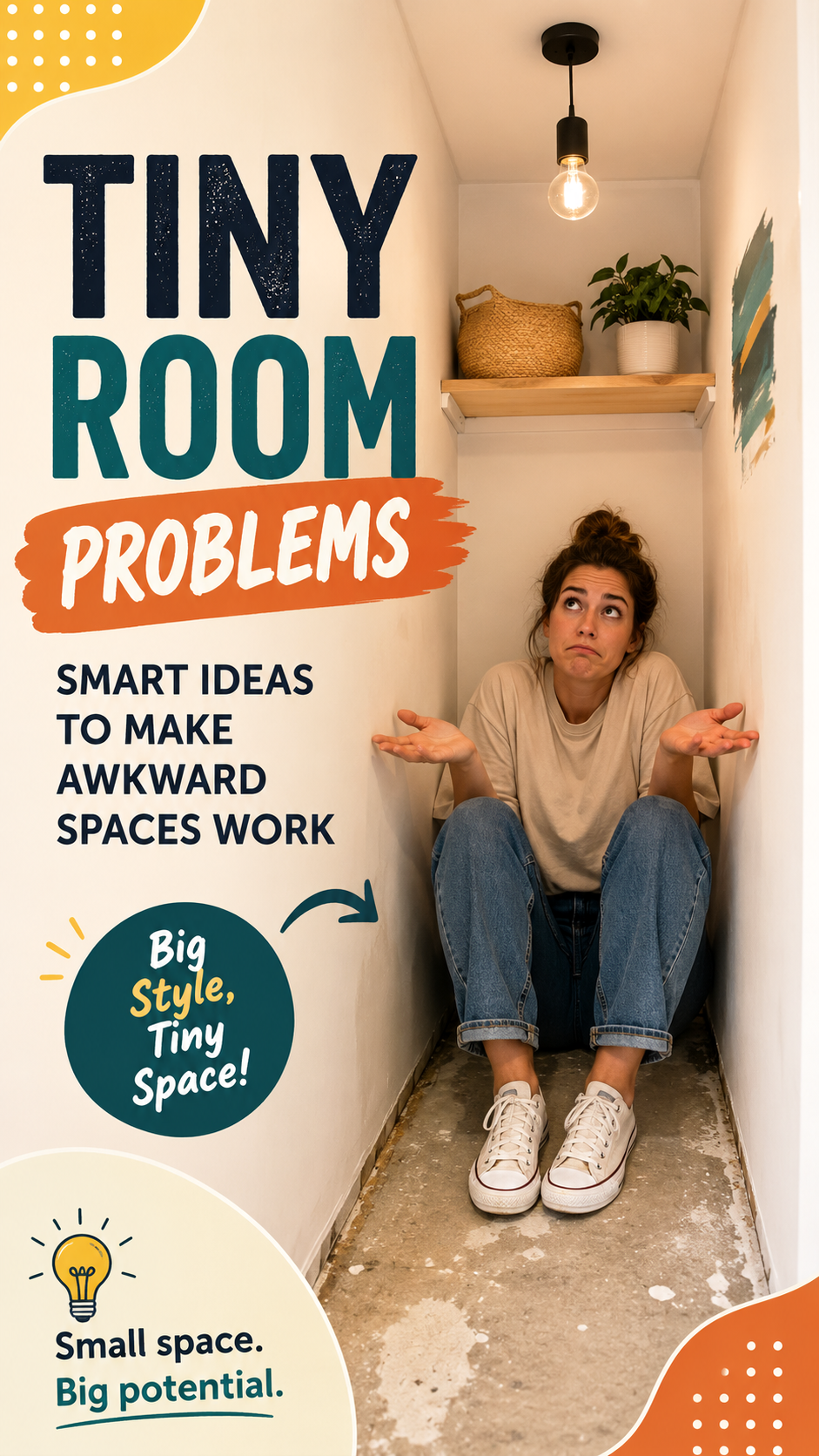
A tiny room can feel frustrating at first glance, especially when the floor space is so limited that even simple furniture choices feel complicated. But small rooms are not design dead ends. They are opportunities to get creative, edit with intention, and build a space that works harder than a larger room ever needs to. A successful small room makeover is not about filling every corner. It is about choosing the right layout, creating visual breathing room, and giving every item a clear purpose.
Whether you are dealing with a narrow bedroom, an awkward spare room, a compact rental, a tiny home office, or a closet-sized nook, the goal is the same: make the space feel usable, comfortable, and stylish. With smart storage, flexible furniture, light-enhancing decor, and a few visual tricks, even the most cramped room can feel fresh, functional, and surprisingly inviting.
Key Takeaways
- A small room makeover starts with layout, not decor.
- Vertical storage helps free up valuable floor space.
- Light colors, mirrors, and simple curtains can make tiny rooms feel larger.
- Multi-purpose furniture is essential for awkward small spaces.
- Editing clutter is one of the fastest ways to improve a compact room.
- Small rooms can still feel stylish when the design choices are intentional.
Why Small Rooms Feel So Difficult to Design
Small rooms often feel challenging because every design decision has a visible impact. In a larger room, a bulky chair, dark wall color, or extra storage bin might blend into the background. In a tiny room, those same choices can make the space feel crowded almost instantly. The room may also have odd proportions, low natural light, unfinished corners, or limited wall space, which makes decorating feel even trickier.
The biggest mistake people make is trying to force a normal-sized room plan into a compact space. A tiny room needs a different approach. Instead of asking, “How do I fit everything in?” ask, “What does this room truly need to do?” That simple shift makes the makeover more practical and more beautiful.
Important: The most successful small room makeover is not the one with the most furniture or decor. It is the one where every piece earns its place and supports the way the room will actually be used.
Start With the Purpose of the Room
Before buying shelves, paint, rugs, or furniture, define the main purpose of the space. A tiny room might become a cozy bedroom, a reading nook, a compact office, a dressing area, a storage zone, a hobby corner, or a guest space. Trying to make one very small room do too many things can quickly lead to clutter and frustration.
Choose one primary function and one secondary function at most. For example, a small bedroom might also need a study desk. A tiny office might also need hidden storage. A narrow spare room might become a closet and vanity area. Once the purpose is clear, the layout becomes easier to plan.
Questions to Ask Before the Makeover
- What is the one thing this room must do well?
- What items truly need to stay in this room?
- Which wall has the most usable space?
- Does the room need seating, sleeping space, storage, or a work surface?
- What currently makes the room feel cramped?
These questions help you separate wants from needs. In a small space, that clarity is everything.
Plan the Layout Before You Decorate
Layout is the foundation of any small room makeover. Paint and accessories can improve the mood, but they cannot fix a layout that blocks movement or wastes space. Start by measuring the room, including door swings, window placement, outlets, and any awkward corners. Then sketch a simple floor plan before moving furniture around.
In a narrow room, it usually works best to keep the main walkway clear and place furniture against the longest wall. In a square small room, corner placement can open the center. In a very tight room, floating furniture may not be realistic, so wall-mounted and foldable options become more useful.
Best Layout Ideas for Tiny Rooms
- Use one main wall: Keep storage, furniture, and decor grouped on one side when possible.
- Leave the floor visible: More visible floor makes the room feel larger.
- Choose slim furniture: Narrow desks, compact beds, and shallow shelves reduce visual weight.
- Use corners wisely: Corners can hold shelves, lamps, baskets, or small seating.
- Avoid blocking windows: Natural light is one of the best space-enhancing features.
Choose Furniture That Fits the Scale
Small rooms need furniture that matches their proportions. Oversized furniture can make a room feel uncomfortable even if it technically fits. Instead, look for pieces with slim legs, clean lines, shallow depth, and built-in storage. Furniture that sits slightly off the floor can also help the space feel lighter because it allows the eye to see underneath.
For a tiny bedroom, a bed with drawers underneath can replace a bulky dresser. For a small office, a wall-mounted desk can create workspace without taking over the floor. For a narrow room, a bench with storage can provide seating and organization in one piece.
Smart Furniture Picks for a Small Room Makeover
- Storage beds or platform beds with drawers
- Wall-mounted desks or fold-down tables
- Narrow console tables for tight walls
- Floating nightstands instead of bulky side tables
- Ottomans with hidden storage
- Stackable stools or nesting tables
- Tall bookcases with a small footprint
Pro Tip: When choosing furniture for a small room, pay attention to depth, not just width. A piece that is only a few inches too deep can make walking through the room feel awkward.
Use Vertical Storage to Save Floor Space
When floor space is limited, the walls become your best design tool. Vertical storage draws the eye upward and keeps essential items off the ground. This is especially useful in tiny bedrooms, compact offices, laundry nooks, craft rooms, and awkward spare rooms.
Floating shelves, pegboards, wall hooks, tall cabinets, and over-door organizers can transform empty wall space into practical storage. The key is to keep vertical storage styled and organized so it feels intentional rather than cluttered.
Vertical Storage Ideas That Look Good
- Install floating shelves above a desk, bed, or bench.
- Use baskets on high shelves for items you do not need daily.
- Add wall hooks for bags, robes, hats, or lightweight decor.
- Try a pegboard for craft supplies, tools, or office items.
- Use a tall bookcase instead of several short storage pieces.
Expert Insight
In a compact room, storage should be both useful and visual. Open shelving works best when it mixes practical containers with a few decorative pieces, such as a plant, framed print, or small lamp. This keeps the space from feeling like a storage closet.
Make the Room Feel Bigger With Light and Color
Color can dramatically change how a small room feels. Light colors tend to reflect more light, making walls appear farther away. Warm whites, soft beige, pale gray, muted sage, creamy taupe, and gentle blush can all work beautifully in compact spaces. That does not mean small rooms must be plain. The trick is to use stronger colors as accents rather than overwhelming the entire room.
For example, a small room can have light walls with a deep green shelf, a terracotta pillow, a navy desk chair, or a warm wood accent. These touches add personality without closing in the space.
Color Ideas for Small Room Makeovers
- Warm white: Clean, flexible, and bright.
- Soft beige: Cozy without feeling heavy.
- Pale sage: Fresh, calm, and nature-inspired.
- Light greige: Modern and easy to pair with decor.
- Muted blue: Peaceful for bedrooms or reading corners.
Should You Use Dark Colors in a Small Room?
Yes, but use them thoughtfully. A dark accent wall, dark built-in shelves, or a moody painted ceiling can look stylish in a small room when balanced with good lighting and lighter furniture. Dark colors are best when the goal is cozy, dramatic, or cocoon-like. For a room that already feels cramped and poorly lit, lighter colors are usually safer.
Add Mirrors for Instant Visual Space
Mirrors are one of the easiest small room makeover tools because they bounce light and create the illusion of depth. A mirror placed across from a window can make the room feel brighter. A tall mirror leaned against a wall can visually stretch the height of the room. A mirrored closet door can make a narrow space feel less closed in.
Choose a mirror style that matches the room’s personality. Rounded mirrors soften tight corners. Slim black frames feel modern. Wood frames add warmth. Frameless mirrors blend quietly into the design.
Important: A mirror works best when it reflects something attractive, such as natural light, a styled shelf, artwork, or an open doorway. Avoid placing it where it reflects clutter.
Create Storage That Does Not Look Like Storage
Small rooms need storage, but too many visible bins and boxes can make the space feel busy. The best storage blends into the design. Think woven baskets, fabric bins, closed cabinets, under-bed drawers, storage benches, and matching containers. When storage looks cohesive, the room feels more peaceful.
Hidden Storage Ideas for Awkward Spaces
- Use under-bed drawers for seasonal clothes or linens.
- Choose a bench with a lift-up seat.
- Add baskets to high shelves for rarely used items.
- Use storage boxes in one consistent color palette.
- Place slim rolling carts in narrow gaps.
- Hang organizers behind doors for accessories or cleaning supplies.
Even a very small room can stay organized when items have a dedicated home. The goal is not to hide everything. It is to reduce visual noise so the room feels calm and easy to use.
Style the Room Without Overcrowding It
Decor gives a small room personality, but it needs to be edited carefully. Instead of using many tiny accessories, choose fewer pieces with more impact. A large framed print can look cleaner than a cluster of small mismatched items. One beautiful lamp can do more for the atmosphere than several scattered decorations.
Texture is especially helpful in tiny rooms. A woven basket, soft throw, linen curtains, warm wood shelf, or textured rug can make the space feel cozy without adding clutter. Plants are also a great choice because they bring life and color into compact spaces.
Small Room Decor Ideas That Add Style
- One large artwork piece instead of many small frames
- A soft rug that defines the usable area
- Lightweight curtains hung high and wide
- A small plant on a shelf or windowsill
- A statement lamp or wall sconce
- Coordinated baskets for storage and texture
Make Awkward Corners Useful
Awkward corners are common in small rooms, especially narrow spaces or rooms with unusual walls. Instead of ignoring these areas, turn them into micro-zones. A small corner can become a reading nook, floating shelf display, plant area, charging station, vanity spot, or mini workspace.
The secret is to avoid bulky furniture. Use wall-mounted pieces, corner shelves, tiny stools, or slim lighting. Even a narrow wall can hold a few hooks, a mirror, or a small ledge shelf.
Ideas for Corners and Narrow Gaps
- Add a corner shelf for books or plants.
- Place a small floor lamp to brighten a dark area.
- Use a narrow rolling cart for supplies.
- Install wall hooks for everyday items.
- Create a mini vanity with a mirror and floating ledge.
Lighting Makes a Huge Difference
A tiny room with poor lighting can feel even smaller. Layered lighting helps create depth and comfort. Instead of relying on one overhead light, add a mix of task lighting, ambient lighting, and accent lighting where possible. Wall sconces, clip-on lamps, LED strips, and small table lamps can brighten the room without taking up much space.
Warm lighting usually makes compact rooms feel cozy and inviting. Cooler lighting may work better for a small office or craft area where focus is important. The best choice depends on how the room will be used.
Small Space Lighting Ideas
- Use wall sconces instead of floor lamps.
- Add LED strips under shelves for soft glow.
- Try a pendant light if floor and table space are limited.
- Use a mirror to reflect natural light.
- Choose lamps with slim bases or clip-on designs.
Small Room Makeover Ideas by Room Type
Every small room has different needs, but the same design principles apply: maximize function, reduce clutter, and make the space feel visually open. Here are practical ideas for different types of compact rooms.
Tiny Bedroom Makeover
Use a bed with built-in storage, floating nightstands, wall sconces, and high-mounted curtains. Keep bedding simple and choose a calming color palette. A tall mirror and one large artwork piece can help the room feel more finished without crowding it.
Small Office Makeover
Choose a wall-mounted desk or slim writing table. Add shelves above the workspace and use a comfortable chair that can tuck in neatly. Keep cords hidden and use containers for office supplies so the desk stays clear.
Compact Guest Room Makeover
Consider a daybed, sleeper chair, or Murphy bed if the room must serve multiple purposes. Add a small side shelf, reading light, hooks, and a basket for guest essentials. Keep decor welcoming but minimal.
Awkward Storage Room Makeover
Use labeled baskets, tall shelving, wall hooks, and clear zones. Keep the floor as open as possible. A small storage room can still look polished when the containers match and the layout is easy to maintain.
Budget-Friendly Small Room Makeover Tips
A small room makeover does not need to be expensive. In fact, compact rooms often cost less to refresh because they require fewer materials and fewer furniture pieces. A new paint color, better lighting, shelves, storage baskets, and a rug can completely change the feel of the room.
Affordable Updates With Big Impact
- Paint the walls a brighter, softer color.
- Replace heavy curtains with light, airy panels.
- Add peel-and-stick wallpaper to one accent area.
- Install floating shelves for vertical storage.
- Use matching baskets to hide clutter.
- Swap harsh bulbs for warm, cozy lighting.
- Add a mirror to reflect light and create depth.
Small upgrades can feel dramatic in a tiny room because every detail is noticeable. Focus on changes that improve both function and atmosphere.
Common Small Room Makeover Mistakes to Avoid
Designing a small room is often about restraint. The wrong choices can make the room feel cluttered, dark, or hard to move through. Avoiding a few common mistakes can make your makeover much more successful.
- Using too much small decor: Many tiny items can make the room feel busy.
- Choosing furniture that is too deep: Depth matters in tight spaces.
- Ignoring vertical space: Walls can provide valuable storage.
- Blocking natural light: Windows should stay as open as possible.
- Keeping items without a purpose: Clutter feels bigger in small rooms.
- Forgetting lighting: Poor lighting makes compact rooms feel cramped.
At a Glance
- Keep the layout simple and easy to move through.
- Use walls for shelves, hooks, lighting, and storage.
- Choose furniture with slim profiles and hidden storage.
- Use mirrors, light colors, and soft lighting to open the space.
- Decorate with fewer, more intentional pieces.
Conclusion: Tiny Rooms Can Have Big Potential
A small room makeover is all about making smart choices. The space may be limited, but the possibilities are not. When you focus on purpose, layout, vertical storage, light, and scale, even the most awkward room can become useful and beautiful. The goal is not to make the room look huge. The goal is to make it feel comfortable, organized, and thoughtfully designed.
Start with what the room needs most. Clear the clutter, measure carefully, choose furniture that fits, and let the walls do more work. Add texture, lighting, and a few personal touches to bring warmth and style. With the right approach, a tiny room can become one of the most charming and efficient spaces in your home.
Tags
Small Room Makeover Tiny Room Ideas Small Space Design Awkward Space Ideas Small Bedroom Decor Storage Ideas Home Decor Tips