
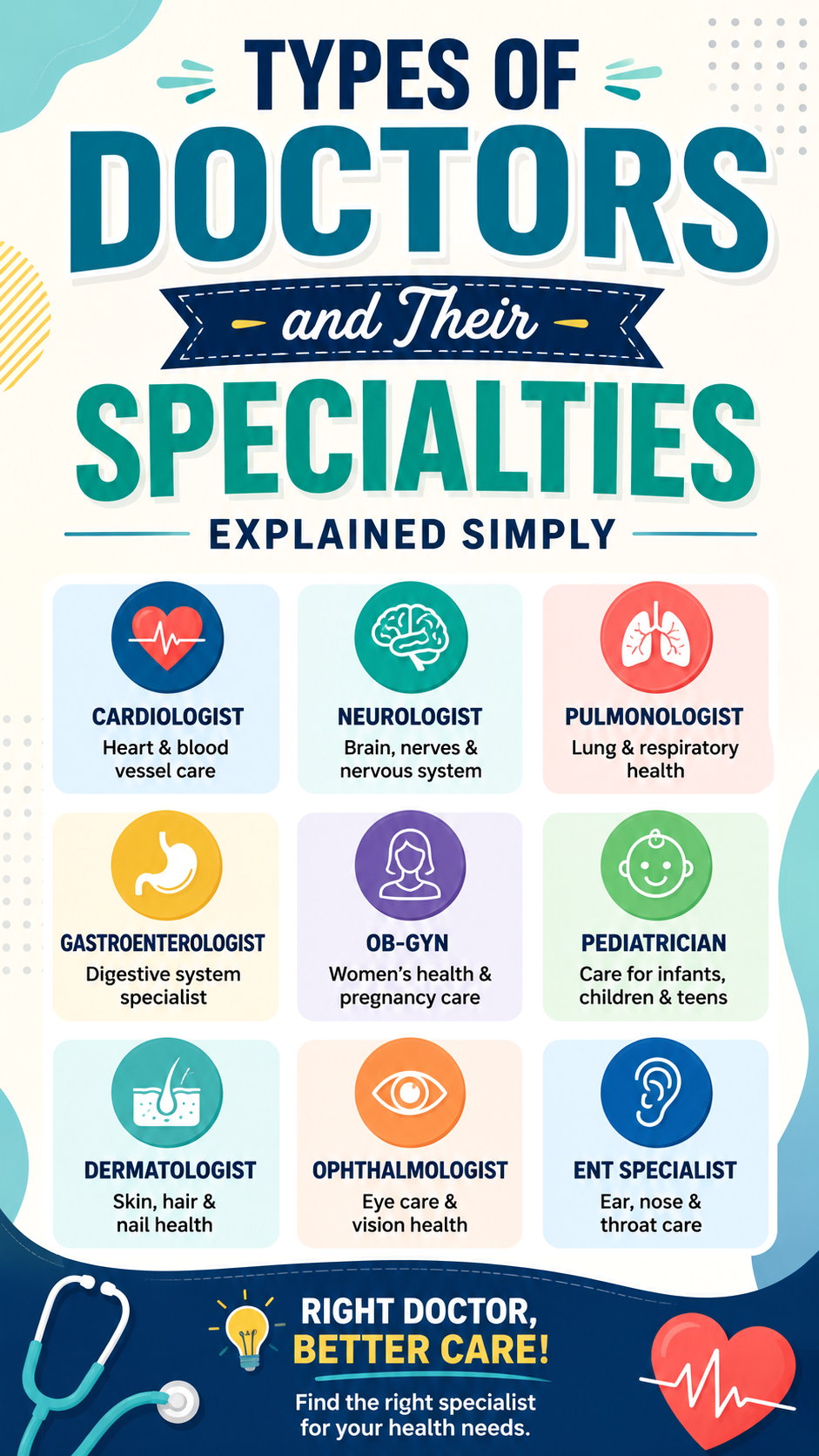
Choosing the right doctor can feel overwhelming, especially when there are dozens of medical specialties and subspecialties. Many people know they need medical help but are unsure whether to see a family physician, internist, dermatologist, cardiologist, or another specialist. Understanding the different types of doctors and their specialties can make healthcare decisions easier, improve communication with healthcare providers, and help patients receive appropriate treatment more quickly.
Modern medicine is highly specialized. While primary care doctors handle a wide range of common health concerns, specialists focus on specific organs, systems, age groups, or medical conditions. Learning what each doctor does can save time, reduce confusion, and ensure you get the right care when you need it most.
Key Takeaways
- Doctors specialize in different areas of medicine and patient care.
- Primary care physicians are often the first point of contact for health concerns.
- Specialists focus on specific diseases, organs, or patient populations.
- Knowing which doctor to see can improve diagnosis and treatment outcomes.
- Preventive care is just as important as treatment.
- Many health conditions require collaboration between multiple specialists.
Why Medical Specialties Exist
Medicine has evolved significantly over the years. As scientific knowledge expanded, it became impossible for a single physician to master every area of healthcare. Medical specialties emerged to provide deeper expertise in specific fields.
A cardiologist focuses on heart health, while a neurologist specializes in the nervous system. This specialized knowledge allows doctors to diagnose conditions more accurately, use advanced treatment methods, and stay current with developments in their field.
Important: Understanding medical specialties empowers patients to make informed healthcare decisions and seek the most appropriate care for their specific symptoms or conditions.
Primary Care Doctors
Primary care physicians serve as the foundation of healthcare. They often provide preventive care, diagnose common illnesses, manage chronic conditions, and coordinate referrals to specialists when needed.
Family Medicine Doctors
Family medicine physicians care for patients of all ages, from infants to older adults. They treat a wide variety of conditions and often build long-term relationships with families.
- Routine checkups
- Vaccinations
- Minor illnesses and injuries
- Preventive screenings
- Chronic disease management
Internal Medicine Doctors
Internists specialize in adult healthcare. They are highly trained in diagnosing and managing complex medical conditions affecting adults.
Patients with diabetes, high blood pressure, heart disease, or multiple health concerns often work closely with an internist.
Pediatricians
Pediatricians focus exclusively on infants, children, and adolescents. They monitor growth, development, vaccinations, and childhood illnesses.
Because children’s healthcare needs differ from those of adults, pediatricians receive specialized training in child development and pediatric medicine.
Doctors Who Treat Specific Body Systems
Many specialists focus on particular organs or body systems. These doctors provide advanced expertise for diagnosing and treating conditions within their area of focus.
Cardiologists
Cardiologists specialize in heart and cardiovascular health. They diagnose and treat conditions such as:
- Heart disease
- Heart failure
- High blood pressure
- Irregular heart rhythms
- Coronary artery disease
People experiencing chest pain, shortness of breath, or cardiovascular risk factors may be referred to a cardiologist.
Neurologists
Neurologists diagnose and treat disorders involving the brain, spinal cord, and nervous system.
Common conditions managed by neurologists include migraines, epilepsy, stroke, Parkinson’s disease, and multiple sclerosis.
Pulmonologists
Pulmonologists focus on the respiratory system. They treat conditions affecting the lungs and breathing.
- Asthma
- Chronic obstructive pulmonary disease
- Pneumonia
- Sleep apnea
- Lung infections
Gastroenterologists
Gastroenterologists specialize in the digestive system, including the stomach, intestines, liver, pancreas, and gallbladder.
Patients experiencing chronic digestive symptoms may be referred to a gastroenterologist for further evaluation and treatment.
Why This Matters
- Seeing the right specialist can shorten the time to diagnosis.
- Specialized expertise often leads to more targeted treatment plans.
- Early referrals can improve outcomes for many chronic conditions.
Doctors Focused on Specific Patient Groups
Obstetricians and Gynecologists (OB-GYNs)
OB-GYNs provide healthcare related to women’s reproductive systems, pregnancy, childbirth, and reproductive health.
These specialists perform routine examinations, prenatal care, fertility evaluations, and treatments for gynecological conditions.
Geriatricians
Geriatricians specialize in caring for older adults. Aging often brings unique health challenges, including multiple chronic conditions and medication management concerns.
These physicians help older patients maintain independence and quality of life.
Skin, Eyes, and Ear Specialists
Dermatologists
Dermatologists diagnose and treat conditions affecting the skin, hair, and nails.
- Acne
- Eczema
- Psoriasis
- Skin infections
- Skin cancer screenings
They also perform cosmetic procedures and help patients manage chronic skin disorders.
Ophthalmologists
Ophthalmologists are medical doctors specializing in eye health. Unlike many vision professionals, they can perform surgery as well as diagnose and treat eye diseases.
Common services include cataract surgery, glaucoma treatment, and comprehensive eye care.
Otolaryngologists (ENT Doctors)
ENT doctors specialize in conditions affecting the ears, nose, and throat.
Patients commonly visit ENT specialists for hearing problems, sinus issues, throat disorders, allergies, and balance-related concerns.
Pro Tip: Persistent symptoms that do not improve with primary care treatment may indicate the need for evaluation by a specialist who can perform advanced testing and targeted treatment.
Mental Health Specialists
Psychiatrists
Psychiatrists are medical doctors who diagnose and treat mental health conditions. Because they attend medical school, psychiatrists can prescribe medications when appropriate.
They help patients manage conditions such as depression, anxiety disorders, bipolar disorder, schizophrenia, and other psychiatric illnesses.
The Importance of Mental Health Care
Mental health plays a vital role in overall well-being. Seeking professional support is an important step toward managing emotional, behavioral, and psychological challenges.
Many patients benefit from a combination of therapy, lifestyle changes, and medical treatment under the guidance of qualified healthcare professionals.
Surgical Specialists
Some physicians focus primarily on performing surgical procedures to treat diseases, injuries, and structural abnormalities.
General Surgeons
General surgeons perform a broad range of procedures involving the abdomen, digestive tract, and other body systems.
They often treat conditions such as appendicitis, hernias, gallbladder disease, and certain cancers.
Orthopedic Surgeons
Orthopedic specialists focus on bones, joints, muscles, ligaments, and tendons.
- Fracture treatment
- Joint replacement surgery
- Sports injuries
- Arthritis management
- Spinal conditions
Neurosurgeons
Neurosurgeons perform procedures involving the brain, spine, and nervous system. Their work often addresses serious neurological conditions requiring advanced surgical care.
Emergency Medicine Physicians
Emergency medicine doctors work in emergency departments and urgent care settings, providing immediate treatment for acute illnesses and injuries.
These physicians are trained to rapidly assess patients, stabilize critical conditions, and coordinate care with specialists when necessary.
From severe injuries and infections to heart attacks and strokes, emergency medicine specialists handle a wide range of urgent medical situations.
How Doctors Work Together
Modern healthcare is increasingly collaborative. A patient with a complex condition may see several specialists who work together to create a comprehensive treatment plan.
For example, someone with heart disease and diabetes might receive care from a primary care physician, cardiologist, endocrinologist, nutrition specialist, and other healthcare professionals.
Important: Coordinated healthcare improves communication between providers, reduces treatment gaps, and helps ensure patients receive comprehensive care tailored to their individual needs.
When Should You See a Specialist?
Many health concerns can be addressed by a primary care doctor. However, specialist care may be recommended when symptoms persist, conditions become more complex, or advanced expertise is needed.
Common reasons for specialist referrals include:
- Chronic symptoms that remain unexplained
- Complex medical conditions
- Need for specialized diagnostic testing
- Advanced treatment options
- Surgical evaluation
Patients should always discuss concerns with their healthcare provider to determine the most appropriate next steps.
The Value of Preventive Healthcare
While specialists play a crucial role in treatment, preventive healthcare remains one of the most effective ways to maintain long-term wellness.
Routine checkups, screenings, vaccinations, healthy lifestyle habits, and early intervention can reduce the risk of serious illness and improve overall health outcomes.
Working closely with a trusted healthcare provider helps ensure that potential problems are identified and addressed before they become more severe.
At a Glance
- Primary care doctors handle general health needs and preventive care.
- Specialists focus on specific organs, diseases, or patient populations.
- Cardiologists, neurologists, and dermatologists are among the most recognized specialties.
- Mental health specialists support emotional and psychological well-being.
- Collaborative care often produces the best outcomes for complex conditions.
Conclusion
Understanding the different types of doctors and their specialties is an important step toward becoming a more informed healthcare consumer. From family physicians and pediatricians to cardiologists, dermatologists, surgeons, and psychiatrists, each specialist contributes unique expertise that helps patients receive the care they need.
Knowing which doctor treats specific conditions can reduce confusion, improve access to appropriate treatment, and support better health outcomes. Whether you are scheduling a routine checkup, seeking answers for persistent symptoms, or exploring healthcare careers, understanding medical specialties provides valuable insight into how modern healthcare works.
Tags
Types of Doctors Medical Specialties Healthcare Guide Primary Care Specialist Doctors Patient Education Medical Careers Health Awareness