
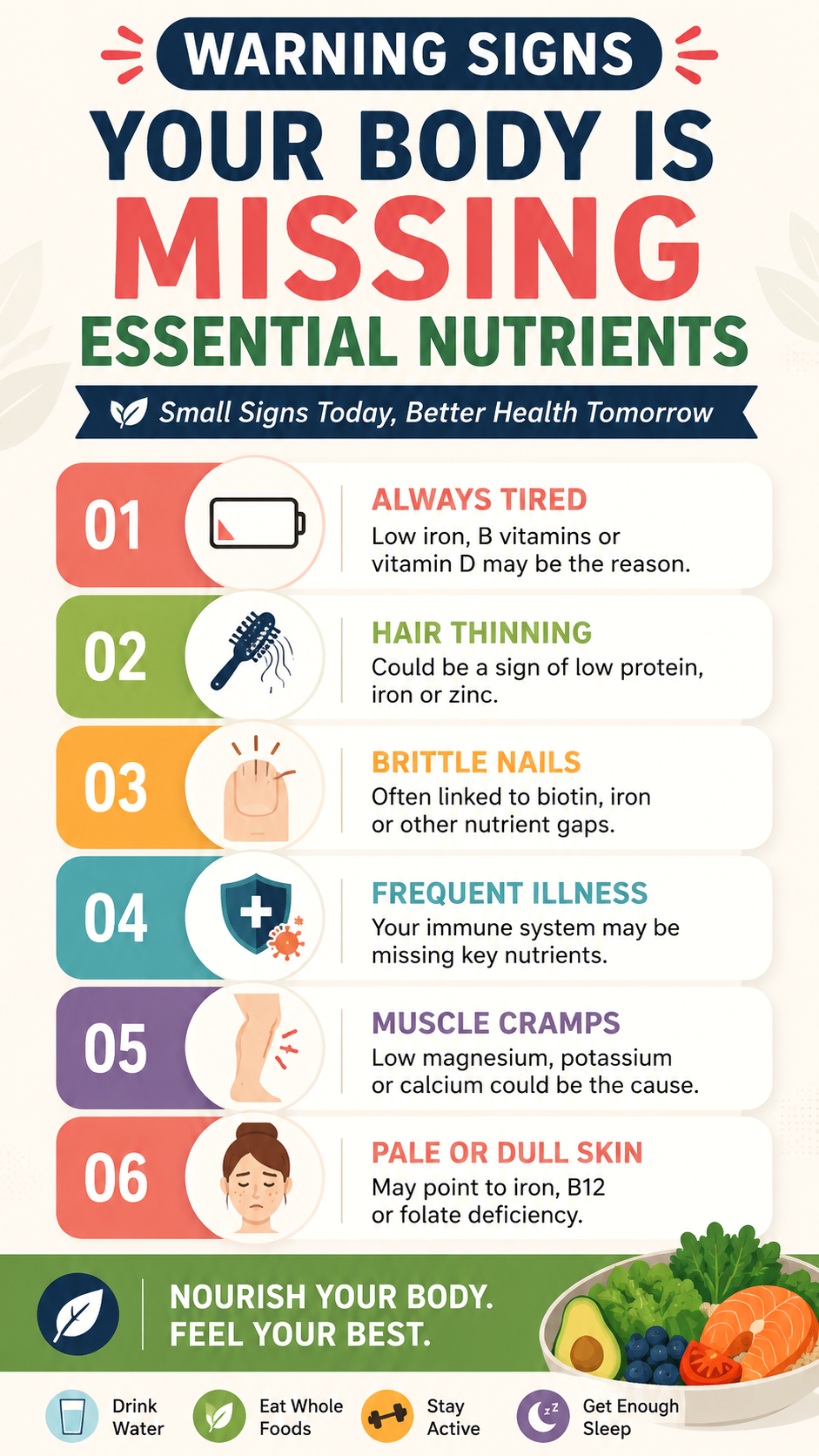
Many people focus on calories, weight, or exercise when thinking about health, but nutrient intake often plays an even bigger role in how the body feels and functions every day. Vitamins, minerals, protein, healthy fats, and other essential nutrients support everything from energy production and immune function to skin health and mental clarity. When the body does not receive enough of these nutrients, it often sends warning signals that should not be ignored.
Recognizing the early signs of nutrient deficiencies can help you make informed dietary choices before small issues develop into larger health concerns. While symptoms can vary from person to person, there are several common indicators that may suggest your body needs additional nutritional support.
Key Takeaways
- Persistent fatigue can be linked to nutrient deficiencies.
- Hair, skin, and nail changes may indicate nutritional gaps.
- Frequent illness can suggest weakened immune support.
- Muscle cramps and weakness are sometimes connected to low mineral intake.
- A balanced diet is the best foundation for preventing deficiencies.
- Early recognition of symptoms can support better long-term health.
Why Essential Nutrients Matter
Essential nutrients are substances your body cannot produce in sufficient amounts on its own. They must be obtained through food or, when appropriate, supplementation. These nutrients support vital biological processes that keep organs, muscles, bones, nerves, and the immune system functioning properly.
When nutrient intake falls short, the body often prioritizes critical functions while reducing resources allocated to less essential processes. This is why symptoms frequently appear in the hair, skin, nails, energy levels, and overall well-being.
Important: Nutrient deficiencies do not always develop overnight. In many cases, symptoms emerge gradually, making them easy to overlook until they begin affecting daily life.
1. Constant Fatigue and Low Energy
Feeling tired after a long day is normal. Feeling exhausted despite adequate sleep is not. Persistent fatigue is one of the most common signs that your body may be lacking important nutrients.
Several nutrients contribute directly to energy production, including:
- Iron
- Vitamin B12
- Folate
- Magnesium
- Vitamin D
When these nutrients are insufficient, the body’s ability to transport oxygen, produce energy, and maintain healthy cellular function can be compromised.
What to Watch For
- Difficulty getting through the day
- Feeling drained after minor activities
- Poor concentration
- Lack of motivation
- Frequent need for caffeine
2. Hair Loss or Thinning Hair
Healthy hair requires a steady supply of nutrients. When the body lacks key vitamins and minerals, hair growth can slow down and shedding may increase.
Protein, iron, zinc, biotin, and certain vitamins all play important roles in maintaining strong, healthy hair follicles.
If you notice more hair accumulating in your brush, shower drain, or on your pillow than usual, it may be worth examining your overall nutrition habits.
Nutrition Habits That Support Hair Health
- Eating adequate protein throughout the day
- Including leafy greens and legumes
- Consuming nuts and seeds
- Adding nutrient-rich seafood when appropriate
- Maintaining a balanced and varied diet
3. Brittle Nails
Your nails can reveal a surprising amount about your nutritional status. Brittle, weak, or easily cracked nails may indicate that your body is lacking nutrients needed for healthy nail growth.
Deficiencies associated with nail issues can involve iron, biotin, protein, and other essential nutrients.
Strong nails require consistent nourishment over time, which means dietary improvements often take several weeks or months before noticeable changes occur.
Why This Matters
- Hair, skin, and nails are often among the first places where nutrient deficiencies become visible.
- Small physical changes can serve as valuable clues about overall health.
- Addressing nutrition early may help prevent more significant issues later.
4. Frequent Illness or Reduced Immune Function
The immune system relies on a broad range of nutrients to function effectively. If you seem to catch every cold that circulates through your workplace or household, nutritional gaps could be one contributing factor.
Nutrients commonly associated with immune support include:
- Vitamin C
- Vitamin D
- Zinc
- Selenium
- Protein
A nutrient-dense eating pattern can help support the body’s natural defense systems and overall resilience.
Pro Tip: Instead of focusing on a single vitamin, aim for dietary variety. A colorful plate often provides a wider range of nutrients that work together to support immune health.
5. Muscle Cramps and Weakness
Occasional muscle cramps can occur after intense exercise, but recurring cramps may indicate inadequate intake of certain minerals.
Magnesium, potassium, calcium, and sodium all contribute to normal muscle function. When levels become imbalanced, muscles may not contract and relax properly.
Weakness, twitching, or unusual muscle discomfort can sometimes accompany these deficiencies.
Lifestyle Factors That Can Contribute
- Excessive sweating
- Restrictive diets
- Poor hydration habits
- Limited intake of fruits and vegetables
- Chronic stress
6. Slow Wound Healing
When cuts, scrapes, or minor injuries seem to take an unusually long time to heal, nutrition may be playing a role.
The body requires protein, vitamin C, zinc, and other nutrients to repair tissues efficiently. Insufficient intake can slow down the healing process and affect recovery.
Proper nutrition provides the building blocks necessary for cell growth, tissue repair, and collagen production.
7. Mood Changes and Difficulty Concentrating
The brain depends on a steady supply of nutrients to perform optimally. Nutritional deficiencies can sometimes affect mood, memory, focus, and mental performance.
Several nutrients support brain health, including B vitamins, omega-3 fatty acids, iron, magnesium, and vitamin D.
While mood changes can have many causes, nutrition should not be overlooked as a contributing factor.
Important: Mental fatigue, poor concentration, and brain fog may sometimes be connected to dietary habits. Evaluating nutrition can be a helpful step when seeking to improve cognitive performance.
8. Pale Skin or Changes in Complexion
Your skin often reflects what’s happening inside the body. Unusual paleness, dullness, or loss of healthy color may indicate nutrient deficiencies in some individuals.
Iron, vitamin B12, and folate are among the nutrients commonly associated with healthy blood production and normal skin appearance.
Maintaining a nutrient-rich eating pattern can help support healthy circulation and skin vitality.
9. Persistent Cravings
Food cravings can occur for many reasons, including habits, emotions, and environmental triggers. However, persistent cravings may sometimes reflect nutritional imbalances.
While cravings do not always point directly to a specific deficiency, they can signal that dietary quality deserves closer attention.
Focusing on balanced meals that include protein, fiber, and healthy fats often promotes greater satisfaction and steadier energy levels.
10. Dry Skin and Poor Skin Health
Skin requires adequate hydration and nutrition to maintain its protective barrier. Dry, flaky, or irritated skin can occasionally be linked to insufficient intake of certain nutrients.
Healthy fats, vitamins A, C, E, and zinc all contribute to skin maintenance and repair.
Supporting skin health begins with consistent hydration and a balanced diet rich in whole foods.
How to Improve Nutrient Intake Naturally
The best approach to preventing nutrient deficiencies is usually a balanced dietary pattern that includes a variety of whole foods.
Focus on Nutrient-Dense Foods
- Colorful fruits and vegetables
- Whole grains
- Lean proteins
- Legumes and beans
- Nuts and seeds
- Dairy products or suitable alternatives
- Healthy fats such as olive oil and avocado
Build Better Daily Habits
- Eat balanced meals consistently.
- Stay adequately hydrated.
- Limit heavily processed foods.
- Include protein at every meal.
- Aim for a variety of colors on your plate.
- Seek professional guidance if symptoms persist.
When to Seek Professional Advice
Many symptoms associated with nutrient deficiencies can also have other causes. If you experience persistent fatigue, significant hair loss, frequent illness, or other concerning symptoms, it is important to consult a qualified healthcare professional.
Testing may help identify whether specific nutrient deficiencies are present and determine the most appropriate course of action.
At a Glance
- Fatigue is one of the most common deficiency warning signs.
- Hair, skin, and nail changes often provide visible clues.
- Immune function depends on adequate nutrient intake.
- Balanced meals help support long-term health.
- Early intervention can make a meaningful difference.
Conclusion
Your body is remarkably good at communicating when something is missing. Persistent fatigue, brittle nails, thinning hair, muscle cramps, frequent illness, and other subtle changes may all be signs that nutritional needs are not being fully met.
Paying attention to these warning signals provides an opportunity to make positive dietary changes before deficiencies become more significant. By focusing on nutrient-dense foods, maintaining balanced eating habits, and seeking professional guidance when needed, you can support your overall health, energy levels, and long-term well-being.
Tags
Nutrition Tips Nutrient Deficiency Healthy Living Vitamin Deficiency Wellness Tips Healthy Diet Essential Nutrients Preventive Health