
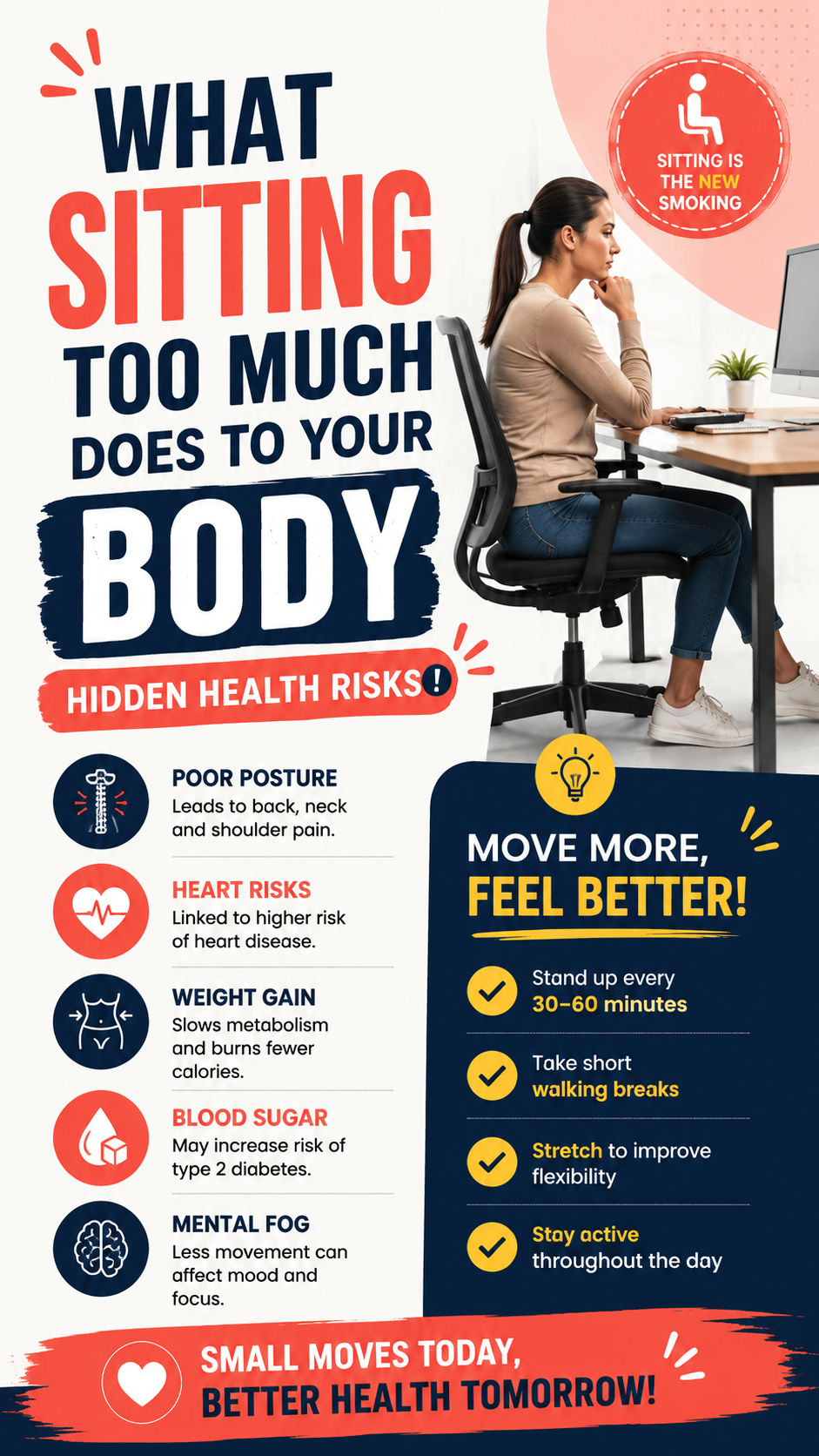
Sitting has become one of the most common daily activities in modern life. Whether you work at a desk, commute long distances, relax in front of a television, or spend hours scrolling through a smartphone, extended periods of sitting are often viewed as harmless. However, growing awareness around sedentary lifestyles has revealed that too much sitting can have significant effects on physical and mental health.
Many people focus on exercise as the primary indicator of health, but what happens during the remaining hours of the day matters just as much. Even individuals who exercise regularly may experience negative effects if they spend most of their waking hours seated. Understanding the hidden health risks of prolonged sitting can help you make simple changes that support better well-being and long-term vitality.
Key Takeaways
- Prolonged sitting can negatively affect posture, circulation, and metabolism.
- A sedentary lifestyle may increase the risk of chronic health conditions.
- Muscle stiffness and joint discomfort often develop from extended inactivity.
- Regular movement breaks can significantly improve overall health.
- Good posture and ergonomic habits help reduce physical strain.
- Small daily changes can make a meaningful difference over time.
Why Sitting Too Much Has Become a Modern Health Concern
Advancements in technology have made life more convenient than ever. While these innovations bring many benefits, they also encourage prolonged sitting. Office jobs, remote work, online entertainment, and digital communication have reduced the need for physical movement throughout the day.
Human bodies were designed for movement. Walking, standing, stretching, and changing positions regularly help support healthy circulation, muscle activity, and energy expenditure. When sitting becomes the dominant posture for many hours at a time, the body begins to respond in ways that may not be immediately noticeable.
Important: The health risks associated with prolonged sitting often develop gradually. Many people do not notice the effects until discomfort, fatigue, or other symptoms become more persistent.
The Impact on Posture and Musculoskeletal Health
One of the most visible consequences of excessive sitting is poor posture. Spending hours seated, especially with improper workstation setup, can place continuous stress on the neck, shoulders, back, and hips.
Forward Head Position
Many people lean toward screens without realizing it. Over time, this habit can strain the neck muscles and contribute to discomfort, stiffness, and tension headaches.
Rounded Shoulders
Extended desk work often causes the shoulders to roll forward. This posture may reduce mobility and create muscle imbalances that affect overall body mechanics.
Tight Hip Flexors
Remaining seated for long periods keeps the hip flexor muscles in a shortened position. Tight hip flexors can contribute to lower back discomfort and reduced flexibility.
Weak Core Muscles
When sitting dominates daily life, the core muscles may become less engaged. A weaker core can affect posture, balance, and overall stability.
How Sitting Affects Circulation
Healthy circulation depends on regular movement. Walking and muscle contractions help move blood efficiently throughout the body. Long periods of sitting can slow this process.
When circulation becomes less efficient, some individuals may experience swelling in the feet and ankles, feelings of heaviness in the legs, or general discomfort after remaining seated for extended periods.
Standing up regularly, taking short walks, and stretching throughout the day can encourage healthier blood flow and reduce feelings of stiffness.
Why This Matters
- Movement supports healthy blood circulation.
- Regular activity helps reduce muscle stiffness.
- Short walking breaks can improve comfort and energy levels.
The Relationship Between Sitting and Metabolism
Your metabolism is influenced by more than structured exercise. Daily movement contributes significantly to calorie expenditure and energy balance.
When sitting for prolonged periods, the body’s energy demands decrease. Muscles become less active, and overall movement drops. Over time, this reduced activity may affect how efficiently the body uses energy.
Even small increases in daily movement can help maintain a more active lifestyle. Standing while taking phone calls, walking during breaks, and using stairs when possible are simple examples.
Pro Tip: Focus on increasing movement throughout the entire day rather than relying solely on one workout session. Consistent activity often produces meaningful long-term benefits.
Effects on Energy Levels and Productivity
Many people assume sitting conserves energy, but excessive sitting can actually contribute to feelings of sluggishness and reduced motivation.
Regular movement helps stimulate circulation and keeps the body engaged. Taking brief activity breaks throughout the day can improve alertness and support concentration.
Employees who incorporate movement into their routines often report feeling more refreshed and productive. Something as simple as standing up every hour may help combat the mental fatigue associated with prolonged sitting.
Signs You May Need More Movement
- Frequent stiffness or soreness
- Afternoon energy crashes
- Difficulty concentrating
- Persistent neck or back discomfort
- Feeling restless after long periods at a desk
Mental Health and Sedentary Habits
Physical activity and mental well-being are closely connected. Extended periods of inactivity may contribute to lower mood, increased stress, and reduced feelings of overall wellness.
Movement encourages mental refreshment. A short walk outdoors, a stretching session, or even standing while working can provide a welcome break from prolonged sitting.
Many people notice improved focus and a more positive mindset after incorporating regular movement into their daily routine.
Common Health Risks Linked to Excessive Sitting
Researchers and health professionals continue to study the long-term effects of sedentary behavior. While risk levels vary among individuals, excessive sitting has been associated with several health concerns.
- Reduced physical fitness
- Weight management challenges
- Poor posture and back discomfort
- Muscle weakness and stiffness
- Lower energy levels
- Reduced mobility and flexibility
Important: Sitting itself is not harmful when balanced with adequate movement. Problems often arise when long periods of sitting become a daily habit without regular activity breaks.
How Desk Workers Can Reduce Sitting Time
Many careers require extensive computer use, making prolonged sitting difficult to avoid completely. Fortunately, there are practical strategies that can help.
Schedule Movement Breaks
Set reminders to stand, stretch, or walk every 30 to 60 minutes.
Use Standing Work Periods
If possible, alternate between sitting and standing during work tasks.
Walk During Calls
Phone calls present an excellent opportunity to move around rather than remain seated.
Improve Workspace Ergonomics
Proper monitor height, chair support, and keyboard placement can reduce physical strain and support better posture.
Simple Exercises to Counteract Sitting
You do not need an intense workout to offset some of the effects of prolonged sitting. Simple movements can be surprisingly effective.
Neck Stretches
Gentle neck movements can help relieve tension built up from screen time.
Shoulder Rolls
Rolling the shoulders backward encourages better posture and mobility.
Standing Leg Stretches
Stretching the legs and hips can reduce tightness associated with sitting.
Short Walks
Even a few minutes of walking can refresh both the body and mind.
Creating a More Active Lifestyle
Reducing sitting time does not require a complete lifestyle overhaul. The most successful changes are often small and sustainable.
Try parking farther away from entrances, taking the stairs when possible, walking during lunch breaks, or performing light stretches while watching television. These habits add movement naturally throughout the day.
Consistency matters more than perfection. Every opportunity to move contributes to better overall health.
At a Glance
- Long sitting periods can affect posture and circulation.
- Movement throughout the day supports overall wellness.
- Short breaks are often more effective than remaining seated for hours.
- Ergonomic habits can reduce physical discomfort.
- Small daily actions create long-term benefits.
Conclusion
Sitting is an unavoidable part of modern life, but excessive sitting should not become the default state of our daily routine. The hidden health risks associated with prolonged sitting extend beyond temporary stiffness and discomfort. Posture issues, reduced circulation, lower energy levels, and decreased mobility can gradually affect overall well-being.
Fortunately, meaningful improvements often come from simple actions. Standing more often, taking movement breaks, improving workstation ergonomics, and incorporating regular activity throughout the day can help counteract the effects of a sedentary lifestyle.
By becoming more aware of how much time you spend sitting and making intentional efforts to move more frequently, you can support better health, greater comfort, and improved quality of life for years to come.
Tags
Sitting Too Much Hidden Health Risks Sedentary Lifestyle Workplace Wellness Healthy Habits Posture Health Office Fitness Wellness Tips