
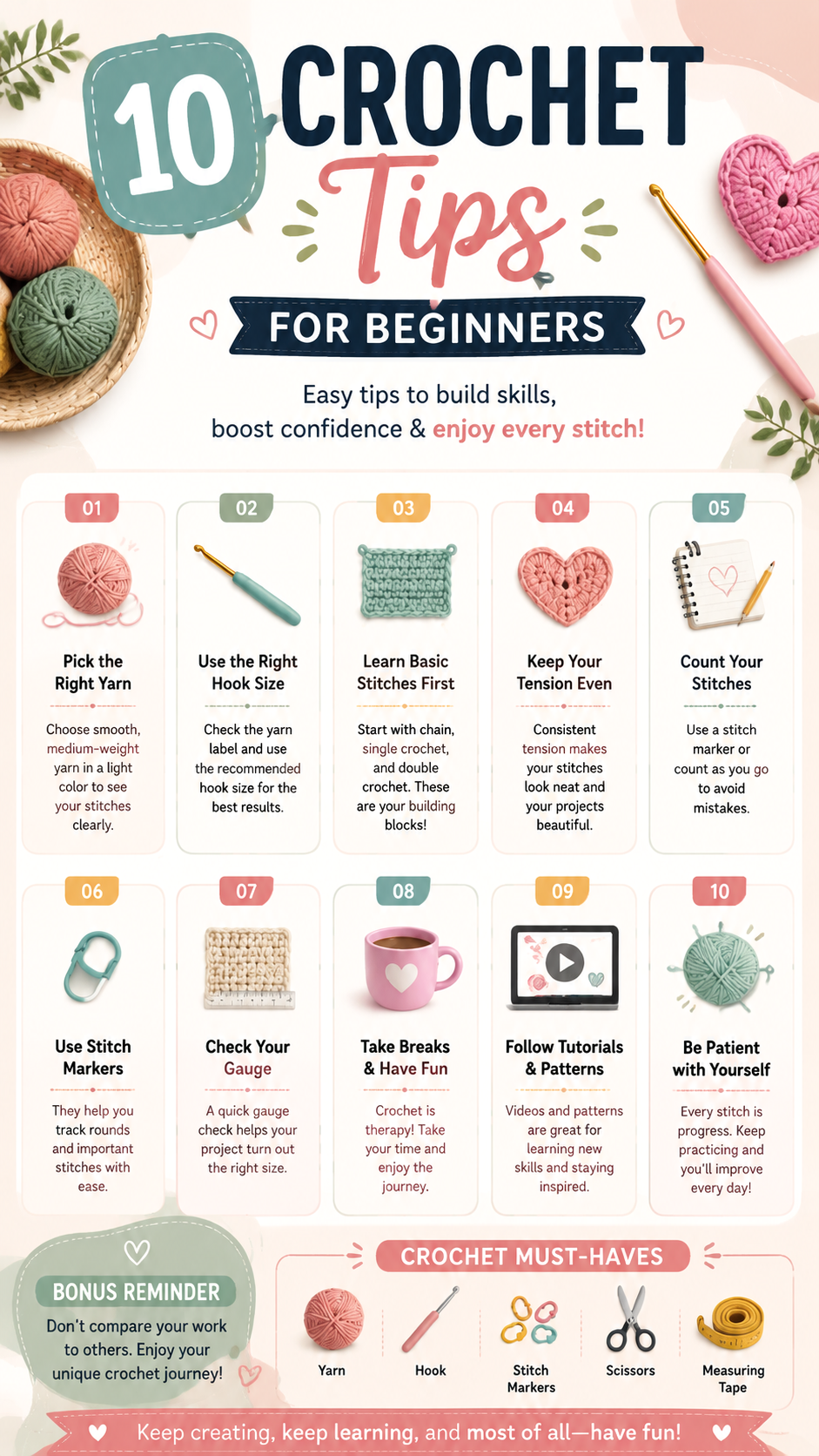
Crochet is one of the most relaxing and rewarding creative hobbies you can start, especially as a beginner. The visual guide shows a structured and friendly approach to learning crochet basics step by step, focusing on the essential skills that help new crafters build confidence from the very first stitch. Whether you are picking up a hook for the first time or trying to improve your consistency, these foundational tips will help you create smoother, more enjoyable projects while avoiding common beginner frustrations.
Key Takeaways
- Choosing the right yarn and hook size makes learning significantly easier
- Consistent tension is the foundation of neat and even stitches
- Basic stitches like chain, single crochet, and double crochet are essential starting points
- Using stitch markers helps prevent confusion in rows and rounds
- Practice and patience are more important than speed in early learning stages
Understanding Crochet Basics for Beginners
Starting crochet can feel overwhelming at first, but it becomes much easier when broken into simple, manageable steps. The foundation of crochet is built on understanding your tools, learning a few essential stitches, and developing rhythm through repetition. Once you grasp these basics, you can begin exploring more complex patterns with confidence.
The infographic emphasizes a structured learning approach, which is ideal for beginners. Instead of rushing into complex projects, focusing on small improvements each day leads to better long-term results and a more enjoyable crafting experience.
Choosing the Right Yarn for Smooth Learning
One of the most important first steps in crochet is selecting the right yarn. Smooth, medium-weight yarn is often recommended for beginners because it is easier to handle and clearly shows stitches. Light-colored yarn also helps you see your work more clearly, reducing mistakes and frustration.
Important: Yarn texture and thickness directly affect your learning experience. A slippery or overly fuzzy yarn can make it difficult to see individual stitches, which slows down progress and increases confusion.
Hook Size Matters More Than You Think
Using the correct hook size is essential for creating balanced stitches. Every yarn comes with a recommended hook size, and following this guide helps maintain consistent tension and structure. Beginners often overlook this detail, but it can significantly affect the final outcome of a project.
Pro Tip: If your stitches feel too tight or too loose, adjusting your hook size is often the simplest and most effective solution. Small changes can dramatically improve your results.
Learning Basic Stitches Step by Step
Every crochet journey starts with mastering a few core stitches. The chain stitch, single crochet, and double crochet form the foundation of most patterns. Once you understand how these stitches work, you can combine them to create a wide variety of textures and designs.
Practicing these stitches repeatedly helps build muscle memory. Over time, your hands will naturally learn the movements, making the process smoother and faster without needing to constantly check instructions.
Keeping Your Tension Even
Tension refers to how tightly or loosely you hold your yarn while crocheting. Consistent tension is what makes stitches look even and professional. Beginners often struggle with uneven tension, but this improves with practice and awareness.
Expert Insight
Even tension is more important than speed. Slowing down your movements in the beginning helps train your hands to create uniform stitches, which leads to better long-term results and cleaner finished projects.
Counting Stitches and Staying Organized
Counting stitches is a simple but powerful habit that prevents mistakes in your projects. Losing track of stitches can lead to uneven edges or distorted shapes, which can be frustrating for beginners. Taking a moment to count regularly helps maintain structure and accuracy.
Using stitch markers is another helpful technique. They act as visual reminders of where rows begin or end, making it easier to keep track of progress, especially in larger projects.
Why Gauge and Measurements Matter
Gauge refers to the number of stitches and rows within a specific measurement. While it may seem advanced, understanding gauge early on helps ensure that finished projects match expected sizes. This is especially important for clothing or wearable items.
Ignoring gauge can lead to projects turning out too large or too small, even if the pattern is followed correctly. Taking time to check gauge saves frustration later in the process.
Taking Breaks and Enjoying the Process
Crochet is meant to be relaxing, not stressful. Taking short breaks helps prevent hand fatigue and keeps the experience enjoyable. It also allows you to return to your project with a fresh mindset, which often improves accuracy.
Enjoying the process is just as important as completing the final piece. Creativity grows when you allow yourself to experiment without pressure.
Watching Tutorials and Reading Patterns
Video tutorials and written patterns are excellent learning tools for beginners. They provide visual guidance and step-by-step instructions that make it easier to understand techniques. Combining both methods helps reinforce learning and builds confidence faster.
Over time, reading patterns becomes second nature, allowing you to explore more advanced projects and creative designs.
Patience is the Real Secret to Progress
Every experienced crocheter started as a beginner. Mistakes are part of the learning process, and each one helps you improve. The key is consistency and patience. Even a few minutes of practice each day can lead to noticeable progress over time.
Be patient with yourself and focus on small improvements rather than perfection. Crochet is a skill that grows naturally with time and repetition.
Essential Tools for Crochet Beginners
Having the right tools makes the learning process smoother and more enjoyable. Basic tools include yarn, hooks, stitch markers, scissors, and a measuring tape. These simple items are enough to start most beginner projects and build foundational skills.
Keeping your tools organized also helps you stay focused and reduces interruptions during practice sessions.
Common Mistakes Beginners Should Avoid
One common mistake is starting with overly complex patterns too soon. Another is ignoring tension and hook size recommendations. These small details can greatly affect your results and confidence level.
Avoid rushing through stitches. Speed comes naturally with practice, but accuracy should always come first.
Quick Points
- Start with simple stitches and build gradually
- Focus on tension and consistency over speed
- Use tools like stitch markers for better accuracy
- Practice regularly in short, relaxed sessions
Conclusion
Crochet basics are all about building a strong foundation through simple, consistent practice. By focusing on the right yarn, hook size, stitches, and tension, beginners can quickly develop confidence and enjoy the creative process. With patience and regular practice, every stitch becomes easier and more enjoyable, turning crochet into a relaxing and fulfilling skill that lasts a lifetime.
crochet basics crochet for beginners crochet tips crochet tutorial crochet stitches handmade crafts DIY crochet