
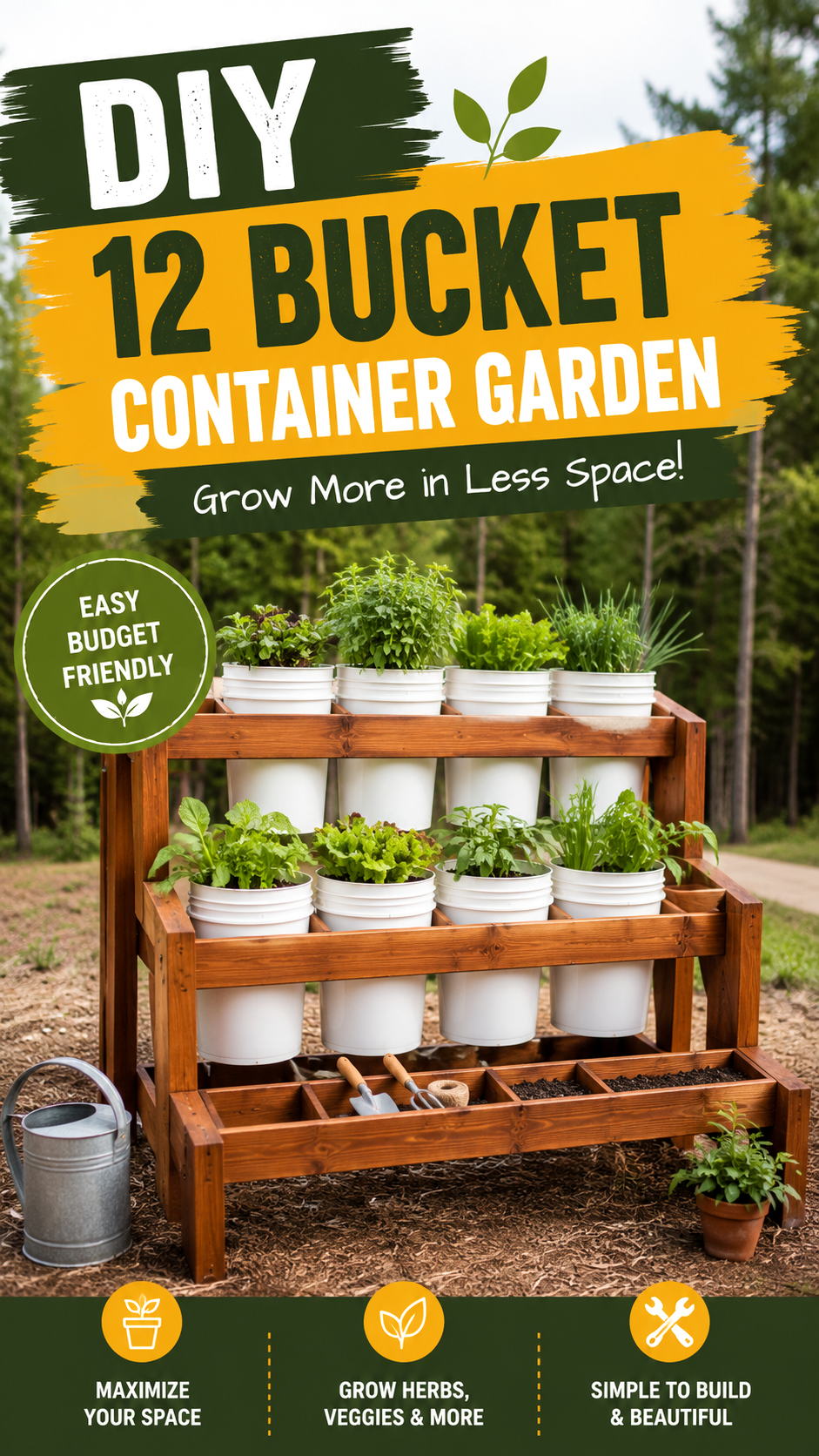
A well-designed container garden can completely transform the way you grow fresh vegetables, herbs, and flowers, especially when space is limited. One of the most practical and affordable solutions is a multi-level plastic bucket garden stand that combines vertical growing with organized storage. Instead of spreading containers across the yard, this approach keeps everything neatly arranged in one compact structure while making plant care easier and more enjoyable.
Whether you have a small backyard, a patio, a deck, or even a sunny corner beside your home, a DIY bucket container garden offers flexibility, excellent accessibility, and impressive growing potential. With inexpensive materials and a weekend of building, you can create a productive garden that maximizes every square foot while adding a clean, organized look to your outdoor space.
Key Takeaways
- Vertical bucket gardens maximize growing space.
- Plastic buckets are affordable, durable, and versatile.
- A sturdy wooden stand improves organization and accessibility.
- Perfect for herbs, leafy greens, vegetables, and flowers.
- Ideal for beginners and experienced gardeners alike.
Why Plastic Bucket Gardens Continue to Grow in Popularity
Container gardening has become increasingly popular because it removes many of the challenges associated with traditional gardening. Poor soil, limited yard space, weeds, and difficult maintenance become much less of a concern when plants are grown inside individual containers.
Plastic buckets are especially attractive because they are inexpensive, lightweight, durable, and readily available. Many gardeners even repurpose food-grade buckets, making this method environmentally friendly while reducing gardening costs.
Important: Growing plants in separate buckets gives each crop its own growing environment. This makes watering, fertilizing, crop rotation, and pest management much easier compared to planting everything directly in the ground.
The Benefits of a Multi-Level Bucket Garden Stand
Rather than placing buckets randomly around the yard, organizing them on a custom-built wooden stand creates a more efficient gardening system. Multiple shelves allow you to take advantage of vertical space while keeping every container within comfortable reach.
Better Use of Space
One of the greatest advantages is the ability to grow more plants in a compact footprint. By stacking containers vertically, gardeners can significantly increase their planting capacity without expanding the garden area.
Improved Accessibility
Raised containers reduce bending and kneeling, making everyday tasks like watering, pruning, harvesting, and inspecting plants much more comfortable.
Cleaner Garden Layout
An organized rack keeps buckets aligned neatly while creating defined pathways around the garden. The result is a cleaner, more attractive outdoor space that feels intentional rather than cluttered.
Expert Insight
Position taller plants on the upper shelves only if they will not shade the lower containers. Planning sunlight exposure before planting helps every crop receive enough light throughout the day.
Choosing the Right Buckets
Not every plastic bucket is equally suitable for gardening. Food-grade buckets are generally preferred because they have previously contained safe materials rather than chemicals.
- Choose sturdy buckets without cracks.
- Ensure each bucket has adequate drainage holes.
- Use consistent bucket sizes for easier rack construction.
- Select white or light-colored buckets if gardening in hot climates to reduce soil temperature.
Building a Strong Wooden Support Frame
A sturdy wooden frame serves as the backbone of the entire project. Pressure-treated lumber or naturally weather-resistant wood species work well for outdoor conditions.
The frame should comfortably support the combined weight of buckets, soil, water, and mature plants. Since wet soil becomes surprisingly heavy, reinforcing shelves and cross supports is essential for long-term durability.
Planning Shelf Spacing
Leave enough vertical clearance between shelves so plants have room to grow. Compact herbs require less space than tomatoes, peppers, or climbing vegetables.
Pro Tip: Before securing the shelves permanently, place empty buckets on the frame to confirm spacing, accessibility, and overall balance. Small adjustments during construction can greatly improve usability later.
Selecting the Best Plants for Bucket Gardening
Many vegetables thrive inside buckets because their root systems fit comfortably within the available soil volume.
Excellent Choices Include
- Lettuce
- Spinach
- Kale
- Swiss chard
- Basil
- Parsley
- Cilantro
- Mint
- Green onions
- Bush beans
- Peppers
- Compact tomato varieties
Mixing edible crops with flowering plants can also encourage pollinators while creating an attractive display.
Creating Healthy Growing Conditions
Good soil makes an enormous difference in container gardening. Rather than filling buckets with ordinary garden soil, use a high-quality potting mix designed for containers.
A lightweight mix provides better drainage, increased aeration, and healthier root development.
Drainage Matters
Each bucket should contain several drainage holes near the bottom. Excess water must escape freely to prevent root rot and overly saturated soil.
Watering Consistently
Container gardens generally require more frequent watering than traditional gardens because limited soil dries out faster, especially during warm weather.
Checking moisture daily helps prevent both underwatering and overwatering.
Fertilizing for Continuous Growth
Plants growing inside containers rely entirely on the nutrients available in their limited soil volume. Regular feeding helps maintain vigorous growth throughout the season.
- Apply balanced fertilizer according to package directions.
- Supplement with compost when appropriate.
- Monitor leaf color for nutrient deficiencies.
- Avoid excessive fertilizer that encourages leafy growth without fruit production.
Maintaining Your Bucket Garden
Routine maintenance keeps plants healthy while extending the productivity of your garden.
Regular Tasks
- Remove yellow or damaged leaves.
- Harvest vegetables frequently.
- Watch for insect activity.
- Inspect supports and shelf stability.
- Refresh mulch when needed.
- Rotate seasonal crops.
Important: Frequent harvesting encourages many vegetables and herbs to continue producing throughout the growing season. Picking mature crops promptly often results in healthier, more productive plants.
Ideas for Customizing Your Garden Stand
A bucket garden stand can easily be personalized to fit your available space and gardening style.
- Add hooks for hanging garden tools.
- Install side shelves for seed trays.
- Include storage underneath for soil or watering cans.
- Paint or stain the wood for weather protection.
- Label each bucket with plant names.
- Add wheels for portability if appropriate.
Why DIY Container Gardening Is Perfect for Modern Homes
Many homeowners want fresh produce but lack the space or time for a traditional vegetable garden. A vertical bucket system offers a practical compromise by delivering productive growing capacity in a compact footprint.
It also makes gardening more approachable for beginners who want manageable projects with visible results. Individual buckets allow experimentation with different vegetables, soil blends, fertilizers, and watering routines without affecting the entire garden.
Common Mistakes to Avoid
- Using buckets without drainage holes.
- Overcrowding plants.
- Ignoring sunlight requirements.
- Choosing weak shelving materials.
- Allowing containers to dry completely.
- Skipping regular fertilization.
- Growing oversized crops in undersized containers.
Quick Points
- Vertical designs maximize limited space.
- Food-grade buckets provide durable planting containers.
- Good drainage is essential for healthy roots.
- Regular watering and feeding improve harvests.
- Strong wooden frames ensure long-term stability.
Conclusion
A DIY plastic bucket container garden is one of the smartest ways to grow fresh produce while making the most of limited outdoor space. Combining sturdy buckets with a thoughtfully designed wooden stand creates an organized, attractive, and highly productive growing system that works for gardeners of every experience level.
From herbs and leafy greens to peppers and tomatoes, this vertical gardening approach offers flexibility, affordability, and ease of maintenance. With quality materials, proper drainage, healthy soil, and consistent care, your bucket garden can provide an abundant harvest season after season while adding both beauty and functionality to your outdoor living space.
Tags
Plastic Bucket Ideas DIY Garden Container Gardening Vertical Garden Bucket Garden Small Space Gardening Raised Garden Stand Vegetable Gardening