
There is something comforting about a warm cup of tea. It feels simple, gentle, and easy to add to a daily wellness routine. When the focus is natural organ support, herbal teas often come to mind because they combine hydration, plant-based compounds, soothing aromas, and mindful pause moments in one cup.
The idea behind “5 teas that support your organs naturally” is not about miracle cures or quick fixes. It is about building small, consistent habits that may help your body feel more balanced. Your liver, kidneys, digestive system, heart, and lungs all work every day to keep you moving, thinking, breathing, and recovering. A thoughtfully chosen tea can be one small way to support that bigger picture.
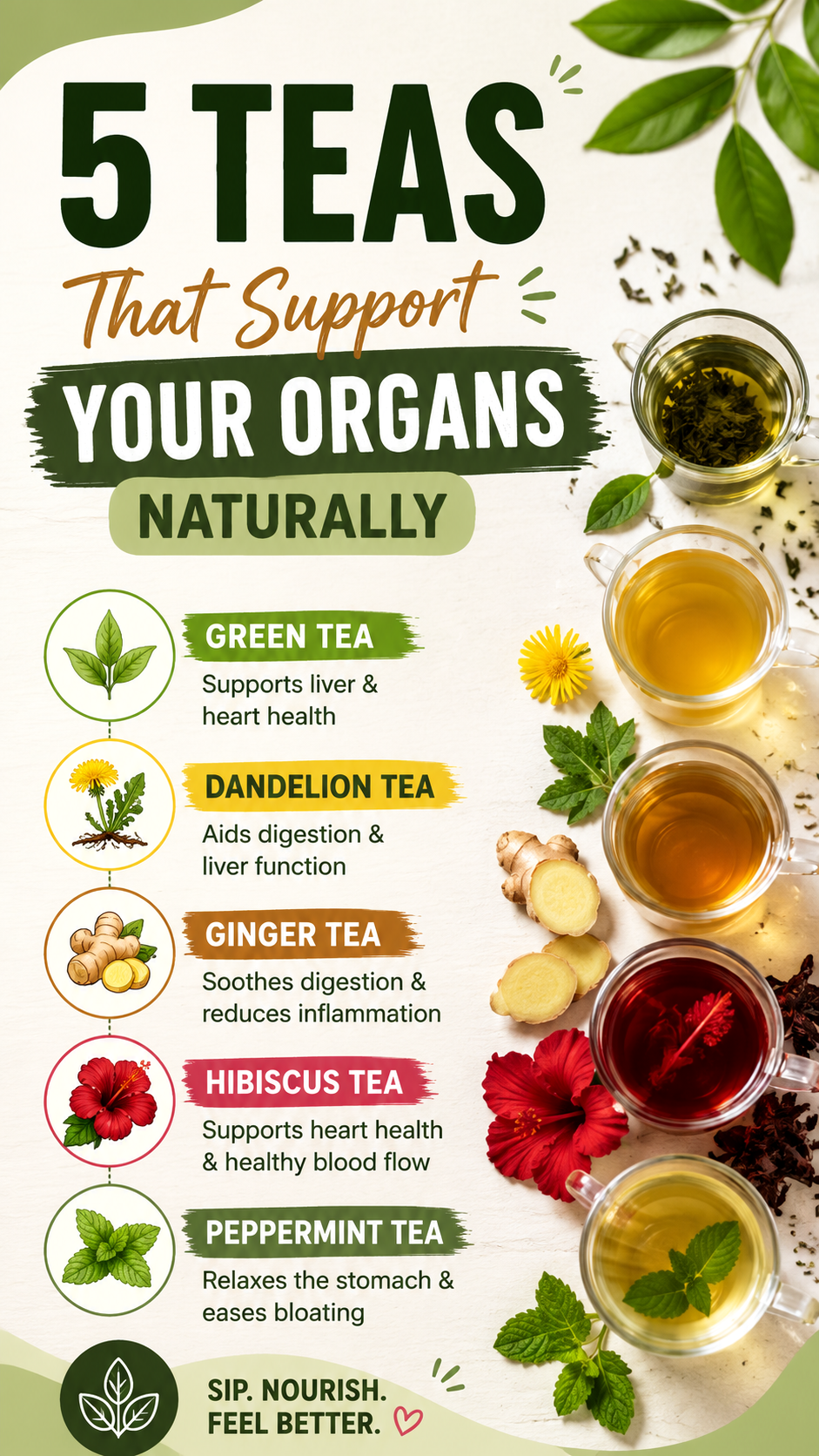
This guide explores five popular teas commonly associated with everyday wellness: green tea, dandelion tea, ginger tea, hibiscus tea, and peppermint tea. Each one brings its own flavor, tradition, and potential benefits, making them useful options for anyone interested in natural health, herbal drinks, and simple self-care rituals.
Key Takeaways
- Herbal teas can be a gentle addition to a balanced wellness routine.
- Different teas are often linked with digestion, hydration, antioxidant support, and relaxation.
- Green tea, dandelion tea, ginger tea, hibiscus tea, and peppermint tea are popular choices for natural organ support.
- Tea works best alongside healthy meals, enough water, quality sleep, and regular movement.
- Anyone with health conditions, pregnancy, or medication use should check with a healthcare professional before drinking medicinal herbs regularly.
Why Herbal Teas Are Popular for Natural Wellness
Tea has been part of wellness traditions for centuries. Some people drink it for digestion, some for calm, some for hydration, and others simply because it helps them slow down. In modern wellness culture, teas are often used as part of a broader lifestyle that includes nourishing food, mindful habits, and daily routines that feel sustainable.
Many teas contain plant compounds such as polyphenols, flavonoids, aromatic oils, minerals, or bitter compounds. These are not magic ingredients, but they can contribute to the overall experience of drinking tea. A cup of tea can also replace sugary drinks, encourage hydration, and support a calming evening routine.
Important: Herbal tea should be seen as supportive, not as a treatment for organ problems. If you have liver disease, kidney disease, heart concerns, digestive disorders, or take medication, speak with a qualified healthcare provider before using herbal teas for targeted health purposes.
1. Green Tea for Antioxidant Support
Green tea is one of the best-known teas for overall wellness. Its light, slightly grassy flavor makes it easy to enjoy hot or iced, and it is widely appreciated for its natural antioxidant content. For people looking to support healthy daily habits, green tea is often a strong place to start.
Green tea is commonly associated with antioxidant support because it contains catechins, a type of plant compound found in tea leaves. Antioxidants help the body deal with oxidative stress, which is part of normal daily life. While no single tea can protect the body on its own, green tea can fit beautifully into a routine focused on whole foods, movement, and hydration.
Which Organs Is Green Tea Often Linked With?
Green tea is often connected with general metabolic health, heart-friendly routines, and liver-conscious wellness habits. It is a smart option for those who want a beverage that feels refreshing but still offers more depth than plain water.
Because it naturally contains caffeine, green tea may be best enjoyed earlier in the day. People who are sensitive to caffeine can choose decaffeinated green tea or brew it lightly for a gentler cup.
How to Enjoy Green Tea
- Brew with hot, not boiling, water to reduce bitterness.
- Add lemon for a bright flavor.
- Drink it in the morning or early afternoon.
- Try iced green tea with mint for a refreshing wellness drink.
2. Dandelion Tea for Liver and Digestive Wellness
Dandelion tea has a deep, earthy flavor that many people associate with traditional cleansing and digestive routines. It may be made from dandelion root, dandelion leaf, or a blend of both. Root teas tend to taste roasted and bold, while leaf teas are usually lighter and more herbaceous.
Dandelion has long been used in herbal traditions, especially in routines focused on digestion and liver support. It is naturally bitter, and bitter herbs are often enjoyed before or after meals to encourage a more mindful eating rhythm.
Pro Tip: Dandelion tea can taste strong at first. Try blending it with cinnamon, ginger, lemon, or a small amount of honey if you want a smoother, more balanced flavor.
Why People Choose Dandelion Tea
Dandelion tea is often chosen by people who want a caffeine-free herbal tea that feels grounding. It is popular in wellness routines related to digestion, bloating, and liver-friendly lifestyle habits. It can also be a cozy alternative to coffee when roasted dandelion root is used.
However, dandelion is not suitable for everyone. People with allergies to plants in the daisy family, gallbladder concerns, kidney issues, or those taking diuretics or certain medications should be careful and seek professional guidance.
Best Time to Drink Dandelion Tea
Many people enjoy dandelion tea after meals because of its bitter, digestive-style profile. Others drink it in the afternoon as a caffeine-free reset. Start with a small amount and see how your body responds.
3. Ginger Tea for Digestive Comfort
Ginger tea is warming, spicy, and instantly recognizable. It is one of the most popular teas for digestive comfort and is often used when people want something soothing after a heavy meal or during chilly weather.
Ginger contains natural aromatic compounds that give it its signature heat. These compounds are part of what makes ginger such a beloved ingredient in both food and traditional wellness drinks. For organ-support routines, ginger tea is most often associated with the stomach and digestive system.
Why Ginger Tea Feels Soothing
The warmth of ginger tea can make the body feel relaxed and settled. It is often enjoyed when the stomach feels uneasy or when digestion feels slow. Its bold flavor also makes it easy to drink without needing added sugar.
Fresh ginger tea is simple to prepare. Slice or grate fresh ginger, steep it in hot water, then add lemon if desired. For a stronger cup, simmer the ginger gently for several minutes instead of simply steeping it.
Why This Matters
The best wellness tea is not always the trendiest one. It is the one you can enjoy consistently, safely, and comfortably as part of your real daily life. Taste, timing, caffeine level, and personal tolerance all matter.
Simple Ginger Tea Ideas
- Ginger and lemon for a bright morning drink.
- Ginger and mint after meals.
- Ginger and cinnamon for a cozy evening cup.
- Ginger with a touch of honey for a soothing seasonal blend.
4. Hibiscus Tea for a Heart-Friendly Routine
Hibiscus tea stands out because of its vibrant ruby-red color and tart, fruity flavor. It is naturally caffeine-free and tastes delicious hot or cold. Many people enjoy hibiscus tea as a refreshing alternative to juice or sweetened drinks.
In natural wellness conversations, hibiscus is often linked with heart-friendly habits. Its bright color comes from plant pigments called anthocyanins, which are also found in many colorful fruits and vegetables. For anyone trying to build a more colorful, plant-forward lifestyle, hibiscus tea is an easy and enjoyable addition.
What Makes Hibiscus Tea Unique?
Hibiscus has a naturally tart taste, similar to cranberry. This makes it satisfying without needing a lot of sweetener. It is especially good iced with orange slices, berries, fresh mint, or a splash of sparkling water.
Because hibiscus may not be appropriate for everyone, especially people with low blood pressure, pregnancy, or certain medication use, it is wise to check with a healthcare professional if you plan to drink it often.
Important: Hibiscus tea is refreshing and naturally beautiful, but more is not always better. Keep your routine moderate and pay attention to how your body feels, especially if you manage blood pressure or take prescription medication.
How to Make Hibiscus Tea More Enjoyable
If hibiscus tastes too tart, pair it with naturally sweet ingredients. Orange, apple, cinnamon, berries, or a small drizzle of honey can soften the flavor. For a summer drink, chill brewed hibiscus tea and serve it over ice with fresh fruit.
5. Peppermint Tea for Digestion and Relaxation
Peppermint tea is crisp, cooling, and naturally caffeine-free. It is one of the easiest herbal teas to love because the flavor is clean and familiar. Many people drink peppermint tea after meals, before bed, or whenever they want a refreshing reset.
Peppermint is commonly associated with digestive comfort. Its natural menthol gives it a cooling sensation, and the aroma alone can feel uplifting. For a simple wellness routine, peppermint tea offers a soothing experience without complexity.
Why Peppermint Tea Is a Daily Favorite
Peppermint tea is versatile. It works in the morning, after lunch, after dinner, or as part of an evening wind-down ritual. It also blends well with other herbs, especially ginger, chamomile, fennel, and lemon balm.
People with reflux may find peppermint uncomfortable because it can relax the lower esophageal sphincter in some cases. If peppermint makes heartburn worse, it is better to choose a gentler tea such as chamomile or ginger, depending on personal tolerance.
Easy Peppermint Tea Pairings
- Peppermint and ginger for a bold digestive blend.
- Peppermint and chamomile for a calming nighttime tea.
- Peppermint and lemon for a fresh, bright flavor.
- Peppermint iced tea for a cooling afternoon drink.
How to Choose the Right Tea for Your Wellness Goal
Choosing the right tea depends on what you want your routine to feel like. If you want a light caffeine boost and antioxidant support, green tea may be the best fit. If you want something earthy and caffeine-free, dandelion tea may be appealing. If you want warmth after meals, ginger tea is a classic option. If you want a colorful iced drink, hibiscus is a beautiful choice. If you want something cool and refreshing, peppermint tea is hard to beat.
It also helps to think about timing. Caffeinated teas are usually better earlier in the day. Strong herbal teas may be better in moderation. Calming caffeine-free teas can be useful in the evening when you want to reduce screen time and prepare for rest.
| Tea | Common Wellness Focus | Best Time to Enjoy |
|---|---|---|
| Green Tea | Antioxidant and daily energy support | Morning or early afternoon |
| Dandelion Tea | Digestive and liver-friendly routines | After meals or afternoon |
| Ginger Tea | Digestive comfort and warmth | After meals or chilly evenings |
| Hibiscus Tea | Heart-conscious, colorful hydration | Afternoon or iced refreshment |
| Peppermint Tea | Digestion and relaxation | After meals or evening |
Smart Tips for Brewing Better Herbal Tea
A good cup of tea starts with simple details. Water temperature, steeping time, herb quality, and storage can all affect flavor. If tea tastes too bitter, too weak, or too medicinal, a few small adjustments can make it much more enjoyable.
Use the Right Steeping Time
Green tea usually needs a shorter steep than most herbal teas. Herbal teas often need more time because roots, flowers, and leaves release flavor at different speeds. Dandelion root and ginger may taste better when simmered, while peppermint and hibiscus usually steep well in hot water.
Avoid Over-Sweetening
A little honey or natural sweetener can make strong teas more pleasant, but too much sugar can work against your wellness goals. Try improving flavor with lemon, cinnamon, mint, orange peel, or fresh fruit before adding extra sweetener.
Store Tea Properly
Keep teas in a cool, dry place away from sunlight and strong odors. Herbs can lose flavor over time, especially if exposed to moisture or heat. Airtight containers help preserve freshness and aroma.
How Tea Fits Into a Healthy Organ-Support Lifestyle
Tea can be a lovely habit, but organ health depends on the bigger picture. Your body benefits from balanced meals, enough protein, fiber-rich foods, colorful fruits and vegetables, healthy fats, hydration, sleep, and regular movement. Tea works best when it supports these basics rather than replacing them.
For example, a cup of ginger tea after a balanced dinner may support a calmer digestive routine. Green tea in the morning may help replace a sugary coffee drink. Hibiscus iced tea may encourage hydration in the afternoon. Peppermint tea at night may help create a relaxing screen-free ritual.
Important: The most powerful wellness routines are usually the ones that feel easy enough to repeat. A daily tea ritual can be a small anchor habit that reminds you to pause, hydrate, breathe, and make another supportive choice.
Who Should Be Careful With Herbal Teas?
Although tea feels gentle, herbs can still affect the body. Some herbal teas may interact with medications, influence blood pressure, affect fluid balance, or be unsuitable during pregnancy or breastfeeding. People with chronic health conditions should be especially careful with strong herbal infusions or daily medicinal use.
It is also important to listen to your body. If a tea causes discomfort, headaches, reflux, stomach upset, dizziness, or allergic symptoms, stop drinking it and seek guidance if needed.
General Safety Tips
- Start with one cup and see how you feel.
- Do not combine many strong herbs at once.
- Check labels for added ingredients.
- Ask a healthcare professional about herbs if you take medication.
- Use tea as a supportive habit, not a substitute for medical care.
At a Glance
- Green tea is a popular antioxidant-rich choice for daily wellness.
- Dandelion tea is often used in digestive and liver-friendly routines.
- Ginger tea is warming and commonly enjoyed after meals.
- Hibiscus tea is tart, colorful, caffeine-free, and refreshing.
- Peppermint tea is cooling, soothing, and easy to add to evening routines.
Conclusion: Make Tea a Simple Wellness Ritual
Natural organ support does not have to feel complicated. Sometimes it starts with something as simple as choosing a better daily drink. Green tea, dandelion tea, ginger tea, hibiscus tea, and peppermint tea each offer a unique flavor and wellness personality, making them useful options for anyone building a more mindful routine.
The best approach is to choose teas you genuinely enjoy, drink them consistently but moderately, and pair them with healthy lifestyle basics. Tea cannot do the work of a balanced diet, quality sleep, hydration, movement, and medical care, but it can support a calmer, more intentional way of caring for your body.
Whether you prefer a warm mug in the morning, a digestive tea after meals, or a refreshing iced herbal blend in the afternoon, these five teas can help turn everyday wellness into a ritual you look forward to.
Tags
Herbal Teas Organ Support Natural Wellness Healthy Drinks Digestive Health Green Tea Herbal Wellness Routine