
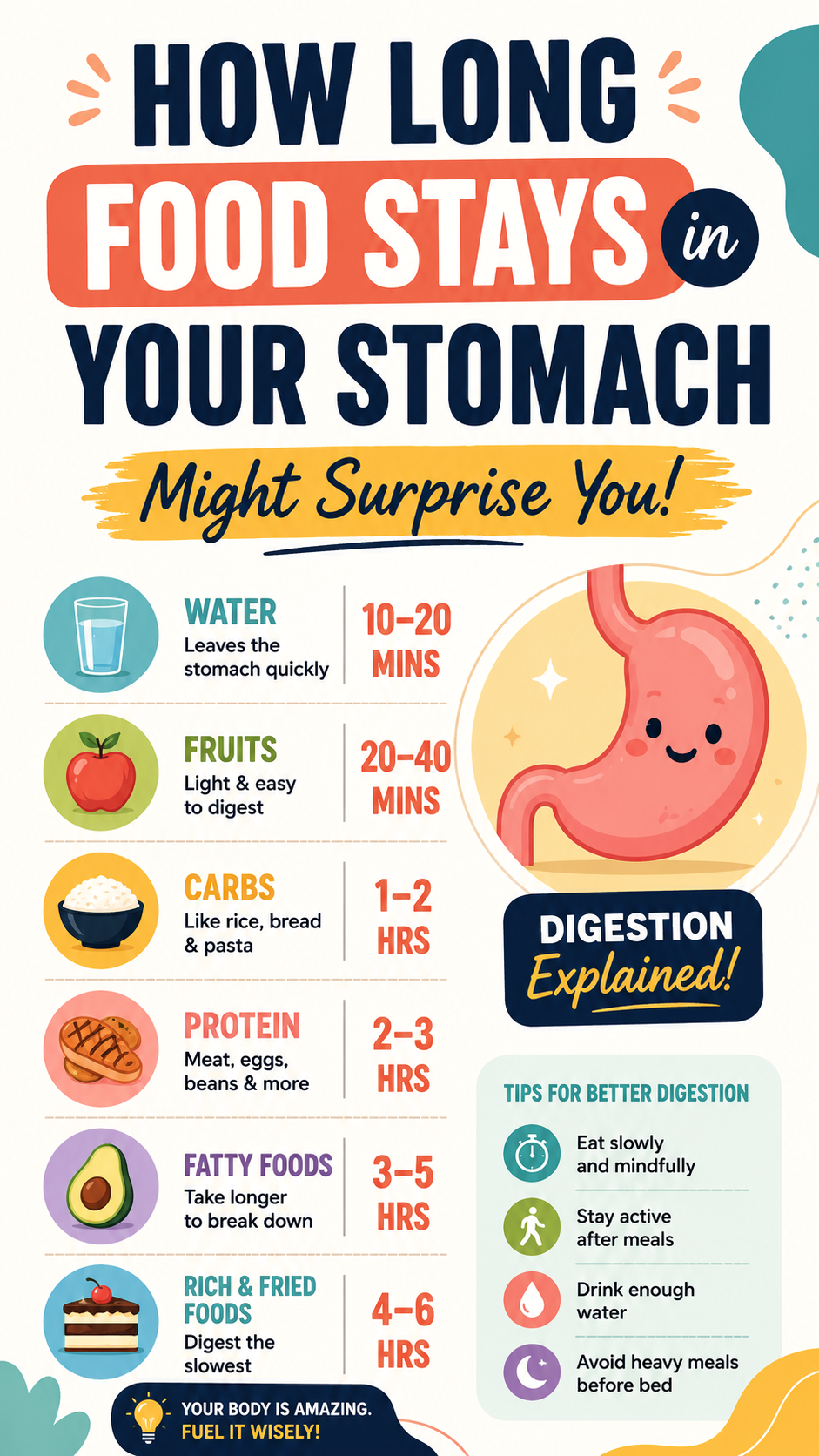
Food does not leave your stomach at the same speed every time. A light snack, a high-protein meal, a fiber-rich plate, and a greasy dinner can all move through digestion differently. That is why the question “how long does food stay in your stomach?” is more useful than it might seem. It can help you understand fullness, bloating, meal timing, energy levels, and why some foods feel heavier than others.
In general, the stomach acts like a flexible mixing chamber. It receives food, churns it with stomach acid and enzymes, then gradually releases the partly digested mixture into the small intestine. This process is called gastric emptying. While it often takes a few hours, the exact timing depends on what you ate, how much you ate, your hydration, stress level, activity, and your individual digestive rhythm.
Important: Digestion time is not a strict countdown. Your body adjusts the pace based on the meal. Liquids usually move faster, while large meals high in fat, protein, or fiber may stay in the stomach longer and create a stronger feeling of fullness.
Key Takeaways
- Most meals stay in the stomach for around 2 to 5 hours before moving onward.
- Liquids, simple carbohydrates, and small snacks usually digest faster.
- Fatty, protein-rich, and large meals tend to slow stomach emptying.
- Feeling full for a while after eating is normal, especially after a heavier meal.
- Meal timing, stress, sleep, and movement can all affect digestive comfort.
- Persistent pain, vomiting, severe bloating, or unexplained digestive changes should be discussed with a healthcare professional.
What Happens to Food Inside Your Stomach?
When you eat, digestion begins before food even reaches your stomach. Chewing breaks food into smaller pieces, saliva begins softening and chemically preparing it, and the esophagus carries it downward. Once food enters the stomach, the real mixing begins.
The stomach uses muscular contractions to churn food into a soft, semi-liquid mixture called chyme. At the same time, stomach acid helps break down food and activates enzymes that begin protein digestion. The stomach does not absorb most nutrients. Instead, it prepares food so the small intestine can do the majority of nutrient absorption.
Think of the stomach as a smart holding tank. It does not simply dump everything into the intestine at once. It releases small amounts gradually through the pyloric valve, which helps the small intestine handle digestion efficiently.
How Long Does Food Stay in Your Stomach?
For many people, a typical mixed meal remains in the stomach for about 2 to 5 hours. A smaller, lighter meal may move through closer to the lower end of that range. A larger meal that contains more fat or protein can remain longer.
However, total digestion takes much longer than stomach digestion alone. After food leaves the stomach, it travels through the small intestine, then the large intestine. The entire digestive process can take many hours and sometimes more than a day, depending on the person and the meal.
A Simple Digestion Time Guide
Although everyone digests food differently, these general patterns are helpful:
- Water and clear liquids: Usually leave the stomach quickly.
- Fruit and light snacks: Often digest faster than heavy meals.
- Simple carbohydrates: Tend to move through the stomach relatively quickly.
- Protein-rich meals: Usually take longer because protein requires more breakdown.
- High-fat meals: Often slow gastric emptying and may feel heavier.
- Large mixed meals: Typically stay the longest because they contain multiple nutrients and more volume.
Pro Tip: When you feel uncomfortably full, the issue is often not one single food. It may be the combination of meal size, fat content, eating speed, carbonation, stress, and how close the meal was to bedtime.
Why Some Foods Stay in the Stomach Longer
Different nutrients trigger different digestive responses. This is why a bowl of soup may feel lighter than a cheeseburger, even if both contain calories. The body handles texture, fat, protein, fiber, and meal volume in different ways.
Fat Slows the Process
Fat is energy-dense and takes time to digest. When a meal is high in fat, the stomach often releases food more slowly so the small intestine can process it properly. This can be helpful because it promotes fullness, but it can also contribute to a heavy or sluggish feeling after rich meals.
Examples of foods that may slow stomach emptying include fried foods, creamy sauces, fatty meats, large amounts of cheese, butter-heavy dishes, and very rich desserts.
Protein Takes More Work
Protein is essential for the body, but it also requires careful breakdown. Stomach acid and enzymes help unfold and prepare protein for further digestion in the small intestine. Meals with eggs, meat, fish, beans, lentils, tofu, or Greek yogurt may keep you satisfied longer than a meal made mostly of simple carbohydrates.
Fiber Adds Bulk and Balance
Fiber affects digestion in a different way. It can support healthy bowel movements and help regulate appetite, but high-fiber meals may also slow the movement of food because they add bulk and texture. Whole grains, vegetables, fruits, beans, seeds, and legumes can make meals feel more filling.
Meal Size Matters
A small snack usually empties from the stomach faster than a large plate of food. The more volume the stomach receives, the more time it may need to mix, break down, and gradually release the meal.
Why This Matters
Understanding digestion time can help you plan meals around sleep, exercise, work, and comfort. It can also explain why some meals leave you energized while others make you feel overly full, bloated, or tired.
Common Foods and How They May Feel During Digestion
It is tempting to search for exact digestion times for every food, but the body does not work like a stopwatch. Still, certain food patterns are useful to understand.
Fruits
Fruits are often water-rich and contain natural sugars, fiber, vitamins, and minerals. Many people find fruit easier to digest than heavy meals. Softer fruits such as bananas, melon, and applesauce may feel lighter, while dried fruit or very fibrous fruit may be more filling.
Vegetables
Cooked vegetables are often easier on the stomach than raw vegetables because cooking softens fiber. Raw cruciferous vegetables, such as cabbage, broccoli, and cauliflower, are nutritious but may feel gassy or heavy for some people, especially in large portions.
Grains and Starches
Rice, oats, potatoes, pasta, and bread can vary widely in how they feel. Refined grains may move through faster, while whole grains with more fiber can increase fullness. Pairing grains with protein and healthy fat usually makes a meal more satisfying and slower to digest.
Meat, Fish, Eggs, and Dairy
Protein foods tend to stay with you longer. Leaner proteins may feel lighter than fatty cuts of meat or heavy dairy-based dishes. For some people, lactose-containing foods can cause digestive discomfort, especially if they have trouble digesting lactose.
Fried and Greasy Foods
Fried foods are a common reason people feel heavy after eating. They often combine fat, salt, and dense carbohydrates, which can slow stomach emptying and increase the chance of reflux or discomfort in sensitive people.
Why You May Feel Full Long After Eating
Feeling full after a meal is normal. Fullness comes from stomach stretching, digestive hormones, nutrient signals, and the pace at which food leaves the stomach. A meal that is balanced and satisfying should keep hunger away for a while.
But if fullness becomes uncomfortable or lasts much longer than expected, several everyday factors may be involved.
- Eating too quickly: Fast eating can lead to swallowing more air and missing fullness cues.
- Large portions: More food volume naturally takes longer to process.
- High-fat meals: Fat can slow stomach emptying.
- Carbonated drinks: Bubbles may increase pressure and bloating.
- Stress: Stress can affect gut movement and comfort.
- Lying down soon after eating: This may worsen reflux or heaviness for some people.
Important: Occasional bloating or heaviness is common, but digestive symptoms that are severe, frequent, or paired with weight loss, vomiting, blood in stool, trouble swallowing, or ongoing pain deserve medical attention.
How Meal Timing Affects Digestion
Meal timing can change how comfortable you feel during the day. Eating a heavy meal right before exercise may make you feel sluggish because your body is still working on digestion. Eating a large dinner right before bed may also lead to discomfort or reflux in some people.
Before Exercise
A large meal shortly before a workout can feel uncomfortable because your stomach may still be full. Many people prefer a lighter snack before movement, then a more complete meal afterward. The best timing depends on the person, workout intensity, and food choice.
Before Sleep
Digestion continues while you sleep, but lying down with a very full stomach can make some people feel uncomfortable. For better nighttime comfort, consider eating heavier meals earlier and keeping late snacks lighter.
Between Meals
Feeling hungry again soon after eating may mean the meal was too small, too low in protein, or too low in fiber. On the other hand, feeling stuffed for many hours may mean the meal was larger or richer than your body comfortably handles.
Simple Ways to Support Comfortable Digestion
You do not need complicated routines to support digestion. Small habits can make meals feel easier and more comfortable.
Eat Slowly and Chew Well
Chewing is the first mechanical step of digestion. Smaller pieces of food are easier for the stomach to mix and break down. Eating more slowly also gives fullness signals time to develop, which may reduce overeating.
Balance Your Plate
A balanced meal often includes protein, carbohydrates, fiber-rich plants, and some fat. This combination can support steady energy and satisfaction. The key is portion balance. Too much of a rich food may feel heavy, while too little protein or fiber may leave you hungry quickly.
Stay Hydrated
Water supports the digestive process and helps fiber do its job. You do not need to force large amounts of water with meals, but regular hydration throughout the day can help overall digestive comfort.
Take a Gentle Walk
A relaxed walk after eating may help some people feel less sluggish. Intense exercise right after a large meal can feel uncomfortable, but light movement is often a simple way to support digestion.
Notice Your Personal Triggers
No digestion chart can perfectly predict your body. Some people feel great after beans and vegetables, while others feel bloated. Some tolerate dairy easily, while others do not. Tracking patterns can help you understand which foods, portions, and meal times work best for you.
Pro Tip: Instead of labeling foods as “good” or “bad,” pay attention to how they feel in your body. Digestion is personal, and comfort often depends on portion size, preparation method, and what the food is paired with.
What Slows Digestion Besides Food?
Food type is important, but it is not the only factor. Your digestive system is connected to your nervous system, hormones, sleep habits, and daily routine.
Stress and Digestion
Stress can change how the gut feels and moves. Some people lose their appetite when stressed, while others experience nausea, bloating, urgency, or discomfort. Relaxed eating, slower breathing, and taking a short pause before meals may help create a calmer digestive environment.
Sleep and Routine
Poor sleep can influence hunger, cravings, and digestive comfort. Irregular eating patterns may also make it harder to notice what your body prefers. A consistent rhythm can help many people feel more balanced.
Medications and Health Conditions
Some medications and health conditions can affect how quickly the stomach empties. If you notice a major change in fullness, nausea, reflux, constipation, or appetite, it is wise to speak with a qualified healthcare professional for personalized advice.
Signs Your Meal May Be Too Heavy for Your Stomach
A satisfying meal should feel nourishing, not punishing. A meal may be too heavy for your current needs if you regularly feel uncomfortable afterward.
- You feel overly full for many hours.
- You experience frequent burping, reflux, or pressure.
- You feel sleepy or sluggish after eating.
- Your stomach feels stretched or tight.
- You often need to loosen clothing after meals.
These signs do not always mean something is wrong. They may simply mean the portion was large, the meal was rich, or you ate faster than usual. If the pattern is frequent or intense, it may be worth adjusting meal size and checking in with a professional.
How to Use Digestion Times in Everyday Life
Knowing how long food stays in the stomach can help you make practical choices without becoming overly strict. The goal is not to obsess over timing. The goal is to understand your body better.
For Better Energy
If you get tired after lunch, look at the size and composition of your meal. Very heavy meals can make you feel sluggish, while meals with balanced protein, fiber, and moderate portions may support steadier energy.
For Less Bloating
Try slowing down, reducing carbonated drinks, and noticing whether very large portions of raw vegetables, beans, dairy, or fried foods trigger discomfort. You may not need to remove these foods completely. Smaller portions or different preparation methods can make a difference.
For Meal Planning
If you have a busy day, plan heavier meals when you have time to digest comfortably. Choose lighter options before exercise, travel, important meetings, or bedtime if you know your stomach is sensitive.
At a Glance
- Light meals usually digest faster than rich, heavy meals.
- Fat and protein often increase fullness and slow stomach emptying.
- Eating speed, stress, and sleep can affect digestive comfort.
- Gentle walking and hydration may support easier digestion.
- Your personal patterns matter more than any perfect digestion chart.
Conclusion: Digestion Time Is a Helpful Clue, Not a Fixed Rule
How long food stays in your stomach depends on the food, the portion, and your body’s unique rhythm. A light snack may move along quickly, while a rich, large, protein-heavy, or high-fat meal can stay in the stomach much longer. That difference is normal and often explains why some meals feel light while others keep you full for hours.
The most useful approach is to combine general digestion knowledge with personal awareness. Notice which meals leave you energized, which ones make you feel heavy, and how timing affects your comfort. Eat slowly, build balanced plates, stay hydrated, and give your body time to digest before intense activity or sleep.
Digestion is not just about how fast food moves. It is about comfort, nourishment, energy, and learning how to work with your body instead of against it.
Tags
Digestion Time Gut Health Stomach Health Healthy Eating Food Digestion Bloating Tips Meal Timing Wellness Tips