
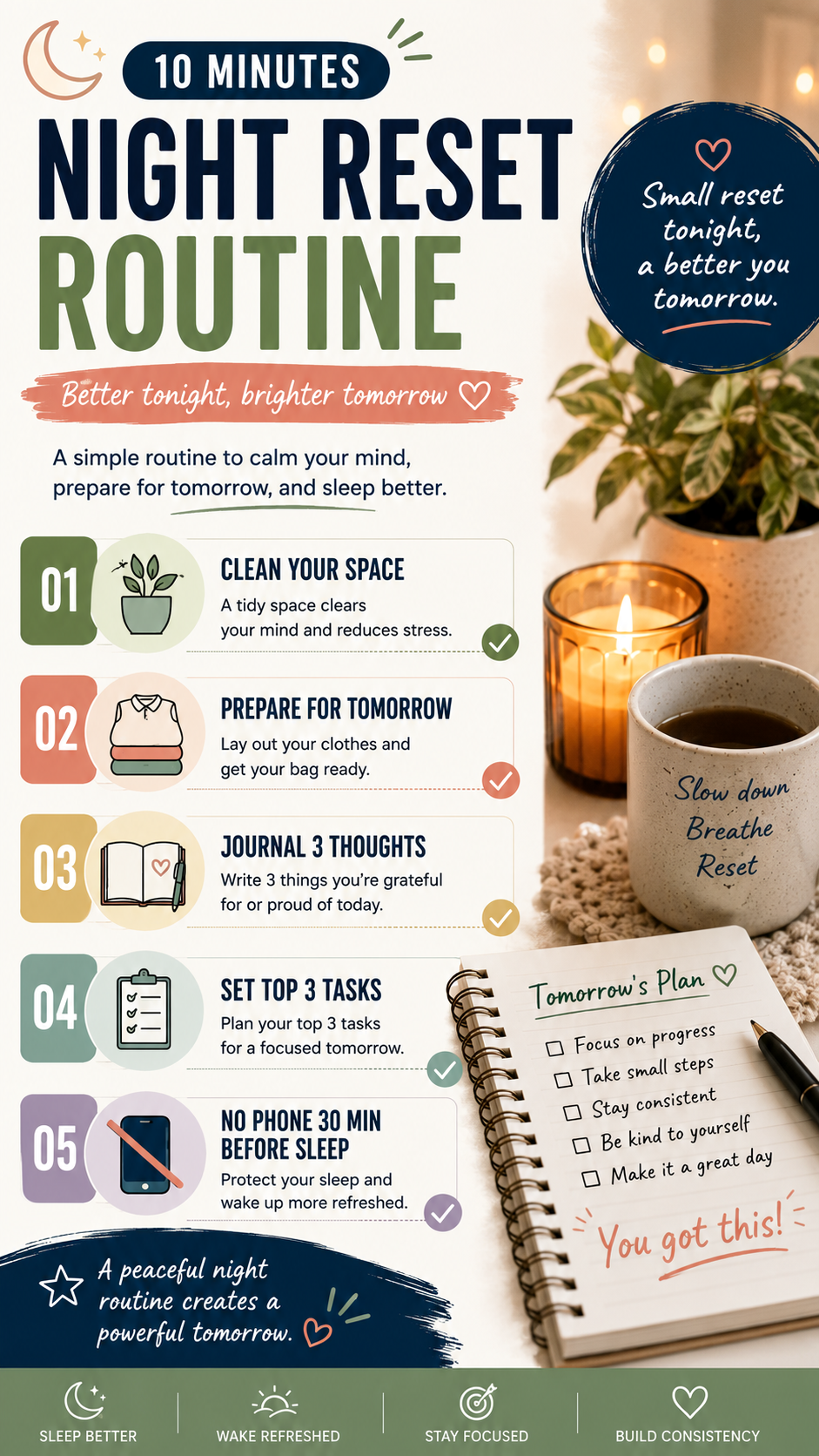
A calmer tomorrow often starts with what you do tonight. When the day feels busy, scattered, or mentally loud, a simple 10-minute night reset routine can help you close the evening with intention instead of carrying unfinished stress into bed. The beauty of this kind of routine is that it does not need to be complicated. A few small actions, done consistently, can make your space feel lighter, your mind feel clearer, and your morning feel much easier to begin.
The idea behind a night reset is simple: tidy what matters, prepare what helps, reflect on the good, plan your next priorities, and create a phone-free buffer before sleep. These calm habits work together to support better sleep, reduce morning decision fatigue, and help you feel more grounded before your head hits the pillow.
Key Takeaways
- A 10-minute night reset helps you end the day with calm and structure.
- Cleaning one small area can reduce visual clutter and mental stress.
- Preparing for tomorrow makes mornings smoother and less rushed.
- Journaling three thoughts encourages gratitude, reflection, and emotional release.
- Setting your top three tasks gives tomorrow a clear focus.
- A no-phone buffer before sleep supports a more peaceful bedtime routine.
Why a 10-Minute Night Reset Works So Well
A night reset routine is powerful because it gives your brain a clear signal: the day is winding down. Instead of moving straight from tasks, screens, chores, and worries into bed, you create a gentle transition. This transition matters because bedtime is not only about sleep. It is also about emotional closure, environmental calm, and mental preparation.
Many people try to improve their mornings by focusing only on alarms, planners, or productivity hacks. While those tools can help, the real secret is often found the night before. When your clothes are ready, your space is tidy, and your priorities are already written down, you wake up with fewer decisions to make. That means more energy for the things that actually matter.
Important: A night reset is not about creating a perfect evening. It is about building a small rhythm that helps you feel more peaceful, prepared, and in control before tomorrow begins.
Step 1: Clean Your Space
The first step in a 10-minute night reset routine is to clean your space, but this does not mean deep cleaning your entire home. The goal is to choose one visible area that affects your mood. This might be your desk, nightstand, kitchen counter, bathroom vanity, coffee table, or bedroom floor.
A tidy space can make the evening feel less chaotic. When you remove dishes, fold a blanket, put away clothes, or clear your bedside table, your environment instantly feels more settled. Even a few minutes of tidying can make your room feel more inviting and restful.
How to Make It Quick and Easy
Set a timer for two minutes and focus on only one zone. Avoid the temptation to start a full organizing project. The purpose is not perfection. The purpose is peace. Pick up what is obvious, throw away trash, return items to their place, and create a clean visual surface.
- Clear your nightstand so it feels calm before bed.
- Put dirty clothes in the hamper instead of leaving them on a chair.
- Wash or stack dishes so the kitchen feels easier in the morning.
- Reset your desk if you work or study from home.
Small Space, Big Mental Shift
Visual clutter can make your mind feel busy, even when you are trying to relax. By cleaning one small area, you give yourself a quiet reminder that the day is complete and your home is ready to support rest.
Step 2: Prepare for Tomorrow
Preparing for tomorrow is one of the simplest ways to reduce morning stress. This step can include laying out clothes, packing your bag, preparing lunch, filling a water bottle, choosing your workout outfit, or placing keys and essentials near the door.
Morning routines often fall apart because too many small decisions pile up at once. What should I wear? Where are my keys? Did I pack my notebook? What do I need to bring? When these questions are answered the night before, the morning feels smoother and more intentional.
Create a Simple Launch Pad
A launch pad is a specific place where you keep the things you need for the next day. It might be a chair, basket, entry table, hook, or corner of your desk. Place your bag, keys, wallet, planner, headphones, or anything important in that spot before bed.
Pro Tip: Do not prepare for an imaginary perfect morning. Prepare for your real morning. Choose the outfit, bag, and setup that will make your actual routine easier, even if you wake up tired or pressed for time.
Step 3: Journal Three Thoughts
Journaling does not need to be long, poetic, or complicated. For a night reset routine, three short thoughts are enough. You can write three things you are grateful for, three things you are proud of, three moments that stood out, or three thoughts you want to release before sleep.
This step helps move your thoughts out of your head and onto paper. If your mind tends to replay the day at night, journaling can create a sense of emotional closure. You are not ignoring your thoughts. You are giving them a place to land.
Easy Night Journal Prompts
Use prompts that feel gentle and realistic. The best journaling habit is the one you can repeat without pressure.
- Three things I am grateful for today are…
- Three things I handled well today are…
- Three thoughts I want to release tonight are…
- Three small wins from today are…
- Three things I want to remember tomorrow are…
Keep It Short Enough to Repeat
The goal is consistency, not length. A few honest sentences can be more helpful than a full page you only write once a month. Let your journal be simple, imperfect, and useful.
Why This Matters
A peaceful night routine is not just about getting more done. It is about helping your nervous system shift from daily pressure into rest. Small habits like journaling, tidying, and planning create a steady rhythm that makes bedtime feel safe, calm, and intentional.
Step 4: Set Your Top Three Tasks
Planning your top three tasks for tomorrow gives your day a clear direction before it even begins. Instead of waking up and wondering where to start, you already know what deserves your attention. This is especially helpful if you often feel overwhelmed by a long to-do list.
The key is to choose only three. Not ten. Not everything you could possibly do. Three meaningful tasks that would make tomorrow feel productive, focused, or complete.
How to Choose Your Top Three
Start by asking yourself what would make the biggest difference tomorrow. One task might be practical, like paying a bill or sending an email. Another might be personal, like exercising, meal prepping, or calling someone back. A third might be related to work, school, home, or a creative project.
- Choose one priority that moves an important goal forward.
- Choose one task that will reduce stress once completed.
- Choose one small action that supports your wellbeing.
Important: Your top three tasks should guide your day, not pressure you into perfection. Think of them as anchors. They help you return to what matters when the day gets busy.
Use a Simple Planner Page
A notebook, sticky note, planner, or notes app can all work. Write the date, list your three priorities, and add a few encouraging words if that helps. A short phrase like “take small steps” or “focus on progress” can make your plan feel motivating instead of demanding.
Step 5: No Phone 30 Minutes Before Sleep
The final step in the night reset routine is often the most challenging: no phone for 30 minutes before sleep. Phones are useful, entertaining, and easy to reach for, but they can also keep your mind alert when you are trying to slow down.
A phone-free buffer gives your brain space to unwind. Instead of scrolling through updates, messages, videos, or endless information, you create a quiet pocket of time for rest. This is when you can journal, read, stretch, sip tea, moisturize, tidy your bedside area, or simply sit in a calmer environment.
Make the Habit Easier
You do not have to rely on willpower alone. Place your phone across the room, charge it outside the bedroom, turn on focus mode, or set a reminder that tells you when your screen-free time begins. If 30 minutes feels too hard at first, start with 10 minutes and build from there.
- Use a real alarm clock if your phone keeps pulling you back in.
- Keep a book or journal beside your bed as a replacement habit.
- Turn off nonessential notifications before your evening routine.
- Create a small bedtime basket with lotion, lip balm, tea, and a notebook.
How to Fit the Whole Routine Into 10 Minutes
A 10-minute night reset works best when each step has a clear time limit. This keeps the routine from feeling like another chore. You are not trying to overhaul your whole life in one evening. You are creating a repeatable flow that helps you end the day well.
A Simple 10-Minute Breakdown
| Time | Reset Action | Purpose |
|---|---|---|
| 2 minutes | Clean one small space | Reduce clutter and create calm |
| 2 minutes | Prepare clothes, bag, or essentials | Make the morning easier |
| 2 minutes | Journal three thoughts | Reflect and release the day |
| 2 minutes | Write tomorrow’s top three tasks | Create focus and direction |
| 2 minutes | Start your phone-free wind down | Protect sleep and quiet the mind |
This structure is flexible. Some nights you may spend more time journaling and less time tidying. Other nights you may only prepare your clothes and write your priorities. The routine should support your life, not become another source of pressure.
Creating a Cozy Atmosphere for Your Evening Reset
The visual mood of a night reset matters. Warm lighting, a candle, a cup of tea, a notebook, and a peaceful bedside setup can make the routine feel inviting. When your environment feels comforting, you are more likely to repeat the habit.
You do not need a perfectly styled bedroom or expensive self-care products. A cozy atmosphere can be as simple as dimming the lights, clearing your nightstand, playing soft music, or using a favorite mug. The goal is to create a feeling of calm that helps you slow down.
Simple Items That Support a Night Reset
- A small notebook for gratitude, thoughts, and tomorrow’s plan.
- A pen you enjoy using so journaling feels easy.
- A candle or warm lamp for soft evening lighting.
- A calming drink, such as herbal tea or warm water.
- A tray, basket, or drawer to keep bedtime essentials together.
Pro Tip: Make your routine visually inviting. When your journal, pen, and evening essentials are easy to see and reach, your night reset becomes less of a task and more of a comforting ritual.
How This Routine Helps You Wake Up Refreshed
Waking up refreshed is not only about the number of hours you sleep. It is also about the state of mind you bring into bedtime and the amount of friction waiting for you in the morning. A night reset helps with both.
When your space is cleaner, your thoughts are written down, and your top priorities are clear, your morning begins with less clutter. You are not starting from a place of confusion. You are picking up from a plan you already made with care.
The Confidence of Being Prepared
Preparation builds quiet confidence. Even small actions, like laying out clothes or writing tomorrow’s first task, can make you feel more capable. You are telling yourself, “I have taken care of future me.” That message matters.
Over time, this routine can become a reliable anchor. It helps you build consistency without needing a dramatic lifestyle change. Ten minutes each night can create a stronger sense of rhythm, clarity, and self-trust.
At a Glance
- Reset one small space before bed.
- Prepare clothes, bags, or essentials for tomorrow.
- Write three thoughts to clear your mind.
- Choose your top three tasks for focused action.
- Create a phone-free wind down to protect your sleep.
Common Mistakes to Avoid
Even a simple routine can become overwhelming if you try to do too much. The most common mistake is turning a 10-minute reset into a long list of evening chores. When the routine feels too heavy, it becomes easier to skip.
Do Not Aim for a Perfect Night
Some nights will be messy. Some nights you will be tired. Some nights you may only complete one or two steps. That still counts. A routine should be flexible enough to meet you where you are.
Do Not Overload Your To-Do List
Writing too many tasks for tomorrow can make you feel behind before the day begins. Keep your top three realistic and meaningful. You can always add more later, but your main focus should be clear.
Do Not Wait Until You Are Exhausted
If possible, start your night reset before you are completely drained. The routine only takes 10 minutes, but it is easier to complete when you begin before your energy disappears. Try starting right after dinner, after a shower, or before you settle into bed.
Make the Routine Your Own
The best night routine is one that fits your real life. You can personalize the 10-minute reset based on your schedule, home, goals, and energy level. If you are a student, you might prepare your backpack and review assignments. If you work from home, you might reset your desk. If you are focused on wellness, you might include stretching, skincare, or a calming drink.
The structure can stay the same while the details change. Clean a little. Prepare a little. Reflect a little. Plan a little. Disconnect a little. That simple rhythm is what makes the routine so useful.
A Gentle Version for Busy Nights
On nights when you have almost no energy, try a three-minute version. Put away five items, write one thought, and choose one priority for tomorrow. This keeps the habit alive without demanding too much from you.
A Deeper Version for Slow Evenings
On slower nights, you can expand the routine. Add a longer journal entry, prepare breakfast, stretch for five minutes, read a few pages, or plan your week. The core routine gives you a foundation, and you can build on it when you have more time.
Conclusion: A Peaceful Night Creates a Powerful Tomorrow
A 10-minute night reset routine is a small act of care with a big impact. By cleaning your space, preparing for tomorrow, journaling three thoughts, setting your top three tasks, and stepping away from your phone before sleep, you create an evening rhythm that supports calm, clarity, and consistency.
This routine is not about doing everything perfectly. It is about giving yourself a softer landing at the end of the day and a better starting point in the morning. With just a few intentional habits, you can sleep with less stress, wake with more direction, and move through tomorrow with a clearer mind.
Start tonight with one small reset. Clear your nightstand, write three thoughts, choose tomorrow’s top priorities, and let the evening become a little lighter. A peaceful night routine can become one of the simplest ways to take care of your future self.
Tags
Night Routine Evening Reset Better Sleep Self Care Habits Productive Morning Journaling Calm Habits Bedtime Routine