
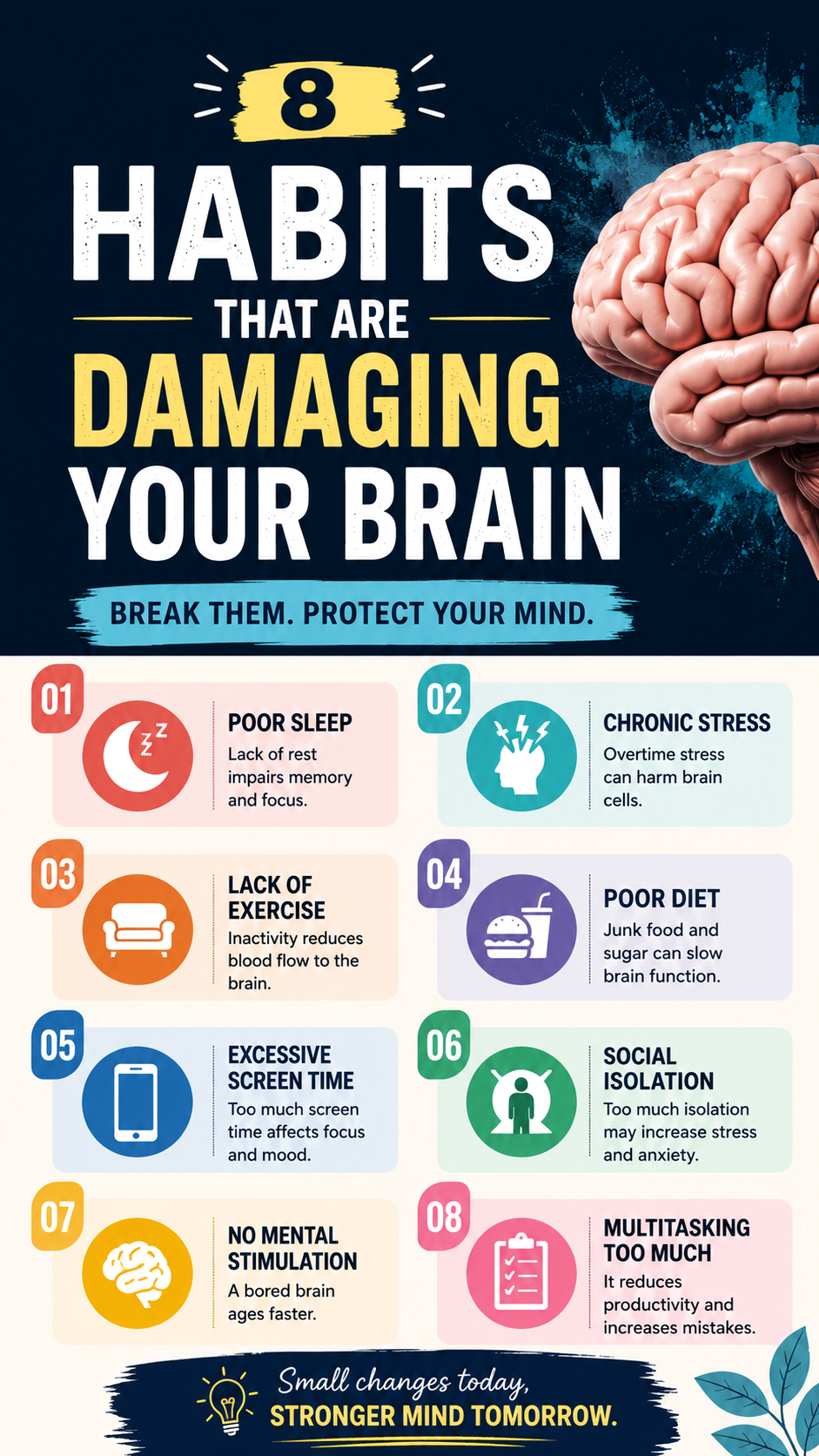
Many people focus on physical health but overlook one of the most important organs in the body: the brain. Every thought, memory, decision, and emotion depends on healthy brain function. While genetics and age play a role in cognitive performance, daily habits often have a much bigger impact than most people realize. Some common behaviors that seem harmless can gradually affect concentration, memory, mental clarity, and long-term brain health.
Understanding which habits may be working against your cognitive well-being is the first step toward protecting your mind. Small changes made consistently can support sharper thinking, better mood regulation, and improved mental performance for years to come.
Key Takeaways
- Daily habits have a major influence on brain health.
- Poor sleep can significantly impact memory and focus.
- Chronic stress may contribute to cognitive decline over time.
- Physical activity supports healthy brain function.
- Nutrition plays a critical role in mental performance.
- Small lifestyle improvements can create lasting benefits.
Why Brain Health Matters More Than Ever
Modern lifestyles place constant demands on the brain. Endless notifications, busy schedules, information overload, and increasing stress levels challenge our ability to stay focused and mentally balanced. The brain requires proper care just like any other part of the body.
When brain health suffers, the effects often appear gradually. You may notice difficulty concentrating, forgetfulness, reduced productivity, low motivation, or mental fatigue. These symptoms are sometimes dismissed as normal, but they can be linked to lifestyle habits that are slowly affecting cognitive performance.
Important: Brain health is not only about preventing future problems. It directly influences your daily energy, focus, learning ability, emotional balance, and overall quality of life.
Habit #1: Not Getting Enough Sleep
Sleep is one of the most powerful tools for brain maintenance. During sleep, the brain processes information, strengthens memories, and clears waste products that accumulate throughout the day.
Consistently sleeping too little can lead to:
- Reduced concentration
- Poor memory retention
- Slower reaction times
- Increased mental fatigue
- Difficulty making decisions
Many adults underestimate the importance of sleep, often sacrificing rest to meet work or social demands. However, sleep deprivation can affect brain performance almost immediately.
Simple Sleep Improvements
- Maintain a consistent sleep schedule.
- Limit screen time before bed.
- Create a dark and quiet sleeping environment.
- Avoid excessive caffeine late in the day.
Habit #2: Living with Constant Stress
Stress is a normal part of life, but chronic stress can place a heavy burden on the brain. When stress hormones remain elevated for long periods, they may interfere with memory, attention, and emotional regulation.
People experiencing prolonged stress often report feeling mentally exhausted, forgetful, or overwhelmed. Over time, unmanaged stress can affect both cognitive function and overall well-being.
Stress management does not require perfection. Even small practices can help:
- Deep breathing exercises
- Daily walks outdoors
- Meditation or mindfulness
- Journaling
- Regular social interaction
Why This Matters
- Chronic stress affects focus and memory.
- Relaxation techniques can improve mental clarity.
- Managing stress supports long-term cognitive resilience.
Habit #3: Lack of Physical Activity
Exercise benefits far more than muscles and cardiovascular health. Physical activity increases blood flow to the brain, delivering oxygen and nutrients necessary for optimal performance.
Regular movement has been associated with:
- Improved focus
- Better memory
- Enhanced mood
- Greater mental energy
- Reduced stress levels
Even moderate activities such as walking, cycling, swimming, or dancing can support cognitive health.
Pro Tip: Consistency matters more than intensity. A daily 20 to 30 minute walk can provide meaningful benefits for both brain and body.
Habit #4: Poor Nutrition Choices
The brain consumes a significant amount of energy each day. Nutrient-rich foods provide the building blocks needed for healthy cognitive function.
A diet heavily dominated by highly processed foods may leave the brain without essential nutrients it needs to perform at its best.
Brain-Friendly Foods
- Leafy green vegetables
- Berries
- Nuts and seeds
- Fish rich in omega-3 fats
- Whole grains
- Beans and legumes
Hydration also plays a major role. Even mild dehydration can contribute to headaches, reduced concentration, and mental fatigue.
Habit #5: Excessive Screen Time
Technology offers countless benefits, but excessive screen exposure can challenge the brain’s ability to focus deeply. Constant interruptions and rapid information consumption may contribute to attention difficulties and mental exhaustion.
Extended screen use can also interfere with healthy sleep patterns, especially when devices are used late at night.
Healthier Technology Habits
- Schedule regular screen breaks.
- Turn off unnecessary notifications.
- Establish device-free periods.
- Avoid screens before bedtime.
Habit #6: Social Isolation
Humans are naturally social creatures. Meaningful social interaction stimulates cognitive processes, emotional regulation, and communication skills.
Extended isolation can negatively affect mental health and cognitive engagement. Regular conversations, community involvement, and supportive relationships help keep the brain active.
Social connections provide opportunities to learn, solve problems, share experiences, and maintain emotional balance.
Habit #7: Ignoring Mental Stimulation
Just like muscles benefit from exercise, the brain benefits from mental challenges. Learning new skills and engaging in intellectually stimulating activities helps maintain cognitive flexibility.
Examples include:
- Reading books
- Learning a language
- Playing strategy games
- Solving puzzles
- Taking educational courses
- Practicing creative hobbies
Keeping the brain engaged encourages continuous learning and adaptation.
The Power of Lifelong Learning
People who regularly seek new knowledge often experience stronger mental engagement and improved problem-solving abilities. Learning keeps neural pathways active and encourages cognitive growth.
Habit #8: Multitasking Too Often
Many people believe multitasking increases productivity. In reality, constantly switching between tasks can reduce efficiency and place extra strain on attention systems.
The brain performs best when it can focus on one meaningful activity at a time. Frequent task switching often leads to mistakes, reduced concentration, and mental fatigue.
Important: Deep focus allows the brain to process information more effectively. Prioritizing single-task work sessions can improve productivity and reduce cognitive overload.
Habit #9: Neglecting Emotional Health
Emotional well-being and brain health are closely connected. Persistent feelings of anxiety, sadness, frustration, or overwhelm can influence concentration, memory, and motivation.
Supporting emotional health may include:
- Seeking professional support when needed
- Practicing self-care
- Building strong relationships
- Setting healthy boundaries
- Prioritizing rest and recovery
Taking emotional health seriously is an investment in long-term cognitive wellness.
Building Brain-Friendly Daily Routines
The good news is that protecting your brain does not require dramatic lifestyle changes. Small habits performed consistently often produce the greatest results.
A Simple Daily Brain Health Checklist
- Get sufficient quality sleep.
- Move your body every day.
- Eat nutrient-dense foods.
- Stay hydrated.
- Manage stress effectively.
- Maintain meaningful relationships.
- Challenge your mind regularly.
- Limit unnecessary distractions.
Expert Insight: Brain health is often shaped by the cumulative effect of small decisions. Tiny improvements repeated daily can create significant benefits over months and years.
Quick Points
- Sleep is essential for memory and focus.
- Exercise supports cognitive performance.
- Stress management protects mental well-being.
- Nutrition directly influences brain function.
- Lifelong learning keeps the mind active.
Conclusion
Your brain works tirelessly every day, making it one of the most valuable assets you possess. The habits you practice consistently can either support cognitive health or gradually work against it. By prioritizing quality sleep, nutritious food, physical activity, stress management, mental stimulation, and meaningful social connections, you can create an environment where your brain thrives.
Lasting brain health is not built through a single action. It develops through daily choices that protect focus, memory, emotional balance, and long-term cognitive performance. Start with one small improvement today and build from there. Your future self will thank you.
Tags
Brain Health Healthy Habits Mental Health Cognitive Function Memory Improvement Wellness Tips Healthy Lifestyle Mental Clarity