
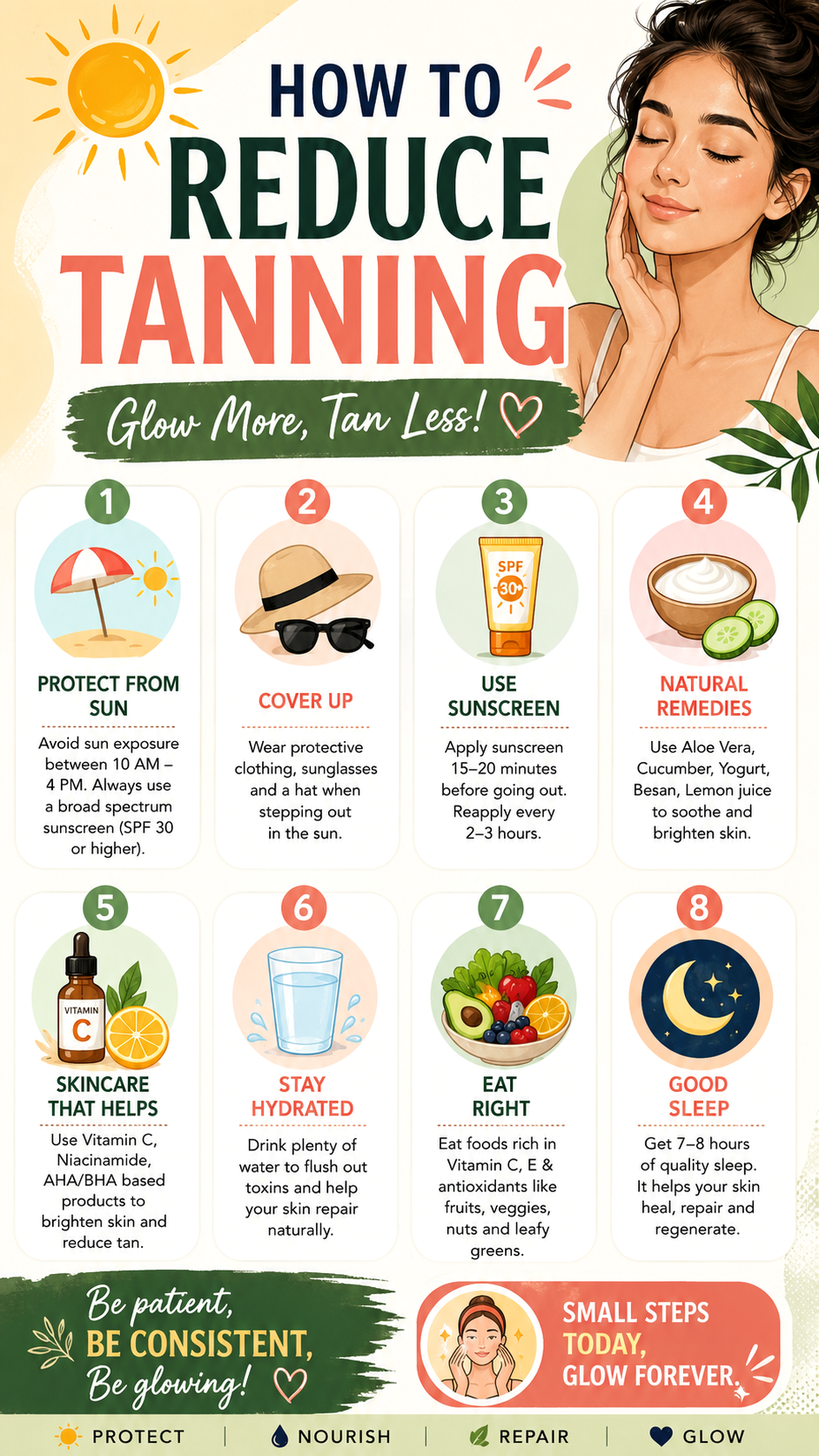
Sun tanning is a common concern for many people, especially during warmer months when outdoor activities increase. While a tan is the skin’s natural response to ultraviolet (UV) exposure, prolonged time in the sun can lead to uneven skin tone, dullness, dehydration, and signs of premature aging. The good news is that with the right combination of sun protection, skincare habits, hydration, and healthy lifestyle choices, it is possible to reduce the appearance of tanning naturally and support brighter, healthier-looking skin.
Whether you spend time commuting, exercising outdoors, or simply enjoy sunny days, understanding how to care for your skin can make a noticeable difference. This guide explores practical and natural ways to reduce tanning while protecting your skin from further damage.
Key Takeaways
- Limit direct sun exposure during peak UV hours.
- Use broad-spectrum sunscreen every day.
- Try soothing natural ingredients like aloe vera and cucumber.
- Support skin health through hydration and nutrition.
- Incorporate brightening skincare ingredients responsibly.
- Maintain consistency for long-term results.
Understanding Why Tanning Happens
Tanning occurs when the skin produces more melanin in response to UV radiation. Melanin acts as a protective pigment that helps shield deeper layers of the skin from sun damage. While this process is natural, excessive UV exposure can cause uneven pigmentation and make the skin appear darker than usual.
The intensity of tanning depends on several factors, including skin type, duration of sun exposure, geographic location, and the strength of UV rays. Although a tan may fade naturally over time, proper skincare and sun protection can help accelerate the process while supporting overall skin health.
Important: Preventing additional sun exposure is often more effective than trying to reverse tanning after it occurs. Consistent protection helps maintain a more even complexion over time.
Protect Your Skin From Further Sun Exposure
One of the most important steps in reducing tanning naturally is minimizing additional UV exposure. Even the most effective skincare routine can struggle to deliver results if the skin continues to receive significant sun exposure daily.
Avoid Peak Sun Hours
UV rays tend to be strongest between 10 AM and 4 PM. During these hours, prolonged exposure can increase the risk of tanning and skin damage. If possible, schedule outdoor activities during the early morning or late afternoon.
Seek Shade Whenever Possible
Walking under covered areas, using umbrellas, and choosing shaded spots outdoors can significantly reduce direct UV exposure. Even small adjustments can help protect your skin throughout the day.
Wear Protective Clothing
Protective clothing acts as a physical barrier between your skin and UV rays. Consider wearing:
- Wide-brimmed hats
- Long-sleeved lightweight shirts
- Sunglasses with UV protection
- Breathable fabrics designed for sun protection
These simple measures can help prevent further darkening while allowing existing tanning to gradually fade.
The Essential Role of Sunscreen
Sunscreen is one of the most effective tools for preventing tanning and protecting skin health. A quality broad-spectrum sunscreen helps shield the skin from both UVA and UVB rays.
Choose the Right SPF
Dermatologists often recommend using SPF 30 or higher for everyday protection. Higher SPF formulas may provide additional protection during extended outdoor activities.
Apply Correctly
Many people use less sunscreen than needed. Apply a generous amount to all exposed areas of skin approximately 15 to 20 minutes before going outdoors.
Reapply Regularly
Sunscreen effectiveness decreases throughout the day due to sweat, water exposure, and natural wear. Reapplying every two to three hours helps maintain protection.
Why This Matters
- Consistent sunscreen use helps prevent new tanning.
- It supports a more even skin tone over time.
- Daily protection may reduce visible signs of premature aging.
Natural Remedies That May Help Soothe Tanned Skin
Many natural ingredients are traditionally used to calm sun-exposed skin and improve its appearance. While results vary from person to person, these ingredients are often included in home skincare routines.
Aloe Vera
Aloe vera is widely known for its soothing properties. Applying fresh aloe vera gel can help cool the skin and support hydration after sun exposure.
Cucumber
Cucumber contains a high water content and can provide a refreshing sensation when applied to the skin. Chilled cucumber slices are often used to soothe areas affected by heat and sun exposure.
Yogurt
Plain yogurt contains lactic acid, which may gently exfoliate the skin’s surface. Some people use yogurt masks to help improve the appearance of uneven skin tone.
Lemon and Besan Mixtures
Traditional skincare routines sometimes combine ingredients such as gram flour (besan) and lemon juice. However, lemon can irritate sensitive skin and increase sun sensitivity. Always patch test and use caution when trying homemade remedies.
Pro Tip: Natural remedies work best when combined with daily sun protection and a consistent skincare routine. Patience and consistency are often more important than any single ingredient.
Skincare Ingredients That Support Brighter-Looking Skin
Modern skincare products offer several ingredients that can help improve skin texture and support a more even complexion.
Vitamin C
Vitamin C is a popular antioxidant that helps protect against environmental stressors while supporting a brighter appearance. It is commonly used in serums and creams.
Niacinamide
Niacinamide is known for its versatility. It may help improve skin texture, strengthen the skin barrier, and support a more balanced skin tone.
AHA and BHA Exfoliants
Alpha hydroxy acids (AHAs) and beta hydroxy acids (BHAs) help remove dead skin cells from the surface. Regular exfoliation may contribute to a fresher and more radiant appearance when used appropriately.
Tips for Safe Exfoliation
- Start slowly if you are new to exfoliating acids.
- Follow product instructions carefully.
- Always use sunscreen during the day.
- Avoid over-exfoliation, which can irritate the skin.
Stay Hydrated for Healthier Skin
Hydration plays a significant role in maintaining healthy-looking skin. When the body is adequately hydrated, the skin often appears smoother, plumper, and more resilient.
Drinking water consistently throughout the day supports normal bodily functions and contributes to overall wellness. While water alone will not remove a tan, proper hydration complements a comprehensive skincare approach.
Additional hydration tips include:
- Carry a reusable water bottle.
- Eat water-rich fruits and vegetables.
- Reduce excessive intake of dehydrating beverages.
- Use a moisturizer to support the skin barrier.
Nutrition and Skin Health
Your diet can influence how your skin looks and feels. Nutrient-rich foods provide vitamins, minerals, and antioxidants that support overall skin wellness.
Foods Rich in Vitamin C
- Oranges
- Strawberries
- Kiwi
- Bell peppers
- Broccoli
Foods Rich in Vitamin E
- Almonds
- Sunflower seeds
- Avocados
- Spinach
Antioxidant-Rich Choices
Colorful fruits and vegetables contain antioxidants that help protect cells from oxidative stress. Including a variety of produce in your meals supports overall skin health and wellness.
Important: Healthy skin is influenced by multiple factors including sun protection, hydration, nutrition, sleep quality, and consistent skincare habits. Focusing on all areas creates better long-term results.
Why Good Sleep Supports Skin Recovery
Sleep is often overlooked in skincare discussions, yet it plays a vital role in overall skin health. During sleep, the body performs important repair and recovery processes.
A consistent sleep schedule may help support a healthier complexion and improve the skin’s appearance over time. Aim for seven to eight hours of quality sleep each night whenever possible.
Tips for Better Sleep
- Maintain a regular bedtime routine.
- Reduce screen exposure before bed.
- Keep your sleeping environment comfortable.
- Avoid excessive caffeine late in the day.
Creating a Consistent Anti-Tan Routine
Consistency is one of the most important factors in seeing visible improvements. Rather than relying on quick fixes, develop a routine that supports your skin daily.
Morning Routine
- Gentle cleansing.
- Vitamin C serum.
- Moisturizer.
- Broad-spectrum sunscreen.
Evening Routine
- Remove sunscreen and impurities.
- Use targeted skincare products.
- Apply moisturizer.
- Prioritize quality sleep.
At a Glance
- Protect skin from excessive sun exposure.
- Wear sunscreen daily and reapply regularly.
- Use soothing natural ingredients responsibly.
- Stay hydrated and eat nutrient-rich foods.
- Maintain healthy sleep and skincare habits.
Conclusion
Reducing tanning naturally is a gradual process that requires a combination of prevention, protection, and consistent care. By limiting excessive sun exposure, using sunscreen correctly, incorporating supportive skincare ingredients, staying hydrated, eating a balanced diet, and prioritizing quality sleep, you can help your skin maintain a healthier and more radiant appearance.
Remember that lasting improvements often come from daily habits rather than overnight solutions. Focus on protecting your skin, nurturing it with gentle care, and staying consistent with your routine. Over time, these simple steps can help support a brighter, more even-looking complexion while promoting overall skin wellness.
Tags
Reduce Tanning Naturally Sun Tan Removal Natural Skincare Glowing Skin Sun Protection Vitamin C Skincare Healthy Skin Tips Skin Care Routine