
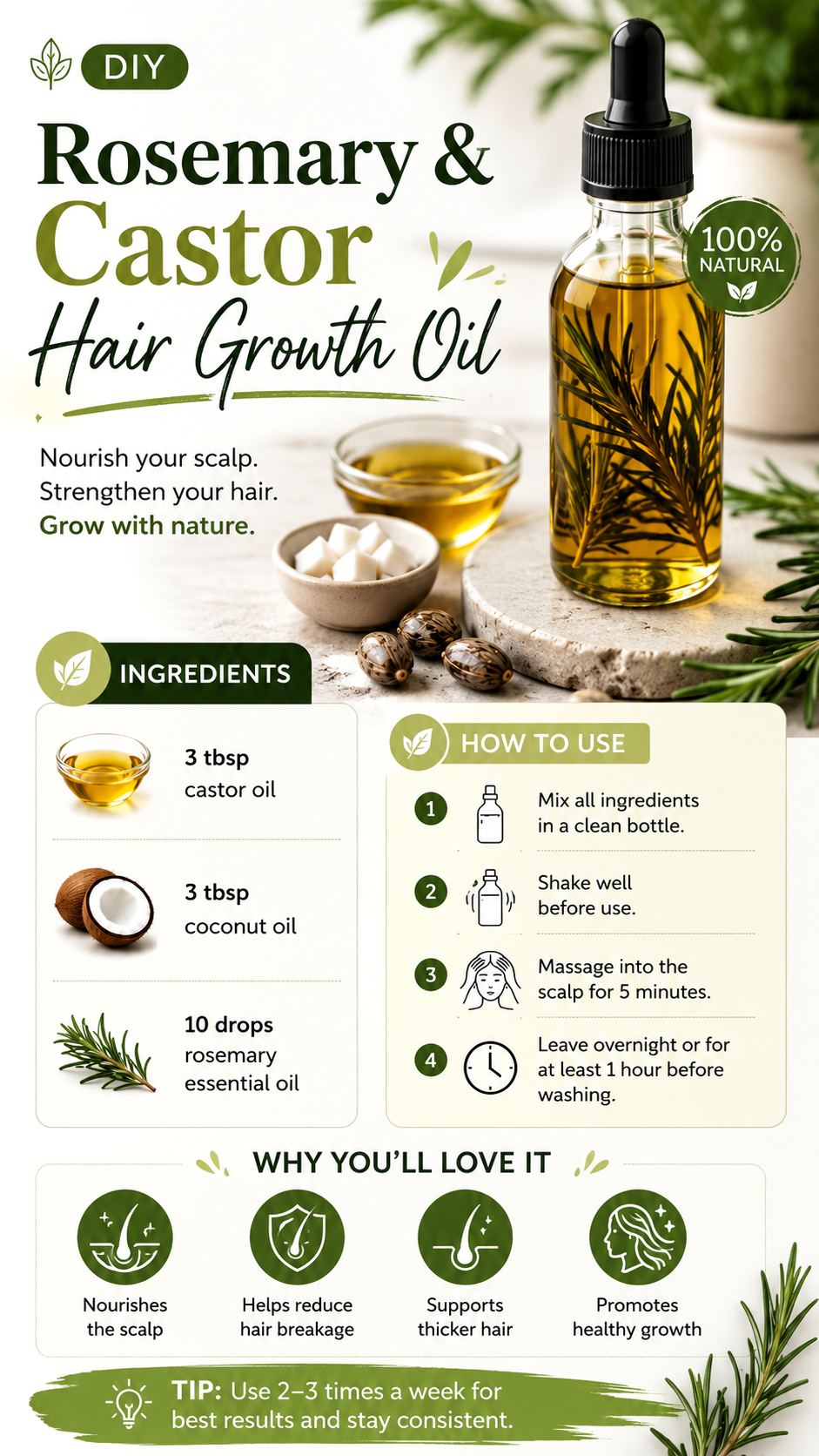
Natural hair care continues to gain popularity as more people look for simple, ingredient-focused solutions that fit into a healthy beauty routine. Among the most talked-about combinations is rosemary and castor oil, a blend often used to nourish the scalp, improve the appearance of hair, and support stronger-looking strands. This easy DIY hair oil recipe combines a few well-known ingredients into a convenient treatment that can be incorporated into a regular self-care routine.
Whether you are exploring natural hair care for the first time or searching for a new addition to your beauty regimen, a rosemary and castor oil blend offers an approachable option. With a handful of ingredients and a few minutes of preparation, you can create a personalized hair treatment designed to support healthier-looking hair over time.
Key Takeaways
- Rosemary and castor oil are popular ingredients in natural hair care routines.
- DIY hair oils are simple to prepare with minimal ingredients.
- Regular scalp massages may help distribute oils evenly and improve comfort.
- Consistency is often more important than applying large amounts of product.
- Natural oil blends can help improve the appearance of dry or brittle hair.
- Proper application techniques can maximize the benefits of hair treatments.
Why Rosemary and Castor Oil Are So Popular
Rosemary oil has become a favorite ingredient among natural beauty enthusiasts. Known for its refreshing herbal aroma and lightweight nature, it is commonly added to scalp treatments, hair serums, and DIY beauty recipes. Many people appreciate rosemary oil because it feels invigorating when applied to the scalp and blends well with a variety of carrier oils.
Castor oil, on the other hand, has been used in beauty routines for generations. Its thick consistency helps coat the hair shaft, giving strands a smoother and more conditioned appearance. Because it is rich and highly moisturizing, castor oil is often included in products designed to support dry or damaged hair.
Important: The popularity of rosemary and castor oil comes from their ability to complement each other. Rosemary adds a refreshing botanical element, while castor oil delivers deep moisture and conditioning support for the hair and scalp.
When combined, these ingredients create a balanced treatment that can be used as part of a weekly hair care routine.
Understanding the Ingredients
Castor Oil
Castor oil is widely recognized for its thick texture and moisturizing properties. It helps create a protective layer around hair strands, reducing the appearance of dryness and improving shine. Many people use castor oil to support healthier-looking ends and improve overall hair manageability.
Coconut Oil
Coconut oil is frequently used as a carrier oil in DIY beauty recipes. It has a lighter texture than castor oil and helps make the mixture easier to spread through the hair. Coconut oil is also valued for its conditioning properties and ability to leave hair feeling softer.
Rosemary Essential Oil
Rosemary essential oil contributes a pleasant herbal scent and is commonly associated with scalp-focused treatments. Since essential oils are highly concentrated, they are typically diluted in carrier oils before use.
How to Make Rosemary and Castor Hair Oil at Home
One of the best things about this DIY treatment is its simplicity. The recipe requires only a few ingredients and can be prepared in minutes.
Ingredients
- 3 tablespoons castor oil
- 3 tablespoons coconut oil
- 10 drops rosemary essential oil
Preparation Steps
- Add the castor oil to a clean bottle or container.
- Pour in the coconut oil.
- Add the rosemary essential oil.
- Close the bottle securely.
- Shake well until the ingredients are thoroughly mixed.
Once prepared, store the mixture in a cool, dry place away from direct sunlight. Shake the bottle before each use to ensure the ingredients remain evenly distributed.
Expert Insight
Small batches are often the best choice for homemade beauty products. Freshly prepared oil blends are easier to manage and help maintain the quality and aroma of the ingredients.
How to Apply the Oil for Best Results
Application techniques can make a noticeable difference in your overall experience with hair oils. Rather than pouring large amounts directly onto the hair, focus on targeted application and gentle massage.
Step 1: Section the Hair
Divide your hair into manageable sections. This allows the oil to reach the scalp more effectively and helps ensure even coverage.
Step 2: Apply to the Scalp
Using your fingertips or a dropper bottle, apply a small amount of oil directly to the scalp.
Step 3: Massage Gently
Spend approximately five minutes massaging the oil into your scalp using circular motions. This process helps distribute the oil evenly and can feel relaxing after a long day.
Step 4: Leave It On
Allow the treatment to remain on the scalp for at least one hour. Many people prefer overnight application for added convenience.
Step 5: Wash Thoroughly
Use a gentle shampoo to remove excess oil. Depending on your hair type, a second wash may be necessary.
Pro Tip: Consistency matters more than quantity. Applying a moderate amount of oil two or three times per week often works better than using excessive amounts infrequently.
Potential Benefits of a Rosemary and Castor Oil Routine
While individual results vary, many people incorporate this type of oil blend into their routines because of the following potential advantages:
- Helps maintain scalp moisture.
- Supports smoother-looking hair.
- Improves shine and softness.
- Helps reduce the appearance of dryness.
- Encourages a healthy hair care routine.
- Provides a relaxing self-care experience.
These benefits often become more noticeable when the treatment is used consistently over time and paired with a balanced hair care routine.
Creating a Complete Hair Care Routine
A DIY oil treatment can be a valuable addition to a broader hair care strategy. Healthy-looking hair typically benefits from a combination of good habits rather than a single product.
Keep the Scalp Clean
Regular cleansing helps remove buildup from styling products, environmental pollutants, and excess oil.
Use Gentle Hair Products
Choose shampoos and conditioners that match your hair type. Harsh products may leave hair feeling dry or difficult to manage.
Reduce Heat Exposure
Frequent use of hot styling tools can contribute to dryness and breakage. Whenever possible, allow hair to air dry or use lower heat settings.
Stay Hydrated
Hydration plays a role in overall wellness and can contribute to healthier-looking skin and hair.
Common Mistakes to Avoid
Even simple DIY treatments can be less effective when common mistakes occur.
- Applying too much oil at once.
- Skipping regular shampooing after treatments.
- Using essential oils without proper dilution.
- Expecting overnight transformations.
- Changing routines too frequently.
Important: Patience is essential with any hair care routine. Sustainable habits and consistent maintenance often produce better long-term results than constantly switching between products and treatments.
Who Can Benefit from This DIY Hair Oil?
This type of oil blend appeals to a wide variety of people. Individuals with dry hair often enjoy the moisturizing properties, while those focused on scalp care appreciate the targeted application process.
It may also appeal to people who prefer homemade beauty solutions and want greater control over the ingredients they use.
Since hair types vary considerably, it can be helpful to adjust the amount used based on personal needs and preferences.
At a Glance
- Simple recipe with only three main ingredients.
- Easy to prepare at home in just a few minutes.
- Suitable for weekly scalp care routines.
- Combines moisture, conditioning, and botanical benefits.
- Best results typically come from consistent use.
Conclusion
A DIY rosemary and castor hair oil blend offers a simple way to incorporate natural ingredients into your hair care routine. Combining castor oil, coconut oil, and rosemary essential oil creates a versatile treatment that supports scalp care while helping hair feel softer, smoother, and more manageable.
What makes this recipe especially appealing is its simplicity. The ingredients are easy to find, the preparation process takes only a few minutes, and the application can easily fit into a weekly self-care ritual. When paired with consistent hair care habits, gentle cleansing, and regular scalp massages, this DIY treatment can become a valuable part of maintaining healthy-looking hair.
Tags
Rosemary Oil Castor Oil DIY Hair Care Natural Hair Growth Scalp Care Hair Oil Recipe Healthy Hair Beauty DIY