
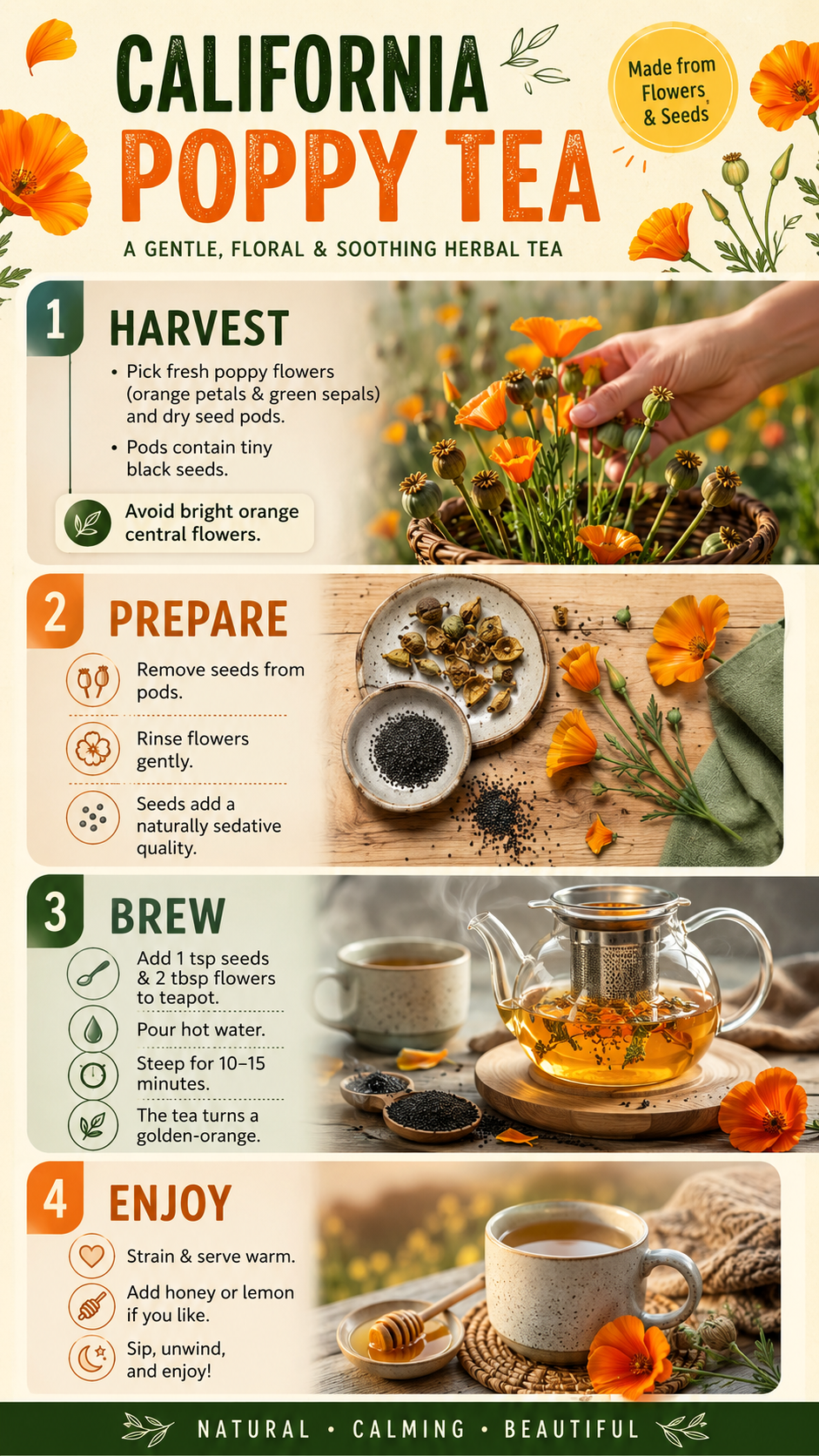
California poppy has long been admired for its vibrant orange blooms and delicate, fern-like foliage. Beyond its ornamental appeal, many gardening enthusiasts enjoy growing this beautiful plant for homemade herbal tea. A thriving California poppy patch offers colorful garden displays while providing flowers and mature seed pods that can be harvested for traditional herbal preparations. Whether you are interested in expanding your herb garden or exploring homegrown botanical teas, cultivating California poppies is a rewarding project that combines beauty, sustainability, and mindful gardening.
Key Takeaways
- California poppies are easy-to-grow annual flowers suited to many gardens.
- Flowers and mature seed pods are commonly harvested for herbal preparations.
- Proper drying and careful brewing help preserve flavor and quality.
- Growing your own plants gives you complete control over harvesting practices.
- Simple gardening habits can produce beautiful blooms throughout the growing season.
Why California Poppy Has Become a Favorite Garden Herb
Gardeners appreciate California poppy because it offers much more than visual appeal. The cheerful blossoms brighten borders, raised beds, and wildflower gardens while attracting pollinators throughout the flowering season. Once established, these hardy plants generally require minimal maintenance, making them suitable for beginners and experienced gardeners alike.
The plant’s delicate flowers and seed pods are commonly featured in homemade herbal tea recipes. Growing your own supply allows you to harvest fresh flowers at their peak while ensuring the plants have been cared for according to your preferred gardening practices.
Important: Always positively identify any plant before harvesting it for culinary or herbal use. Only use healthy, pesticide-free plants that have been grown specifically for this purpose.
Growing California Poppies Successfully
California poppies thrive in sunny locations with well-draining soil. They are well known for tolerating dry conditions once established, making them an excellent choice for low-maintenance landscapes and water-wise gardens.
Choose the Right Location
- Provide at least six hours of direct sunlight each day.
- Select loose, well-draining soil.
- Avoid overly rich soil, which may encourage excessive foliage instead of flowers.
- Leave enough spacing for healthy airflow.
Watering Tips
Young seedlings benefit from consistent moisture while becoming established. Mature plants generally perform well with less frequent watering. Allowing the soil to dry slightly between waterings often encourages stronger root development.
Seasonal Care
Deadheading spent flowers can encourage additional blooming throughout the season. If you wish to collect seeds, leave selected flowers on the plant until the seed pods fully mature and dry naturally.
Harvesting Flowers and Seed Pods
Timing is one of the most important aspects of harvesting California poppies. Fresh blossoms are typically collected when they are fully opened and healthy. Mature seed pods should remain on the plant until they become dry and naturally develop mature seeds.
Harvest during dry weather whenever possible. Morning is often preferred after any dew has evaporated. This helps reduce excess moisture that could interfere with drying.
- Use clean scissors or garden snips.
- Select only healthy flowers.
- Avoid damaged or diseased plant material.
- Handle blossoms gently to preserve their appearance.
Expert Insight
Harvesting smaller amounts throughout the blooming season often produces fresher herbal material than collecting everything at once. Regular harvesting also encourages gardeners to closely monitor plant health.
Preparing Freshly Harvested Plants
Preparation begins immediately after harvesting. Gently inspect each flower for insects, damaged petals, or debris. If rinsing is necessary, use cool water and allow the flowers to dry thoroughly before storage.
Mature seed pods can be carefully opened once completely dry. Store seeds separately if you plan to replant future gardens or prepare herbal mixtures.
Drying Methods
Drying preserves plant material while helping maintain quality for future use. Spread flowers in a single layer on a drying screen or paper towel in a cool, shaded location with good air circulation.
- Keep flowers away from direct sunlight.
- Turn material occasionally for even drying.
- Store only when completely dry.
- Protect drying herbs from excess humidity.
Pro Tip: Label every storage container with both the plant name and harvest date. This simple habit keeps your herbal pantry organized and helps rotate older supplies first.
Brewing a Homemade California Poppy Herbal Tea
Many gardeners enjoy transforming their harvest into a warm herbal infusion. The image demonstrates a simple preparation that combines dried flowers and mature seeds before steeping them in hot water.
Basic Brewing Process
- Place dried flowers into a teapot or tea infuser.
- Add mature seeds if desired.
- Pour freshly heated water over the herbs.
- Allow the mixture to steep for approximately 10 to 15 minutes.
- Strain before serving.
Many people enjoy serving the tea warm. Honey or lemon can be added for additional flavor depending on personal preference.
Creating a Relaxing Tea Ritual
A homemade herbal tea becomes even more enjoyable when paired with a peaceful evening routine. Preparing a favorite mug, dimming bright lights, and taking a few quiet moments before bedtime can transform an ordinary cup of tea into a relaxing daily ritual.
Many gardeners find satisfaction not only in drinking the tea but also in knowing they cultivated every step of the process, from planting seeds to harvesting colorful blossoms.
Storage Tips for Dried Flowers and Seeds
Proper storage helps preserve both flavor and quality. Once completely dry, transfer flowers and seeds into airtight glass jars or sealed containers.
- Store in a cool, dry cupboard.
- Keep away from direct sunlight.
- Avoid excessive moisture.
- Use clean, dry utensils when handling dried herbs.
Important: Moisture is one of the biggest enemies of dried herbs. Proper drying and airtight storage help maintain freshness while reducing the risk of spoilage.
Benefits of Growing Your Own Herbal Garden
Growing herbs at home offers many practical advantages. Freshly harvested flowers are often more vibrant than commercially available dried products, and gardeners gain complete control over cultivation methods.
Home herb gardens also encourage sustainable living. A small garden can produce seasonal harvests while creating habitat for beneficial pollinators and adding natural beauty to outdoor spaces.
Additional Advantages
- Fresh harvesting throughout the growing season.
- Lower packaging waste.
- Beautiful ornamental flowers.
- Educational gardening experience.
- Opportunity to save seeds for future planting.
At a Glance
- Grow in full sun with well-drained soil.
- Harvest healthy flowers and mature seed pods.
- Dry thoroughly before storage.
- Steep dried herbs in hot water before serving.
- Store dried materials in airtight containers.
Conclusion
California poppies bring together ornamental gardening, seasonal harvesting, and traditional herbal preparation in one rewarding project. Their brilliant flowers brighten landscapes while offering gardeners an opportunity to enjoy a hands-on connection with nature. From selecting the perfect planting location to carefully harvesting blossoms and preparing a comforting herbal tea, every step reflects the satisfaction that comes from growing something yourself.
Whether you are building your first herb garden or expanding an established collection, California poppies offer beauty, simplicity, and seasonal enjoyment. With thoughtful harvesting, careful drying, and proper storage, you can appreciate both the colorful blooms in your garden and the relaxing ritual of preparing a warm homemade herbal infusion.
Tags
California Poppy Herbal Tea Herb Gardening Wildflowers Tea Garden Organic Gardening Drying Herbs Home Herbalism